The 100-Month Fallacy
The original back-of-the-napkin arithmetic is seductive: a top-tier gaming GPU priced at roughly six thousand Australian dollars versus Codex Plus and Claude Pro bundled at sixty dollars per month equals one hundred months of frontier model access. The implication is that buying hardware is financial suicide. But the comparison collapses the moment you look at what each dollar actually buys.
A single RTX 5090 with 32 GB of VRAM cannot run a frontier-class model. At best, it comfortably fits a quantized Qwen 3.6 27B or Gemma 4 variant. Meanwhile, the sixty-dollar subscription gets you unconstrained access to Claude Opus 4.6 or GPT-5.5, models with hundreds of billions to over a trillion parameters and million-token context windows. The Reddit math compares a mid-size open-weight model running locally against a cloud-hosted research library and complains that the truck bed is smaller than the freight train. It was never an apples-to-apples comparison.
The Subsidy Bubble Is About to Pop
The more uncomfortable truth is that sixty dollars per month is a promotional rate, not a market-clearing price. Industry consensus holds that Anthropic spends significantly more than that to deliver Claude Pro to a single power user. Frontier labs are currently burning investor cash to capture market share, and the resulting prices are unsustainable.
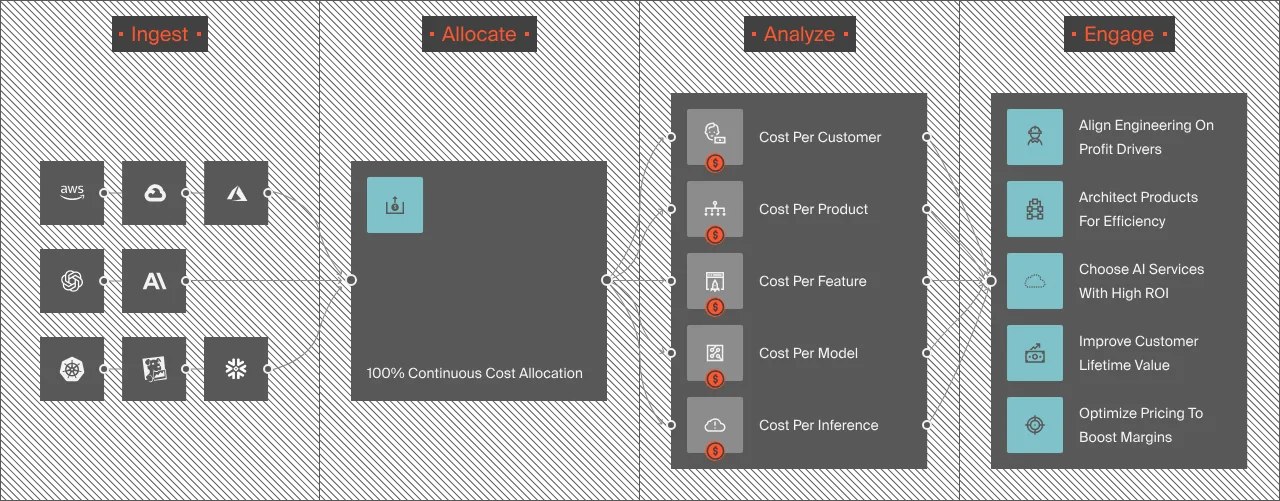
RecentCloudZero research found that average monthly AI spend jumped from $63,000 in 2024 to $85,500 in 2025, a 36 percent increase in a single year, with the share of companies spending over $100,000 per month more than doubling in the same period. Yet consumer-facing subscriptions have stayed flat or even dropped relative to token value. The pattern is unmistakable: subsidize now, normalize the habit, and hike later. One developer noted that an enterprise GitHub Copilot bill was set to rise sevenfold under a new usage-based pricing model. Another pointed out that Claude Max at $200 per month effectively delivers tens of thousands of dollars worth of tokens at current API rates. The Netflix trajectory from six dollars to twenty dollars is the playbook everyone expects.
Against that backdrop, treating the cloud subscription as a fixed, perpetual cost is fantasy. Local hardware starts to look less like a luxury and more like a hedge against the inevitable correction. When providers finally align consumer prices with their infrastructure costs, that hundred-month calculation will invert overnight.
The Token Economics That Actually Matter
Let us get specific. Claude Opus 4.7 pricing and capabilities sit at the premium tier, but even the outgoing Opus 4.6 benchmark is instructive. Alibaba’s Qwen 3.6 27B scores 77.2 percent on SWE-bench Verified, within 3.6 points of Claude Opus 4.6 at 80.8 percent. It fits on a single RTX 4090 and runs at 35, 50 tok/s under vLLM. The RTX 5090 offers more headroom for KV cache and longer contexts, but the capability gap at the coding bench is now single-digit.

The API pricing for Opus 4.6 is $5 per million input tokens and $25 per million output tokens. A typical coding workload with a 2:1 input-to-output ratio lands at a blended cost of roughly $11.67 to $15 per million tokens. A working developer using an agentic tool like Claude Code or Aider can burn 100,000 to 500,000 tokens per active hour. A productive day of four to six hours lands between 1.5 million and 4 million tokens. At API rates, that is $20 to $50 per day, or $400 to $1,000 per month.
Against that burn rate, an RTX 4090 at roughly $1,600 used breaks even in four to six months. An RTX 5090, even at the inflated Australian import pricing, pays for itself in under a year if the developer is actually working the model all day. Past break-even, the marginal cost of inference drops to roughly twenty cents per day in electricity. The subscription, meanwhile, compounds forever.
Hardware Bottlenecks and the VRAM Wall
Of course, local inference has hard physical limits. A 5090’s 32 GB of VRAM can host Qwen 3.6 27B in Q6 quantization with generous context, but it will not touch a 500-billion-parameter frontier model. Running those open-weight behemoths requires tens of thousands of dollars in server hardware, plus cooling and power infrastructure that disqualifies it from sitting under your desk. The rising cost of running LLMs locally means the floor is collapsing beneath the idea of affordable, on-prem frontier inference.
The landscape is further complicated by memory economics. Memory cost comparisons and economics have reached a point where DDR5 RDIMMs now cost more per gigabyte than the GDDR6X memory inside a used RTX 3090. If you want to escape NVIDIA’s pricing gravity, alternative GPU options from AMD like the MI350P are finally entering the PCIe market, but the ecosystem maturity still lags. Meanwhile, Apple Silicon is rewriting the rulebook for unified memory. An M4 Max MacBook Pro scales to 128 GB with 546 GB/s bandwidth, offering four times the addressable memory of a 5090 in a laptop chassis, with no PCIe copy penalties. The Apple M5 Max for local inference continues that trajectory, though it still trades raw inference speed for memory capacity.
If nothing else, remember that hardware depreciates aggressively. NVIDIA has shown a willingness to render entire architectures obsolete overnight with driver policy changes, as seen when NVIDIA rendering previous GPU architectures obsolete broke Linux support for legacy cards without warning. And while some hobbyists delight in running LLMs on minimal hardware, serious productivity still demands serious silicon.
Unlimited Tokens Are Not Free
Advocates for local setups often cite unlimited token generation as the killer feature. You can loop a local model overnight, refining a project continuously, while Claude Pro throttles you mid-session. That is true, but it omits two line items: power and depreciation.
A 5090 under full load pulls roughly 575 to 600 watts. Run it twenty-four hours a day and you are adding a space heater to your electricity bill. More importantly, the hardware loses value every quarter. Next year’s architecture will obsolete today’s flagship, and models are not getting smaller. The idea that a 5090 will still be running frontier-equivalent models in eight years is optimistic at best.
Concurrency is another hidden tax. A single GPU bottlenecks fast when you try to run eight concurrent agentic loops. Cloud APIs scale horizontally, a local card scales vertically until it hits a thermal wall. The gumball-machine analogy holds up beautifully for individual queries, but it falls apart for industrial throughput.
The Hybrid Routing Playbook
The pragmatic answer in 2026 is not local-or-cloud. It is local-for-volume, cloud-for-velocity. Experienced developers have settled on a tiered workflow: use the API for architecture, planning, and complex multi-file refactors where a mistake cascades. Then drop down to a local Qwen 3.6 27B instance for autocomplete, single-file edits, lint fixes, and test scaffolding.
Setting it up is trivial. Serve the model locally with vLLM:
vllm serve Qwen/Qwen3.6-27B \
  --host 0.0.0.0 --port 8000 \
  --max-model-len 65536 \
  --gpu-memory-utilization 0.92
Point your editor at http://localhost:8000/v1. When you hit a reasoning wall that the 27B model cannot crack, swap the base URL to Anthropic or OpenAI and escalate. Most developers who have actually measured their traffic find that only 20 to 30 percent of daily queries genuinely need a frontier model. The remaining 70 to 80 percent is busywork that a local model handles for pennies.
This hybrid approach also preserves capabilities that APIs cannot offer. Open weights let you fine-tune adapters on your proprietary codebase, a non-starter with closed models. While training models on single consumer GPUs demonstrates that customization is increasingly accessible, cloud APIs offer zero flexibility on model weights. For businesses where privacy is non-negotiable, local inference is the only way to guarantee that source code never leaves the machine.
At the other extreme, enterprise costs for local AI experimentation have escalated to $60,000 for H200 rigs, proving that serious local frontier-scale inference is still reserved for whales. The RTX 5090 sits in the middle: not a data-center replacement, but a cap-ex hedge against recurring op-ex that is about to get repriced.
So, Who Should Buy the 5090?
The decision tree is straightforward once you remove ideology.
Buy local hardware if:
– You burn through three million or more tokens per month. The break-even is real and measured in months, not years.
– You handle regulated, proprietary, or sensitive code that cannot touch a third-party API.
– You already need the GPU for gaming, 3D generation, or other compute workloads. The AI capability is then effectively a bonus.
– You want to fine-tune or LoRA-adapt models against your own repositories.
Stick to the API if:
– You are a casual coder using AI for an hour a day. A part-time workload will not amortize the hardware against even current subscription rates.
– You need guaranteed low-latency concurrency for team workflows. A single consumer GPU turns into a queue when multiple developers hit it.
– You value zero maintenance over zero marginal cost. Local inference requires driver updates, quantization tuning, and dependency babysitting.
The Reddit post that started this fire got the arithmetic right but the economics wrong. A sixty-dollar monthly subscription is a loss-leading promotional price, not a natural law. A six-thousand-dollar GPU is a depreciating capital asset, not a perpetual motion machine. The real variable is throughput: how many tokens you actually move in a working week.
For a solo developer doing sustained agentic coding, local inference crossed the viability threshold in early 2026. Open-weight models within four points of frontier APIs, combined with API pricing that is quietly repricing upward, make the hardware purchase rational. But pretending a 27-billion-parameter quantized model replaces a trillion-parameter cloud instance is delusion. The answer is to stop treating this as a tribal war and start treating it as infrastructure routing. Local for volume. Cloud for the edge cases that actually matter. And when the subscription bill inevitably doubles, you will be glad you bought the hardware back when supply chains were merely strained, not broken.