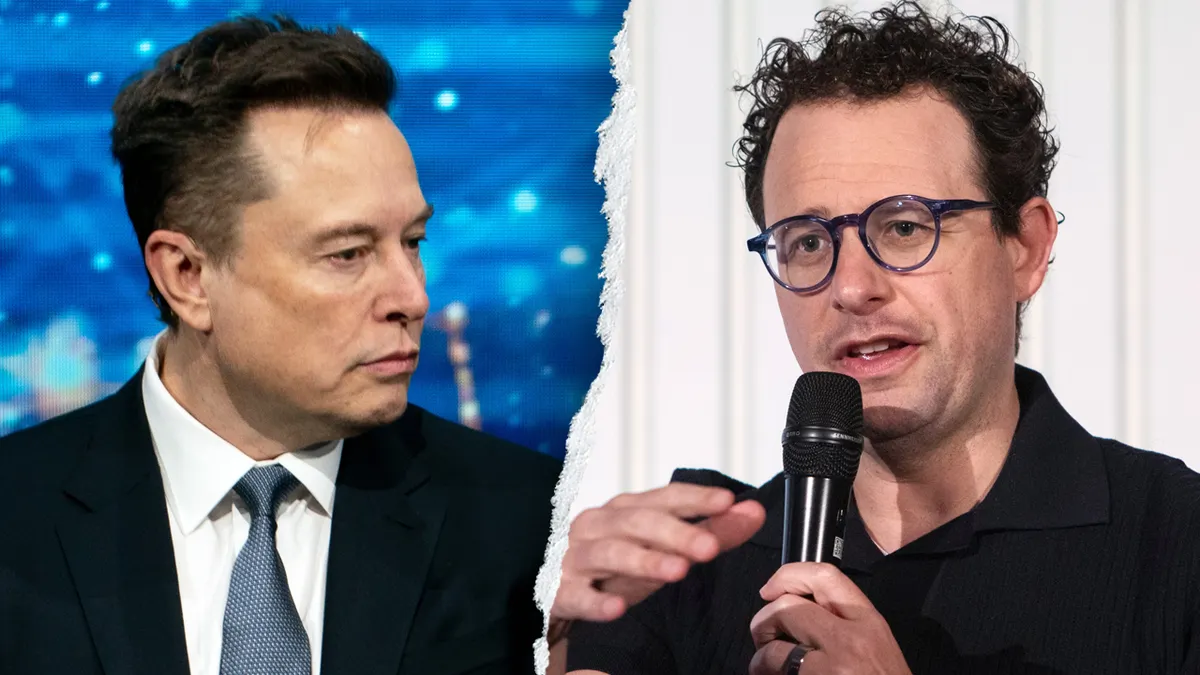
Three months ago, Elon Musk declared Anthropic “evil” and accused the AI lab of hating Western civilization. Fast forward to today, and he’s leasing them his crown jewel, the world’s largest supercomputer, for an estimated $3, 4 billion annually. The quickest heel-turn in tech isn’t about ideological conversion. It’s a cold, calculated financial maneuver timed perfectly with SpaceX’s looming IPO. Beneath the public theater lies a stark reality: the AI battle is no longer just about who builds the best model, but who owns the power grid it runs on, and how that ownership can be weaponized for Wall Street validation.
The Simple Math Behind a Strategic U-Turn
The deal’s surface-level logic is brutally simple. Colossus 1, SpaceX’s Memphis-based data center, houses roughly 220,000 Nvidia GPUs built in 2024 to train Musk’s own Grok AI. Yet Grok generates less than $1 billion in annualized revenue, a figure dwarfed by Anthropic’s >$40 billion trajectory. The facility was a massively underutilized asset.
Enter analyst Antoine Chkaiban’s calculus. By leasing the entire complex to Anthropic, SpaceX stands to capture $3, $4 billion in annual revenue, with over $2.5 billion in cash profit. The margins are extreme, but the logic is ironclad: the capital expense is sunk, operating costs are primarily electricity and staffing, and Musk wasn’t about to let “multiple billions of dollars of GPUs sit idle.” It’s a textbook case of turning a liability into a revenue stream.
The genius lies in the timing. SpaceX filed its confidential S-1 on April 1, targeting a staggering valuation between $1.75 trillion and $2 trillion. A marquee, multi-billion dollar, multi-year contract with one of the world’s three leading frontier AI labs is precisely the kind of “sticky” enterprise revenue that underwriters salivate over. It transforms the narrative from “rocket company with an AI hobby” to “the fourth hyperscaler.”
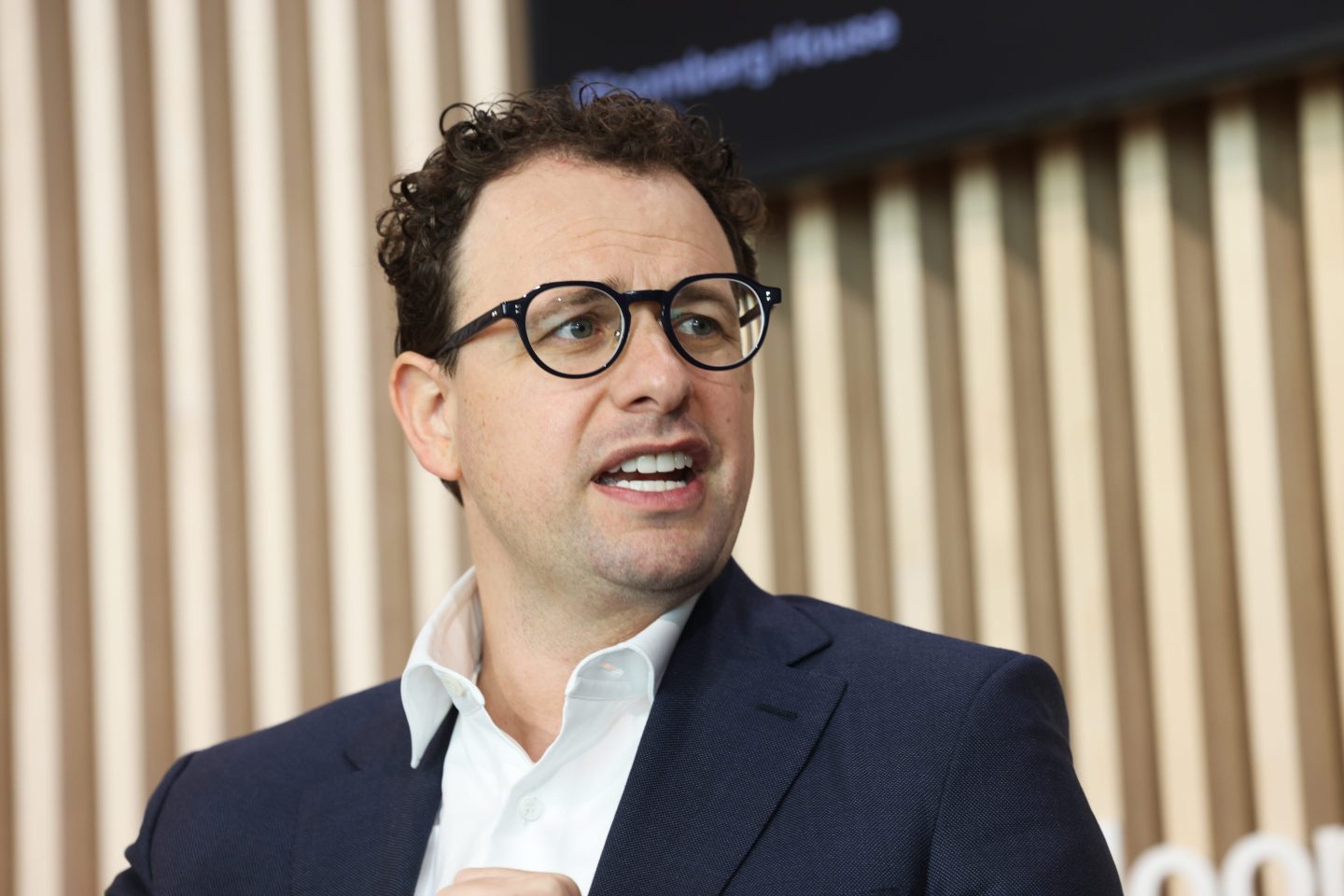
From Competitor to Landlord: Reframing the Valuation Multiplier
This is where the financial engineering gets sophisticated. Traditional aerospace companies like Boeing and Lockheed Martin trade at roughly half the forward earnings multiple of cloud hyperscalers like Amazon, Microsoft, and Alphabet. For SpaceX to command a hyperscaler’s premium, it needs to tell a hyperscaler’s story.
The Anthropic deal provides the perfect script. Instead of paying the typical 30%+ margin to AWS or Google Cloud for compute, Anthropic now pays it to SpaceX. Musk isn’t just entering the AI race, he’s skipping ahead to become the landlord who collects rent from all the participants.
This pivot isn’t exactly subtle. As one analyst told Fortune, “He who controls the data center, really does control the application of artificial intelligence right now.” However, skeptics doubt SpaceX can truly replicate the global, resilient footprint of AWS with one massive Memphis facility. Building hyperscale credibility requires more than a single supercomputer, it demands geographic redundancy, legal frameworks, and enterprise-grade SLAs. But for the purpose of an IPO roadshow, the story of being a hyperscaler is, for now, just as valuable as the reality.
The Kill-Switch Clause and Unprecedented Leverage
The deal’s most audacious term isn’t about money or megabits. It’s about control. In a post on X, Musk stated that SpaceX “reserves the right to reclaim the compute” if Anthropic’s AI “engages in actions that harm humanity.”
Whether this clause is legally enforceable or merely performative is almost beside the point. Its existence grants Musk a powerful leash over a direct competitor. Here is the CEO of SpaceX (and owner of xAI) holding unilateral power to pull the plug on one of his most formidable rivals, all while he’s actively suing another, OpenAI, for allegedly straying from its mission. The irony of Musk positioning himself as the arbiter of “AI for good” while simultaneously controlling the infrastructure of a competitor he recently maligned is a plot twist only Silicon Valley could produce.
This creates a precarious dependency. Frontier AI labs don’t typically single-source their critical infrastructure, and experts speculate Anthropic will be “working aggressively on compute efficiency in the background” and have contingency plans within months. Yet, as Gene Munster of Deepwater Asset Management noted, the real risk is Musk himself, putting the odds of the deal lasting two years at 80%. The other 20% is “a bet on Musk himself. He can change his mind.”
Anthropic’s Desperate Leap: Growth vs. Infrastructure
Why would Anthropic willingly step into this gilded cage? The answer is explosive, unplanned growth. The company has reportedly grown 80-fold in a single quarter, leading to “inevitable strain on our infrastructure.” Despite a $200 billion commitment to Google Cloud and other multi-billion dollar deals, demand for Claude, especially its coding tools, outstripped supply. Their strategic options were narrowing fast as they faced prohibitive compute costs driving business model changes.
The SpaceX deal provides an immediate 300-megawatt injection of capacity. It’s a stopgap, a pressure valve. But it comes with the recognition that their most critical resource, the physical hardware needed to run their models, is now partially controlled by a mercurial figure with competing interests. This Faustian bargain highlights a core vulnerability in the AI gold rush: the miners are at the mercy of the pickaxe sellers. For a deeper look at the kind of risks uncontrolled autonomous AI can pose, the infrastructure choice becomes even more critical.
The Dissolution of xAI and the Birth of SpaceXAI
Simultaneous to this deal, Musk announced the dissolution of xAI into SpaceX, rebranding the combined entity “SpaceXAI.” This isn’t a failure, it’s a consolidation. It cleans up the corporate structure ahead of the IPO, eliminating a complex subsidiary narrative and presenting a unified “AI-powered space and compute” company to investors. The move also follows xAI’s leadership crisis and technical setbacks, which saw significant internal turmoil.
The message is clear: all of Musk’s AI ambitions are now funneled through the SpaceX corporate vehicle. The Anthropic lease isn’t a partnership with xAI, it’s a B2B contract with the newly minted SpaceXAI, making its revenue streams cleanly attributable to the parent company going public.
The Practical Takeaway: Compute as the Ultimate Leverage
For technical leaders and founders, this saga is a masterclass in strategy over sentiment. It proves that in the current epoch, compute is more valuable than code. You can have the best model architecture and the finest-tuning dataset, but if you don’t control the power and the silicon to run it, you are perpetually vulnerable. Your roadmap is dictated not by your product team, but by your cloud provider’s capacity planning, or, as we now see, by your landlord’s whims.
This deal also foreshadows the next phase of competition: not between models, but between vertically integrated empires. Amazon has models (Titan) and cloud (AWS). Google has models (Gemini) and cloud (GCP). Microsoft has models (via OpenAI) and cloud (Azure). Now, SpaceX enters the fray with models (Grok, via SpaceXAI) and cloud (its own compute infrastructure), directly challenging the established trio. If Musk’s ambitions for orbital data centers materialize, this could evolve into a battle literally above Earth’s atmosphere.
The final, unsettling lesson is about power consolidation. When infrastructure providers own competing AI labs, or vice versa, the line between platform and participant dissolves. It creates inherent conflicts of interest and grants a small group of companies extraordinary control over the direction of the technology. As AI becomes more central to the global economy, the ownership of its physical backbone may be the most important geopolitical and financial story of the coming decade.
For now, SpaceX’s roadshow deck just got a $4 billion footnote. The “evil” company is now its star tenant, and the rocket company is poised to be valued like a cloud giant. In the high-stakes theater of tech IPOs, that’s not a plot twist, it’s a perfectly executed pivot.