The Technical Execution: A Perfect Storm of Bad Timing
Here’s what actually happened. On December 20th, 2025, Arch Linux maintainers announced the switch to NVIDIA’s 590 driver series, which defaults to open kernel modules for Turing (RTX 20xx) and newer architectures. The problem? These new modules rely on the GPU’s Graphics System Processor (GSP), a microcontroller that Pascal and older cards simply don’t have. Rather than maintain parallel code paths, NVIDIA chose the nuclear option: complete excision of pre-Turing support from their production driver branch.
For Arch users, this manifested as a particularly brutal update experience. Running sudo pacman -Syu would cheerfully replace nvidia-dkms with nvidia-open-dkms, only for the new driver to fail loading on Pascal hardware. The system would then dump users to a command-line interface with no graphical fallback, leaving many scrambling to mount their system from a live USB to fix the damage.
The AI Infrastructure Angle: Where This Really Hurts
While gamers with GTX 1060s are rightfully annoyed, the real casualties are AI developers and researchers who invested in Pascal-based Tesla cards. The Tesla P40, specifically called out in Reddit discussions, packs 24GB of VRAM, still a respectable amount for local LLM inference and training. These cards were selling for $150 just two years ago, and until this driver drop, represented one of the best price-per-VRAM ratios for budget-conscious AI work.
One developer noted they sold their P40s at peak value when 3090s were affordable, but many weren’t so lucky. The Hackaday comments reveal users who built entire home labs around these cards, counting on NVIDIA’s historical 5-7 year support window. Instead, they got roughly 8 years before being forced onto community-maintained legacy drivers.
The Open-Source Alternative: Nouveau’s Inadequacy
The community’s usual fallback, Nouveau, the reverse-engineered open-source driver, isn’t a viable solution here. Firmware restrictions imposed by NVIDIA prevent Pascal cards from reaching their default clock speeds under Nouveau, crippling performance. As Tom’s Hardware pointed out, this isn’t a problem AMD users face, legacy AMD GPUs recently received a 30% performance boost from kernel updates.
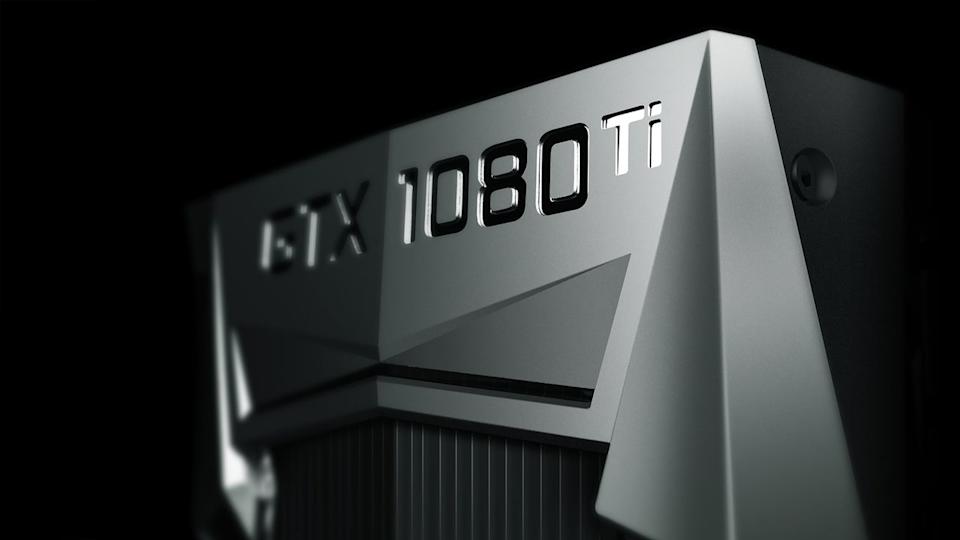
The contrast is stark. AMD’s open-source strategy means a Radeon HD 7970 from 2011 still gets improvements, while a GTX 1080 Ti from 2017 is already on life support.
The Controversy: Planned Obsolescence vs. Resource Allocation
NVIDIA’s official line follows standard corporate EOL policy: focus resources on newer architectures. But critics argue this is accelerated obsolescence. The 580.xx driver branch that supports Pascal is functionally complete and stable. Maintaining it would primarily mean recompiling against new kernel versions, something the AUR maintainer ventureo is doing for free.
The company’s $5 trillion valuation suggests they could afford a small team dedicated to legacy support. Instead, they’ve offloaded that responsibility onto unpaid community volunteers, creating a precarious situation where security patches depend on someone’s free time.
The Arch Linux Dilemma: Bleeding-Edge Philosophy Meets User Pain
Arch maintainers aren’t blameless here. Their rolling-release model means users get updates immediately, often before downstream distributions have time to smooth rough edges. While they did publish warnings, the timing, just days before the 590 driver hit repos, left little room for preparation.
Some community members defend the approach, pointing out that Arch users are expected to read update announcements. Others, like the commenter on DEV Community, note that the migration process is straightforward for experienced users.
A Path Forward: Community Resilience and Hard Questions
The immediate fix works, but it raises long-term concerns. The 580.xx driver will receive quarterly security updates until October 2028, after which even those dry up. Post-2028, Pascal users will be running potentially vulnerable kernel modules with no official recourse.
This saga exposes fundamental tensions in modern computing:
– Hardware longevity vs. corporate profit cycles: How long should a GPU remain supported?
– Rolling-release convenience vs. stability: Should distributions buffer users from disruptive changes?
– Open-source ideals vs. proprietary control: Can the community truly maintain hardware without vendor cooperation?
NVIDIA’s Pascal purge is a masterclass in how not to handle hardware deprecation. The hardware works. The driver infrastructure exists. Yet users are forced onto community-maintained solutions because supporting viable products doesn’t align with quarterly earnings targets.
For now, the AUR provides a lifeline. But every yay -Syu will remind Pascal users that their hardware’s future depends on a volunteer’s spare time, not a $5 trillion company’s resources. That’s not just a technical failure, it’s a statement about whose interests actually matter in the AI hardware ecosystem.
Discussion points for the community:
- Should Linux distributions provide longer transition periods for breaking hardware changes?
- Is it time for regulatory requirements on driver support timelines?
- How do we balance innovation with hardware sustainability in AI infrastructure?
- Would a truly open NVIDIA driver ecosystem prevent these disruptions?