Nvidia’s $20B Groq Grab: The Chip War’s Endgame Begins
Nvidia is reportedly writing a $20 billion check to acquire Groq’s assets, a move that would instantly become the largest AI hardware acquisition in history and potentially redraw the battle lines in the silicon arms race. The deal, first reported by CNBC, values the nine-year-old chip designer at nearly triple its $6.9 billion September valuation, just three months after Groq raised $750 million from investors including Blackrock, Samsung, Cisco, and even a fund where Donald Trump Jr. is a partner.
The numbers alone are staggering. At $20 billion, this dwarfs Nvidia’s previous record purchase of Mellanox for $7 billion in 2019. With $60.6 billion in cash and short-term investments on its balance sheet as of October, Nvidia can afford the splurge. But the real story isn’t the price tag, it’s the surgical precision of a deal structured to swallow Groq’s talent and technology while leaving its corporate husk behind.
The “Non-Exclusive” Fiction
Groq’s official blog post frames the transaction as a “non-exclusive licensing agreement” for its inference technology. Founder and CEO Jonathan Ross, who helped create Google’s TPU, will join Nvidia along with President Sunny Madra and other senior leaders. Groq’s CFO Simon Edwards becomes CEO of the remaining shell company, and GroqCloud continues operating uninterrupted.
This is acquihire theater. Nvidia gets all of Groq’s assets, patents, IP, and presumably the engineering team that built its low-latency processors, while avoiding the antitrust scrutiny of a formal acquisition. In an email to employees, Jensen Huang explicitly stated: “While we are adding talented employees to our ranks and licensing Groq’s IP, we are not acquiring Groq as a company.” The legal distinction matters, but functionally, Groq as a competitive entity ceases to exist.
Why Groq Mattered
Groq wasn’t another me-too GPU vendor. The company pioneered a radically different architecture for AI inference, the phase where trained models generate responses to user queries. While Nvidia dominates training with its CUDA ecosystem and H100/H200 GPUs, inference represents the next frontier. It’s where AI models actually meet users, and where latency, cost-per-token, and energy efficiency become critical.
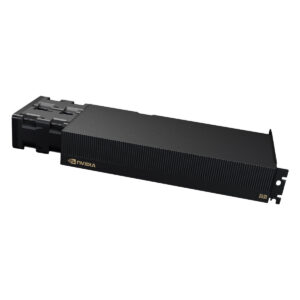
Groq’s secret sauce was its use of on-chip SRAM instead of external high-bandwidth memory (HBM). This eliminated the memory bottleneck plaguing traditional architectures, enabling blazing-fast inference for smaller models. The trade-off: limited model capacity compared to GPU-based systems. But for many production workloads, chatbots, real-time analytics, edge AI, Groq’s approach delivered compelling performance.
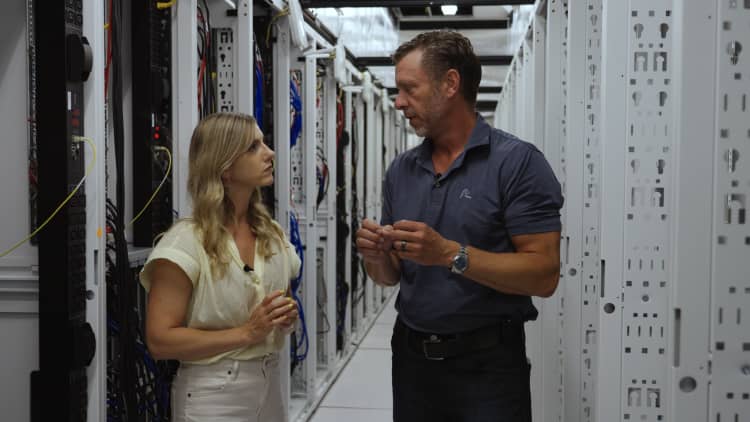
The power demands of generative AI make chip efficiency a strategic imperative, not just a technical one.
The Consolidation Playbook
This isn’t Nvidia’s first rodeo with this strategy. In September, the company spent over $900 million to hire Enfabrica’s CEO and license its technology. Meta, Microsoft, and Amazon have executed similar deals, paying hundreds of millions or billions to absorb startup talent without technically “acquiring” companies. The pattern is clear: when regulators circle, Big Tech innovates on deal structure.
The strategy exploits a loophole. Traditional antitrust review focuses on market concentration and consumer harm. By structuring deals as licensing agreements with talent acquisition, companies argue they’re not reducing competition, Groq’s technology remains theoretically available to license (to whom, exactly, remains unclear). Meanwhile, the engineers who could have built competing products now work for the acquirer.
Market sentiment reflects this cynicism. Discussions on investment forums quickly turned to which startup is next, with Cerebras Systems, the only other major SRAM-based AI chip designer, emerging as the obvious candidate. Cerebras withdrew its IPO filing in October after raising over $1 billion, fueling speculation it’s shopping itself to the highest bidder.
The Real Winners
Let’s follow the money. Groq’s September investors, who poured in $750 million at a $6.9 billion valuation, are looking at a 2.9x return in just three months. Blackrock, Samsung, Cisco, Altimeter, and 1789 Capital all cash out handsomely. The speed of the deal, coming together quickly, according to investor Alex Davis, suggests Groq wasn’t shopping itself but couldn’t refuse an offer that represented a 190% premium to its last valuation.
For Nvidia, the math is different. At $20 billion, it’s paying roughly 40x Groq’s targeted $500 million revenue for 2025. That’s not a valuation, it’s a strategic tax on competition. Nvidia isn’t buying Groq’s revenue, it’s buying the team that could have built a credible alternative to its inference business and the IP that might have enabled competitors.
What This Means for AI Infrastructure
The acquisition signals where Nvidia sees the market heading. Huang’s keynote speeches throughout 2025 emphasized inference as the next battleground. Training massive models gets headlines, but serving millions of users efficiently is where the real money flows. Every ChatGPT query, every Midjourney generation, every AI assistant response runs through inference infrastructure.
- Neutralize a threat: Groq’s architecture challenged Nvidia’s inference roadmap
- Acquire talent: The TPU team’s expertise is now Nvidia’s to leverage
- Tech integration: Groq’s low-latency processors can be integrated into Nvidia’s “AI factory” architecture
- Market signaling: Competitors and investors now know Nvidia will pay any price to maintain dominance
The company has been aggressively deploying its cash hoard across the AI stack, investing in OpenAI ($100 billion committed), Intel ($5 billion partnership), CoreWeave, Crusoe, and Cohere. The Groq deal represents the most direct attack on competitive silicon yet.
The Antitrust Tightrope
Regulators are already scrutinizing Big Tech’s talent acquisition strategies. The FTC and DOJ have questioned whether these “non-exclusive” licensing deals are fundamentally acquisitions in disguise. The Groq transaction will test that boundary.
Bernstein analyst Stacy Rasgon noted the primary risk is antitrust, but “structuring the deal as a non-exclusive license may keep the fiction of competition alive (even as Groq’s leadership and, we would presume, technical talent move over to Nvidia).” The comment captures the absurdity: Groq’s technology remains theoretically available, but the people who understand it deeply enough to compete now work for Nvidia.
Huang’s relationship with the incoming Trump administration, among the strongest in tech, may provide political cover. But the fundamental question remains: when one company controls both the training and inference layers of AI infrastructure, can meaningful competition survive?
For AI Developers and Enterprises
If you’re building AI products, this deal has immediate implications. GroqCloud’s continued operation means existing customers won’t see service disruption, but roadmap uncertainty is now guaranteed. The engineers who were building next-generation inference chips are now Nvidia employees, presumably working on integrating Groq’s ideas into Nvidia’s product line.
The SRAM-based approach that made Groq interesting may live on, but as a feature of Nvidia’s platform rather than an alternative to it. That’s good for Nvidia’s ecosystem lock-in, but bad for customers who wanted genuine competition to drive down inference costs.
For enterprises architecting AI infrastructure, the message is clear: Nvidia is consolidating control across the entire stack. The company that already owns training is now systematically eliminating inference alternatives. Your negotiating leverage just shrunk.
The Endgame
The AI chip race isn’t over, but it’s entering its final laps. With Groq absorbed, Cerebras potentially next, and AMD, Intel, and custom silicon from cloud providers as the remaining challengers, the market is bifurcating into Nvidia and everyone else.
The $20 billion price tag reflects Nvidia’s assessment of the stakes. In a world where AI models are becoming commoditized, controlling the silicon they run on is the ultimate moat. Huang is betting that whoever owns the inference layer will own the AI economy.
For now, Groq’s technology will be “integrated into the NVIDIA AI factory architecture”, extending Nvidia’s platform to “serve an even broader range of AI inference and real-time workloads.” The language is corporate, but the subtext is clear: another independent voice in AI hardware has been silenced, and the cost of building outside Nvidia’s ecosystem just went up.
The chip war’s endgame isn’t a battle, it’s a buyout.