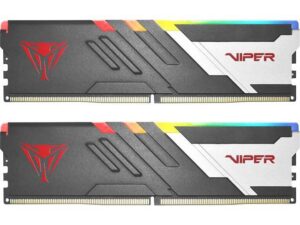
We’ve entered the upside-down. The kind of market distortion where enterprise hardware becomes so expensive that consumer GPUs start looking like budget alternatives. DDR5 RDIMM prices have officially crossed the threshold where, per gigabyte, they’re more expensive than the memory in an RTX 3090. Let that sink in: the same GPU that scalpers were hawking for $2,000 during the crypto boom now delivers memory at a discount compared to server-grade RAM.
This isn’t a drill. It’s a fundamental rewiring of infrastructure economics that’s hitting AI labs, data centers, and anyone trying to run large models locally.
The Numbers Don’t Lie (But They Do Induce Nausea)
Let’s cut through the noise with actual data from the trenches. One developer on r/LocalLLaMA reported buying a 4-stick DDR5 RDIMM kit last June for £1,900. That same kit now costs £11,296 from the identical retailer. If we assume these are 96GB modules, a common configuration for high-capacity RDIMMs, that’s a jump from roughly £4.95 per gigabyte to £29.40 per gigabyte. In USD? That’s about $6/GB to $36/GB.
Now compare that to an RTX 3090. With 24GB of GDDR6X and current used market prices hovering around $800-900, you’re looking at $33-37 per gigabyte. The math is brutal: server RAM has achieved price parity with the once-untouchable halo product of the GPU world.
But it gets worse. Another user who purchased 16x64GB DDR5-5600 modules for €3,600 last summer could now flip them for €30,000+. That’s an 833% appreciation rate, making RAM a better investment than most crypto tokens. The Samsung M321R8GA0PB2-CCP modules that cost $4,000 for 768GB in mid-2025? They’d run you $24,000 today.
Hyperscalers Ate the Memory Market
This isn’t happening in a vacuum. The same AI gold rush that’s made GPUs unobtanium has now consumed the DRAM supply chain. Hyperscalers like Google, Amazon, Meta, Microsoft, and Oracle are monopolizing entire years of production from OEMs, creating a vacuum that’s sucking consumer options off the market entirely. Micron/Crucial didn’t just raise prices, they canceled their entire consumer product category to focus exclusively on enterprise output.
The smoking gun? OpenAI’s Stargate project alone is consuming up to 40% of global DRAM output, with deals inked to Samsung and SK Hynix for up to 900,000 wafers per month. When one player eats nearly half the supply chain, prices don’t just rise, they detonate. This is the same DRAM supply chain pressure that’s forcing hardware costs up 156% and making Valve struggle to manufacture Steam Deck OLEDs.
The sentiment among developers is raw frustration. One infrastructure engineer who dropped $4,000 on RAM last year put it bluntly: the decisions of AI executives are creating scarcity that impacts everyone else. The counterargument, that 768GB is nothing compared to the petabytes being hoarded by the hyperscalers, only proves the point: this is a market failure driven by concentrated demand.
The “VRAM-as-RAM” Workaround Is No Longer a Meme
Here’s where it gets technically interesting. When RAM costs more than GPU memory, the Linux kernel feature for swap on video RAM stops being a curiosity and starts looking like a cost-optimization strategy. Developers are actively exploring using VRAM as ultra-fast swap space, dubbed “vswap”, for memory-intensive AI workloads.
The concept is simple: map unused GPU memory into the system’s virtual memory space, creating a tiered storage hierarchy where VRAM acts as a high-speed buffer between DRAM and SSD. For inference workloads that need massive context windows but not necessarily massive GPU compute, this becomes economically rational. Why pay $36/GB for DDR5 when you can get the same capacity plus a free tensor processor at $33/GB?
There are caveats, of course. The bandwidth between GPU and CPU isn’t free, and managing coherence across PCIe introduces latency. But for batch processing, offline inference, and certain training paradigms, the trade-offs are increasingly tolerable. One developer noted that VRAM is “more than 10x better for what we want” in the context of local LLM serving.
This isn’t theoretical. The economic trade-offs between cloud and local AI inference hardware are already forcing a reevaluation of what constitutes viable infrastructure. When cloud APIs are in freefall but local hardware costs are skyrocketing, creative solutions become necessities.
Gaming Logic Meets Enterprise Reality
The XDA analysis of DDR5 pricing for gamers reveals a parallel truth: the upgrade that brings the most gains is almost never more RAM. One writer calculated that upgrading from DDR4 to DDR5 would cost $900 for memory alone, or $1,600 for a full platform upgrade, while delivering marginal gaming improvements. Instead, they spent $730 on an RX 9070XT and saw immediate 60+ FPS gains in demanding titles.
This logic scales to AI infrastructure. If your workload is memory-bound but not necessarily latency-sensitive, stacking GPUs instead of RDIMMs becomes a defensible strategy. You get the memory capacity plus massive parallel compute for free. The shift from NVLink to high-speed networking in AI infrastructure actually supports this approach, modern clusters are designed for distributed memory anyway.
The Open-Source Pressure Valve
There’s a countervailing force that might save us from this madness: efficient models. The cost-efficient AI models challenging hardware-centric scaling are showing that you don’t need trillion-parameter monsters for quality results. MiniMax M2.5 scores 80.2% on SWE-Bench Verified, within spitting distance of Claude Opus, while costing $1/hour to run.
Similarly, open-source models reducing reliance on expensive hardware like Alibaba’s Qwen3.5-397B-A17B are proving that clever architecture beats brute force. When you can serve a 200B parameter model from a workstation the size of a Mac Mini, the pressure to hoard RAM dissipates.
This is the silver lining. The same market forces driving RAM prices to absurdity are also accelerating the development of models that need less RAM. It’s an arms race between efficiency and scarcity, and for once, efficiency might be winning.
What This Means for Your Next Build
If you’re planning AI infrastructure in 2026, the old playbook is dead. Here’s what the new math looks like:
- For Local LLM Enthusiasts: That 3090 you were about to sell? Keep it. Its 24GB of VRAM is now competitively priced against system RAM, and you get 10,496 CUDA cores thrown in. For context windows up to 128K tokens, you might be better off with three 3090s (72GB total VRAM) than a single server with 64GB of DDR5.
- For Enterprise Architects: The broader AI cost economics and pricing sustainability suggest this is temporary, but “temporary” could mean 18-24 months. Short-term, consider GPU-based memory expansion. Long-term, pressure vendors for supply chain transparency or explore CXL memory pooling to share resources across nodes.
- For Data Engineers: If your pipeline is memory-intensive but not GPU-bound, look into RAM disk implementations on spare GPUs before paying enterprise RAM prices. The performance is surprisingly viable for batch jobs.
- For Budget-Conscious Developers: That DDR4 kit in your closet? It’s appreciating faster than your 401K. One developer found 10 sticks of 32GB DDR4-2400 in storage and realized they were sitting on a goldmine worth $100+ per stick on eBay. The “RAMacopalyse” has turned old modules into assets.
The Inevitable Reckoning
This situation is unsustainable. Memory manufacturers are leaving consumer money on the table, hyperscalers are creating artificial scarcity, and the market is screaming for alternatives. The open-source AI ecosystems reducing dependency on proprietary infrastructure will continue to chip away at demand, while CXL 2.0 and memory pooling will eventually break the RDIMM monopoly.
But until then, we’re living in a world where the RTX 3090, a card that once symbolized excess, is now a budget option. Where developers treat RAM sticks like bearer bonds. Where “just add more memory” is a six-figure decision.
The economics of AI infrastructure have been flipped on their head. Your next cluster might look less like a traditional server and more like a mining rig, and for once, that’s not a bad thing.