OpenAI is burning through cash so fast it makes crypto startups look frugal. According to a New York Times analysis, the company that defined the generative AI era could hit zero cash by mid-2027. That’s not a typo, zero. While Sam Altman pitches investors on a $100 billion Stargate to AGI, the math behind his strategy is starting to look like a high-stakes game of musical chairs where the music stops in about 18 months.
The financial model is brutally simple: annual operating expenses exploding from $8 billion in 2025 to $40 billion by 2028, while revenue crawls to $5 billion by 2027. Even if OpenAI hits Altman’s rosiest projection of $100 billion revenue by 2027 (which analysts call “overly optimistic” with the kind of understatement usually reserved for describing nuclear accidents as “thermal events”), the company still faces a $207 billion funding gap by 2030.
The Cost Death Spiral Nobody Wants to Talk About
Let’s talk about where the money actually goes. Computing costs alone chew through $1.4 billion annually, and that’s before OpenAI trains its next flagship model. The company has committed to $1.4 trillion in data center infrastructure over the next decade, a number so large it ceases to mean anything to human brains.
But here’s where it gets spicy: OpenAI signed “net 360” payment terms with suppliers like CoreWeave, meaning they don’t have to pay for a full year. It’s the corporate equivalent of “I’ll gladly pay you Tuesday for a hamburger today.” Except Tuesday is coming, and OpenAI has over $80 billion in deferred commitments hitting in 2026 alone, including a $250 billion compute deal with Microsoft.
The talent costs are equally staggering. When you’re competing with Google, Meta, and a thousand well-funded startups for the same pool of AI researchers, salaries become weapons. And OpenAI has been losing some of its best people, engineers who helped build the very models that justify the company’s stratospheric valuation.
The Revenue Mirage and the Ads of Desperation
OpenAI’s revenue story isn’t matching its cost story. ChatGPT traffic is down significantly as competitors siphon off users. When Apple, OpenAI’s most prominent integration partner, started quietly shifting toward Google’s Gemini for iPhone AI features, it wasn’t just a technical decision. It was a bet on who’s still going to be solvent in 2027.
The ads integration into ChatGPT? That’s not a monetization strategy, it’s a distress signal. As one analyst bluntly put it: “No need to use an analyst for this. OpenAI adding ads is enough telling.” Altman himself called ads a “last resort” in 2024. When your Plan A is AGI and your Plan B is banner ads, you’ve got a strategic planning problem.
The numbers reveal why. While OpenAI claims $13 billion in annual revenue from subscriptions and API access, expenses are escalating faster. The company is essentially subsidizing 95% of its users while hoping that 5% paying customers somehow morph into 10% and that chatbots magically capture 2% of the digital advertising market from zero.
The Chinese Efficiency Bomb
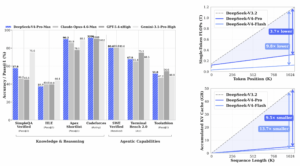
Here’s where the narrative gets genuinely uncomfortable for OpenAI’s investors. Chinese models like DeepSeek are delivering GPT-5 level performance at 95% less cost. Let that sink in. Not 5% less, not 20% less, 95% less.
This isn’t just about price competition. It’s about the fundamental assumption that bigger models and bigger compute budgets equal sustainable competitive advantage. Qwen’s rise as a cost-effective, open-source challenger to OpenAI has captured 20% of OpenRouter traffic not through marketing, but through brutal efficiency. While OpenAI burns billions, Qwen proves you can build competitive models with a fraction of the capital.
The implications ripple across the industry. Solar-Open-100B challenging U.S. AI dominance with government-backed efficiency shows South Korea entering the race with a 102-billion-parameter model trained on government GPUs. Mistral 3’s open-weight models offering cost-efficient alternatives to proprietary AI demonstrates that a French upstart can release a full spectrum of models that make OpenAI’s pricing look extortionate.
The Open Source Tidal Wave
The most damning threat to OpenAI’s business model isn’t another well-funded startup, it’s the open-source community. INTELLECT-3 proving open-source models can outperform expensive corporate AIs just proved that 100B+ MoE models can beat corporate giants at their own game. While OpenAI guards its weights like state secrets, INTELLECT-3 is giving away the blueprint.
Nemotron-3-nano 30B delivering high performance at lower parameter cost shows NVIDIA, a company that profits from more compute, not less, releasing a model that outperforms Meta’s Llama 3.3 70B with roughly half the parameters. The message is clear: efficiency matters more than scale.
Even architectural innovations are undermining the “bigger is better” mantra. LLaDA2.0’s diffusion language models breaking autoregressive inefficiencies challenges the fundamental assumption that token-by-token generation is the only path forward. Meanwhile, Tencent’s diffusion-based WeDLM-8B achieving faster, cheaper inference proves these aren’t academic curiosities, they’re practical alternatives that slash inference costs.
The Infrastructure Cost Reckoning
OpenAI’s strategy depends on massive centralized infrastructure. But that infrastructure is becoming a liability. Browser-based AI reducing reliance on costly cloud inference is crossing from demo to deployment. Running 3-billion parameter models entirely in browsers, with no servers, no API keys, and no data leaving devices, isn’t just a privacy win, it’s a fundamental threat to the API-based business model.
The hardware story gets worse for OpenAI’s cost structure. AMD R9700 reducing hardware costs for local AI inference shows database administrators building 128GB VRAM systems with four AMD cards that cost less than a single NVIDIA H100. When the tools of AI development become commoditized, the moat around proprietary model APIs dries up.
The Strategic Vacuum
OpenAI’s defenders argue the company is playing 4D chess, that the cash burn is “war spending” on hyper-scaling demanded by private investors. They point to the fact that every funding round has been larger than the last, and that an IPO could raise $100 billion.
But this misses the point. The question isn’t whether OpenAI can raise more money. It’s whether the underlying unit economics will ever make sense. As one analyst noted: “If the private investors wanted out we’d have seen an IPO by now.” The fact that OpenAI is still private with these numbers should terrify anyone looking at the cap table.
The company’s entire strategy rests on a single proposition: AGI will arrive and justify everything. There’s no Plan B. As Altman himself has framed it, achieving AGI is “only a matter of giving them enough money.” This is less a business strategy and more a religious conviction backed by venture capital.
The 2027 Inflection Point
So what happens when the cash runs out? Several scenarios emerge:
The Microsoft Acquisition: OpenAI gets fully absorbed into Microsoft. This is the most likely outcome, but it values OpenAI not as an independent AI leader but as a talent and technology acquisition. The $100 billion valuation evaporates.
The Fire Sale: If Microsoft passes, other tech giants might swoop in for a bargain. But with $80 billion in deferred commitments and a business model that loses money on every user, the “strategic value” becomes questionable.
The Government Bailout: Despite both OpenAI and the White House denying they want a bailout, the “too big to fail” argument will emerge. But bailing out a company that set money on fire to build chatbots would be political suicide.
The Controlled Demise: OpenAI winds down operations, open-sources some models, and the talent disperses. The brand becomes a cautionary tale about the importance of sustainable unit economics.
What This Means for AI’s Future
OpenAI’s potential collapse isn’t just a business story, it would reset the entire AI industry’s assumptions. The narrative that infinite capital leads to AGI would be replaced by a focus on capital efficiency, sustainable business models, and open-source collaboration.
The shift is already happening. Startups are prioritizing lean compute stacks. Investors are demanding clear paths to profitability, not just user growth. And developers are increasingly choosing models based on cost-performance ratio, not brand name.
Browser-based AI reducing reliance on costly cloud inference and T5Gemma 2 reviving efficient encoder-decoder architectures represent the future: efficient, decentralized, and architecturally diverse. The AI landscape is fragmenting into specialized, cost-effective solutions rather than consolidating around a single proprietary model.
The Bottom Line
OpenAI’s $100 billion AGI gamble is running into the cold, hard math of unsustainable unit economics. By mid-2027, the company faces a cash crunch that makes WeWork’s IPO look sensible. Chinese efficiency, open-source innovation, and architectural revolutions are eroding the moat that justified its valuation.
The AI revolution isn’t ending, it’s maturing. And maturity means focusing on costs, sustainability, and real business value rather than moonshot promises. Whether OpenAI adapts or becomes a cautionary tale, the industry’s next chapter will be written in spreadsheets, not research papers.
The question isn’t whether AI will transform the world. It’s whether the companies building it can survive their own burn rates long enough to see it happen. For OpenAI, the clock is ticking. And Tuesday is almost here.