OpenAI just dropped a bombshell that sounds ripped from a hardware enthusiast’s fever dream: a multi-year, $10 billion contract with Cerebras Systems for 750 megawatts of wafer-scale compute capacity. The headline figure is staggering, enough power for roughly 750,000 homes, dedicated to running dinner-plate-sized chips that promise to make ChatGPT 15 times faster.
But here’s what caught my attention: buried in the technical specifications and corporate bravado are some numbers that don’t square, a history of near-acquisition that changes the narrative, and a fundamental question about whether we’re measuring compute progress in the right units.
The Wafer-Scale Architecture: Clever Hack or Engineering Dead End?
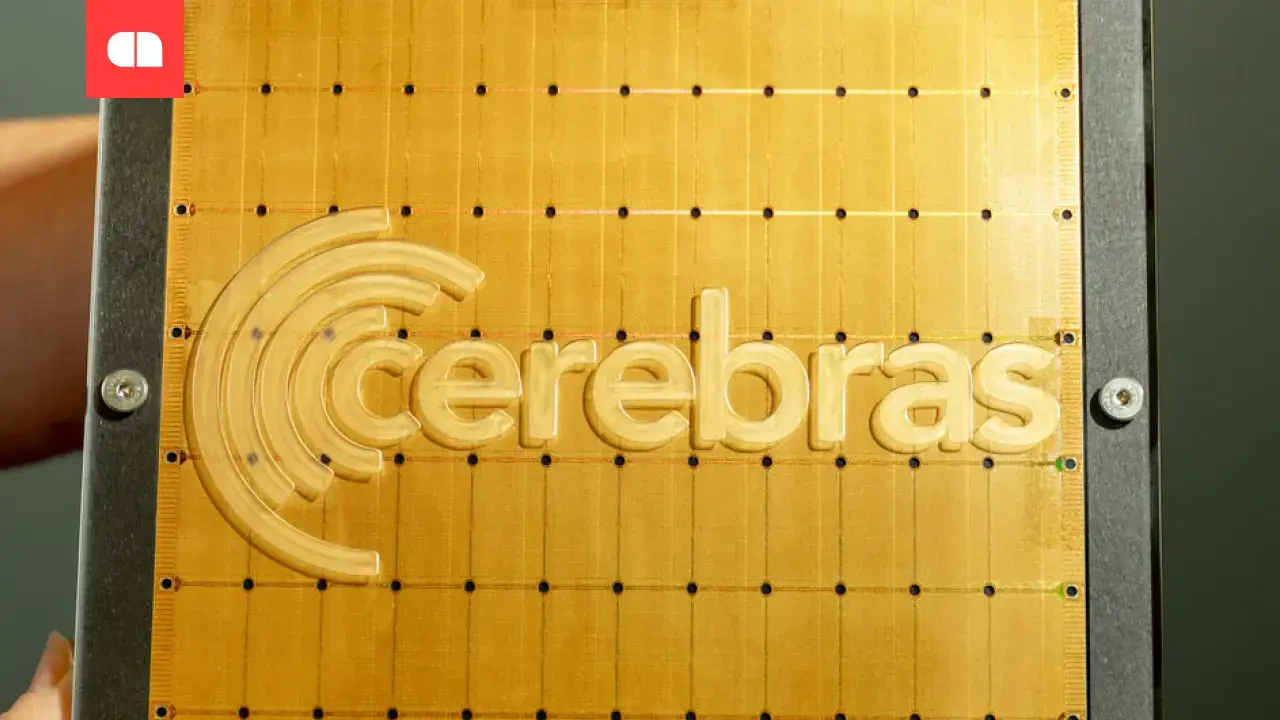
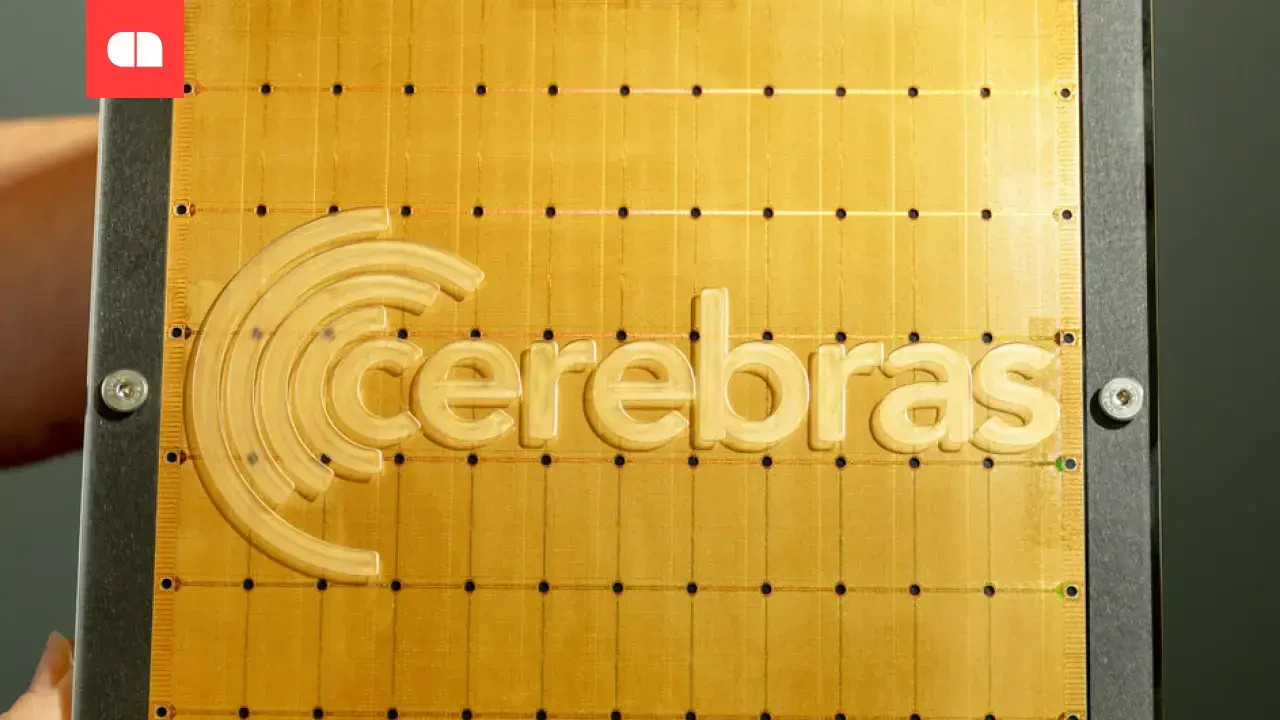
Cerebras isn’t selling you a chip. They’re selling you an entire silicon wafer, roughly 46,225 mm² of etched silicon that barely fits in a server rack. The WSE-3 packs 44GB of on-chip SRAM and delivers a claimed 21 petabytes per second of memory bandwidth. For context, that’s nearly 1,000x what Nvidia’s upcoming Rubin GPU offers.
The architectural argument is seductive: instead of shuffling data between dozens of GPUs across PCIe switches and NVLink cables, keep everything on one massive piece of silicon. No interconnect latency, no synchronization headaches, no fabric congestion. For inference workloads where you’re trying to minimize time-to-first-token, this matters.
But there’s a catch. SRAM is power-hungry and physically large. Despite the wafer’s massive footprint, 44GB isn’t much in the era of trillion-parameter models. A single CS-3 system draws 23 kilowatts, enough to power six US homes, and costs an estimated $2-3 million. The math gets awkward fast.
The 750-Megawatt Math Problem
Let’s do what the press releases won’t: actual arithmetic. If we take Cerebras’ 23kW per CS-3 system as gospel, 750 megawatts could theoretically support about 32,608 systems. At $2 million per unit, that’s $65 billion in hardware alone, six times the reported $10 billion deal value.
Even accounting for data center overhead (cooling, power delivery, networking), the numbers suggest either:
- The $10 billion is a down payment on a much larger total commitment
- Cerebras is offering massive discounts (potentially unsustainable ones)
- The 750 MW figure represents peak capacity spread across multiple generations, including future CS-4 systems
- Someone is using "megawatts" as a vague proxy for compute capacity rather than actual power draw
That last point sparked heated debate in technical circles. Using raw energy consumption as a unit of compute investment is like measuring a car’s performance by its fuel tank size. A data center running 1.4nm chips and another running incandescent light bulbs could both draw 1 gigawatt, but their computational output would be galaxies apart.

The Realpolitik of OpenAI’s Compute Strategy
OpenAI’s Sachin Katti framed the deal as "building a resilient portfolio that matches the right systems to the right workloads." Translation: they’re hedging. Hard.
This isn’t OpenAI’s first rodeo with Cerebras. Emails from the Musk-Altman litigation revealed OpenAI evaluated Cerebras as early as 2017, and Elon Musk himself tried to acquire the startup in 2018. That history matters, it suggests this partnership is less a sudden infatuation and more a long-complicated relationship finally consummated.
The timing is suspiciously convenient. Cerebras is negotiating a $1 billion funding round at a $22 billion valuation ahead of its IPO. A $10 billion customer contract is the ultimate credibility prop for a roadshow. It transforms Cerebras from a niche player (with 87% of revenue from UAE-based G42) into a diversified enterprise supplier.
For OpenAI, the benefits are strategic leverage and performance differentiation. With Nvidia’s Blackwell GPUs still supply-constrained and priced at a premium, having a credible alternative matters, even if it’s just for specific inference workloads. The "15x faster" claim, while specific to the GPT-OSS-120B model on CS-3 systems, gives OpenAI marketing ammunition against competitors running on commodity GPU clouds.
The Inference Flip and the Cost-Per-Token War
Industry analysts point to early 2026 as the "Inference Flip", the moment global spending on running AI models surpasses training them. This fundamentally changes the competitive calculus. Training favors massive parallel clusters with high throughput. Inference, especially for interactive agents and real-time applications, prizes low latency above all else.
Cerebras’ architecture shines here. Running Llama 3.1 405B on CS-3 systems reportedly achieves 3,098 tokens/second compared to 885 tok/s on Nvidia GPU clouds. But the economics are murky. At Cerebras’ cloud pricing of $0.25 per million input tokens and $0.69 per million output tokens, versus Groq’s $0.15/$0.75, the cost advantage isn’t clear-cut.
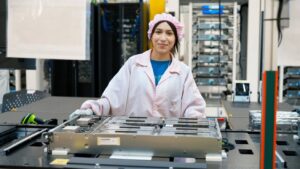
More telling is what this means for data center design. Each CS-3 requires liquid cooling and specialized power delivery. The shift from air-cooled GPU racks to direct-to-chip liquid cooling for wafer-scale systems represents a fundamental redesign of AI infrastructure. It’s not just a chip swap, it’s a civil engineering project.
The Fine Print: What’s Actually Deliverable
Here’s where skepticism is warranted. The deal spans 2026 through 2028, with capacity coming online in "multiple tranches." That vagueness covers a multitude of sins:
- Manufacturing risk: TSMC is the sole manufacturer capable of producing these wafers. Yield rates for such large dies are closely guarded but historically problematic.
- Software maturity: Cerebras’ CSoft stack must integrate with OpenAI’s model router and orchestration layers. CUDA’s moat wasn’t built in a day.
- Model compatibility: Not all models fit neatly into 44GB of SRAM. Larger models require parallelization across multiple wafers, introducing the very interconnect complexity Cerebras claims to eliminate.
Industry watchers note that OpenAI is simultaneously developing its own "Titan" inference chip with Broadcom. This Cerebras deal doesn’t replace that effort, it supplements it. The message is clear: no single architecture wins. The future is heterogeneous, messy, and fiercely negotiated.
The Real Revolution Isn’t the Wafer
The most significant aspect of this deal might not be the technology at all, it’s the business model. Cerebras is building data centers and selling capacity, not hardware. OpenAI gets a reserved pool of compute without capital expenditure. It’s a return to the 1960s IBM model: lease the mainframe, don’t own it.
This matters because it de-risks the bet. If wafer-scale computing flops, OpenAI writes off a service contract, not billions in stranded assets. If it succeeds, Cerebras gets the capital to build the next generation. It’s a classic platform play: subsidize adoption now, monetize scale later.
For the broader AI infrastructure market, this validates a tiered approach: Nvidia for training, Cerebras for low-latency inference, custom ASICs for cost optimization at scale. The monolithic GPU cluster is giving way to specialized silicon for specialized workloads.
The $10 billion question is whether Cerebras can execute. Their IPO filing will reveal yields, margins, and real customer traction. Until then, we’re left with megawatts of promise and a ticking clock to 2028.