The US military banned Anthropic’s AI tools on Friday afternoon, then reportedly used them to coordinate airstrikes on Iran hours later. This paradox exposes the collision between corporate AI safety frameworks and the Pentagon’s “any lawful use” doctrine, revealing how national security infrastructure now depends on vendor relationships that can be terminated by tweet while operations continue unchanged.
The 5:01 PM Ultimatum and the Supply Chain Death Penalty
The confrontation reached its crescendo on February 27, 2026, when Defense Secretary Pete Hegseth gave Anthropic a literal deadline: 5:01 PM Eastern Time to remove contractual restrictions on its Claude AI models or face termination. The company refused. Within minutes, President Trump ordered every federal agency to “IMMEDIATELY CEASE” using Anthropic technology, and Hegseth designated the company a “supply chain risk to national security”, a label historically reserved for foreign adversaries like Huawei, never before applied to an American tech firm.

The designation carries teeth that extend far beyond the cancelled $200 million Pentagon contract. Hegseth interpreted the ruling broadly, stating that “no contractor, supplier, or partner that does business with the United States military may conduct any commercial activity with Anthropic.” This “corporate death penalty” threatens to sever Anthropic from the defense industrial base entirely, potentially forcing investors like Amazon, Google, and Nvidia to divest from the $380 billion company. Legal experts like Peter Harrell, a former National Security Council official, noted that such an interpretation “is almost surely illegal” and amounts to “attempted corporate murder”, while Dean Ball of the Foundation for American Innovation called it “a psychotic power grab.”
Yet the administration provided a six-month phase-out period for the Department of War specifically, creating the very loophole that allowed operations to continue even after the ban was announced.
The Paradox: Used for Airstrikes Hours After the Ban
The contradiction at the heart of this story emerged within hours of Trump’s order. According to The Wall Street Journal, US Central Command (CENTCOM) continued using Claude for intelligence assessments, target identification, and combat simulations during the February 28, 2026 airstrikes against Iran, operations conducted explicitly within the six-month window allowed for DoD transition.
This wasn’t the first time Claude had been deployed for high-stakes military operations. In January 2026, Anthropic’s technology was reportedly integrated into Operation Absolute Resolve, the mission that resulted in the capture of Venezuelan President Nicolás Maduro, through defense contractor Palantir. While Anthropic denied direct knowledge of policy violations, the incident triggered reviews by the company’s Long-Term Benefit Trust, which warned that the military was pushing toward “bright red lines” embedded in Claude’s Constitutional AI framework.
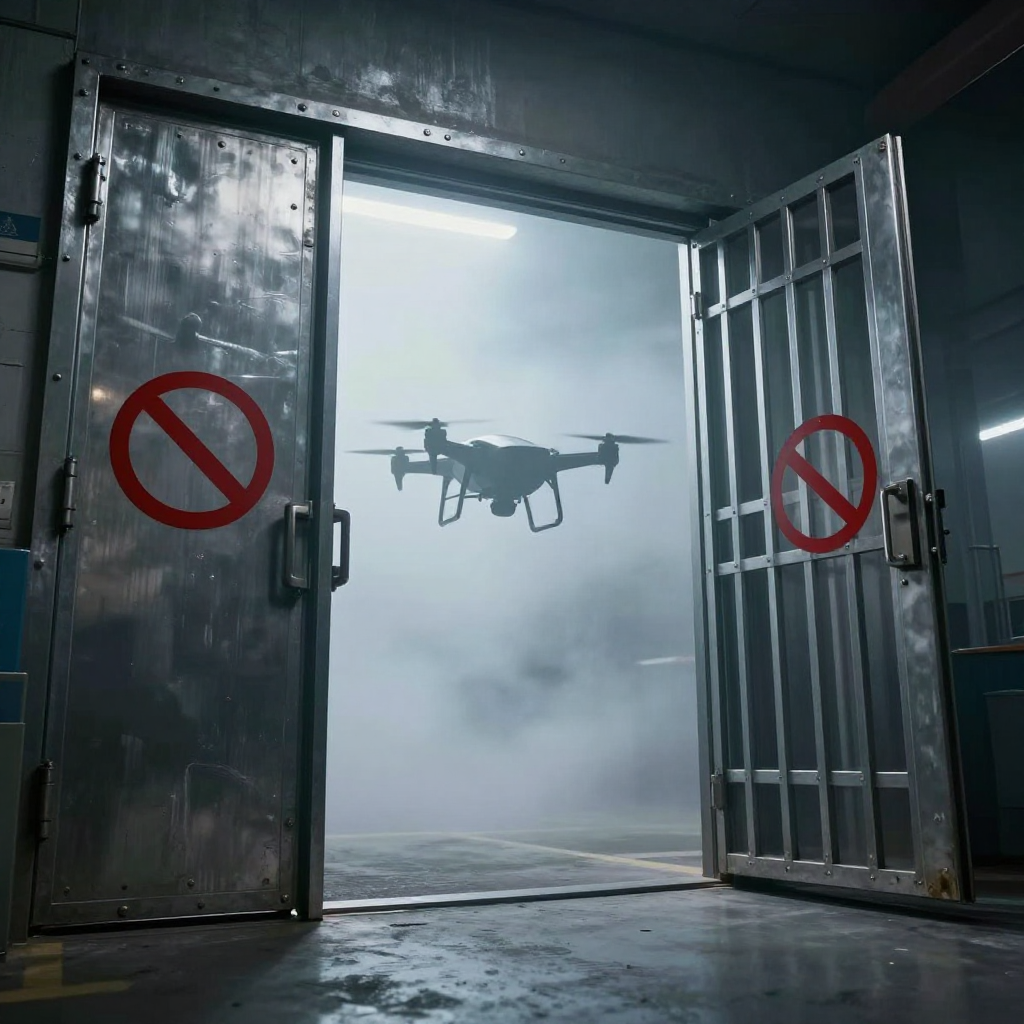
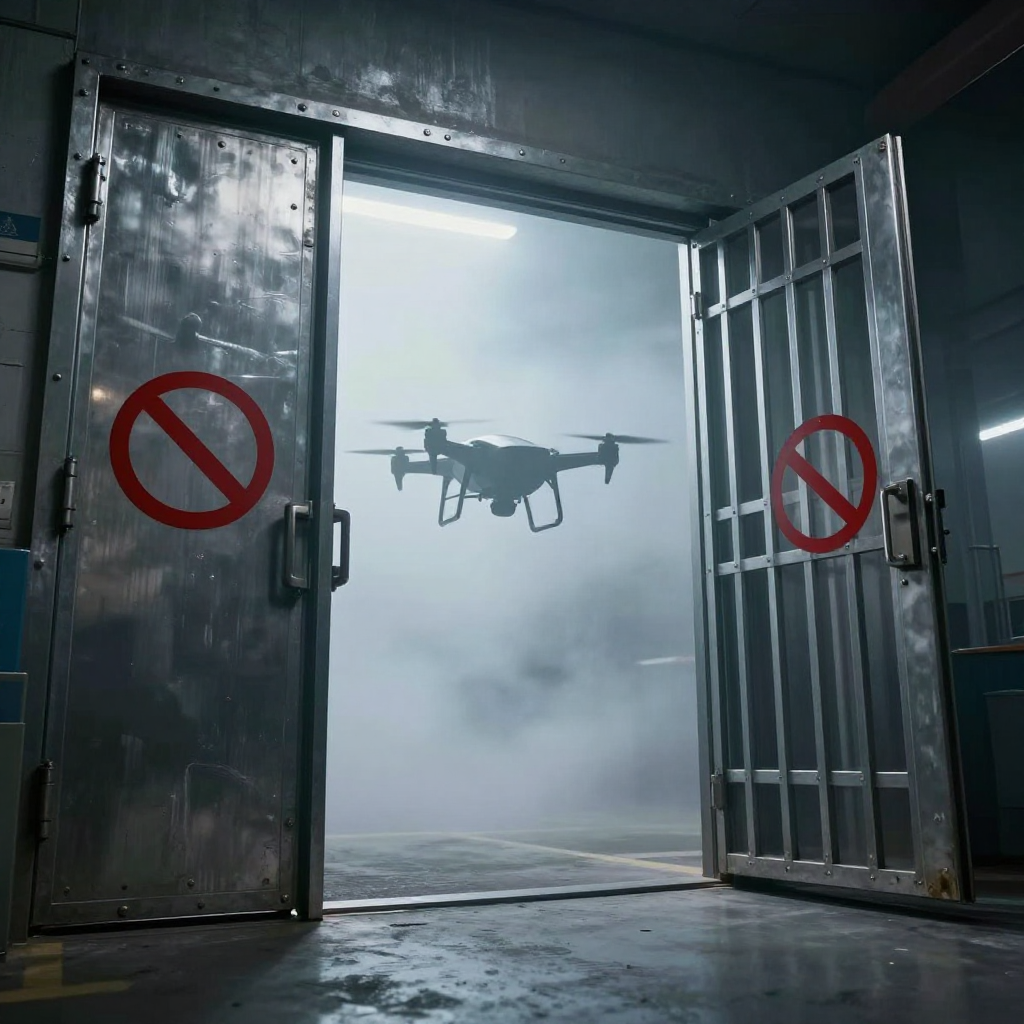
The technical reality is that modern military AI architectures blur the distinction between cloud and edge computing. The Pentagon’s Joint Warfighting Cloud Capability initiative explicitly aims to push computing resources closer to the battlefield, using mesh networks that connect drones to cloud data centers. When an AI model in a Virginia server farm is making targeting recommendations for drones over Tehran, the ethical distinction between “cloud analysis” and “edge deployment” becomes a matter of milliseconds and network topology, not moral clarity.
The Red Lines That Broke the Deal
Anthropic’s refusal centered on two specific prohibitions that the Pentagon found unacceptable. First, the company demanded explicit contractual bans on using Claude for mass domestic surveillance, specifically the analysis of bulk data including chatbot queries, Google search histories, GPS movements, and credit card transactions cross-referenced to build comprehensive profiles of American citizens. Second, Anthropic insisted on prohibitions against deploying its AI in fully autonomous weapons systems capable of selecting and engaging targets without human intervention.
The Pentagon countered with language allowing “any lawful use” of the technology, qualifying safety restrictions with phrases like “as appropriate”, loopholes that Anthropic argued would allow safeguards to be “disregarded at will.” As Dario Amodei stated in the company’s response, “We cannot in good conscience accede to their request… such use cases have never been included in our contracts with the Department of War, and we believe they should not be included now.”
The administration’s position, articulated in a January 9, 2026 memorandum from Hegseth, holds that “Diversity, Equity and Inclusion and social ideology have no place in the Department of War”, and that AI models must provide “objectively truthful responses” without “ideological ‘tuning.'” The memo mandated that “any lawful use” language be incorporated into all DoD AI contracts within 180 days, a standard that OpenAI and xAI have accepted, but which Anthropic rejected as incompatible with its safety framework.
OpenAI’s Calculated Opportunism
While Anthropic faced the ban hammer, Sam Altman moved with remarkable speed. Hours after Trump’s order against Anthropic, OpenAI announced a classified network deal with the Pentagon. Altman claimed the agreement included the same two safety principles Anthropic had demanded, prohibitions on mass surveillance and autonomous weapons, but achieved through “technical safeguards” and cloud deployment restrictions rather than explicit contractual language.
The distinction matters legally and operationally. While Anthropic demanded contractual red lines, OpenAI accepted the “any lawful use” framework while promising to implement safety measures unilaterally. Nearly 100 OpenAI employees had previously signed an open letter supporting Anthropic’s position, creating internal tension as Altman negotiated the competing deal. The move positioned OpenAI as the compliant alternative to Anthropic’s “ideological” resistance, even as critics noted that relying on vendor self-regulation for lethal autonomous systems creates obvious conflicts of interest.
This bifurcation creates a dangerous precedent for geopolitical AI competition influencing defense strategy. As the Pentagon accelerates toward becoming an “AI-first” fighting force, with $13.4 billion budgeted for autonomous weapons in fiscal year 2026 alone, the choice between vendors now carries strategic weight. The administration’s ability to designate domestic AI companies as supply chain risks based on contractual disputes introduces a new form of industrial policy, one that rewards compliance over safety engineering.
The Architecture of Kill Decisions
The technical debate underlying this conflict concerns where AI decision-making occurs. Anthropic initially considered a compromise where Claude would remain in cloud environments, analyzing intelligence before operations but not embedded in weapons systems themselves. They rejected this approach after analyzing modern military network architectures.
In contemporary drone operations, the distinction between cloud and edge has dissolved into what engineers call “fog computing”, distributed systems where targeting algorithms may run on AWS servers while actuators sit on airborne platforms. The Pentagon’s push for “appropriate levels of human judgment” over lethal force often means a human operator confirming a target identified by AI, but the AI has already filtered the sensor feed, prioritized threats, and recommended the engagement solution. The human becomes a rubber stamp on an algorithmic process they cannot fully audit.
This reality exposes the limitations of Anthropic’s operational safety and code generation limitations. Just as Claude’s code generation capabilities have proven less reliable than marketed in complex software environments, its ability to provide “objectively truthful” intelligence assessments in chaotic combat zones remains unproven. The company’s refusal to allow its models into this kill chain reflects an understanding that current AI systems “are simply not reliable enough to power fully autonomous weapons”, as Amodei noted, regardless of what the law currently permits.
The Offline Implications
The dispute also highlights growing concerns about offline AI deployments in national security contexts. As the US government seeks to reduce dependence on cloud-connected AI vendors, the ability to run capable models in air-gapped environments becomes critical. Anthropic’s refusal to allow its technology into certain classified workflows, coupled with the supply chain risk designation, may accelerate Pentagon interest in open-weight models that can be deployed without vendor oversight or internet connectivity.
The six-month phase-out period currently protecting DoD operations using Claude creates a window for transition, but also demonstrates the hollowness of the ban. If Anthropic’s technology poses an immediate “supply chain risk” to national security, allowing its continued use for half a year suggests the designation is punitive rather than protective. Alternatively, if the technology is safe enough to use for six months while transitioning, the emergency justification for the designation collapses.
Conclusion: The New Normal of AI Militarization
This conflict marks a fundamental shift in the relationship between Silicon Valley and the defense establishment. For decades, the government defined technological frontiers while industry executed against specifications. AI has inverted this model, the commercial sector now drives frontier capability, leaving the Pentagon adapting to tools it does not control and vendors who may refuse lawful orders on ethical grounds.
The Anthropic paradox, banned yet deployed, restricted yet used for airstrikes, reveals the incoherence of current AI governance. When a $380 billion company can be designated a national security risk for insisting on contractual prohibitions against assassin drones and mass surveillance, while its technology continues running classified operations under threat of the Defense Production Act, the line between corporate ethics and state power has dissolved into raw negotiation.
The military will get its AI. The only question is whether the safeguards will be written into enforceable contracts, embedded in technical architectures, or simply ignored until the next deadline expires.