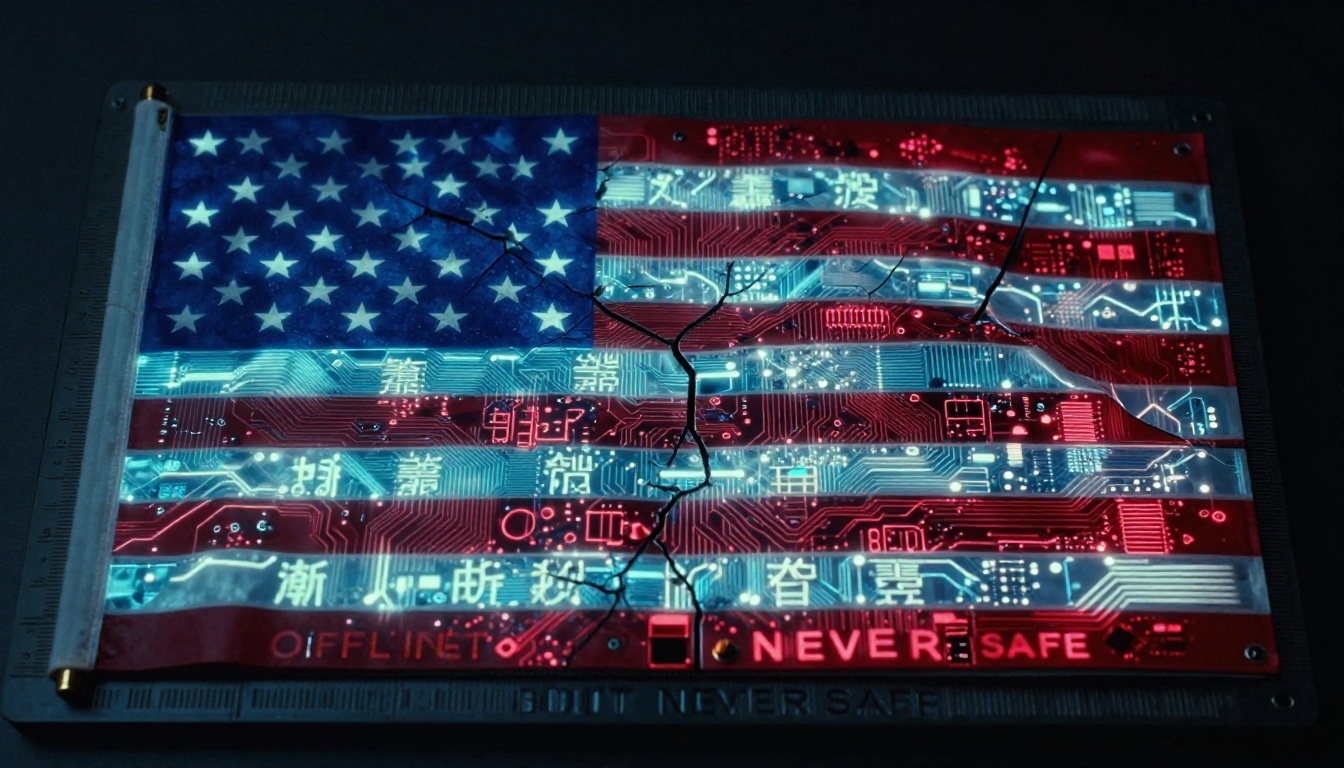
Here’s the uncomfortable truth keeping US defense contractors and enterprise security architects awake at night: the best tools for offline AI deployment are Chinese, and admitting that out loud is practically career suicide.
The math is brutally simple. If your data can’t touch the cloud, ever, you need open-weight models that run in air-gapped environments. And in that specific but critical category, American options have essentially evaporated.
The Capability Gap Is Already a Chasm
Let’s talk about gpt-oss-120b, America’s most recent semi-capable open model. It’s a fossil. While Chinese labs have been shipping Mixture-of-Experts (MoE) models with 200K+ context windows and reasoning capabilities that match Claude, OpenAI’s open-weight offering remains frozen in August 2025. The performance delta isn’t marginal, it’s generational.
The numbers from recent quantization benchmarks tell a stark story. When evaluating Qwen3.5-35B-A3B quants against the BF16 baseline, the most faithful quantization (AesSedai’s Q4_K_M) achieves a KL divergence of just 0.010214, meaning it retains near-identical probability distributions to the full-precision model. Meanwhile, GPT-OSS-120B struggles to compete even with older quants, showing up dead last in most recent benchmarks.
The Reddit thread that blew up on r/LocalLLaMA captured the existential dread perfectly: developers serving national security-conscious customers are trapped between using outdated US models and “secretly” deploying superior Chinese alternatives. As one engineer put it, the choice is “slowly fall further and further behind the curve, or… what?”
Why Chinese Models Own the Offline Game
Three factors created this monopoly by accident:
- 1. Architectural Aggression: Chinese labs went all-in on MoE architectures while US companies chased scale. Qwen3.5’s 397B parameter model activates only a fraction per query, making it deployable on commodity hardware. DeepSeek’s V3.2 achieves 685B parameters with context windows up to 130K tokens. The efficiency gains aren’t incremental, they’re transformative for resource-constrained environments.
- 2. Quantization Leadership: The Chinese open-source community has weaponized model compression. That same Qwen3.5-35B-A3B can run in IQ4_XS quantization at just 16.4 GiB with a KL divergence of 0.024036. For context, that’s a model you can run on a single RTX 4090 that outperforms GPT-OSS-120B at a fraction of the memory footprint. The quantization recipes aren’t just better, they’re obsessively optimized, with different protection schemes for attention layers and expert routers.
- 3. Permissive Licensing as Strategy: While OpenAI and Anthropic hoarded their weights, Alibaba dropped Qwen under Apache 2.0. DeepSeek used MIT licenses. The result? Qwen derivatives now represent over 40% of new language model remixes on Hugging Face, while Meta’s Llama has cratered to 15%. This isn’t organic adoption, it’s ecosystem capture through strategic generosity.
The National Security Paradox
Here’s where it gets politically radioactive. The Pentagon needs offline AI for everything from analyzing classified satellite imagery to processing signals intelligence. They can’t use cloud APIs because, well, that’s how you get your spy satellite data leaked. But the models they can use, air-gapped, locally deployed, are increasingly Chinese.
The cognitive dissonance is breaking procurement officers. One defense contractor described the internal conversation: “Tell the customers we’re switching to Chinese models because the American ones are locked away behind paywalls, logging, and training data repositories?” The alternative is lobbying OpenAI for “another favor” in releasing open weights, which feels like begging.
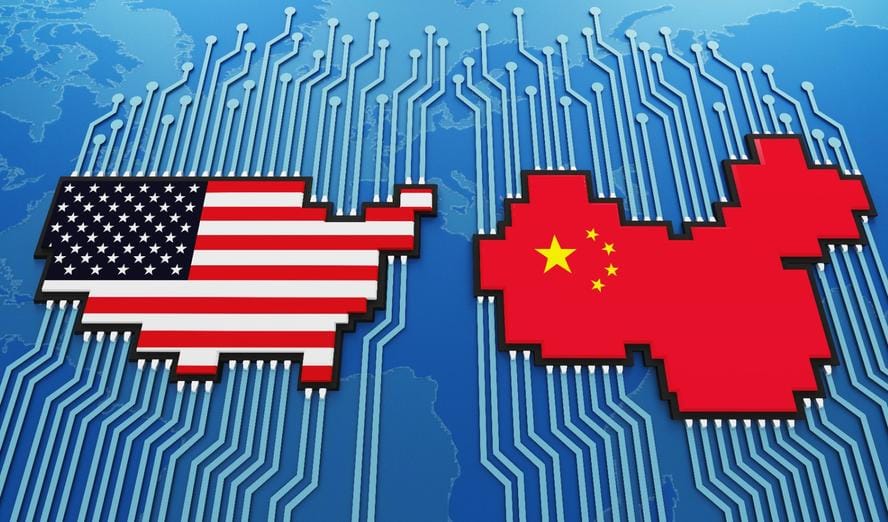
The irony is thick enough to cut. US export controls on H100s were supposed to slow Chinese AI development. Instead, they accelerated Chinese open-source innovation while American labs retreated into closed APIs. US-China AI decoupling and its impact on model development has created a perverse incentive structure: Chinese labs share to build global influence, while US companies close up to protect margins.
Real-World Deployment Data Doesn’t Lie
The deployment patterns reveal the true state of play. Research mapping 175,000 exposed AI deployments across 130 countries found Qwen on 52% of systems running multiple AI models. That’s not a trend, that’s market dominance.
Enterprise architects are making these decisions with eyes wide open. Airbnb switched customer service bots to Qwen because it was “fast and cheap.” Chamath Palihapitiya moved workloads to Kimi K2.5 for better performance. These aren’t ideological choices, they’re engineering decisions based on TCO and capability.
The quantization efficiency scores tell the same story. When measuring the VRAM-to-quality tradeoff, AesSedai’s Q4_K_M quant scores a perfect 1.0 on the efficiency index. The best competing US-model quants don’t even register. For organizations deploying at scale, this math is unforgiving.
The Risks Are Real, But Manageable (Maybe)
Let’s not pretend Chinese models are perfect. The CAISI report found DeepSeek models echo CCP narratives 4x more often than US reference models, with the most aligned variant hitting 25.7% narrative compliance when prompted in Chinese. That’s not a bug, it’s a feature embedded in the weights.
Security vulnerabilities are another headache. DeepSeek R1 remained susceptible to the “Evil Jailbreak” technique years after OpenAI patched it. Palo Alto Networks found three additional jailbreak vectors. For air-gapped defense systems, this is… suboptimal.
But the most serious risk is supply chain dependency. Unlike API-based models you can switch off, open-weight models get baked into systems. Qwen derivatives are now the foundation for 40% of new open-source AI work. If access gets restricted tomorrow, the global AI ecosystem faces a seismic shock. As one researcher noted, removing that foundation “would not be a clean operation.”
The West’s Inadequate Response
Western policy has been a masterclass in reactive theater. Italy blocked DeepSeek over data privacy. Taiwan banned government use. Germany asked Apple to remove the app. The US debates penalties while the developer community keeps downloading.
None of this addresses the core issue: the West voluntarily ceded the open-source tier. When OpenAI, Anthropic, and Google stopped releasing open weights, they created a vacuum. Chinese labs filled it with models optimized for exactly the use cases US organizations now desperately need.
The ATOM project, American Truly Open Models, represents a belated recognition of the problem. But it’s a research tracking initiative, not a Manhattan Project for open AI. Meta’s Llama 4 is promising, but it’s playing catch-up to an ecosystem that now moves at Chinese internet speed.
What Happens Next
The February 2026 AI model war nobody saw coming is actually a quiet revolution in deployment patterns. US closed models still lead on raw benchmarks, but that lead is meaningless for organizations that can’t use them. The gap between frontier performance and deployable performance has become the gap that matters.
Three scenarios emerge:
- The Great Reversal: US labs wake up and start releasing competitive open models. This requires a fundamental business model shift and probably government funding. Reflection AI’s $8B valuation suggests capital is available, but time is short.
- The Quiet Adoption: Organizations continue using Chinese models while maintaining public deniability. The “patriotic system prompt” meme becomes actual policy, run Qwen, but filter its outputs through a “freedom layer.”
- The Balkanization: The AI ecosystem splits permanently. US government systems use outdated but “safe” American models, while commercial and international systems standardize on Chinese open weights. Capability gaps become structural.
The uncomfortable reality is that 80% of AI startups are now building on Chinese open-source models. The question isn’t whether the West should be worried, it’s whether it’s too late to matter.
For engineers in sensitive sectors, the advice is practical and bleak: quantify your actual risk tolerance. If you’re building a code completion tool, Qwen’s censorship patterns are irrelevant. If you’re analyzing geopolitical intelligence, they’re disqualifying. Most use cases fall somewhere in between, requiring a level of nuance that current black-and-white policy frameworks can’t handle.
The ultimate irony? The US may need to fund its own “patriotic” open-source models that are basically Qwen with different branding. Or as one Reddit commenter darkly joked: “just torrent Opus once the Pentagon forces Anthropic to hand it over.”
Until then, the capability gap widens every quarter. And the most secure AI deployments in America might just be running on Chinese code.