China’s TPU: 1.5x Faster Than A100, 5 Years Too Late, and the Ex-Google Engineer Credibility Gap
A Chinese startup’s bold claim of a TPU beating NVIDIA’s A100 exposes the fault lines between technical achievements, geopolitical posturing, and the harsh realities of AI hardware ecosystems.
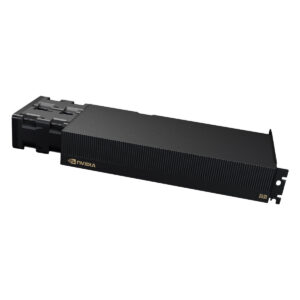
Yet buried in this seemingly outdated benchmark lies a more interesting story: the fracture lines between hardware capability, software ecosystems, and the geopolitical desperation driving China’s semiconductor sprint.
The 12nm Elephant in the Room
Zhonghao Xinying’s “Ghana” chip allegedly runs on a 12nm process, which is precisely three generations behind the 4nm process NVIDIA uses for its Blackwell architecture. The company claims this older node achieves “an order of magnitude” better efficiency through architectural optimization, specifically, by stripping out general-purpose compute elements that make GPUs versatile but power-hungry.
This is where the story gets technically interesting. The A100’s 54 billion transistors aren’t just for matrix multiplication, they handle everything from legacy CUDA workloads to graphics primitives. A purpose-built TPU can indeed shed 30-40% of its silicon budget on specialized workloads. But the claim that a 12nm ASIC can compete with a 4nm GPU isn’t just about architecture, it’s about what you’re willing to leave on the table.
As one hardware architect noted in industry forums: “TPUs are not magic. They’re just chips that bet everything on one workload. The magic is in the software stack that feeds them.”
The “Ex-Google Engineer” Credibility Discount
Let’s address the credential salad. Founder Yanggong Yifan worked on Google TPU generations v2, v3, and v4. At face value, this suggests deep expertise in one of the few successful ASIC programs outside NVIDIA’s walls. But here’s the uncomfortable truth: Google’s TPU team had thousands of engineers, and Broadcom actually fabricated the silicon.
The Reddit community’s skepticism is warranted. As one commenter distilled: “There are 300,000 ex-Google engineers. The magnitude of the claim should be weighed against the magnitude of the credential.” This isn’t gatekeeping, it’s Bayesian reasoning. When Meta’s engineers left to start AI hardware companies, they brought decades of infrastructure experience and a roadmap. A single contributor’s resume, even an impressive one, doesn’t de-risk a foundry partnership or compiler toolchain.
The Efficiency Mirage: 42% Cost, But What About the Other 58%?
Zhonghao Xinying’s most concrete claim is per-unit cost: 42% of NVIDIA’s A100 pricing. For a Chinese market starved of sanctioned hardware, this is genuinely meaningful. The A100 still trades at a premium in gray markets, with smuggled units commanding 2-3x MSRP.
But the sticker price ignores the total cost of ownership that makes NVIDIA unbeatable:
- Software stack: CUDA’s 20-year head start means every ML framework, from PyTorch to JAX, is optimized for NVIDIA’s architecture first
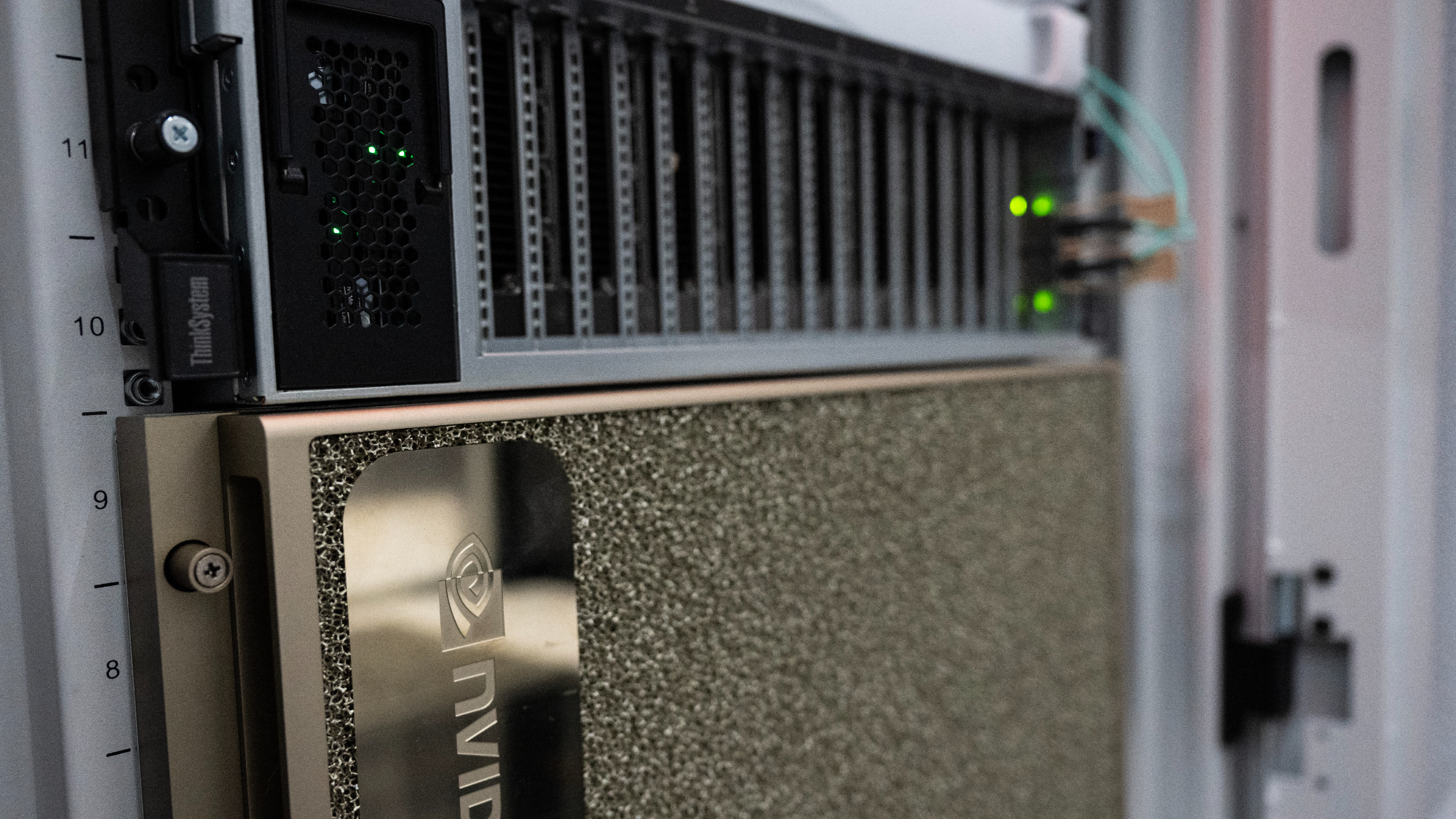
- Ecosystem lock-in: The “Taize” cluster’s 1,024 processor fabric sounds impressive until you realize NVIDIA’s DGX systems offer 256-way GPU coherence with zero code changes
- Talent pipeline: There are ~500,000 CUDA-literate developers globally. How many know Zhonghao Xinying’s custom instruction set?
This is why Google, despite building superior TPUs for its own workloads, still relies on NVIDIA for external cloud customers. The hardware is only as good as the software that runs it.
The Geopolitical Performance Theater
Zhonghao Xinying’s most important claim isn’t technical, it’s political: “Our chips rely on no foreign technology licenses.” This statement is aimed squarely at China’s semiconductor self-sufficiency mandate, which includes energy subsidies for domestic chips and quotas restricting NVIDIA purchases.
The timing is telling. The announcement comes as:
– US export controls have reduced NVIDIA’s China revenue to near-zero
– Chinese AI labs are renting foreign cloud access to circumvent sanctions
– Domestic alternatives like Huawei’s Ascend still struggle with software maturity
In this context, “1.5x faster than A100” isn’t a technical benchmark, it’s a sovereignty statement. The metric matters less than the existence of a domestically可控 (controllable) alternative.
The Real Controversy: We’re Asking the Wrong Question
Here’s what makes this story actually interesting: It reveals how the AI hardware conversation has been captured by hardware metrics while ignoring the software architecture moat.
NVIDIA’s true defensibility isn’t FLOPS, it’s the CUDA compilation toolchain, the NCCL communication library, and the NGC container registry. These aren’t features, they’re an operating system for AI. Challenging this requires more than a faster matrix multiplier, it demands a 10-year investment in developer experience.
Zhonghao Xinying’s 2026 IPO deadline makes such investment nearly impossible. You can’t build TensorBoard, Kubernetes operators, and a debugger ecosystem in 18 months, even with state backing. This is why Google’s TPUs remain a niche product despite technical leadership, they’re islands in a CUDA ocean.
So What Happens Next?
The most likely scenario isn’t disruption, it’s compartmentalization. Zhonghao Xinying will find a niche in:
– State-mandated deployments where software compatibility is secondary to sovereignty
– Inference markets for quantized models that don’t need full CUDA precision
– Edge computing where cost and power matter more than flexibility
Meanwhile, NVIDIA will continue its 3-6 month release cadence, with Blackwell Ultra already delivering 45% better inference throughput than its predecessor.
The real winner? The foundries. SMIC and other Chinese fabs gain process validation from ASIC designs that prioritize yield over bleeding-edge density. Even if Zhonghao Xinying fails, the manufacturing capability advances, and that’s what actually threatens NVIDIA’s long-term dominance.
The Takeaway
- China’s chip strategy is working, but through attrition not breakthrough
- The “ex-Google engineer” halo is dead, execution matters more than credentials
- Software architecture remains the moat, and moats don’t fill in three years
- Benchmarketing is the enemy of progress, savvy engineers smell process nodes and ecosystem maturity
NVIDIA’s response won’t be a press release. It’ll be a quiet expansion of DGX Cloud into Southeast Asian markets, letting infrastructure speak louder than FLOPS.
The AI hardware race isn’t about who builds the fastest chip. It’s about who makes the last chip standing when the software ecosystem consolidates. And that chip will be the one developers actually want to use, not the one their government forces them to.
Read the original technical breakdown of Zhonghao Xinying’s claims and TrendForce’s analysis of China’s semiconductor self-sufficiency push