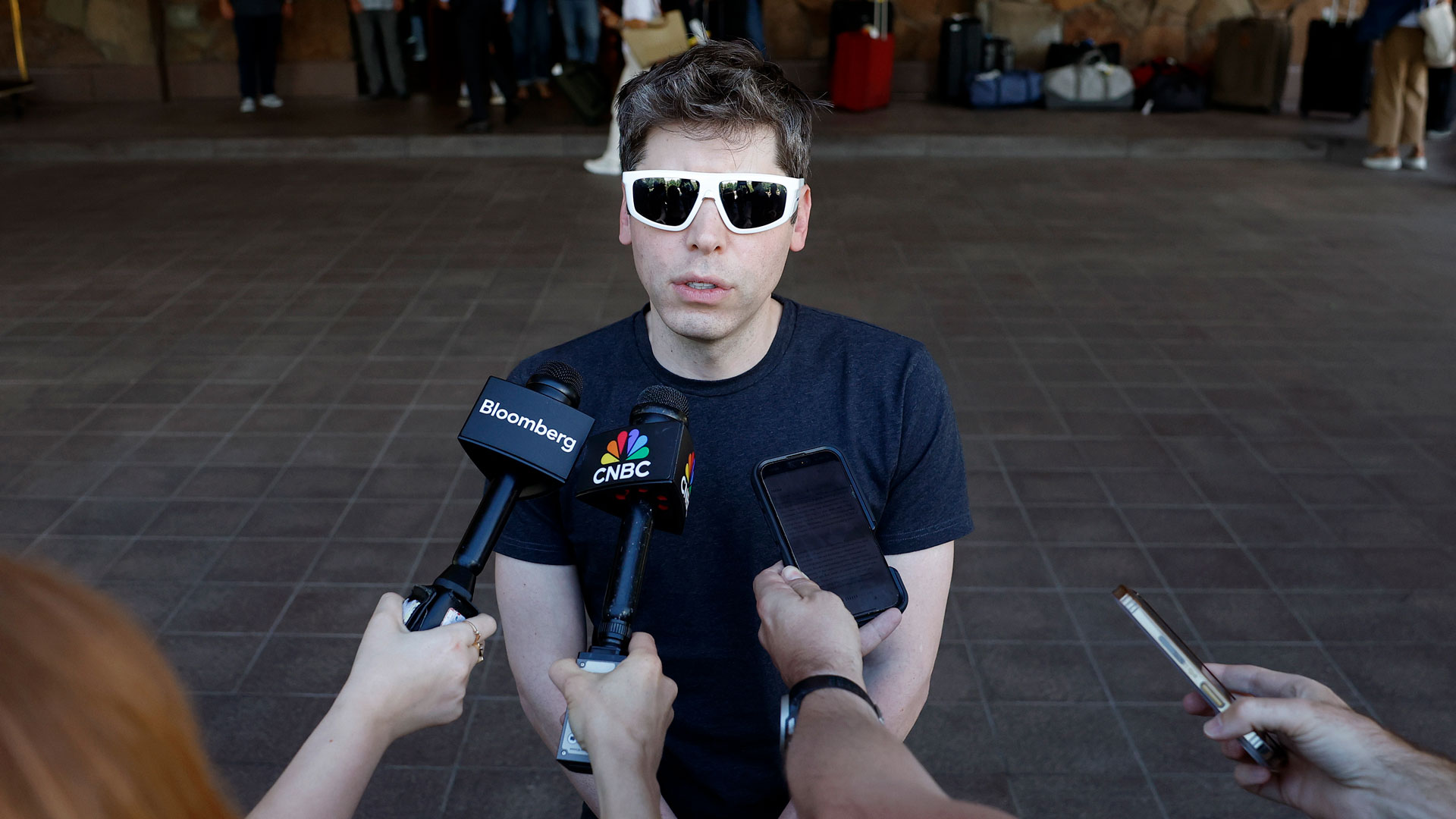
OpenAI is burning through cash at a rate that makes WeWork look fiscally responsible. While Sam Altman tours the world talking about artificial general intelligence, his company is hemorrhaging roughly $22 million every single day. The math is brutal: $8 billion in projected losses for 2025, climbing to $40 billion by 2028, with cumulative negative cash flow hitting $143 billion before profitability, if that day ever comes.
This isn’t a growth-phase blip. It’s a structural collapse masked by hype.
The Financial Death Spiral
Microsoft’s own filings reveal OpenAI lost approximately $12 billion in a single quarter. That’s not a typo. For context, Netflix’s entire content budget for 2025 was $17 billion. OpenAI incinerated two-thirds of that in three months. The company’s flagship video generation tool, Sora, costs $15 million per day to operate, an expense insiders call “completely unsustainable” even by Silicon Valley’s loose standards.
The scaling laws that once seemed like OpenAI’s moat have become its garrote. Training runs in 2025 reportedly failed to beat prior versions despite consuming 5x the compute. When doubling model quality requires quintupling resources, you’re not building a business, you’re constructing a monument to diminishing returns. Altman’s $1.4 trillion commitment to data center infrastructure looks less like strategic investment and more like a hostage negotiation with physics itself.

Analysts now predict OpenAI could run out of cash by mid-2027. That timeline assumes investors keep writing blank checks for a company that needs $200 billion in annual revenue by 2030, a 15x increase from current projections, to merely survive.
Gemini’s Shadow: The Competitive Erosion
While OpenAI sets money on fire, Google’s Gemini is eating its lunch. Gemini has surged past 650 million monthly active users, embedding itself into the fabric of daily digital life through Android, Search, and Gmail. ChatGPT’s traffic dipped month-over-month in late 2025, the second decline of the year, as users discovered they didn’t need a separate app when AI assistance appeared seamlessly in tools they already used.
The market share numbers tell a stark story: ChatGPT’s dominance has shrunk to 68% while Gemini commands 18.2% and growing. More telling is the sentiment shift. Salesforce’s CEO publicly switched to Gemini after a quick test. On developer forums, the conversation has changed from “ChatGPT is revolutionary” to “Gemini 3 Pro isn’t even close, it’s on another level.”
Google’s integration strategy exploits OpenAI’s fundamental weakness: distribution. While OpenAI requires users to seek out its service, Gemini meets them where they live. This isn’t just convenience, it’s a structural advantage that OpenAI cannot replicate without becoming a platform company overnight, a transformation that would require capital it doesn’t have and time it can’t afford.
Internal Collapse: The Exodus of the Architects
The brain drain at OpenAI has accelerated from a trickle to a hemorrhage. Key exits include:
- Mira Murati, CTO, gone
- Bob McGrew, Chief Research Officer, gone
- Ilya Sutskever, Chief Scientist, gone
- Greg Brockman, President, gone
- Half the AI safety team, gone
These aren’t junior developers. They’re the architects of the very scaling laws that now threaten to bankrupt the company. Their departure signals something more dire than typical startup churn: a fundamental loss of faith in leadership and direction.
The “Code Red” declared in December after Gemini 3’s release wasn’t just about competition. It was a recognition that the company’s technical roadmap had hit a wall. When your best minds flee while you’re burning $15 million daily on a video generator, you don’t have a pivot, you have a panic.
Leadership Vacuum: Altman’s House of Cards
Sam Altman’s management style is increasingly described as “toxic” by departing employees. His $40 billion fundraising round last March, bigger than Saudi Aramco’s IPO, was hailed as a triumph. But Aramco was profitable. OpenAI is a money incinerator with a chatbot attached.
Altman’s response to investor concerns about the $1.4 trillion compute commitment reportedly snapped: “If you want to sell your shares, I’ll find you a buyer.” This isn’t leadership, it’s arrogance financed by other people’s money. The $134 billion lawsuit from Musk, alleging OpenAI broke nonprofit promises, adds legal jeopardy to financial peril.
The irony is thick: OpenAI was founded to prevent AI from becoming controlled by profit-driven interests. Now it faces collapse because it can’t control its profit-driven spending.
The Integration Trap
OpenAI’s standalone strategy looked brilliant when it was the only game in town. Now it’s a liability. While Google weaves AI into every productivity tool, OpenAI remains a destination, one users must consciously choose and pay for separately.
This creates a usage gap. ChatGPT dominates deep reasoning tasks and creative work, but Gemini captures the countless micro-interactions that constitute daily AI use: drafting an email, summarizing a document, answering a quick question. Over time, these small wins compound into habit formation and data advantages that become unassailable.
The research confirms this: users increasingly turn to Gemini for speed and integration, while reserving ChatGPT for specialized tasks. But specialized tasks don’t generate $200 billion in revenue. Mass market adoption does, and OpenAI is losing that race.
What This Means for the AI Industry
OpenAI’s crisis exposes the AI bubble’s flimsy foundation. The sector has raised hundreds of billions on the promise that bigger models equal bigger profits. But if the market leader can’t achieve sustainability at scale, the entire thesis collapses.
We’re witnessing a classic innovation cycle: first-mover advantage, massive capital influx, diminishing returns, competitive erosion, and finally, consolidation or collapse. OpenAI sits at the inflection point between erosion and collapse.
The implications ripple outward. If OpenAI fails or gets acquired at a fire-sale price, it will trigger a sector-wide reckoning. Investors who’ve poured money into AI startups with similar burn rates will slam the brakes. The trillion-dollar data center buildout, already straining the U.S. electricity grid, could freeze overnight.
The Path Forward (or Down)
OpenAI’s options are narrowing. A Microsoft acquisition seems plausible, the tech giant already owns significant IP and integration points. But as one analyst noted, Microsoft might simply sunset OpenAI to make room for Copilot, creating a double failure.
The more likely scenario? A distressed sale to a cash-rich player like Google or Apple, who would acquire the talent and patents while dismantling the unsustainable business model. This would validate the technology while admitting the business model was a Ponzi scheme built on venture capital and hubris.
For the broader AI ecosystem, OpenAI’s crisis serves as a cautionary tale: technical brilliance without economic sustainability is just an expensive hobby. The companies that survive will be those that solve real problems at sustainable margins, not those that burn the most cash chasing artificial general intelligence.
The AI winter isn’t coming, it’s already here, disguised as a $500 billion valuation and a charismatic CEO in designer sunglasses. When the thaw comes, we’ll discover which companies were building businesses and which were just building bonfires.
Internal Links:
- OpenAI’s competitive threat from Google’s Gemini
- Sam Altman’s aggressive defense of OpenAI’s massive spending
- Internal burnout and organizational chaos in AI startups
- Broader industry trend of AI-driven downsizing over innovation
- Hidden costs of AI productivity on technical expertise
- Existential threat AI poses to white-collar roles