We’re repeating our favorite historical mistake. We watch a transformative technology emerge and soothe ourselves with the same old mantras: “It’s just a tool”, “It makes us more productive”, “We’ll adapt”. We said it about the internet and Excel. But this is not that. Generative AI isn’t a tool to help you do your job better, it’s a system that, increasingly, can do your job itself. The first victims aren’t assembly line workers, they’re the lawyers, accountants, analysts, and developers we told the displaced factory workers to “learn to code” and become. The automation wave is now crashing over the value chain’s top floor. The consensus among those building it? The timeline is terrifyingly short.
The Three-Year Timeline: From Prediction to Payroll
For decades, white-collar workers have been insulated from automation. Computers created more administrative and analytical jobs than they destroyed. That historical truism is dead. Anthropic Chief Scientist Jared Kaplan delivered a chilling prognosis in a recent interview: AI could replace “most white-collar jobs within 3 years.” His reasoning is straightforward: current models already excel at the academic and analytical tasks that form the bedrock of countless office roles, and their ability to reason and improve autonomously is accelerating.
This is not a sci-fi fable. It’s a market signal from a lead architect of the systems in question. The underlying mechanics are straightforward: routine administrative work, report drafting, data analysis, presentation building, the daily grind of knowledge work, involves pattern recognition, language manipulation, and structured reasoning. These are precisely the tasks LLMs have been designed to perfect. They work faster, require no breaks, and process vast information landscapes in seconds. They don’t get bored.
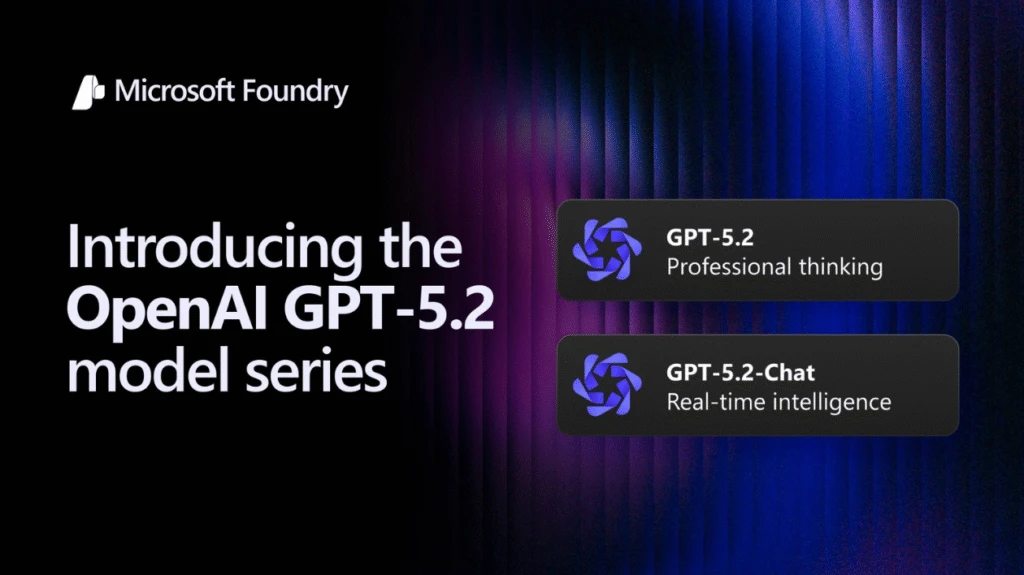
The pace of this is what’s new. OpenAI went from GPT-5.1 to GPT-5.2 in under a month. Google’s Gemini 3, Anthropic’s Opus 4.5, these aren’t demo reels. They are being integrated, right now, into business workflows. As one veteran technical recruiter with 20 years of experience observed: we’re currently in the “stalled growth” phase. Companies aren’t backfilling roles as teams become more productive with AI. Next comes “human-in-the-middle orchestration”, where one worker supervises AI doing the work of many. The final phase? “AI replacement.” They estimate this multi-year trend could ultimately impact 3.3 billion jobs globally.
GPT-5.2 Isn’t a Chatbot, It’s a Scalable Colleague
What makes this wave different from simple spreadsheet macros or email automation is the depth of capability. Look at the specs of GPT-5.2. It boasts a 400,000-token context window and 128,000-token output capacity. This means it can ingest and reason across an entire enterprise codebase, a lengthy legal contract, or a complete financial report in a single interaction. Its design is explicitly for enterprise coding and agentic workflows, handling complex, multi-step tasks end-to-end.
Azure’s pitch for GPT-5.2 in Microsoft Foundry is telling: it’s about “multi-step logical chains“, “agentic execution“, and “reliable agentic workflows” that produce “shippable artifacts.” This is the language of production systems, not research papers. It’s a model that can decompose a complex business problem, design a solution, write the code, run unit tests, and generate deployment scripts. For the legions of software engineers and business analysts who spend their days translating requirements into functional specifications and then into code, the threat is explicit.
The enterprise economics are becoming compelling. While GPT-5.2 costs $1.75 per million input tokens (a 40% premium over GPT-5), its “greater token efficiency” and ability to solve tasks in fewer steps make it viable for high-value workflows. At $14 per million output tokens, it’s still far cheaper than a $100,000+ junior developer or a $80,000 paralegal. The cost curve only points down.
The Practitioner’s Dilemma: Augmentation vs. Replacement
The divide in sentiment is starkly visible in developer and professional forums. One side, often those actively using AI daily, sees an indispensable productivity tool. A legal professional shared their experience: a task that once took an hour was completed by AI in seconds, though a follow-up query produced a dangerously incorrect answer requiring expert verification. Their conclusion? AI is a powerful augmentation tool, but the expert’s judgment, for now, is irreplaceable.
The counter-argument is one of trajectory, not snapshot. In 2022, AI couldn’t code. In 2023, it couldn’t handle long context. In 2024, it struggled with complex reasoning. Each of those statements is now “embarrassingly wrong.” To bet your career that AI will magically stop improving at your specific knowledge domain is, as one observer bluntly put it, “copium.”
Mark Pincus, founder of Zynga, recently pointed out that AI like GPT has a “70% likelihood of replacing white-collar jobs within the next decade.” The implication is that the shift isn’t a gradual drift, it’s a looming cliff.
The Staggering Scale of the Role Reversal
Historically, automation hit blue-collar jobs hardest. The coming wave is a profound inversion. An analysis by Nitin Seth, CEO of Incedo, projects that in the short term (2025-2030), 10 white-collar jobs could be lost for every one blue-collar job. Knowledge work, already digitized and pattern-based, is uniquely vulnerable to rapid AI automation. Even into the long term (2035-2040), while automation becomes near-universal, knowledge workers remain disproportionately threatened, with Seth projecting ~60% at risk compared to ~35% for blue-collar roles.
The economic logic is brutal. If a senior lawyer’s productivity is amplified 10x, does a firm hire ten times the clients? No. It needs one-tenth the lawyers. If a marketing expert with AI can do the work of several copywriters and illustrators, you don’t hire more marketers, you consolidate. As “Godfather of AI” Geoffrey Hinton warned in his discussion with Senator Bernie Sanders, tech giants are “betting on AI replacing a lot of workers” to pay down the “trillion dollars they’re investing in data centers and chips.” The incentive to automate is built into the financial structure of the industry itself.
The Organizational Inertia Argument (And Why It’s a Trap)
A common rebuttal is corporate inertia. “My company’s processes are too complex”, or “They’ll never fire me because I know the system.” This is a dangerous miscalculation.
First, the tools are moving from generic chat interfaces to specialized, embedded applications. Imagine an “AI Secretary” purpose-built for calendar management, email triage, and report generation, grounded in your company’s data and indemnified against error. That’s not ChatGPT, that’s a product roadmap for 2026.
Second, while a large enterprise may take years to rewire its processes, a startup has no such encumbrance. New businesses will be architected from day one with AI agents as the primary workforce. Their cost structure and speed will exert immense pressure on incumbents. When a competitor can operate with 90% fewer salaried knowledge workers, the incentive to automate becomes existential, not just economical.
Third, much of the “complexity” that protects jobs is pure bureaucracy and information silos, problems AI is uniquely suited to solve. One developer noted they waited two years for database access due to internal politics. A well-designed AI system, once granted permissions, can instantly unify and analyze siloed data.
The Human Above the Loop (If There’s a Loop at All)
So, what does the future of work look like? The analysis points to a fundamental re-imagination beyond conventional reskilling. It’s not about learning to use AI, it’s about learning to orchestrate it and focusing on what it cannot do (yet). This future demands a move from in-the-loop execution to above-the-loop creation and judgment.
1. AI Skilling: Basic proficiency. Using the tools to enhance current workflows, writing code faster, summarizing docs, drafting emails.
2. Building Context: The higher-order skill. Redesigning workflows for agentic AI, providing the deep domain expertise that guides the system towards correct outcomes, and verifying its work. This is the domain of architects and strategists.
3. Entrepreneurial Readiness: The most valuable and rarest shift. Using the freed capacity not to do more of the old work, but to invent new products, business models, and customer experiences that the AI cannot conceive. This is human-above-the-loop value creation.
The uncomfortable truth is that the pyramid is narrow. Not every displaced mid-level manager can become a strategic visionary. As Geoffrey Hinton himself framed it, “What happens when that vital aspect of human existence [meaningful work] is removed from our lives?” He and others suggest a future pivot towards inherently interpersonal roles based on an understanding of human needs, therapy, coaching, care, areas where machines still struggle.
Conclusion: The Great Uncoupling
The debate is no longer whether generative AI will devastate white-collar employment, but when and how deeply. The signals are all there: the panic in OpenAI’s “code red” memo over Google’s gains, the enterprise push for agentic models, the dire warnings from the field’s architects, and the quiet, ongoing hollowing out of hiring.
The advice for the individual professional is no longer simple. “Learn to code” is obsolete, the AIs are better coders. “Learn AI” is a start, but insufficient. The only durable strategy is to cultivate profound, irreplaceable domain expertise combined with the ability to conceive, direct, and validate the work of AI agents. For organizations, the mandate is to aggressively pilot agentic workflows not just for cost savings, but to discover the new human roles that will emerge from the automation. The white-collar apocalypse isn’t a distant sci-fi plot. It’s the next quarterly business plan.