OpenAI Declares ‘Code Red’ as Gemini 3 Erodes Its Moat, Three Years After Google Panicked
Three years ago, Sundar Pichai summoned Larry Page and Sergey Brin back to Google headquarters and declared a “code red” over ChatGPT. Teams canceled Christmas vacations. Bard launched three months later, misfired on a space telescope question, and vaporized $100 billion in market cap overnight. The irony was thick: Google had invented the transformer, pioneered LLMs, then got caught flat-footed by a startup.
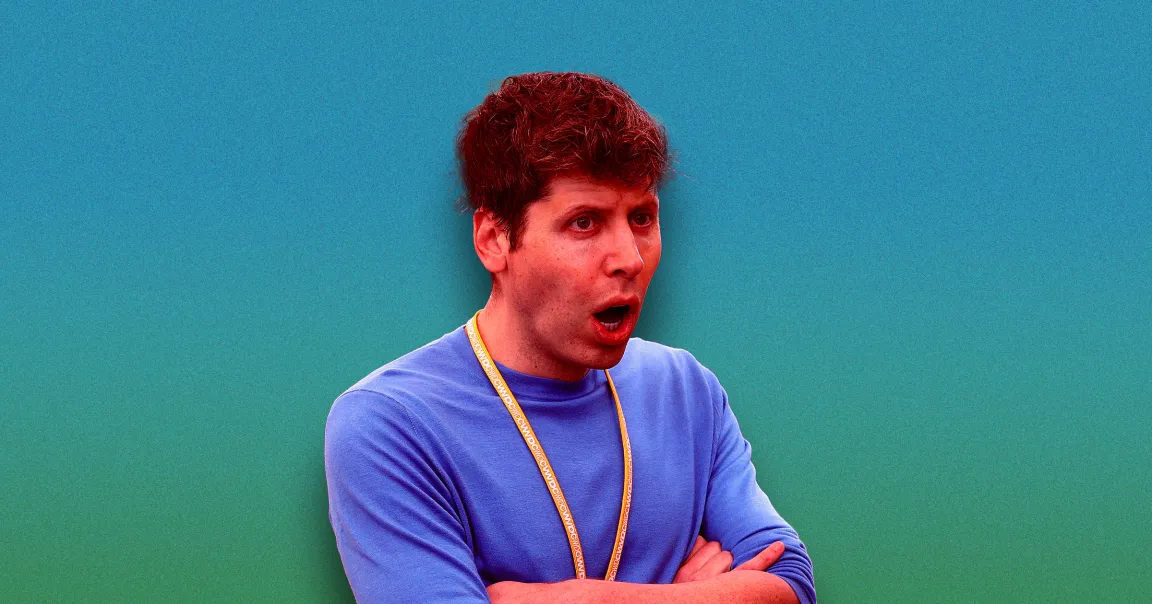
Now the script has flipped. An internal memo from Sam Altman on December 2, 2025, obtained by The Information, reads like a ghost of Google’s past: “We are at a critical time for ChatGPT… all resources on quality.” The ads team? Halted. AI shopping tools? Shelved. The Pulse personal assistant? Indefinitely delayed. Even the $100 million Salesforce partnership, inked a month ago, suddenly looks shaky after Marc Benioff tweeted he’d switched to Gemini 3 and wasn’t coming back.

The numbers explain the panic. Gemini 3 launched November 21 and immediately topped industry benchmarks. ChatGPT’s 800 million weekly active users still lead, but Gemini’s monthly actives jumped from 450 million to 650 million in three months. That gap is closing faster than OpenAI can retrain models. When your $157 billion valuation assumes permanent dominance, 200 million users moving the wrong way isn’t a competitive nuisance, it’s an existential threat.
The Benchmark Reckoning
| Benchmark | Gemini 3 Pro | GPT-5.1 | Delta |
|---|---|---|---|
| Humanity’s Last Exam | 37.5% | 26.5% | +11.0% |
| ARC-AGI-2 (visual reasoning) | 45.1% | ~22% | +23.1% |
| Omniscience Index (reliability) | 13 | 2 | +11 points |
| SWE-bench Verified (coding) | 71.2% | 77.9% | -6.7%* |
Note: GPT-5.1 still leads on some coding tasks, but the margin has narrowed to a rounding error.
These aren’t vanity metrics. The Omniscience Index, developed by AI safety researchers, measures hallucination resistance and factual precision. A score of 13 vs. 2 means Gemini 3 is more than six times less likely to fabricate a citation or hallucinate a function. When Salesforce’s CEO ditches ChatGPT for a competitor after a single afternoon of testing, it’s not because of branding, it’s because the model actually works better on his tasks.
The Infrastructure Trap
OpenAI’s response is constrained by its own success. The memo promises a new reasoning model next week that beats Gemini 3 in internal tests. But the company is burning cash at a rate that makes the old dot-com era look frugal: projected losses of $14 billion by 2026 against $20 billion in revenue. That math only works if growth continues exponentially. It isn’t.
The $1.4 trillion in infrastructure commitments OpenAI announced last quarter, data centers, power plants, chip fabrication partnerships, assume ChatGPT will become the default AI assistant for billions of users. If user growth stalls or, worse, reverses, those fixed costs don’t disappear. They become anchors.
Ilya Sutskever, OpenAI’s co-founder who left in May 2024 to start Safe Superintelligence, crystallized the problem in a recent interview: “2020 to 2025 was the age of scaling. Just add more compute. But now the scale is so big. You think if you 100x it everything transforms? I don’t think that’s true.” Yann LeCun echoed this at NeurIPS, arguing that scaling LLMs alone won’t reach human-level AI.
OpenAI’s entire strategy was predicated on being the biggest, fastest, most capitalized player in a game where size mattered. Now that the returns on scale are diminishing, the competitive moat looks more like a trench.
The Talent Bleed
While Altman rallies the troops, his best generals are leaving. Mira Murati, former CTO, launched Thinking Machines last month and has already recruited 20+ OpenAI researchers. Alexandr Wang, Scale AI’s founder, decamped to Meta’s new Superintelligence Labs. When your technical leadership evaporates during a “code red”, the problem isn’t just external competition, it’s internal execution.
The memo acknowledges this implicitly. “We need to make ChatGPT feel even more intuitive and personal”, it reads, code for “our product is losing its magic.” The safety overhang that made GPT-4 “boring” has been loosened, OpenAI even added erotica for verified adults in a bid to recapture personality. Users still complain the model has lost its edge. Growth slowed in October. The “rough vibes” Altman warned about last week have become a full-blown morale crisis.
What Got Delayed, and Why It Matters
The decision to pause monetization features reveals how deep the quality problems run. Ads were supposed to launch in early 2026. Engineers found code for ad integrations in the Android app weeks ago. Altman once called ads in AI “uniquely unsettling”, but the math is stark: OpenAI needs revenue to fund its infrastructure binge. If the core product can’t support ads without driving users away, the business model collapses.
The other casualties, Pulse, health agents, shopping tools, were meant to diversify OpenAI beyond chat. Pulse was positioned as a proactive assistant that could anticipate needs. Health agents promised to triage medical questions. Shopping tools would integrate with merchants. All are now frozen because ChatGPT itself is underperforming.
This is the classic innovator’s dilemma, played out in hyper-speed. OpenAI spent 18 months building new TAMs instead of fortifying its core. Now a big player didn’t just catch up, it lapped them.
The User Migration Nobody Expected
The most damning data point doesn’t come from benchmarks but from behavior. Benioff’s tweet about abandoning ChatGPT after three years of daily use wasn’t a tech influencer chasing clout, it was a $220 billion software CEO publicly burning a $100 million contract. That’s a signal flare CEOs can’t ignore.
Other enterprise buyers are quietly testing exits. Anthropic’s Claude Opus 4.5, released last week, also beats GPT-5.1 on several reasoning tests. OpenAI’s moat was supposed to be its ecosystem: the ChatGPT brand, the plugin store, the Microsoft partnership. But models are becoming commoditized. When Gemini 3 offers 2 million tokens of context and natively processes PDFs, videos, and codebases in one shot, the switching cost drops to zero.
The Scaling Wall Is Real
The industry is hitting a wall that no amount of money can immediately fix. Pre-training on internet-scale data has plateaued. The marginal benefit of adding another trillion tokens is measured in fractions of a percent. Post-training, reinforcement learning, and inference-time compute are the new battlegrounds, but they require different talent and architecture.
Google’s advantage is its stack: TPUs designed for transformers, YouTube’s video corpus, Search’s real-time data, and a billion Android devices. OpenAI’s advantage was focus and speed. That’s gone. The memo’s “daily calls” to improve ChatGPT are a tacit admission that the old playbook, ship a bigger model every six months, no longer works.
What Happens Next
OpenAI will ship its new reasoning model next week. It will likely beat Gemini 3 on some narrow tasks. Google and Anthropic will respond within weeks. The cycle will accelerate until the differences are imperceptible to anyone without a PhD in evals.
This is the new normal: no sustained leader, permanent crisis mode, and existential risk measured in weekly active users. The “code red” is less about catching Google than surviving the end of easy growth. When scale stops winning, you need product, distribution, and execution. OpenAI is learning what Google did in 2022: that having the best technology means nothing if you can’t ship it fast enough to matter.
For the rest of us, this is the best possible outcome. The frantic competition is already producing better models, lower prices, and faster innovation. Whether OpenAI survives as an independent company is an open question. Whether AI advances is not.
The irony is poetic. The disruptor disrupted. The empire strikes back. And the only certainty is that the next memo, from whichever CEO is panicking next, will arrive sooner than anyone expects.