The Xserve Ghost That Haunts Every Rack Decision
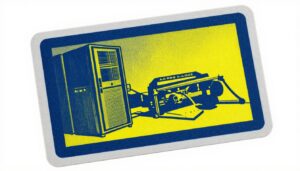
Apple announced the Xserve’s death on November 5, 2010, with sales ending January 31, 2011. The replacement wasn’t another rack unit. It was a Mac Pro server configuration starting at $2,999 with a 2.8GHz quad-core processor, 8GB of RAM, and two 1TB drives. A tower. For people whose entire infrastructure was built around nineteen-inch racks.
That decision left scars. People who built software stacks on Apple technologies during the Xserve era still talk about the rug-pull with a bitterness that aged like fine wine. The thing that matters most in enterprise infrastructure is longevity, the certainty that what you’re building will stay supported. That’s why x86 and Nvidia dominate. You can still run CUDA code written twenty years ago on current hardware with minimal modification. Apple’s track record? Not so much.
The Mac Pro’s trash-can redesign didn’t help. Neither did the cheese-grater saga. Apple’s history of discontinuing pro hardware is a real procurement risk, and anyone who lived through it has institutional memory that no marketing campaign can erase.
But here’s what’s changed: Apple now designs its own silicon, runs its own data centers for Private Cloud Compute, and has a Houston factory that’s been shipping servers since October 2025. The company that couldn’t sell servers in 2011 is now manufacturing them for itself in volume. Selling them to someone else is a smaller leap than it looks.
What the M8 Ultra Server Actually Is
The reported configuration: two versions, one with two M8 Ultra chips and one with four. Target customers are AI developers, businesses, and governments. The workload focus is inference, running trained models to generate responses, not training. Launch no earlier than 2029, and yes, it could still be canceled.
Let’s separate confirmed facts from reported claims:
| Claim | Source | Status |
|---|---|---|
| Two- and four-chip M8 Ultra server | The Information | Reported, unconfirmed |
| NVLink Fusion under discussion | The Information | Reported, not agreed |
| 2029 earliest availability | The Information | Reported estimate |
| Houston server plant shipping | Apple, Tim Cook | Confirmed, Oct 2025 |
| Private Cloud Compute on Nvidia Blackwell | Nvidia, June 2026 | Confirmed and shipping |
| M5 Ultra at 1.2TB/s memory bandwidth | apple.com tech specs | Confirmed, on sale |
| Xserve discontinued 31 January 2011 | Apple, Nov 2010 | Historical fact |
Only four of those seven rows are solid. The three that carry the headline are single-sourced, and Apple hasn’t said a word. Bloomberg’s Mark Gurman added his own wrinkle: the 2029 machine could just as easily carry an M7 Ultra, with M8 Ultra work running in parallel. So even the chip generation is unsettled.
Unified Memory Is the Whole Pitch
You want to understand why this is even being considered? Look at the Mac Studio numbers. The M5 Ultra configuration announced in August 2026 (shipping September 22) is the clearest statement Apple has made about where its silicon fits in the AI world:
| Specification | M5 Max | M5 Ultra |
|---|---|---|
| CPU cores | 18 (6 super, 12 performance) | 30 (10 super, 20 performance) |
| GPU cores | 32, up to 40 | 64, up to 80 |
| Neural Engine | 16-core | 32-core |
| Memory bandwidth | 460GB/s, up to 614GB/s | 1.2TB/s |
| Unified memory | 36GB, up to 128GB | 96GB, up to 512GB |
| Base storage | 512GB SSD | 1TB SSD |
| Starting price | $2,499 | $5,499 |
Here’s the bandwidth jump that matters: M3 Ultra ran at 819GB/s. M5 Ultra runs at 1.2TB/s. That’s a 46 percent increase in one generation, and Apple claims up to 4.3 times the peak AI compute of M3 Ultra. For anyone running local models, prompt processing is bandwidth-bound. That 46 percent shows up on every single interaction.
The Mac Studio M5 Ultra already carries up to 512GB of unified memory. Extrapolate to an M8 Ultra with the same ceiling, and a two-chip box reaches 1,024GB while a four-chip box hits 2,048GB. That’s arithmetic on a published figure, not a spec, Apple has said nothing about M8 Ultra. But it shows the sales pitch: one rack unit holding two terabytes of unified memory, accessible at speeds no GPU cluster touches without a PhD in infiniband configuration.
This builds directly on Apple’s earlier M5 server chip development and Private Cloud Compute strategy. The company has been quietly building toward this for years, and the impact of Apple’s M5 chip launch on on-device AI capabilities was already reshaping expectations for what local inference could look like.
The Frenemy Factor: Apple Renting Nvidia’s Fabric
Here’s the part that should make you do a double-take. Apple, the company that has spent years avoiding Nvidia like a bad ex, is considering using NVLink Fusion to connect its own chips. This is the semi-custom version of Nvidia’s rack-scale interconnect, opened to third-party silicon designers in 2025.
Nvidia’s business model here is genius in its simplicity: it supplies the switches, the chiplets, and the software layer that let non-Nvidia processors join an NVLink fabric. Nvidia keeps the networking revenue, the partner keeps the compute die. Apple would effectively be renting Nvidia’s clothes while wearing its own body.
The list of partners already signed up reads like a who’s who of Nvidia’s strategic hedging:
| Partner | What they bring |
|---|---|
| AWS | Graviton and Trainium silicon at hyperscale |
| Qualcomm | Arm server CPUs |
| Arm | The instruction set underneath most of the list |
| Marvell | Custom silicon for cloud operators |
| MediaTek | ASIC design and packaging |
| Fujitsu | Monaka Arm CPUs for Japanese HPC |
| d-Matrix | Up to 144 Raptor accelerators on one fabric by end of 2027 |
Apple would be the eighth name, and the only one selling a finished box to end customers rather than silicon to system builders. That’s a fundamentally different relationship with the market.
The history here is genuinely messy. The bad blood dates back to overheating issues with early unibody Intel/Nvidia MacBooks and the solder ball failures that left some users holding $2,500 bricks. Nvidia’s chips failed, Apple didn’t want to pay for the fix, feelings were hurt. But as one commenter put it, when enough billions of dollars are at stake, nothing is insurmountable. Bad blood is bad for business, and this is very good business for both sides.
The relationship has already thawed in practice. At WWDC in June 2026, Apple extended Private Cloud Compute onto Google Cloud infrastructure running Nvidia Blackwell GPUs, using Nvidia Confidential Computing to maintain privacy guarantees. Apple shipping on Nvidia hardware is already a fact. An agreement would give Nvidia a role in a product that could compete with its own AI systems, but NVLink Fusion lets Nvidia supply networking to companies building alternative processors, expanding its business beyond customers using Nvidia chips.
Why This Makes Financial Sense (And Why It Doesn’t)
Apple’s infrastructure spending is the strangest number in large-cap tech. In 2025, Apple spent roughly $12.7 billion on capital expenditure. Amazon, Alphabet, Meta, and Microsoft spent about $416 billion combined. For 2026, those four are guiding to roughly $725 billion combined, against Apple’s annualized figure of about $13 billion.
| Company | 2026 Capex Guidance (US$ billions) |
|---|---|
| Alphabet | up to 205 |
| Amazon | about 200 |
| Microsoft | about 190 |
| Meta | 115 to 135 |
| Apple | about 13 |
Alphabet’s 2026 guidance alone is roughly 15.8 times Apple’s annualized figure. Apple is not going to close that gap, and there’s no evidence it wants to. Selling a box is capital-light in a way that operating a cloud region is not. That’s precisely why a hardware product fits Apple’s balance sheet when an Apple cloud never could.
But the market dynamics are shifting. Gartner projected that more than half of enterprise AI inference workloads would run on-premises or at the edge by 2026, up from under a tenth in 2023. IDC puts AI infrastructure spending at about $487 billion in 2026, passing $1 trillion by 2029. Even a low-single-digit share of on-premises inference is a material business.
The inference-only framing matters though. Nobody is training a frontier model on Apple silicon in 2029. The software stack is wrong, the cluster scale is wrong, and Nvidia’s CUDA moat has a fifteen-year head start. Apple isn’t pretending otherwise, and that’s an admission as much as a strategy. For running local LLMs, Apple Silicon’s cost-effectiveness remains hotly debated, and the server play inherits those economics.
The Baltra Complication Nobody’s Talking About
The M8 Ultra story only makes sense alongside the other server chip Apple is building, which almost every write-up of the report left out.
Ming-Chi Kuo reported in January 2026 that Apple is developing a dedicated AI server chip codenamed Baltra, with Broadcom, on TSMC’s N3P process. Mass production was slated for the second half of 2026, with data centers using it built and operational from 2027. Baltra is for Apple’s internal infrastructure, Apple Intelligence, Private Cloud Compute, and is not the chip in the reported commercial server.
That split is logical: Baltra is tuned for Apple’s own model serving at Apple’s own scale, while an M8 Ultra box has to run whatever a customer throws at it. But it also means Apple is running two separate AI silicon tracks in parallel, which is expensive and organizationally messy. The enterprise server has to clear a high internal bar to justify the distraction.
This isn’t entirely new territory. Apple’s strategic shift toward on-device AI with future M7 chips already signaled that the company sees local processing as the future. The technical advancements in Apple M5 Max for local LLM inference laid the groundwork, and the current limitations and future potential of Apple hardware for running large local models define what a rack-scale product would need to solve.
Four Ways This Dies Before 2029
The reporting itself flags cancellation as a live possibility. Let’s be specific about the failure modes.
No enterprise software ecosystem
macOS Server was formally discontinued years ago. There’s no management plane, no fleet provisioning story, no Kubernetes node story, and no support contract structure aimed at a machine room. Apple would have to build an entire enterprise business around this box, and building the hardware is the easy half.
Three years is an eternity in AI
A product that can’t ship before 2029 has to be right about 2029. Memory-bandwidth economics, model sizes, and quantization practice have all moved substantially in the last three years. A 512GB-class unified memory box is remarkable today, it may be ordinary by the time this arrives. Apple’s own efforts to run large AI models directly on consumer devices suggest the long-term trend is toward smaller, more efficient models, not bigger boxes.
The Nvidia dependency can evaporate
NVLink Fusion terms aren’t public, and the arrangement isn’t agreed. Nvidia has every incentive to price access to the fabric in a way that protects its own systems business. If those talks fail, Apple is back to building an interconnect, and the 2029 date goes with it.
Apple has canceled bigger things
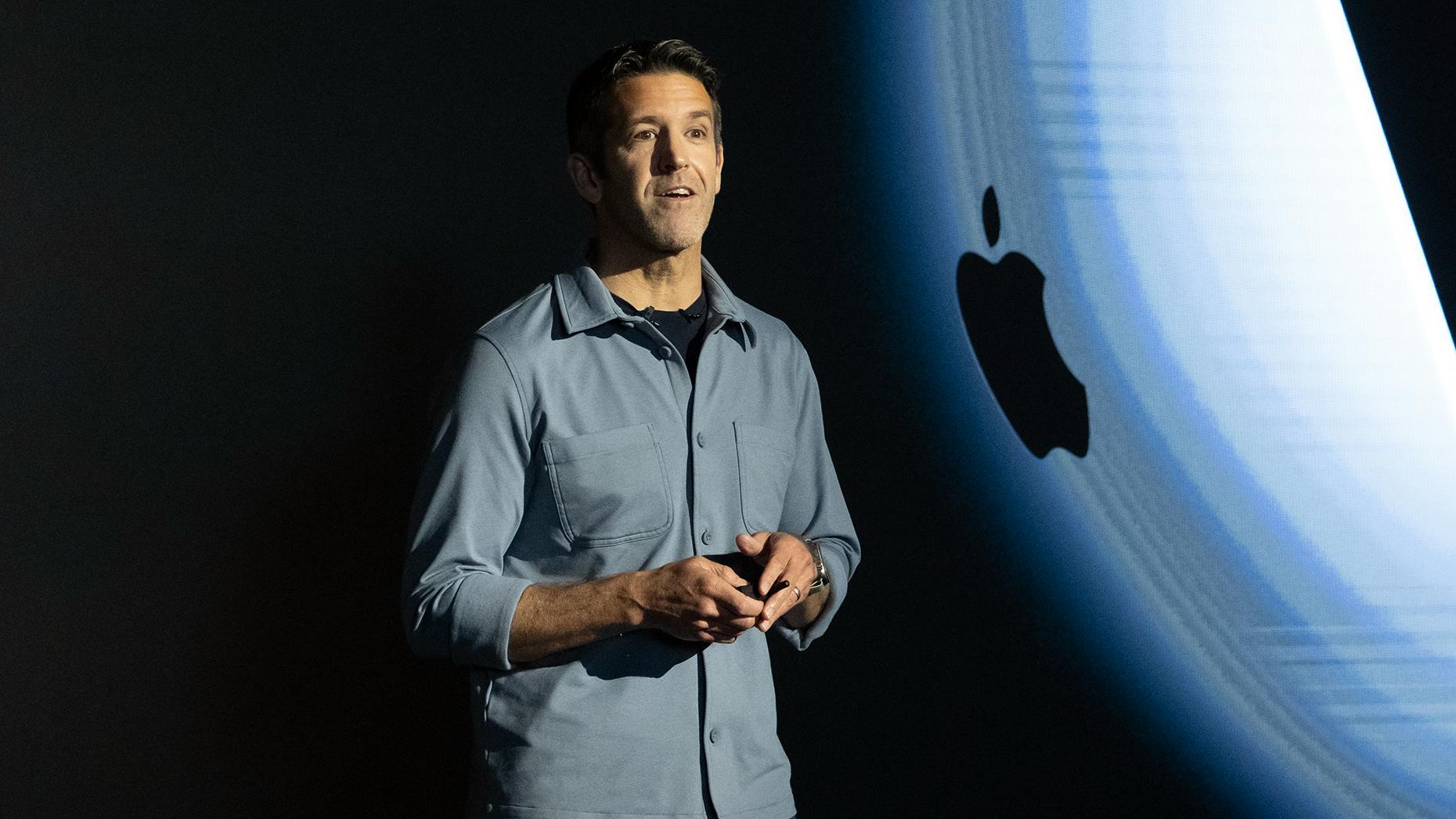
The car program absorbed a decade and was shut down. Apple has never been sentimental about projects that don’t clear its margin bar, and a low-volume enterprise server with support obligations is a structurally worse business than anything else Apple sells. John Ternus’s support matters, but it’s not a commitment.
The Cooling Problem Nobody’s Solved
Macworld made the sharpest technical point in the coverage: the M5 Ultra requires a cooling assembly weighing roughly two pounds inside the Mac Studio chassis. A 1U or 2U rack unit doesn’t have that vertical room. Apple would need a thermal design it has never shipped before, and thermal engineering is where server programs usually slip.
This is the unglamorous reason most hardware projects die. It’s not the chip design or the software stack, it’s moving heat out of a constrained envelope reliably for years of continuous operation. Apple’s cooling engineers have never had to solve a rack-density problem. Their entire history is in thin laptops and silent desktops. This is a different discipline entirely.
Apple’s broader AI strategy emphasizing privacy and on-device processing gives the company a compelling story for sovereign deployments, but a compelling story doesn’t move heat.
What You Should Do If You Buy Infrastructure
Here’s the practical takeaway, and it’s not “wait for Apple.”
Treat this report as a signal about demand. The most reliable information in the story isn’t about Apple. It’s that on-premises inference demand is strong enough that a company famous for avoiding the enterprise is modeling a commercial server. That demand signal is independently confirmed by the Gartner and IDC figures above.
Unified memory is now a procurement category. Whatever happens to this specific product, capacity-per-box is a live axis of competition that barely existed three years ago. Evaluate inference hardware on memory ceiling and bandwidth alongside raw compute, because the model you want to run is more likely to be memory-bound than compute-bound.
Don’t build a 2029 plan around this. Nothing is confirmed, nothing has a price, nothing has a support model, and Apple has exited this market once. Treat it as a possibility worth revisiting each time Apple ships a new Ultra chip, and plan your infrastructure as though it doesn’t exist.
The most honest way to read this story: Apple’s customers built the case for a server product by buying tens of thousands of Mac minis and Mac Studios for AI workloads. OpenAI has bought “tens of thousands” of Mac minis and Mac Studios for training AI agents through reinforcement learning. Anthropic has rented Mac minis from AWS. Apple’s Mac revenue jumped nearly 29 percent last quarter to $10.4 billion.
The demand exists. The question is whether Apple’s organizational DNA can tolerate an enterprise business, with all the support contracts, software commitments, and multi-year product promises that entails, long enough to make it work. The Xserve lesson is that building the box was never the problem. The problem was sticking around after the novelty wore off.
Fifteen years later, we’re about to find out if Apple learned anything.