Every thread about self-hosting AI eventually produces the same line: “once you own the hardware, it’s free forever.” It sounds reasonable. It’s also a financial illusion that ignores electricity, depreciation, opportunity cost, and the quiet reality that your $20,000 rig is competing against a $200/month subscription that keeps getting better.
The “free after hardware” myth is the most expensive lie in local AI. Let’s kill it with actual math.
The $20K Rig Breakeven Nobody Wants to Talk About
A Reddit user recently ran the numbers on a serious local rig, dual high-end GPUs, enough RAM and VRAM to run something respectable, the works. The total: roughly $20,000 upfront. The incremental electricity cost from running it under sustained load: roughly $200 a month. Compare that against a flat $200/month subscription to a hosted option with no upfront cost.
The crossover point where the local rig actually becomes the cheaper option? Month 27. Over two years of ownership before you’re financially ahead.
Before that point, you are strictly worse off by every measure. You’ve just already spent the money, so it doesn’t feel that way anymore. That’s the trap. Sunk cost makes the ongoing electricity feel free even though it isn’t, and it makes people report their setup as “free” once the hardware is paid off, ignoring that the hardware itself was the majority of the real cost.

The Electricity Bill Nobody Wants to Talk About
The “free after hardware” crowd conveniently forgets that a dual high-end GPU rig pulling real wattage under sustained inference load adds up fast. At $200/month in incremental electricity, which is realistic for a serious setup running hours a day, that’s $2,400 a year you’re not thinking about.
But here’s where the math gets interesting. One Reddit user with a single RTX PRO 6000 pushing Qwen 3.6 27B at 25 tok/s and paying $0.12/kWh calculated their electricity cost at roughly 80 cents per million output tokens. On OpenRouter, the same model costs $2 per million output tokens. Factor in input tokens and cache hits, which are literally free locally but cost $0.09/M on providers, and the gap widens dramatically. For a recent session with 900K input, 28M cached, and 135K output, the local cost was $0.80 versus $35.06 on OpenRouter.
So for $200/month in electricity, you could do roughly $8,800 worth of tokens from OpenRouter. That rig costing $15K all-in? Breakeven in approximately two months, if you’re actually burning that much power.
The problem is most people aren’t.
The Utilization Question Changes Everything
The single most important input in this calculation is not the GPU price or the electricity rate. It’s how many hours a day you can actually keep the card busy.
A comprehensive analysis from Digital Applied puts it bluntly: break-even is a utilization question, not a price question. Their model shows that a $9,000 RTX PRO 6000 running a 70B model undercuts Claude Sonnet on token cost only above roughly 26% daily utilization, about 6.3 hours of continuous generation per day. Below that threshold, cloud APIs are cheaper.
The break-even utilization matrix tells the full story:
| Rig | vs GPT-5.5 Pro ($180) | vs Sonnet 4.6 ($15) | vs Haiku 4.5 ($5) | vs Together ($0.88) |
|---|---|---|---|---|
| RTX PRO 6000 (70B, 27 tok/s, ~$9K) | ~2% | ~26% | ~87% | Never |
| DGX Spark (14B, 22.7 tok/s, ~$4,699) | ~1% | ~16% | ~50% | Never |
| RTX 5090 (30B, 60 tok/s, ~$3K) | <1% | ~4% | ~13% | Never |
Notice the “Never” column. Against commodity inference providers like Together AI or Fireworks, which host the same open-weight models for under a dollar per million tokens, local inference never breaks even. At full tilt, 24/7, a $9,000 RTX PRO 6000 generates about 70 million output tokens a month. At Together AI’s ~$0.88 per million tokens, those tokens cost roughly $62 in the cloud. The rig’s depreciation alone is $250 a month, about four times more, before a single watt of power.
The Electricity Scare That Barely Matters
Here’s the counterintuitive finding that flips most arguments on their head: electricity is noise.
At US-average commercial power ($0.14/kWh) and 50% utilization, electricity accounts for only about 13% of monthly TCO for an RTX PRO 6000. Your amortization window, three years versus five, moves the answer far more than your local tariff does, even across the US-to-EU price range.
| Line Item | 20% Use (~5h/day) | 50% Use (~12h/day) | 80% Use (~19h/day) |
|---|---|---|---|
| Depreciation (3-yr) | $250 | $250 | $250 |
| Electricity @ $0.14/kWh | $24 | $38 | $51 |
| Total Monthly TCO | $274 | $288 | $301 |
| Local cost per 1M tokens | $19.59 | $8.22 | $5.38 |
The curve is remarkably flat. Depreciation does the heavy lifting, 77% to 92% of total cost depending on the tariff. A team agonizing over electricity is optimizing the wrong line. The variables that actually move your economics are the hardware price and the amortization window, not where you plug in.
The VRAM Cliff Changes Everything
The real cost driver in 2026 isn’t GPU speed or electricity. It’s VRAM. If a model fits fully inside GPU video memory, inference can be fast, 40 to 50 tokens per second for a 70B model on an RTX 5090. If it spills into system RAM, throughput collapses to roughly 1 to 2 tokens per second. That’s a 20-50x performance collapse from the same card.
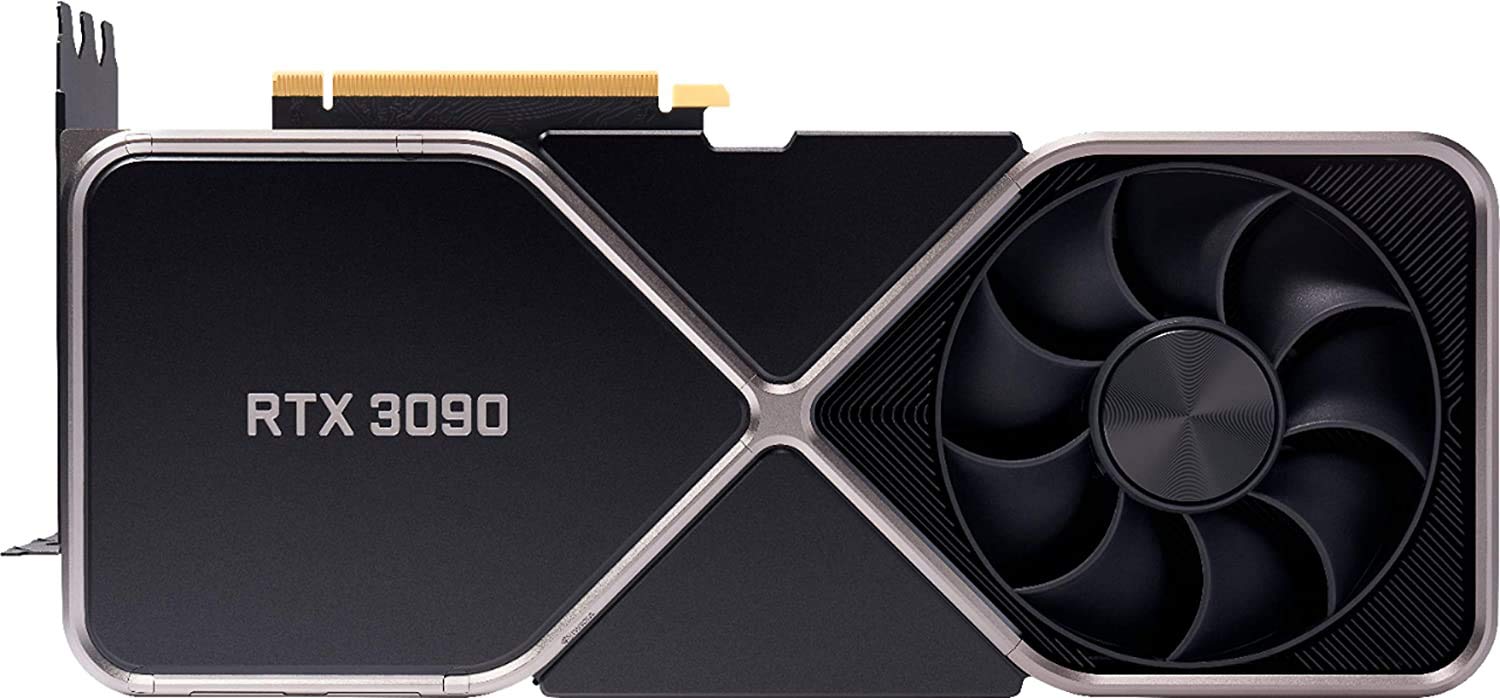
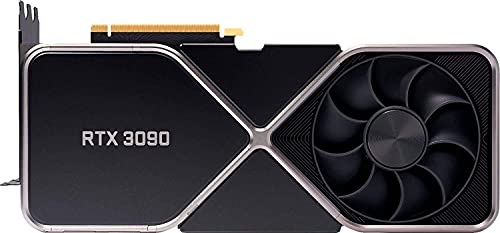
This is the “VRAM cliff”, and it reshapes the entire buying decision. A used RTX 3090 with 24GB of VRAM costs about $600, $850 and delivers roughly 5x the VRAM-per-dollar of an RTX 5090. Four of them = 96GB pooled for under $3,200, enough for a 70B model at high quality. For inference, newest ≠ smartest. VRAM-per-dollar wins.
The model sizing at Q4 quantization tells the story:
| Model Class | VRAM Needed | Hardware That Fits |
|---|---|---|
| 7-8B | ~6-8GB | RTX 5070 Ti 16GB, used 3090 |
| 26-32B | ~20GB | Single 24GB (3090/4090) |
| 70B | ~43GB | RTX 5090 32GB, dual 3090, M4 Max 64GB |
| 100B+ / 405B | 60-130GB+ | Mac 128GB+ unified, quad 3090 (96GB) |
The Hidden Costs Nobody Models
The $20K rig analysis conveniently ignores several factors that push the real breakeven point even further out:
Depreciation and resale value. GPU prices are volatile. The RTX 3090 used market has been surprisingly resilient, but that’s not guaranteed. Newer cards release, and your $20K rig becomes a $10K rig in two years. The M3 Ultra Mac Studios that seemed like a stupid choice last year? They’re looking pretty smart now.
Opportunity cost. That $20K sitting in chips instead of the stock market is a real cost. One Reddit user noted that getting a second RTX PRO 6000 two to three months ago would have netted them more than the stock market did. That’s not a sustainable investment thesis.
Maintenance and troubleshooting. A home server isn’t a subscription. It’s infrastructure. It needs updates, driver fixes, cooling management, and the occasional “why did my model just start outputting gibberish” debugging session. That time has a cost.
When Local Actually Wins
The math flips dramatically for certain use cases. Data generation and fine-tuning workloads can consume thousands of dollars in API tokens monthly. One user reported spending well over a thousand dollars on Gemma 3.1 tokens in a single month. For those workloads, local hardware pays for itself fast.
The key insight from the community: break-even is a utilization question, not a price question. Below roughly six hours of active generation per day, cloud APIs are cheaper. Above it, the rig is. The single most important input is not the GPU price, it is how many hours a day you can actually keep the card busy.
A user with two 3090 cards achieving ~450 t/s with Qwen 3.6 27B using batching (about 80 t/s for a single request) calculated their system draws ~600W. At $0.35/kWh, generating 1 million output tokens costs roughly €0.13 to €0.73. Over a three-year lifespan with average usage of 4 hours per workday, the cost per 1M output tokens lands at €0.35 to €1.96. That’s competitive with many API providers, but only because they’re maximizing utilization.
The Batch Pricing Trap
Here’s where the analysis gets even more interesting. The break-even matrix assumes interactive, standard-rate API pricing. But a large share of real AI work is offline, document processing, classification, summarization, overnight pipelines, and that work qualifies for batch pricing. Anthropic’s Batch API cuts every model’s rate by 50%.
Standard Sonnet 4.6 at $15/MTok breaks even at ~26% utilization. Batch Sonnet 4.6 at $7.50/MTok? That jumps to ~55% utilization, about 13 hours a day of non-stop generation. Batch Haiku 4.5 at $2.50/MTok? Local never wins.
The rule is clean: interactive, latency-sensitive, steady-volume work is where local hardware competes, offline batch work belongs on the cloud.
The Subscription Subsidy Time Bomb
Here’s the spicy part that changes everything: those $200/month subscriptions are almost certainly subsidized by VC money. Anthropic’s own numbers suggest that serious users with a $200 subscription cost the company more than 5x that per month. The difference is currently paid by investment capital. It’s not going to stay that way.
When subscription prices inevitably rise, and they will, the local rig breakeven point shifts dramatically. If that $200/month plan becomes $500 or $1,000, suddenly the 27-month breakeven collapses to something much more palatable. The question isn’t whether local hardware is cheaper today. It’s whether you’re betting that cloud prices will stay this low.
The broader AI cost crisis and inference economics context suggests they won’t. OpenAI’s Sam Altman recently admitted that token costs have gone from a non-issue to “a problem”, and that was before the current DRAM shortage drove GPU prices through the roof.
The Subscription Trap vs. The Hardware Trap
Both paths have hidden risks. Subscriptions put you at the mercy of the provider, price hikes, model deprecations, rate limits, and the quiet reality that your $200/month plan might not cover the usage you actually need. One user noted that Anthropic’s own estimates suggest serious users cost them 5x the subscription price. That gap is currently filled by VC money, and VCs don’t fund losses forever.
Hardware, on the other hand, locks you into a specific capability tier. That $20K rig you buy today will be running models that are two generations behind in 18 months. The used RTX 3090 that was the darling of 2024 is now the budget option of 2026. The RTX 5090 with 32GB can’t even run a 70B model at Q4 quantization, it overflows.
The local LLM cost illusion on Apple Silicon vs cloud is a related trap. A $4,299 MacBook Pro cranking out tokens feels rebellious, but the numbers reveal a different story.
When Local Actually Destroys Cloud Economics
The pro-local crowd isn’t wrong, they’re just selective about their use cases. Data generation and fine-tuning workloads flip the math completely. One user reported spending well over a thousand dollars on Gemma 3.1 tokens in a single month. For those workloads, local hardware pays for itself in weeks.
The cache hit advantage is another factor that’s almost universally ignored. Providers charge you for cache hits, locally, they’re literally free. When you’re ingesting billions of input tokens with decent cache utilization (70-80% after prompt engineering), even $0.09/M adds up fast. One user’s breakdown showed that for a million output tokens, they’d pay $0.80 locally versus $35.06 on OpenRouter when factoring in input and cached tokens.
The Real Reason to Go Local
After all the math, the strongest case for local AI has nothing to do with cost. It’s privacy and control.
For government projects, medical data, legal work, or anything involving client confidentiality, sending data to a third-party API creates a compliance surface that can be expensive or outright forbidden. One developer working on a government project noted they’re outright forbidden from using any non-local AI. Under the EU AI Act and GDPR, the compliance costs of cloud inference can dwarf the hardware costs.
Local inference removes the entire compliance surface. Nothing leaves your network, so there’s no third-party processor to contract, audit, or justify to a regulator. For an organization whose blocker is data sovereignty rather than token price, a local rig is not competing with a cloud API at all, it’s the only option that ships.
The Smart Path Forward
The honest answer for 2026 is that local ownership is the right call for a real but narrow band: heavy, steady, quality-satisfied, often privacy-driven workloads. The cloud, in one form or another, wins everywhere else.
If you’re going local, the smart money is on VRAM-per-dollar, not benchmark leadership. A used RTX 3090 with 24GB at $600-850 delivers roughly 5x the VRAM-per-dollar of an RTX 5090. Four of them = 96GB pooled for under $3,200, enough for a 70B at high quality. The KV cache quantization benchmarks for local inference show that proper optimization can stretch that VRAM even further.
The cloud cost reality for massive parallel compute is a reminder that for bursty or variable workloads, renting is almost always cheaper than owning. And the training LLMs on consumer hardware cost reality shows that even training workloads are becoming more accessible on single cards.
The Bottom Line
The $20K rig breakeven at 27 months is the best-case scenario. It assumes $200/month in electricity, no depreciation, no opportunity cost, and no maintenance time. Factor those in and the real breakeven pushes out even further.
But for the right use case, steady, high-volume, privacy-sensitive workloads, local hardware is a legitimate investment. The key is being honest about your actual utilization and not falling for the “free after hardware” myth.
The rig isn’t free. It’s a prepaid subscription with a 27-month minimum commitment and a variable electricity surcharge. If that works for your use case, great. If not, the cloud is waiting, and it’s probably cheaper than you think.