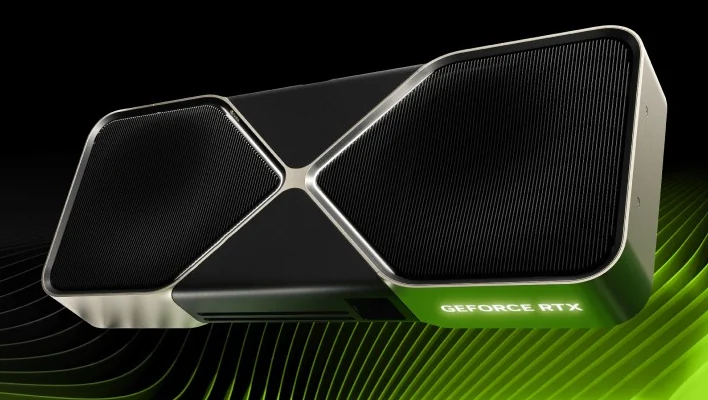
First the RTX 5090 vanished from NVIDIA’s marketplace. Now the RTX 5080 is gone too, and the writing on the wall isn’t just about inventory management, it’s a strategic confession that the gaming GPU market no longer drives NVIDIA’s product decisions.
The rumor mill has been chattering about a 24GB RTX 5080 for over a year. But the “Super refresh” we kept hearing about never materialized. What we’re getting instead is something far more telling: the exact same GB203 die, the same CUDA core count, and the same 256-bit bus, just 50% more VRAM. No architectural improvements. No clock bumps worth mentioning. Just memory.
This isn’t a refresh. It’s a market correction.
The Marketplace Disappearing Act
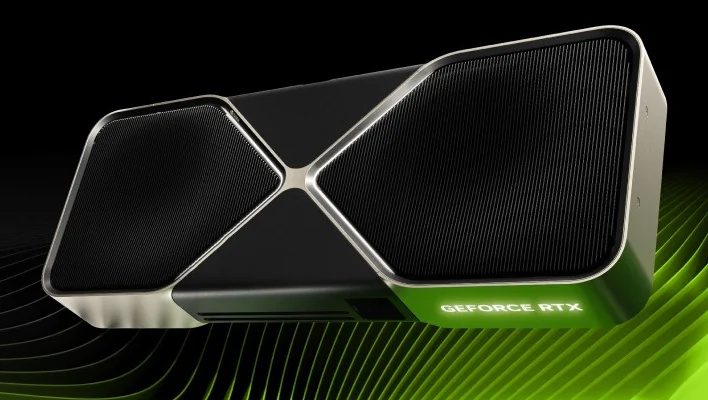
Here’s what we know. Earlier this month, the RTX 5090 disappeared from NVIDIA’s online marketplace, fueling end-of-life speculation. Now the RTX 5080 has followed suit. If you visit the consumer graphics cards section today, the fastest GPU you’ll find is the RTX 5070 Ti.
But the disappearances tell only part of the story. Before vanishing, RTX 5080 prices at various US retailers crossed the $2,000 mark, double the $999 MSRP. A leaked ChannelGate WeChat post (affiliated with Board Channels) from the Chinese market reveals the plan: NVIDIA has cleared all 16GB GPU inventory and expects the replacement 24GB model to launch between December 2026 and January 2027. December being the fastest, January the slowest.
The timeline isn’t accidental. It’s designed to push inventory through the holiday shopping season before the 24GB model emerges at CES.
VRAM Over Compute: A Confession, Not a Feature
Let’s be blunt about what this card is and isn’t. According to Hardware Unboxed’s analysis, the GB203 die in the current RTX 5080 is already fully utilized. As WCCFTech reports, this won’t be a more powerful Super variant. The only meaningful difference will be the VRAM bump from 16GB to 24GB, achieved by swapping the eight 2GB GDDR7 modules for eight 3GB ones.
| Spec | RTX 5080 16GB | RTX 5080 24GB (Rumored) |
|---|---|---|
| CUDA Cores | 10,752 | 10,752 |
| Memory | 16GB GDDR7 | 24GB GDDR7 |
| Bus Width | 256-bit | 256-bit |
| Bandwidth | 960 GB/sec | ~960 GB/sec* |
| Tensor Cores | 5th Gen, 1801 AI TOPS | 5th Gen, 1801 AI TOPS |
*Assuming no memory clock change
This is the most honest product in NVIDIA’s lineup in years. No pretending that “Super” means something. No architectural theater. Just more VRAM, because that’s what the market demands.
The question is: which market?
The AI Elephant in the Room
NVIDIA’s product strategy has never been subtle, but this move is particularly telling. The 24GB VRAM headroom specifically enables something the 16GB card couldn’t do well: running quantized 27B parameter models locally. That’s not a gaming use case. That’s an AI inference use case.
Here’s the uncomfortable truth for gamers: the RTX 5080 was never going to be a pure gaming card again. The 16GB→24GB shift acknowledges that local AI enthusiasts and prosumers are now a significant enough market segment to justify a mid-cycle SKU change. The additional VRAM makes the card particularly enticing to AI users running local models, and the community has already figured out how to squeeze remarkable performance from similar configurations.
The irony isn’t lost on enthusiasts. As one prominent comment on the r/hardware thread put it: there was no reason the 5080 shipped with 16GB in the first place when the 5090 got a VRAM upgrade. This kind of VRAM stagnation stems from two generations of NVIDIA “fucking around and upgrading nothing”, as another user more colorfully phrased it.
The DRAM Crisis NVIDIA Saw Coming
Here’s where the conspiracy theories get interesting, and some of them check out.
Reports indicate NVIDIA told third-party board partners that they could purchase the GPU die but not the GDDR modules separately, dating back to early-to-mid 2025. That’s before the full scope of the DRAM shortage became public knowledge. NVIDIA saw the crisis coming and positioned themselves to control memory allocation across their entire product stack.
The strategy makes brutal sense. Instead of shipping 16GB cards that would immediately look obsolete, NVIDIA:
1. Cleared existing 16GB inventory at inflated prices (up to $2,000+)
2. Delayed the 24GB model until the market could absorb the change
3. Positioned the 24GB card as the flagship until RTX Rubin arrives in 2028
One Reddit user’s observation gets at the core issue: they believe NVIDIA was aware of the shortage “way before we did”, and the 16GB config was deliberate market segmentation. NVIDIA already had multiple Blackwell SKUs with 24GB VRAM, the 5090M, the 5090 Chinese variant, and professional cards like the A4000/A4000 SFF. The 16GB 5080 was a segmentation choice, not a technical limitation.
The 3GB Memory Module Trick
The technical pathway to 24GB is straightforward. Current RTX 5080 models use eight 2GB GDDR7 memory chips. Switching to 3GB chips bumps the total to 24GB, a 50% increase without touching the die layout.
This isn’t the first time this trick has been used. The RTX 4070 Ti Super and RTX 4080 Super both leveraged 2GB modules on existing dies. But the implications here are different. The 5080’s 256-bit bus width remains unchanged, meaning memory bandwidth stays roughly the same (960 GB/sec in the current spec). For AI workloads, this is acceptable, bandwidth matters, but capacity is often the binding constraint for model loading.
The bigger question is price. With the ongoing DRAM crisis, DDR5 prices have skyrocketed 761% in Japan in a single year. A 128GB Corsair kit now costs as much as a high-end gaming PC. Memory prices are brutal across the board, and NVIDIA’s board partners won’t escape that reality. We doubt the new RTX 5080 will arrive at an acceptable price, especially with the current memory crisis.
What This Means for the Competitive Landscape
The GPU market is in a strange place. AMD’s Radeon RX 9700 XT (32GB) was recently priced near the 5080 16GB, around £1,500 in the UK. But that card has also seen price hikes, jumping to roughly £1,900. Meanwhile, Intel has reportedly exited the consumer discrete GPU market entirely.
We’re left with an ecosystem where NVIDIA is the only player with a comprehensive stack, and they know it. The comments on the original Reddit thread capture the sentiment well: one user noted that AMD doesn’t have a 20GB or 24GB card in the current generation, calling it a “massive downgrade.” Others pointed out that if the 5070 Ti also disappears, NVIDIA’s “high-end gaming GPU” narrative collapses entirely. As one commenter sarcastically predicted: maybe the RTX 5050 will eventually be NVIDIA’s high-end gaming GPU.
The Real Story: Consumer GPUs Are AI Workhorses Now
Ignore the gaming framing for a moment. This move tells us something more significant about where the industry is heading.
NVIDIA’s strategic push to dominate AI workflows with software-hardware integration has been visible for years. OpenAI’s acquisition of NVIDIA’s consumer GPU production capacity brought the focus into stark relief. Now we have a mid-cycle product refresh that doesn’t improve gaming performance, doesn’t add features, doesn’t do anything except add VRAM for AI workloads, and it’s coming at a time when consumer GPUs are already invading enterprise AI territory.
The 24GB 5080 becomes a bridge product. It’s not a gaming upgrade. It’s a local AI inference machine that happens to game, targeting a segment of users who were previously forced to choose between a gaming GPU and a workstation card. NVIDIA’s architectural shift away from NVLink affecting multi-GPU memory design shows the same pattern: the boundaries between gaming and professional hardware are dissolving.
The Availability Question
Even if the 24GB 5080 launches at a reasonable MSRP, which is a massive if, don’t expect to find one in stock. The VRAM increase makes the card particularly attractive to AI users, who will buy it in droves. AI enthusiasts have been pushing AI model efficiency on limited VRAM hardware for years, and a 24GB card at the 5080’s performance tier removes the biggest constraint they face.
The Reddit thread’s top comment predicted exactly this: “The 24GB of VRAM could make the card particularly enticing to certain AI users. This could mean that availability will be limited, and the card might not stay in stock for long at its original MSRP, whatever that price might end up being.”
Should You Wait or Buy?
If you’re in the market for a high-end GPU, the calculus is brutal:
- The 16GB 5080 is out of production, with remaining inventory selling above $2,000
- The 24GB version is coming in December/January, likely at a premium over the original $999 MSRP
- The RTX 5090 is also discontinued, with its replacement (rumored to be the 5090D V2 in China) running at inflated prices
- RTX Rubin won’t arrive until 2028
If you need a card for pure gaming, the calculus is different. A modest clock bump on the 24GB model might offer marginal performance gains, but nothing that justifies upgrading from a current 16GB card. You’re paying for VRAM headroom, not speed.
If you’re running local AI models, the 24GB 5080 becomes the value proposition of the generation, assuming you can get one at something resembling MSRP. For clustering consumer workstations to overcome VRAM limitations, 24GB per node represents a meaningful upgrade. Though the ongoing Apple hardware restrictions impacting VRAM availability for local AI suggest the entire ecosystem is constraining, not expanding.
The Verdict: NVIDIA Has Officially Pivoted
This isn’t a rumor story anymore. The RTX 5080 16GB has been pulled from NVIDIA’s marketplace. The 24GB model is coming. And the entire rationale, VRAM capacity for AI workloads over gaming compute, represents a strategic pivot that’s been building for years.
NVIDIA isn’t a gaming company that dabbles in AI. They’re an AI company that still sells gaming cards as an entry-level product. The RTX 5080 24GB is the clearest signal yet that consumer GPU design decisions now flow from AI market demands, with gaming as a secondary consideration.
For AI practitioners, this is excellent news. A 24GB card at the $999-$1,500 price point becomes viable for running 27B parameter models, cost-efficient AI models that are already reshaping hardware demands, and local inference workloads that previously required professional-grade hardware.
For gamers, it’s a sobering reminder that the golden age of cheap, powerful gaming GPUs is definitively over. When the flagship gaming card’s biggest selling point is 50% more VRAM for AI workloads, the message is clear: the compute that made your hobby possible has more profitable things to do.
The only question left is what happens to the RTX 5070 Ti. If NVIDIA’s pattern holds, that card is next on the chopping block. And when it goes, we’ll know the gaming GPU market as we understood it is truly dead.