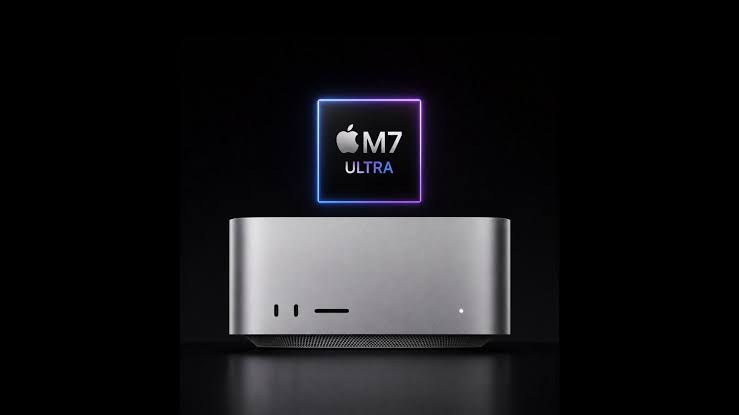
Apple has a history of accidental revolutions. The M-series chips were supposed to fix laptop battery life. Instead, they became the default platform for running large language models locally. Now, according to Bloomberg’s Mark Gurman, Apple is designing its M7 Ultra chip with up to 1.5 TB of unified memory, a figure that doesn’t just rival enterprise servers, it threatens to rewrite the economics of AI development entirely.
The M7 Ultra, expected in 2028, will also push AI performance “closer to the class” of Nvidia’s Blackwell accelerators. That’s not a vague marketing promise. It’s a direct shot at the most dominant force in the AI hardware market.
The Memory Wall Just Got Demolished
The headline figure, 1.5 TB, is roughly double the 768 GB planned for Apple’s upcoming M5 Ultra, and it matches the maximum RAM configuration of the 2019 Intel Mac Pro. But here’s the thing: that 2019 Mac Pro used separate DIMM slots with ECC memory. The M7 Ultra will achieve this within Apple’s unified memory architecture, where the CPU, GPU, and NPU share a single, massive pool of memory without the overhead of copying data between discrete VRAM and system RAM.
This matters because large language models don’t fit into GPU memory. A 70B-parameter model at full FP16 precision requires roughly 140 GB just for the weights. Run a Mixture-of-Experts model like GLM 5.2 at full precision, and you’re looking at nearly 1.5 TB before accounting for context. As one developer noted, the M7 Ultra could run GLM 5.2 at full weights, something currently only possible on multi-GPU server clusters costing hundreds of thousands of dollars.
The community reaction on Reddit has been telling. One commenter put it bluntly: “I would gladly pay $25,000 for 1.5 TB of Unified DDR6 Memory.” Another compared it to the cost of two RTX PRO 6000 cards ($30K+) with eight times the memory. A third pointed out that $25K would be a bargain compared to a server node with similar RAM capacity, which “was well over $100k.”
Of course, the actual pricing will likely be steeper. The M3 Ultra with 512 GB is currently running $12K, $15K on the secondary market. Extrapolating from Apple’s ~$25/GB pricing, a 1.5 TB configuration could easily hit $30K, $60K. Some estimates go as high as $100K.
The “Blackwell-Class” Claim Needs Scrutiny
Gurman’s report specifically states the M7 Ultra will bring AI performance “closer to” Nvidia’s Blackwell accelerators. This is deliberately measured language, not a claim of parity, and it’s worth examining what “closer” actually means.
The M3 Ultra currently achieves about 819 GB/s of memory bandwidth. For comparison, Nvidia’s Blackwell B200 offers 8 TB/s of HBM3e bandwidth. The gap is roughly 10x. But Apple isn’t standing still. The base M6 already targets 200 GB/s (up from 123 GB/s on the M5), and the M7 will push beyond 240 GB/s. The Ultra die, combining two Max dies via Apple’s UltraFusion interconnect, will scale bandwidth significantly, but it’s the architectural changes in the NPU and matrix multiplication units that will narrow the gap.
Prompt processing is the biggest bottleneck for Apple Silicon right now. As one experienced M4 Max user noted, “Token generation is just fine. Lack of prompt processing prowess is what is holding it back.” The M5 already improved prompt processing by 3x, and the M7 promises further gains in matmul throughput. If Apple can deliver a dedicated tensor processing unit on the M7 Ultra, the Blackwell comparison becomes much more credible.
Why This Disrupts NVIDIA’s Grip
Nvidia’s dominance in AI isn’t just about raw FLOPS. It’s about memory capacity and the software ecosystem. The RTX 5090 ships with 32 GB of GDDR7. The RTX PRO 6000 Blackwell offers 96 GB. Even the $30K H200 NVL comes with 141 GB of HBM3e per GPU.
For anyone training or fine-tuning models that exceed these limits, the only option is multi-GPU setups with NVLink or network-based sharding. That means complexity, latency, and astronomical cost.
Apple’s unified memory architecture flips this equation. One machine. One memory pool. No sharding. No PCIe bottlenecks. If you can fit the model, you can run it. The M7 Ultra’s 1.5 TB pool would allow a single developer to work with models that currently require a rack of Blackwell GPUs.
This isn’t just about convenience. It’s about Apple’s strategic shift toward M7 for on-device AI, which skips the M6 Pro and Max entirely. Apple is betting that local AI workflow will define the next computing paradigm, and they’re willing to sacrifice an entire chip generation to get there faster.
The Memory Shortage Nightmare
Here’s the catch. Gurman explicitly says whether Apple ships the 1.5 TB configuration “will depend on the state of the industry.” Widespread memory chip shortages have made high-capacity DRAM scarce and expensive. Apple already pulled the 512 GB Mac Studio configuration earlier this year due to supply constraints, and the 256 GB option followed shortly after.
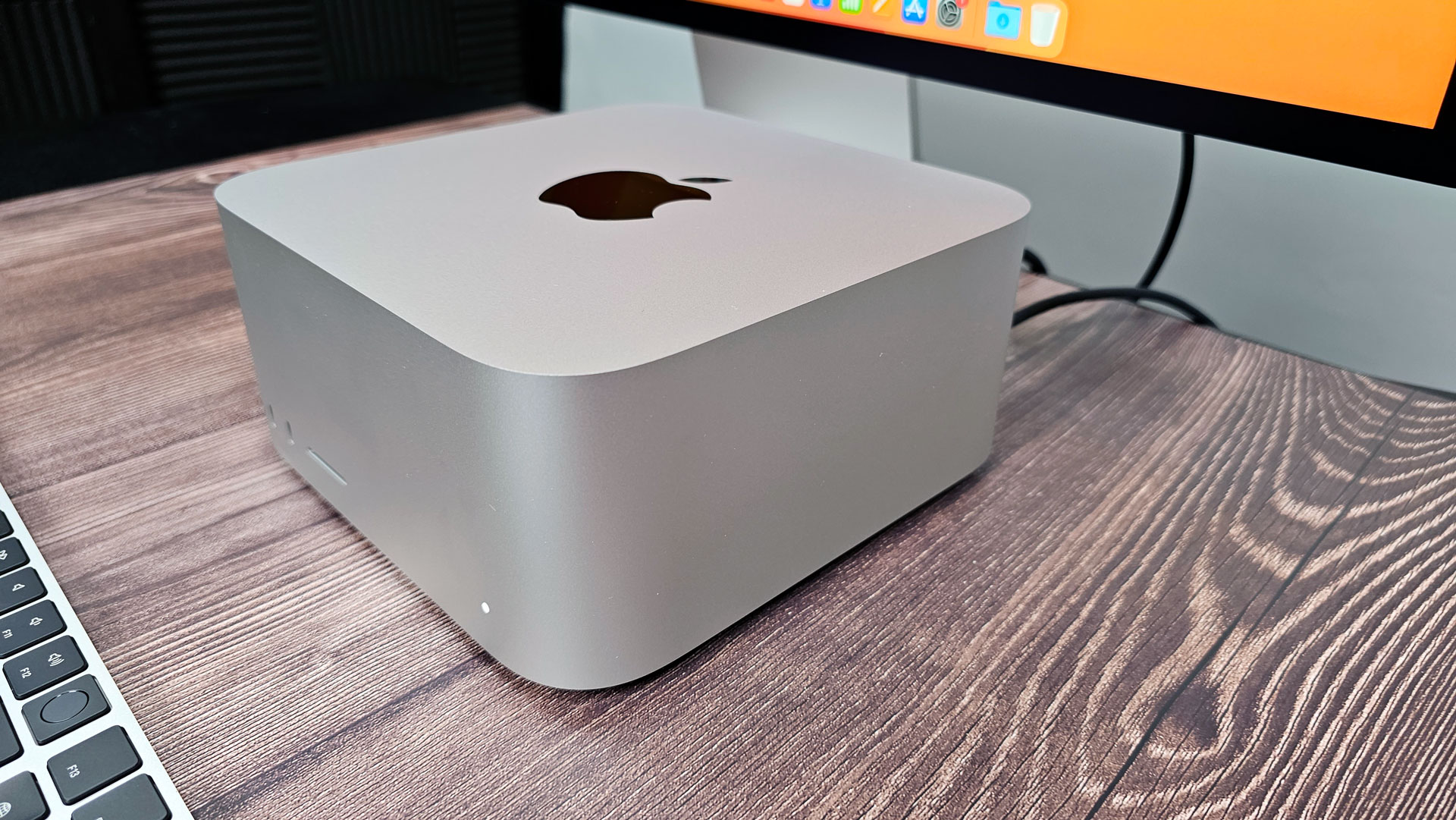
The memory crisis is real. SK Hynix forecasted tight memory supply lasting through 2028. OpenAI’s letter of intent to buy up nearly the entire DDR5 wafer supply triggered a cascade of orders that the industry simply can’t fulfill. One forum commenter summarized the situation: “There is no actual shortage because few data centers are getting built. There is just artificial memory price hike.”
Regardless of the cause, the effect is the same: high-capacity unified memory will carry a premium that makes the M7 Ultra a tool for professionals and enterprises, not hobbyists. But even at $60K, it undercuts server alternatives by a wide margin.
The Server Play: M7 Ultra as an AI Accelerator
The M7 Ultra isn’t just for workstations. Apple is reportedly developing an M7 Ultra-powered AI server architecture for deployment around 2029, following an M5 Ultra-based server platform code-named J246. This suggests Apple sees its silicon competing directly with Nvidia in the data center, not just the enthusiast market.
The implications for on-device vs cloud AI trust boundaries are significant. Apple is building a vertically integrated AI stack, from client-side inference on the M7 Ultra to server-side deployment on the same architecture. This unified approach could allow Apple Intelligence features to seamlessly offload workloads without the architectural friction that plagues hybrid cloud solutions.
Comparison: The 192 GB Trap and the 1.5 TB Breakthrough
AMD’s Strix Halo APU and its successor Gorgon Halo offer up to 192 GB of unified memory. That’s impressive, but it’s not enough for the largest open-weight models. The 70B parameter class at 4-bit quantization requires about 40 GB, leaving room for a large context window. But running DeepSeek V3 or Mixtral 8x22B at anything close to full precision becomes impossible.
The M7 Ultra’s 1.5 TB changes the calculus. You could run multiple 70B models simultaneously, or a single 1T-parameter MoE at 8-bit quantization with a 1M-token context window. This enables workflows that simply aren’t possible on any single workstation today.
But there’s a trap. As one developer pointed out, you could spend $60K on an M7 Ultra system or “the same or less on an absolutely insane GPU setup that completely blows it out of the water for speed.” The tradeoff is clear: Apple offers capacity, Nvidia offers throughput. For batch inference or training, Nvidia wins. For development, experimentation, and workloads that need massive context windows, Apple’s unified memory is the only option.
The Roadmap: M5 Ultra First
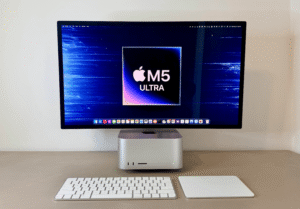
Before the M7 Ultra arrives in 2028, Apple will launch the M5 Ultra later this year or early next year with up to 768 GB of unified memory. This will be the first genuine test of whether Apple can deliver server-class memory in a desktop form factor. The M5 Ultra will reportedly feature 36 CPU cores and 80 GPU cores, and its availability will signal whether Apple’s supply chain can handle the memory demands of its roadmap.
The Apple M5 Max memory bandwidth improvements already demonstrate Apple’s commitment to scaling AI performance. The M5 Max delivers roughly 614 GB/s and a 4x improvement in LLM inference speed. The M5 Ultra, combining two Max dies, will scale that further.
Is It Worth the Price?
The cost analysis of local AI hardware vs cloud subscriptions suggests that at $25K, $60K, the M7 Ultra would break even against cloud API pricing within 12, 24 months for heavy users. But the calculus goes deeper. Cloud inference has unpredictable latency, data privacy concerns, and escalating API costs. For a research team iterating on a custom model, local development becomes a necessity, not a luxury.
One Reddit commenter captured the mood: “Even at $25,000 this can replace one or more employees who cost $70,000 / year, and they burn popcorn in the microwave.” The sentiment may be tongue-in-cheek, but the math holds.
The Bottom Line
Apple’s M7 Ultra with 1.5 TB of unified memory represents a genuine inflection point for local AI. It’s not just another spec bump, it’s a fundamental shift in what a single workstation can accomplish. The developer who can load a 1T-parameter model locally, iterate on it in real-time, and deploy it without cloud dependency has a massive competitive advantage.
The AMD MI350P competitive AI hardware strategy and the 192 GB memory leap from AMD’s Strix Halo show the industry is moving in the same direction. But Apple’s vertical integration, from chip design to system integration to memory supply, gives it a unique ability to execute.
The memory shortage remains the wildcard. If Apple can secure the supply chain, the M7 Ultra won’t just be a product. It will be a declaration that the era of cloud-only AI is over. The most powerful AI workstation on the planet might just sit on your desk.
Whether you can afford to put it there is another question entirely.