
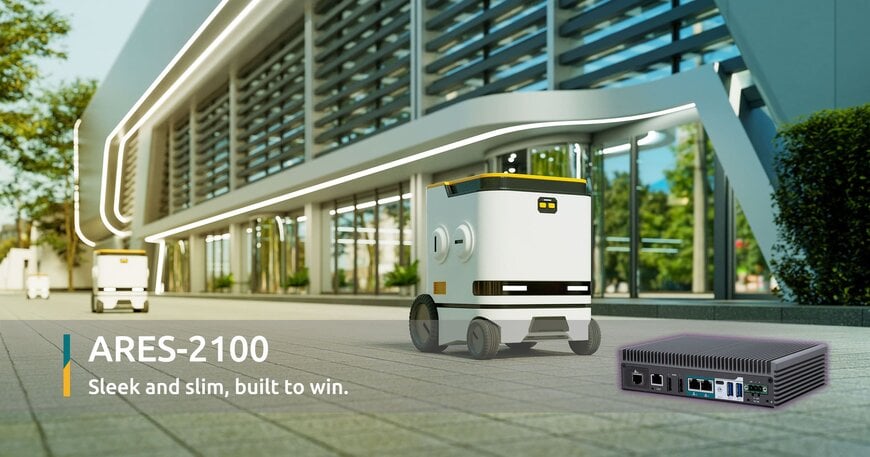
The ARES-2100 Series detailed above is a perfect case study. It’s a fanless edge AI box leveraging Intel’s Wildcat Lake processors to hit 40 TOPS (Trillion Operations Per Second) across CPU, GPU, and a dedicated NPU. Its hybrid computing architecture offloads neural network workloads locally, promising real-time automated inspection and autonomous robot navigation. This isn’t theoretical. It’s designed to sit in an unconditioned factory corner (-20°C to 60°C), analyzing sensor data before it ever touches a web socket.
The Takeaway: Edge AI means inferencing where the data is born. However, recent events show this promise is laced with tension. The Chrome team recently removed its claim that on-device AI doesn’t send data to Google servers. The exact reason is unclear, maybe a legal team stepped in, or maybe the promise was just too difficult to guarantee within their sprawling service architecture. Regardless, it’s a stark reminder that “on-device” is often a marketing term for “mostly on-device, with occasional, undefined trips to the cloud.” The trust boundary gets fuzzy fast.
The Two Poles of Inference: Why We Can’t Have It All
- Privacy & Sovereignty: Where does your data physically reside and who controls it?
- Performance & Latency: How fast do you need an answer?
- Cost & Complexity: What’s your budget for silicon and operational headaches?
On-Device champions privacy. Your medical images, your financial forecast, your factory’s proprietary defect patterns—never leave the physical perimeter of your device, server, or factory floor. This is what fuels the enterprise demand for “private AI” and data sovereignty cited as a key market driver. But the cost is immense hardware and energetic overhead. Running a 284-billion-parameter model like DeepSeek V4 Flash locally isn’t a trivial task. Salvatore Sanfilippo’s new ds4.c project exemplifies the bleeding edge of this challenge: a single-model inference engine built specifically for Apple’s Metal API that crams a MoE model into 128GB of RAM with aggressive 2-bit quantization. It’s a marvel, but it’s also an admission that the general-purpose runtimes of yesteryear aren’t enough.
Cloud Inference, championed by services from OpenAI, Azure AI, AWS Bedrock, and Google Vertex AI, flips the script. It offers massive scale, “infinite” (read: very expensive) compute, and frees you from hardware headaches. You pay for tokens, not terabytes of VRAM. But you surrender your data. Every query, every intermediate result, every error is processed on someone else’s computer, subject to their security posture, retention policies, and the whims of international data regulations. It centralizes your vulnerability.
The Devil Is in the Distributed Details: Introducing New Attack Vectors
Think about a hybrid architecture where sensitive data is pre-processed on a local edge box (like the ARES-2100), but heavier reasoning tasks are offloaded to a cloud API. Where is the trust boundary? Is it at the point where your data leaves the building? Or is it inside the API gateway you use to contact the cloud service? This creates a multi-layered attack surface where a vulnerability at any hop, the edge device’s firmware, the local network, the API management platform, can expose the crown jewels.
Platforms that combine edge and cloud, like the unified cloud-to-edge architecture announced by Vultr, SUSE, and Supermicro, layer AI on top of composable, distributed infrastructure to roll out models, updates, and security policies across the entire architecture. This is powerful, but that security policy layer is your trust boundary. If it’s misconfigured, your sensitive data can flow to the wrong place.
The security analysis of modern cloud-first AI architectures reveals the catastrophic potential of a misplaced trust boundary: a cascading failure across 300 coordinated agents. The same principle applies to edge-cloud hybrids. The networking layer isn’t just moving data, it’s transporting trust.
Beyond Latency: The Unseen Costs of Every Architecture
- The Cost of Operational Silence: Cloud APIs fail. Networks drop. A local inference engine keeps your factory line running or your diagnostic device working when the internet is gone. But what happens when you can’t remotely patch a critical security flaw on ten thousand deployed edge units?
- The Cost of Knowledge Entropy: Edge models are often static. They are quantized, pruned, and frozen. They degrade over time. The cloud model gets silently updated, maybe improving, maybe introducing a new bias. How do you version, audit, and regression-test an AI system where one component is static and the other is a fluid cloud service?
- The Cost of Complexity: Managing a fleet of edge devices with unique hardware, firmware versions, and local state is a systems engineering nightmare compared to scaling pods in Kubernetes. But managing a cloud API bill that grows linearly with user data volume is a financial nightmare.
The architectural fragility of AI systems, as seen in indirect prompt injection attacks, is amplified in hybrid environments. In a pure cloud setting, the threat model involves the API and the model. In a hybrid model, you must now also secure the data pipeline to the API, the edge device firmware, the local model weights, and the coordination logic between the two. A breach at the edge can poison the data sent to the cloud, corrupting its analysis for everyone downstream.
The Practical Checklist: Drawing Your Line in the Silicon
- Data Sensitivity: Can this data ever leave its physical origin point? (Health, finance, proprietary IP = likely ‘no’).
- Latency Tolerance: What is the maximum acceptable time between an input and a decision? (<100ms = likely edge).
- Scale of Deployment: Are we talking one device, one hundred, or one hundred thousand? (Massive scale complicates edge updates).
- Operational Environment: Is there reliable, high-bandwidth connectivity? (Ships, remote mines, rural clinics = likely edge).
- Compliance Mandates: Do regulations like GDPR, HIPAA, or industry-specific standards mandate data residency? (If yes, cloud becomes a legal quagmire).
The promise of inference API management platforms, like Azure AI or AWS Bedrock, is the abstraction of this complexity. They promise “multi-model routing”, “guardrails”, and crucially for this discussion, enterprise privacy controls with data residency and retention options. They are attempting to be policy-aware gatekeepers for your trust boundary. But that’s the rub: they centralize the definition and enforcement of that boundary. Are you comfortable with a vendor being your single point of trust?
Where This Is Heading: The Rise of the Sovereign Inference Layer

- Dynamically route queries based on a real-time analysis of data sensitivity, latency needs, cost, and model capability.
- Encode compliance policies directly into the infrastructure, ensuring data tagged as “PII” never leaves a specific geographic cluster or network segment.
- Provide cryptographic attestation that inference truly happened on the promised hardware, addressing the “on-device” trust gap Chrome exposed.
This vision is what makes the emerging architectures from hardware vendors and platform providers (like the Vultr/SUSE/Supermicro partnership) so crucial. They’re building the plumbing for this new world.
But plumbing is useless without the right policies. Before you choose a hardware platform or sign a cloud contract, you must decide, on a per-application, often per-data-type basis, where you draw your line of trust. The supply chain security risks of AI taught us that the trust boundary extends into your dependencies and how they’re invoked. The same is true for inference. Does your trust boundary break if your on-device compiler has a backdoor? Does it hold if your cloud provider has a data breach?
The security of any future distributed AI agent network will live or die at these inference trust boundaries. As agents proliferate, the points where they exchange data and decisions will be the new frontlines of security.
Final Verdict: There Is No Neutral Ground
- Choose the cloud when you trust a vendor more than you trust your own ability to secure and operate hardware, and when low-latency data sovereignty isn’t your primary concern.
- Choose the edge when the data is too sensitive to travel, the response is needed faster than a network round-trip, or regulations leave you no other choice.
- Choose a hybrid architecture when your needs are diverse, but prepare for an exponential increase in operational and security complexity.
The market, driven by “data sovereignty and private AI demand”, is voting with its wallet and moving processing closer to the source. But the onus is on architects and engineers to ensure that when we pull processing back from the cloud, we aren’t just trading one set of risks for another. We’re building a new, more complex perimeter. And its defense starts with understanding, and explicitly defining, every single trust boundary you intend to create. Anything less is just hoping the nightmare stays at bay.