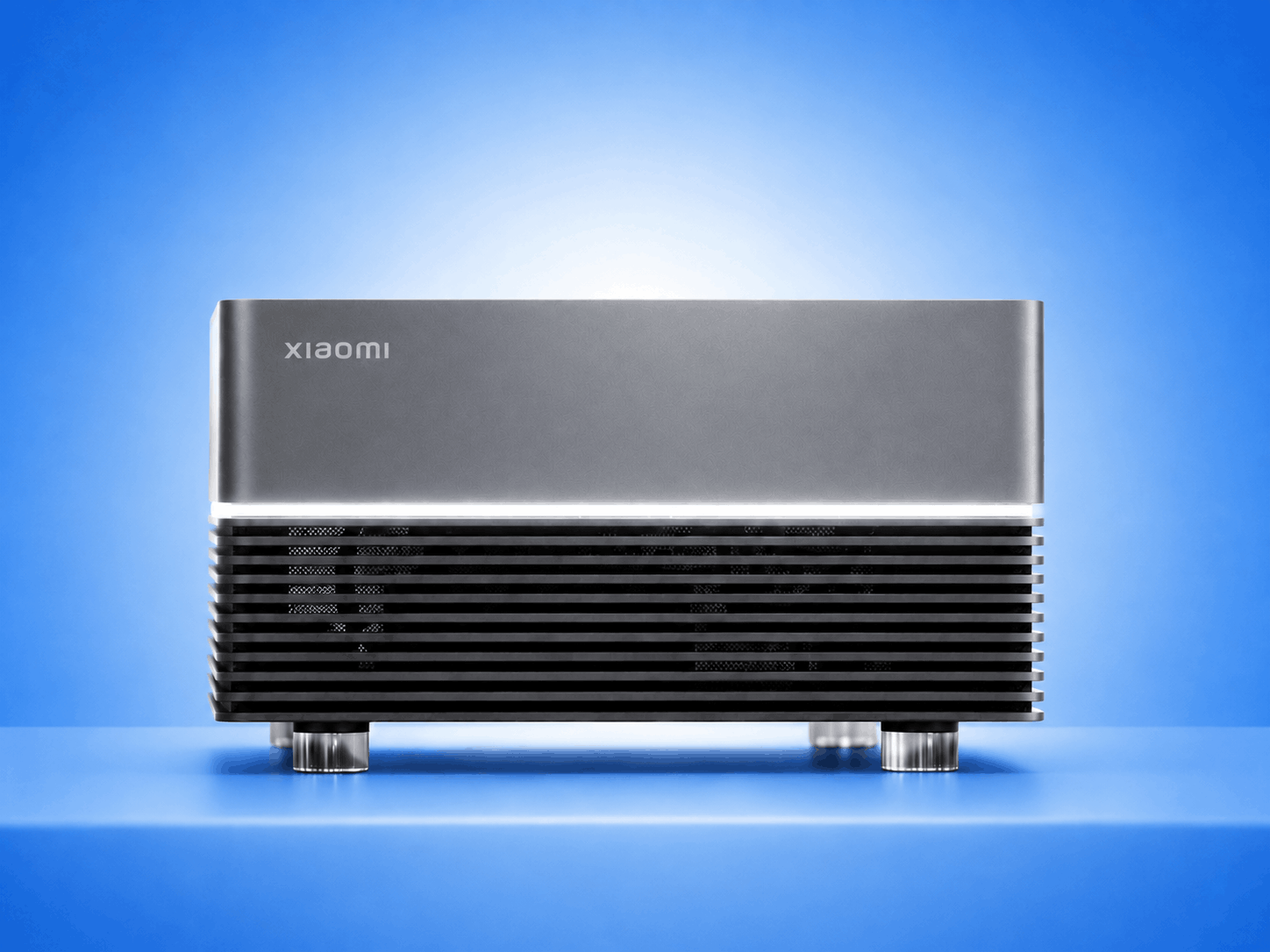
Xiaomi just went from “the company that makes affordable phones” to “the company that builds a 1.22TB/s local AI monster” in a single keynote. The AI Cube prototype, unveiled at their Xuanjie chip technology conference on August 24, packs three in-house silicon designs into a mini PC chassis that runs 120B-parameter models locally. And the internet is losing its collective mind for good reason.
But before we crown Xiaomi the NVIDIA killer, let’s dig into what’s actually on the table, what’s marketing fluff, and what genuinely matters for anyone who runs local inference.
The Three-Chip Strategy Nobody Expected
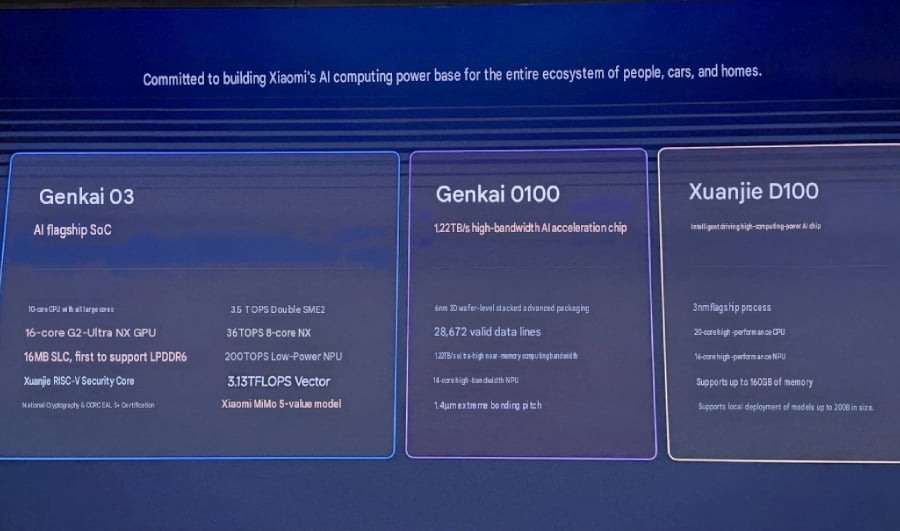
The AI Cube isn’t a single powerful chip. It’s a brutally pragmatic combination of three custom silicon designs that each serve a distinct purpose:
| Chip | Process | Role | Key Specs |
|---|---|---|---|
| Xuanjie O3 | 3nm | Main SoC | 10-core all-big-core CPU, 16-core GPU, 200 TOPS NPU |
| Xuanjie O100 | 6nm | AI Accelerator | 28,672 data lines, 1.22TB/s near-memory bandwidth |
| Xuanjie D100 | 3nm | Smart Driving / Compute | 20-core CPU, 16-core NPU, up to 160GB RAM |
The O3 is already shipping in the Xiaomi 18 Fold, arriving September. The O100 and D100? Commercialization doesn’t happen until 2027. That’s not a typo. The most interesting chip in this entire system won’t be buyable for over a year.
What makes the O100 genuinely fascinating isn’t raw compute, it’s the architecture. Xiaomi stacked DRAM directly on top of the chip using 6nm 3D wafer-level packaging with hybrid bonding at just 1.4-micron pitch. Instead of a conventional 256-bit LPDDR5 memory bus, the O100 leverages 28,672 parallel connections. The result is 1.22TB/s of bandwidth, roughly 16 times what flagship smartphones achieve.
Think of it as AMD’s V-Cache philosophy taken to its logical extreme. Short traces, massive parallelism, bandwidth that would make your average RDNA card weep.
Why Memory Bandwidth Is the Real Battlefield
Here’s the uncomfortable truth about modern LLM inference: compute has outpaced memory for years. A model’s weights need to stream through the chip for every token generated. If your memory bandwidth is insufficient, your silicon sits idle waiting for data. It’s like hiring a Formula 1 driver and making them drive a 1998 Corolla.
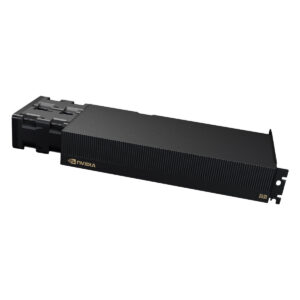
The DGX Spark, NVIDIA’s compact AI workstation, became a favorite punching bag precisely because of this bottleneck. The unit ships with 128GB of unified memory but tops out at 273GB/s bandwidth. That’s the constraint users hit daily, especially for prefill-heavy agentic workloads where the model constantly reprocesses context.
Xiaomi’s O100 at 1.22TB/s doesn’t just beat the DGX Spark, it obliterates it. For context, that’s roughly 4.5 times the bandwidth of NVIDIA’s compact AI box.
This is the kind of network architecture impact on AI inference performance that people overlook when spec-shopping. The path between memory and compute determines whether your 120B model feels responsive or like it’s moving through molasses.
The D100: A Car Chip Doing Heavy Lifting
Here’s where things get weird. The D100 wasn’t designed for this. It was built for Xiaomi’s EVs, the company’s smart driving compute brain. And yet, it’s a critical AI Cube component because it brings up to 160GB of unified memory to the table.
This isn’t as bizarre as it sounds. Electric vehicles are increasingly the most inference-ready devices people own. Look at the numbers:
- Xiaomi D100: up to 160GB RAM
- Xpeng Tuling: up to 216GB (across a 3-chip cluster)
- Tesla Model 3 HW3: 4GB (we don’t talk about that one)
Your next car might genuinely have more AI compute than your gaming PC. The irony of someone buying a cluster of EVs to run Kimi K3 locally isn’t lost on the r/LocalLLaMA crowd, one commenter even asked whether it’d be cheaper than NVIDIA GPUs. At current HBM prices, that’s less of a joke than anyone wants to admit.
What the AI Cube Actually Does
The demonstration system runs a 120B model alongside a 3B model, with the ability to switch between “fast” and “slow” inference paths depending on the workload. The 120B model handles complex reasoning. The 3B model, likely a MoE variant, handles quick, low-latency tasks like intent parsing and routing. That’s a smart division of labor.
Here’s the architecture as best we can infer it:
┌─────────────────────────────────────────────┐
│              AI CUBE SYSTEM                 │
├─────────────────────────────────────────────┤
│  O3 (Main SoC)                              │
│  ├── Handles small 3B models                │
│  ├── Fast path inference                    │
│  └── CPU/GPU/NPU for general compute        │
├─────────────────────────────────────────────┤
│  O100 (AI Accelerator)                      │
│  ├── 1.22TB/s near-memory bandwidth         │
│  ├── Handles 120B model inference           │
│  └── 28,672 parallel data connections       │
├─────────────────────────────────────────────┤
│  D100 (Smart Driving / Compute)             │
│  ├── Up to 160GB unified memory             │
│  ├── Preprocessing / large context handling │
│  └── 3nm, 20-core CPU                      │
└─────────────────────────────────────────────┘
The system sustains 150W continuous power. For the performance envelope, that’s remarkably reasonable, a full RTX 5090 system draws over 500W before you’ve even loaded the model weights.
The 1.22TB/s Question: What’s the Catch?
Here’s where the spec sheet gets murkier than a startup’s pitch deck. Several readers have rightly asked: is that 1.22TB/s figure for SRAM or actual DRAM bandwidth?
The O100’s packaging stacks memory directly on the chip, so what gets reported depends on how you measure. If Xiaomi’s using a wide, slow interface (many parallel lines at modest frequency), the effective bandwidth for real-world workloads could differ significantly from the theoretical figure.
Let’s put the number in context: 1.22TB/s is roughly what you’d expect from 8 channels of DDR5-6400 with perfect efficiency. On paper, that’s exceptional for a near-memory design. In practice, nobody outside Xiaomi’s lab has touched this thing.
We also don’t have:
– Public LLM benchmark results (tokens/sec for actual models)
– Latency measurements for prefill vs. decode
– Memory capacity configurations
– Software stack details
– Pricing
That last one matters. Xiaomi’s comment section is filled with hopefuls asking “1999 yuan?” The more realistic answer, based on 160GB of memory alone (which at current prices costs over $1,000), plus the packaging complexity, suggests this won’t be the budget king Xiaomi fans expect. Comments from ITHome readers estimate 4W-10W RMB ($5,500-$14,000). At that price, it’s competing directly with the DGX Spark and high-end Mac Studios, not with consumer mini PCs.
Xiaomi’s MiMo Software Stack Changes the Calculus
The AI Cube doesn’t run in a vacuum. Xiaomi’s been building a software ecosystem around its MiMo model family, a series of open-weights LLMs that have quietly become serious contenders. The company’s claims of record-breaking inference speeds with MiMo V2.5 show they understand that hardware alone doesn’t win battles. The DFlash optimization for their 300B model demonstrates software-hardware co-design, turning a 311B-parameter model into something that runs efficiently on constrained local hardware.
This matters because an AI box without good software is an expensive paperweight. NVIDIA’s CUDA ecosystem is the moat that keeps competitors out. Xiaomi’s MiMo stack is the first credible attempt by a Chinese consumer tech company to build the equivalent for their own silicon.
The 1000 tokens-per-second on a trillion-parameter model claim from their ultra-fast MiMo inference work might seem like marketing nonsense, but it signals genuine software engineering depth. Xiaomi isn’t just dropping silicon and hoping developers show up.
The Geopolitical Elephant in the Room
You can’t discuss Chinese AI chip design in 2026 without the geopolitical subtext. The Xuanjie O3’s 5.22 million AnTuTu score, the first mobile processor to break 5 million, already turned heads. But the real story is that Xiaomi is doing this without sanctions forcing their hand.
Huawei built HiSilicon because US restrictions cut them off from Qualcomm. Xiaomi faces no such restrictions. They’re building in-house silicon because they want to, not because they have to. The ToI analysis captures this perfectly: Xiaomi gains leverage in supplier negotiations with Qualcomm and MediaTek, plus a differentiation point in a brutally competitive Chinese phone market.
But this also triggers a nervous question: will Washington notice? Xiaomi’s D100 is China’s first 3nm smart driving chip, and the O100’s bandwidth numbers are the kind that get you added to entity lists. TSMC fabricates all three chips, which makes them vulnerable to export controls. One bad trade decision could turn the AI Cube from “next-generation product” to “artifact of a bygone era.”
Chinese media has already framed the Xuanjie launch as “another breakthrough for China’s semiconductor industry”, per CCTV. That framing might be accurate, but it’s also the kind of language that gets policymakers in Washington nervous.
The Competition: DGX Spark, Mac Studio, and the Rest
Let’s be honest about what the AI Cube is up against:
| System | Memory | Bandwidth | Local Model Capacity | Power |
|---|---|---|---|---|
| NVIDIA DGX Spark | 128GB LPDDR5X | 273GB/s | ~200B (4-bit) | 100W |
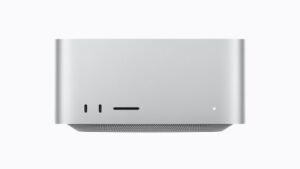
| Mac Studio (M-series) | Up to 192GB | ~800GB/s | ~200B (4-bit) | ~100W |
| Asus Ascent GX10 | 128GB | 273GB/s | ~200B (4-bit) | 100W |
| Xiaomi AI Cube | Up to 160GB+ | 1.22TB/s (claimed) | 120B (native) | 150W |
The DGX Spark’s memory bandwidth was its number one complaint after launch. Users hit walls on prefill speeds and context-heavy agentic workloads. A Mac Studio handles token generation respectably but its prefill speeds are notoriously poor for large models.
The AI Cube’s 1.22TB/s bandwidth could solve exactly these pain points. Fast prefill. Fast RAG processing. Fast re-processing for agentic workloads, the kind that constantly revisits tool calls and search results. One ITHome commenter pointed out this could be the ultimate agentic box: something parsing web results, handling semantic search, running comparatively huge models in the background.
If Xiaomi delivers even half the promised numbers, this becomes the first real all-in-one agentic workstation that doesn’t require a second mortgage.
What’s Missing From This Story
For balanced skepticism: the AI Cube remains an engineering prototype with no release date. Xiaomi’s track record with hardware projects that never materialize is checkered. The presenter’s slides listed “2027” for commercial availability of the O100 and D100, which means this device, if it ships at all, won’t arrive in its final form for well over a year.
The 3nm D100’s inclusion also raises questions about thermal design. You’re stacking three chips that each generate significant heat in a chassis with 33,874 CNC precision holes for a reason. The aerospace aluminum unibody is aesthetic, but it’s also a giant heatsink.
The Bottom Line
Xiaomi didn’t just enter the AI hardware race, they brought a weapon that challenges assumptions about what local inference is capable of. The 1.22TB/s bandwidth figure is the kind of number that DRAM pricing debates are built around. If Xiaomi follows through and this technology reaches the market at a reasonable price, the local AI landscape shifts dramatically.
But the distance between a prototype demo and a shipping product is littered with broken promises. The prudent take: watch what happens when the O100 becomes commercially available in 2027. If Xiaomi can deliver a developer-friendly software stack alongside jaw-dropping bandwidth and a price that undercuts NVIDIA, the DGX Spark will have a genuine rival.
For now, the AI Cube remains the most exciting piece of prototype hardware in local AI, and the most frustrating, because nobody can buy one.