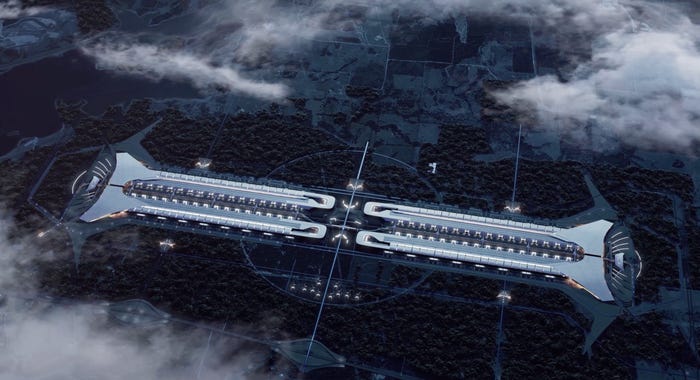
Elon Musk called it “the largest and most valuable building on Earth by far.” He also promised it would be “stunningly beautiful”, which is either a bold architectural vision or the same energy that gave us the Cybertruck. Probably both.
The numbers attached to Terafab Texas are genuinely absurd. We’re talking 100 million square feet of manufacturing space, that’s roughly 15 Pentagons, or five of China’s New Century Global Center in Chengdu, which currently holds the world’s largest building title at 18.9 million square feet. The initial $16.8 billion investment phase will employ 3,000 people, and SpaceX has floated total investment figures reaching $119 billion across future phases.
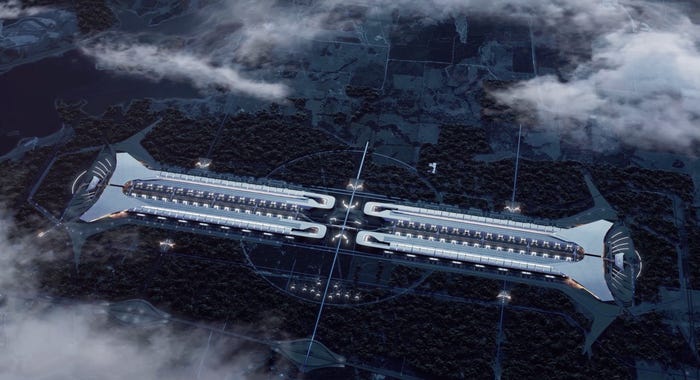
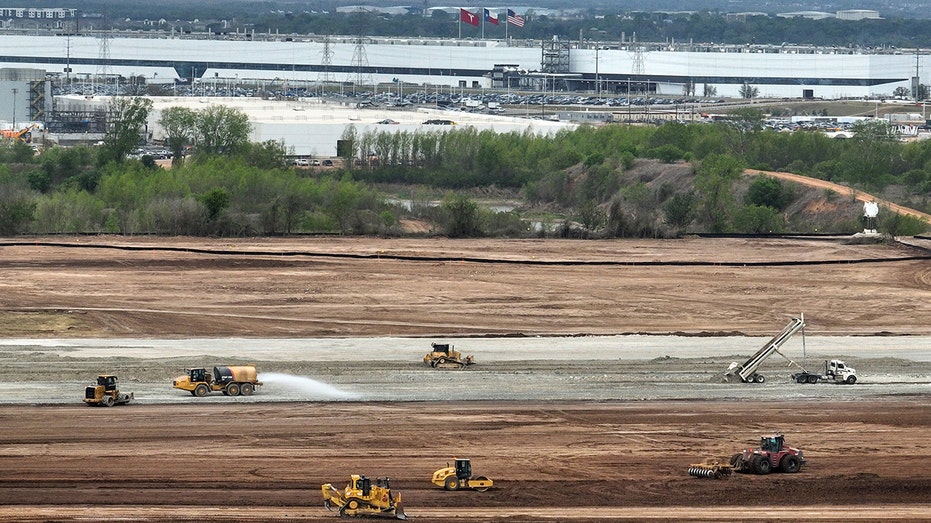
The joint SpaceX-Tesla project in Grimes County, Texas, about an hour north of Houston, represents the most aggressive vertical integration gambit in the history of computing. And the semiconductor industry has opinions about that. Strong ones.
The “We’ll Just Build It” Fallacy
Here’s the uncomfortable truth that keeps getting glossed over in the hype cycle: manufacturing leading-edge logic and memory devices is arguably the hardest manufacturing process humans have ever devised. The Reddit thread on this announcement captured the sentiment perfectly, somewhere between genuine awe and “is this man aware that particle contamination exists?”
The technical reality is brutal. A new fab facility takes years to bring online, and that’s for companies with decades of experience. TSMC needs about two years to bring a new fab to full production capacity. Intel, a company with essentially every possible advantage, experienced engineers, established supply chains, billions in existing infrastructure, is still struggling to regain the process leadership it lost to TSMC in 2018 with the 7nm node.
The gap between “Tesla designed the HW3 and HW4 chips in-house” and “Tesla will manufacture advanced logic and memory devices at scale” is not a small gap. It’s a chasm. Designing chips and manufacturing them are completely different disciplines. Tesla has proven it can do the former through years of FSD hardware development with Samsung as contract manufacturer. The latter requires mastering cleanroom environments with parts-per-billion contamination tolerances, photolithography equipment with nanometer precision, and yields that make or break the economics of every wafer produced.
One commenter on the announcement captured the reality with uncomfortable precision: the insane degree of intolerance to contamination means the average time to get a stable yield out of a chip fab is about five years after the production line starts. Not five months. Five years. During which you’re chasing minuscule leaks in gas lines, finding contamination introduced during equipment installation, tracing parts-per-billion phosphate levels in the water supply, and hunting literal single motes of dust.
You can’t brute-force this. You can’t throw more money or more engineers at it and make the physics cooperate faster. The equipment itself, the EUV lithography machines from ASML that cost hundreds of millions each, are backordered years out. ASML can’t sell to China, so the backlog involves essentially every serious semiconductor player on Earth.
The Intel Connection Nobody’s Talking About
The most interesting detail hiding in this announcement is the implicit partnership with Intel. Musk has reportedly invested in Intel, and the company is expected to help set up the Terafab operation. This changes the calculus significantly.
Tesla has been co-designing AI accelerators for its Full Self-Driving (FSD) hardware for years. The HW3 and HW4 chips are already mass-produced at substantial volumes. What Tesla hasn’t done is manufacture them. But pairing Tesla’s chip design expertise with Intel’s foundry experience, even if Intel’s recent process node struggles have been very public, creates a different risk profile than SpaceX going it alone.
Still, the skeptics have a point. Intel had every advantage imaginable and still lost its process leadership to a company that started as a contract manufacturer in Taiwan. The massive financial losses in leading AI companies like OpenAI show that even with essentially unlimited capital, AI infrastructure bets can bleed cash for years before producing returns.
Why Terafab Exists: The Math of Compute Demand
Despite the skepticism, the underlying logic for Terafab is sound. SpaceX said its and Tesla’s combined demand for chips is expected to exceed global supply. That’s not marketing spin, it’s the same math driving AI’s growing energy demands pushing compute infrastructure to space. When you’re planning Optimus robots, a Cybercab fleet, and space-based data centers, you’re not competing for chips against other enterprises. You’re competing against every hyperscaler on the planet.
The two companies expect to need more than 1 terawatt of computing power in the coming years. That’s a number that makes traditional data center planning look quaint. Google, Meta, and Microsoft are designing their own silicon for similar reasons, the supply chain simply cannot keep up with AI demand at the current trajectory. Meta’s future AI data center lease obligations have swelled to over a quarter trillion dollars. Microsoft’s AI capex race has Wall Street simultaneously cheering and sweating.
The play here is built-in demand. Musk doesn’t need to find customers for Terafab’s output, his own companies are the customers. The question is whether the economics work: can Terafab produce chips at a cost lower than simply buying from Samsung, TSMC, or other established foundries? Because if the answer is no, the “world’s largest building” becomes the world’s largest money pit.
The Tax Breaks and the Local Backlash
Let’s talk about the other side of this deal, because it’s getting spicy in Grimes County. Governor Greg Abbott extended a $30 million Texas Enterprise Fund grant to SpaceX as part of the deal. The facility is also qualified under the Texas Jobs, Energy, Technology, and Innovation (JETI) program, created in 2023 to attract large capital-intensive projects with robust reporting and transparency requirements.
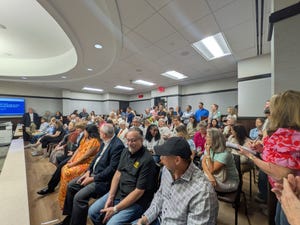
But the locals aren’t universally thrilled. Nearly 900 residents of Grimes County signed a petition calling for more community oversight of large AI infrastructure projects receiving public incentives. The property tax abatements are substantial, SpaceX agreed to pay the county $20 million annually, which is about 78% of what it would have paid in property taxes. That’s a significant discount, and residents in a rural county understand exactly what it means for their school funding and municipal services.
The debate mirrors what’s happening across the country as AI infrastructure projects seek public subsidies. One commenter on the announcement noted that Musk, already the world’s richest person, receives more in tax breaks than entire state homeless programs receive in funding. That’s a politically charged framing, but the underlying tension is real: should public money subsidize infrastructure for private companies whose value is already astronomical?
SpaceX’s defense is straightforward: the facility creates 3,000 high-paying jobs, generates economic activity that ripples through the region, and positions the United States to compete in semiconductor manufacturing. Jordan Buss, SpaceX’s senior director of environment, health, safety, and medical, went further during a local meeting, calling the factory “strategically vital for the United States” and essential for competing in the AI race. That framing, AI as existential competition rather than commercial opportunity, does heavy lifting in justifying the subsidies.
The “It’ll Work Because It’s Musk” Argument
For every semiconductor veteran explaining why this is impossible, there’s someone pointing out that SpaceX was supposed to fail at reusable rockets, Tesla was supposed to fail at EVs, and Starlink was supposed to fail at satellite internet. The “Elon will figure it out” crowd has a track record of being wrong about the details but right about the trajectory.
There’s a legitimate version of this argument. If you have enough capital, you can hire the talent. If you have enough talent, you can build the capability. China has spent years pouring state-level investment into its semiconductor industry and is only now approaching technology that’s three to four years behind the cutting edge, but they got there by hiring the PhDs, buying the equipment (when they could), and grinding through the yield problems.
Musk’s companies already attract world-class engineering talent. The question is whether semiconductor manufacturing expertise is fungible enough that you can pay enough to build a world-class fab team from scratch. TSMC’s process engineers aren’t leaving, they’re paid well and working at the frontier. The talent pool for advanced semiconductor manufacturing is arguably smaller and more concentrated than the pool for rocket engineering.
The Edge Computing Play
What makes Terafab strategically interesting is the focus on edge computing and inference rather than training. The chips coming out of Grimes County won’t compete directly with Nvidia’s training clusters. They’re optimized for inference workloads in robots, autonomous vehicles, and space-based data centers.
This is a fundamentally different market. Nvidia is the ‘cutting-edge’ developer of AI architecture, but that doesn’t mean every AI workload needs Nvidia silicon. Optimus robots need real-time inference with minimal power draw. Cybercabs need deterministic compute for safety-critical decision making. Space-based data centers need radiation-tolerant chips with specific power characteristics.
For these workloads, a vertically integrated fab makes strategic sense. You’re not trying to compete with TSMC for the leading-edge training market. You’re building specialized hardware for your own products, with the manufacturing capacity to scale when you need it.
SpaceX’s Terafab announcement included a striking admission: “While we are deeply appreciative of our current chip suppliers and encourage them to expand production whenever possible, this looming gulf between supply and demand is at the core of Terafab’s necessity.” In other words, they asked their suppliers to expand, the suppliers couldn’t (or wouldn’t) move fast enough, and so they’re building the factory themselves.
The Timeline Problem
The most realistic assessment of Terafab’s timeline looks something like this: years of equipment acquisition delays (because everyone is building fabs right now), then years of yield chasing, then years of trying to hit a moving target as semiconductor process technology advances. The high-stakes competition for top AI talent across companies extends to semiconductor process engineers, and they’re not easy to poach.
If Terafab comes online in 2030 with 2028-era process technology, it might still be useful for edge inference workloads. The performance requirements for robots and autonomous vehicles are less aggressive than training clusters. But it won’t be the “stunningly beautiful” crown jewel of semiconductor manufacturing that the renderings suggest.
The renderings themselves are worth examining. The Terafab design features four massive rectangular buildings split across the site, connected by what looks like a futuristic roadway. It’s described as “Star Wars-like” in the Business Insider coverage, which feels both on-brand and slightly concerning given how much hardware engineering actually goes into semiconductor fabs.
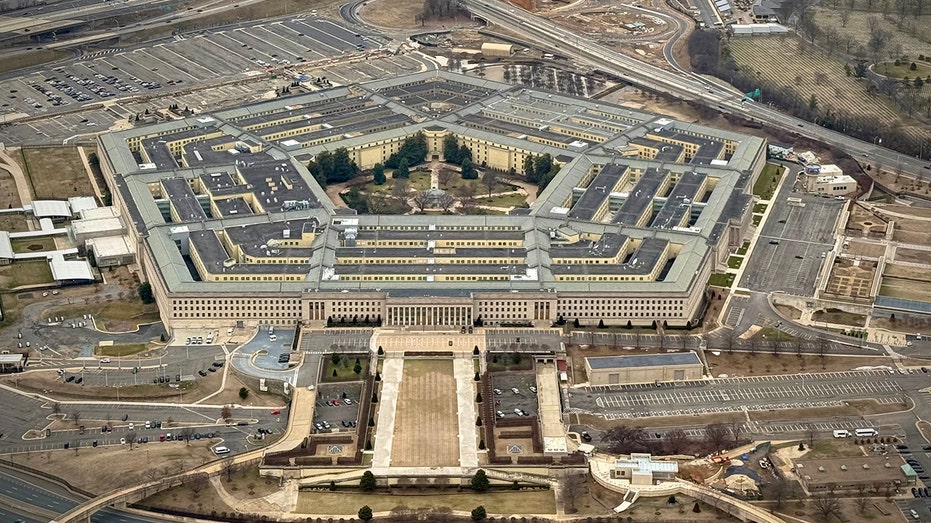
The Pentagon comparison is instructive. At 6.6 million square feet, the Pentagon was the largest building in the US, until Terafab comes online at roughly 15 times that size. But the Pentagon also took 16 months to build during wartime, while semiconductor fabs take years just to achieve stable yields.
The Verdict: Ambitious, Necessary, and Probably Late
Terafab Texas is simultaneously the most ambitious manufacturing project of the decade and the most predictable overpromise in Musk’s portfolio. The scale is unprecedented. The strategic logic is sound. The economics are unproven. The timeline is almost certainly optimistic.
What makes this project different from the open-weights paradox in distributed AI systems is that it’s not about access, it’s about independence. Musk is betting that the AI future requires owning the entire hardware stack, from design through manufacturing, for his companies’ specific workloads.
The skeptics are right that this is one of the hardest things humans have ever attempted. The optimists are right that Musk has a track record of succeeding at hard things after missing deadlines and burning through capital. The residents of Grimes County are right to ask questions about tax abatements and community impact.
But here’s the thing about building a 100-million-square-foot semiconductor factory: if it fails, it’s a spectacular failure that teaches us something about the limits of vertical integration in the AI era. And if it succeeds, it changes the competitive dynamics of the industry permanently.
Either way, Terafab Texas is going to be the most watched construction project on Earth for the next decade. And the “stunningly beautiful” part? We’ll find out if Musk’s architectural taste is better than his Cybertruck design instincts.
The Terafab is scheduled to break ground. The real test, stable yields, economic production, chips in Optimus robots and Cybercabs, will take years to evaluate. The leadership instability plaguing Musk’s AI ventures doesn’t exactly inspire confidence in a project that requires long-term organizational focus. But the Grok model open-sourcing showed Musk can pivot strategy when circumstances demand it.
For now, Texas gets the world’s largest construction project. The semiconductor industry gets a decade of entertainment watching someone try to do the hardest manufacturing process on Earth at unprecedented scale. And the AI industry gets a reminder that the compute bottleneck isn’t just about software, it’s about silicon, and silicon is really, really hard to make.