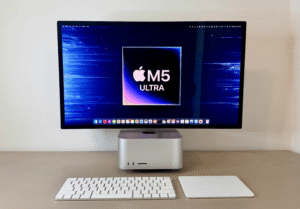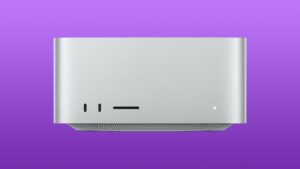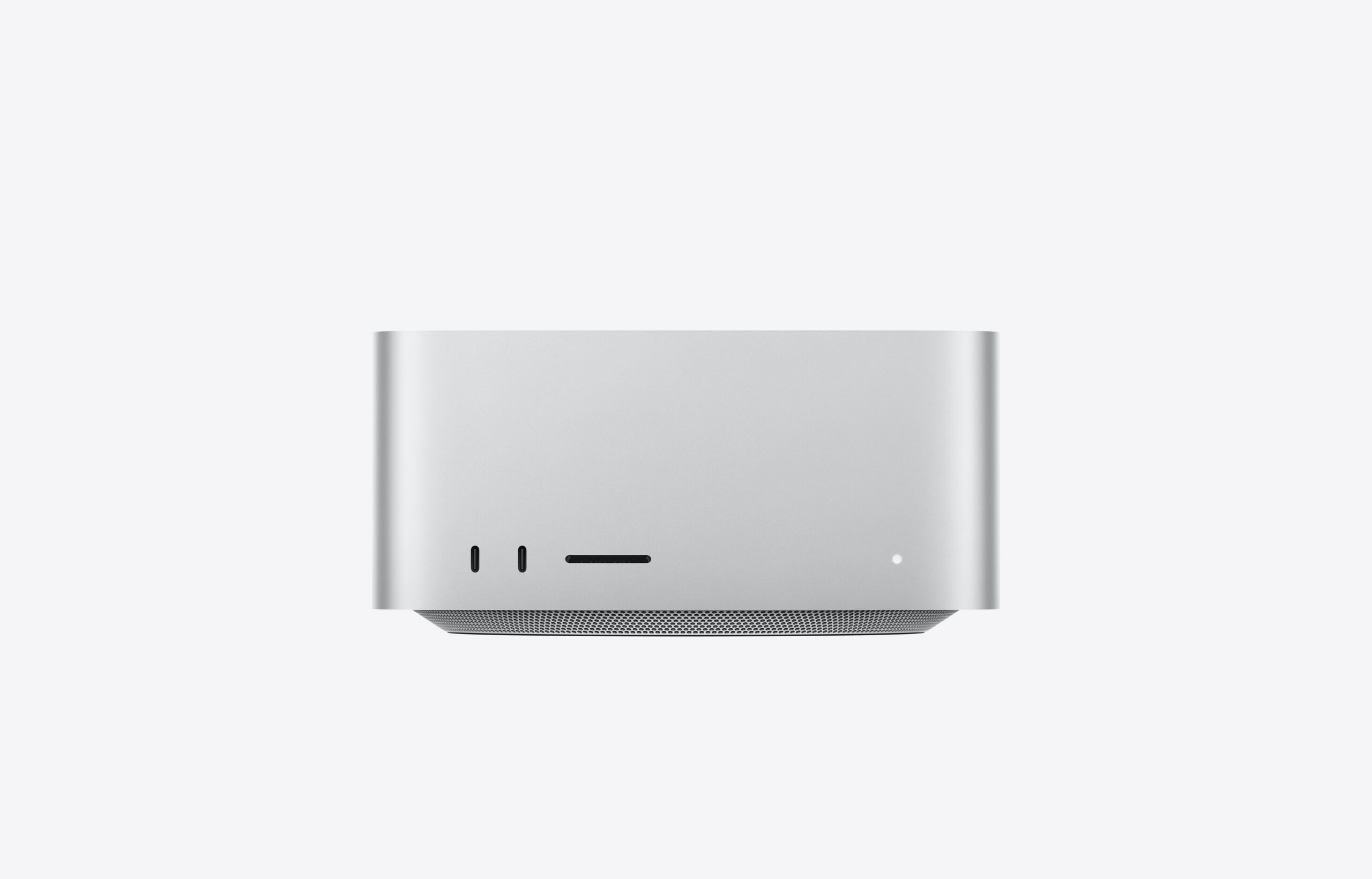
Apple just dropped the pricing for the Mac Studio with 512GB of unified memory, and the internet collectively choked on its coffee. At $22,299 for the base configuration, this machine costs more than a used car, and that’s before you touch the storage options. Max out the 16TB SSD and you’re staring at $29,799, which, as one commenter noted, is about $200 more than a 2026 Toyota Camry at list price.
The reaction was immediate and predictable. Developer forums lit up with a mix of shock, resignation, and dark humor. One user captured the mood perfectly: they’d told themselves they’d buy one at $16,000, but $22K is a hard no. Another pointed out the absurdity of the memory pricing: Apple typically charges around $25 per GB of RAM, but this upgrade works out to roughly $45 per GB for the extra 256GB.
So is this the moment Apple finally jumped the shark on pricing, or is there a method to what looks like textbook price gouging?
Breaking Down the $15,500 Question
Let’s talk about what you’re actually paying for. The 512GB configuration requires the top-tier M5 Ultra chip, 36-core CPU, 80-core GPU, 32-core Neural Engine, which pushes the base from $5,499 to $6,799. Then the memory upgrade itself costs $15,500 on top of that. The math is brutal: you’re paying more for the RAM than most people spend on an entire workstation.
But here’s where it gets interesting. When you compare this against what else exists in the market for 512GB of high-bandwidth memory, the picture shifts. A commenter on the hardware forums broke down the alternatives: this is “the cheapest option for that much memory at that bandwidth by an absolutely massive margin. Like, less than half of any alternative.”
That’s not Apple apologism, it’s market reality. Building a comparable system with NVIDIA workstation GPUs means stacking multiple cards, dealing with NVLink bridges, and still hitting capacity walls. The DGX Spark route gets you comparable memory but sacrifices the unified architecture that makes Apple’s approach so efficient for certain workloads. Even factoring in the economic challenges of high-end local AI rigs amid rising GPU costs, nothing else comes close on price per gigabyte at this bandwidth tier.
The price-per-GB math only looks insane if you’re comparing it to consumer DDR5. This isn’t DDR5. It’s high-bandwidth unified memory integrated directly into the SoC, and the manufacturing complexity, plus the ongoing DRAM shortage that’s been squeezing the entire industry, justifies some premium. Whether it justifies 80% above Apple’s usual per-GB pricing is another question entirely.
What 512GB Actually Unlocks
Forget the spec sheet for a minute. What can you do with this machine that you couldn’t do before?
According to ModelFit’s analysis, the practical difference is dramatic. A 256GB config can run 120B-class MoE models comfortably. The 512GB tier is what moves 400B-class models from “cloud only” to “sits on my desk.” We’re talking about running Llama 4 Maverick 400B entirely in memory at an estimated 76 tokens per second, versus 52 tok/s on the M3 Ultra it replaces.
Here’s the bandwidth math that actually matters:
| Workload | M3 Ultra (819 GB/s) | M5 Ultra (1.2 TB/s) |
|---|---|---|
| 8B Q4 (Qwen3 8B) | ~94 tok/s est. | ~136 tok/s est. |
| 70B Q4 dense (Llama 3.3 70B) | ~15 tok/s est. | ~22 tok/s est. |
| 120B MoE (gpt-oss-120b) | ~101 tok/s est. | ~146 tok/s est. |
| 400B MoE (Llama 4 Maverick) | ~52 tok/s est. | ~76 tok/s est. |
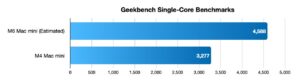
That 1.2 TB/s of memory bandwidth is the headline spec. It’s roughly 50% more than the M3 Ultra, and for token generation, which is bandwidth-bound, not compute-bound, that’s the entire story. Every model class gains about 44% to 52% in throughput.
The real unlock is that gpt-oss-120b, a 120B-class MoE with only about 5B active parameters per token, becomes a genuine daily-driver assistant at ~146 tok/s. That’s fast enough for interactive work, and importantly, it’s fast enough for batch workloads where you’d otherwise be paying per-token API costs.
Apple’s positioning here isn’t subtle. The Mac Studio product page explicitly promotes running “large language models locally.” This isn’t a happy accident of hardware design, it’s a deliberate strategy to capture the local AI workstation market. And Meta’s collaboration with Apple to bring Muse Spark Open to the Mac Studio, with the model running on a dual Mac Studio setup, shows that serious AI players are taking this seriously.
The Two Mac Studios Question
Here’s the pricing quirk that’s driving people insane: the 512GB config costs $22,299, but you could buy two Mac Studios with 256GB each for roughly $18,300 total (the 256GB config tops out at $18,299 with 16TB storage). You’d get twice the CPU cores, twice the GPU cores, and the same total memory.
The catch is interconnect bandwidth. If your models require more than 256GB of unified memory, or you’re running workloads that need tight memory coherence across the entire pool, the dual-machine setup falls apart. Thunderbolt 5 is fast, but it’s not 1.2 TB/s fast. For models that fit under 256GB, the two-machine approach can actually deliver faster prefill on small MoE models. For anything that needs the full 512GB, you’re stuck with the single machine.
This fragmentation matters. The 80-160B model gap that’s been frustrating Mac Studio owners is the same structural issue here. There’s a dead zone between what 256GB comfortably runs and what 512GB unlocks, and Apple’s pricing strategy is trying to monetize that boundary.
Who Is This Actually For?
Let’s be honest about the target market. This isn’t for AI hobbyists running Ollama on their weekend projects. It’s not even for most AI researchers, they’re renting A100s on cloud providers and writing it off as an operational expense.
This machine is for three specific personas:
The privacy-obsessed enterprise team. If your organization handles regulated data, patient records, financial information, classified documents, sending everything to a cloud API is a compliance nightmare. A $22K workstation that runs frontier-class models on-premise starts to look reasonable when the alternative is building out a private GPU cluster or navigating HIPAA/GDPR compliance for every API call. As Acacia Tech Group’s analysis notes, running open-source models locally “solves primary GDPR and HIPAA concerns by eliminating third-party data transfers.”
The production AI developer. If you’re building agentic systems that need to process millions of tokens daily, the per-token API costs add up faster than you think. A 2026 cost analysis suggests local deployment can save $300 to $500 per month in API fees after the initial hardware investment. For heavy workloads, the break-even point arrives in months, not years.
The “I need this for a specific project” buyer. Some workloads genuinely don’t fit in 256GB. Running a 400B-class model with reasonable context lengths requires the 512GB tier, full stop. If your entire business model depends on fine-tuning or running models in that class locally, the price is what it is.
But here’s the uncomfortable truth: most people who convince themselves they need this machine probably don’t. The model landscape has shifted dramatically in 2026. Small models like Qwen3 27B are approaching frontier performance on specific tasks at a fraction of the memory footprint. If your workload tops out at 70B models, the 96GB config at $5,499 is the right size. The 512GB tier exists for a specific class of problem, and if you’re not running that class of problem, you’re paying $17K for unused capacity.
The Bandwidth Trap
There’s a subtle issue that’s not getting enough attention. The 512GB configuration is only available with the maxed-out chip, 36-core CPU, 80-core GPU. That’s fine if you need the extra compute, but the memory bandwidth stays the same regardless: 1.2 TB/s.
Here’s the problem: memory bandwidth scales with the memory controllers, not the compute cores. So you’re paying a $1,300 premium for the better chip, but the real constraint for local LLM inference is bandwidth, not compute. For pure inference workloads, the 30-core/64-core chip would perform identically. The 80-core GPU only matters if you’re also doing graphics work, video rendering, or compute-heavy tasks beyond inference.
This is a deliberate segmentation move. Apple could have offered 512GB on the base Ultra chip, but that would cannibalize the higher-margin configuration. Instead, they’ve created a situation where the memory upgrade forces the chip upgrade, inflating the effective cost of the RAM by another $1,300.
The Upgrade Math That Doesn’t Work
If you already own a 256GB+ M3 Ultra, the upgrade calculus is weak. You’re paying $5,499 minimum for a 44-52% speed bump, not new capability. The same model classes that fit in 256GB of M3 Ultra memory fit in 256GB of M5 Ultra memory. You’re buying speed, not capacity, and for local AI workloads, capacity is usually the bottleneck.
The 512GB M5 Ultra only makes sense if you’re upgrading from a 96GB machine or coming from cloud GPU rentals. In those cases, the hardware can pay for itself in months against typical A100 or H100 rental rates. For everyone else, this is a “if you have to ask the price, you can’t afford it” situation.
The Elephant in the Room
Here’s the question nobody at Cupertino wants to answer: is this the future of Mac pricing, or a temporary distortion from the DRAM shortage? One commenter called it “a preview of how they will price LPDDR6 next year”, which is a sobering thought. The 2026 memory crunch has already forced Apple to retire high-memory configurations across the Mac lineup, and this pricing suggests the pain is far from over.
The Mac Studio M5 Ultra at $22,299 is a signal about where Apple thinks the AI workstation market is heading. It’s not a consumer product, it’s not even really a prosumer product, it’s a professional tool for people whose time and data privacy are worth more than $22K. The Mac Studio clustering breakthrough with RDMA shows that multiple 512GB units can be combined to hit 4.8TB/s of aggregate bandwidth, which opens up even larger model classes.
The machine itself is remarkable. The price is the price because the hardware can do things nothing else at this form factor can touch. But if you’re wondering whether you should buy one, the answer is almost certainly no, unless you already know exactly which 400B-class model you’re going to run on it, and the cloud alternative would cost you more in the first year.
For everyone else, there’s always the open-source tooling route for running models at a fraction of the memory footprint. The Splash inference engine is hitting 144 tokens per second on 27B models on much cheaper hardware, which is a reminder that the model optimization race is moving faster than the hardware upgrade cycle.
The Mac Studio M5 Ultra 512GB is a statement. The question is whether Apple’s target market is ready to endorse it with their credit cards. Judging by the forum reactions, the answer might be “wait for the DRAM prices to come down first.”