The GPU Fire Sale Is Coming: Why AI’s Overcapacity Could Make High-End Compute Dirt Cheap
Every few years, the tech industry convinces itself that scarcity is permanent. We did it with RAM during the pandemic. We did it with GPUs during the crypto boom. And for the past two years, we’ve done it again with AI accelerators, except this time, the stakes and price tags were an order of magnitude higher.
But a confluence of stalled data center buildouts, overcapacity, and weaker-than-expected AI adoption is pointing toward a very different reality: the GPU market is about to flip from scarcity to glut. And if the contrarians are right, we’re not just talking about a mild correction. We’re talking about the kind of price collapse that makes high-end compute accessible to smaller players and local AI enthusiasts for the first time in years.
The question isn’t whether something changes. It’s how fast, and how violent, the correction will be.
The Case for a Coming GPU Glut
The bull case for endless AI scaling rests on a simple assumption: demand for compute grows without limits. But the data coming out of the industry in October 2026 tells a different story.
Let’s start with the most striking number: 79% of surveyed companies are using their GPUs at half capacity or less, according to data highlighted by VentureBeat and Coin Bureau. These aren’t hobbyists with a single 4090 collecting dust between gaming sessions. These are organizations that bought into the AI arms race, deployed infrastructure, and are now staring at utilization dashboards that look more like a flatline than a hockey stick.
The picture gets worse when you look at what’s actually being built. SemiAnalysis, the semiconductor research firm that’s become the go-to source for infrastructure forecasting, has projected more than 50 gigawatts (GW) of additional global data center capacity in 2027. That’s up from an earlier estimate of 43 GW. The firm has identified over 24 GW of data center capacity in advanced construction across 40 major campuses, much of which is already more than halfway built with electrical and cooling equipment installed.
Here’s the kicker: SemiAnalysis also warns of a potential surplus of approximately 10 GW of data center capacity relative to available AI chips by the end of 2028. The firm is essentially projecting that we’ll build more data center space than we have chips to fill it. And that’s before accounting for the fact that much of the existing capacity is already underutilized.
The data center boom is significant: BofA Global Research expects global data center spending to increase from approximately $1 trillion in 2026 to $2.1 trillion by 2028, with average development costs of around $49 million per megawatt. But the revenue side isn’t keeping pace. Gartner has forecast that $3.5 trillion in AI infrastructure investment could be exposed to impairment by 2030, the industry will spend $7 trillion on infrastructure through 2030, with no more than $3.6 trillion in related revenue expected over that same period. That’s a $3.4 trillion hole.

The Neocloud Meltdown
If you want to see the strain firsthand, look at the “neoclouds”, the specialized data center providers that emerged specifically to serve AI workloads. These companies took on massive debt to build GPU clusters, often with five-year commitments from customers who didn’t have confirmed demand.
The market has already passed its verdict. CoreWeave’s stock fell 17% in a single week in October 2026, in line with declines from other neoclouds including Nebius and Iren. Bonds issued by CoreWeave sank to distress levels below 80 cents on the dollar. When debt markets start pricing in significant default risk, you know the fundamentals are shaky.
The core problem is structural. As one industry observer notes, the neoclouds are “getting hit on all sides”, lack of access to cost-effective capital, stalled buildouts, and customers who signed contracts but can’t scale usage fast enough to justify the spend.
Meanwhile, the hyperscalers are running in a different lane entirely. We’re seeing $200bn+ being deployed in 2027 alone by AMZN, MSFT, GOOG, and META, with new projects announced weekly. But even here, there are warning signs. Nvidia’s supply and capacity commitments have ballooned to $279 billion, up from $119 billion in the preceding quarter, according to its August regulatory filing. The company has explicitly warned that inaccurate demand forecasts and delayed customer purchases could create inventory and revenue volatility. When Nvidia starts hedging its own guidance, you know the narrative is shifting.
The Math That Breaks the Bull Case
Perhaps the most devastating data point comes from a simple calculation that went viral on X. DAX, building at opencode, noted that a single GB300 rack, worth $6-7 million, could serve almost 100% of OpenRouter’s DeepSeek traffic. OpenRouter, remember, is the most successful model routing platform in the world.
Even if there’s 10x this demand secretly, that’s still less than $100 million worth of compute. Against the trillions being poured into infrastructure, the actual inference demand for current-generation models is a rounding error. As one analyst put it, when you run the numbers on what actual AI traffic requires versus what’s being built, “the demand is not there yet.”
This is the uncomfortable truth at the heart of the AI infrastructure boom: we built the capacity for a future that hasn’t arrived.
What a Price Crash Actually Looks Like
Here’s where things get interesting for the rest of us. If the overcapacity thesis holds, we’re not just talking about softening prices. We’re talking about a market where supply vastly outstrips demand at current price points.
Citadel CEO Ken Griffin has drawn an apt analogy: “GPUs, like airlines, have a very low marginal cost to run. The moment you have overcapacity, pricing goes into freefall.” That’s the airline model, a plane that flies half-empty still burns nearly the same fuel, so airlines will slash prices to fill seats.
GPUs are similar. The marginal cost of running an inference request on existing hardware is tiny. If data center operators have idle capacity, they’ll drop prices aggressively to attract any usage they can find. The result could be the kind of compute price collapse we’ve never seen in the AI era.
This creates a fascinating feedback loop. Cheaper compute will make running large AI models on consumer GPUs more viable than ever, which in turn could drive more local AI adoption. Combined with efficiency breakthroughs in local AI inference and NVIDIA’s efficient small AI models for local deployment, the hardware we already own becomes dramatically more capable.
The Counterargument: Why It Might Not Happen
Before you start planning that quad-5090 build, let’s steelman the status quo.
Some industry insiders argue that the supply chain remains fundamentally constrained. One big tech worker put it bluntly: “Companies cannot produce chips fast enough. Contracts have been sold out to 2028. GPUs will not be getting cheaper.”
There’s also the power problem. The IEA reports that AI server power density increased elevenfold between 2020 and 2025, with another fourfold increase projected by 2027. The IDC notes that almost 7 GW of planned US data center capacity for 2026 had been delayed or canceled because of insufficient power availability. If you can’t plug in the hardware you already have, the utilization numbers stay low not because of weak demand, but because of infrastructure constraints.
And the counter-bear case points out that anthropic’s own S-1 filing reveals the AI lab now manages compute as a “single, fungible pool from multiple strategic partners”, Amazon Trainium, Google TPUs, Nvidia GPUs, and AMD GPUs, which gives it negotiating leverage but doesn’t eliminate its need for massive compute capacity.
The strongest point in favor of continued scarcity comes from capacity being merely “sold out”, not “utilized.” As one skeptic notes, “Capacity being sold out won’t mean much if the buyers start going bankrupt.” But that’s the risk, and it cuts both ways. The current contractual commitments could be a house of cards that collapses exactly when we need the capacity most.
What This Means for the Local AI Movement
For enthusiasts and small teams, the stakes are clear. We’ve spent years watching GPU prices spiral upward while pushing limits of AI models on low-VRAM hardware and celebrating modest breakthroughs that let 8GB cards run increasingly capable models. The prospect of affordable high-end hardware changes the calculus entirely.
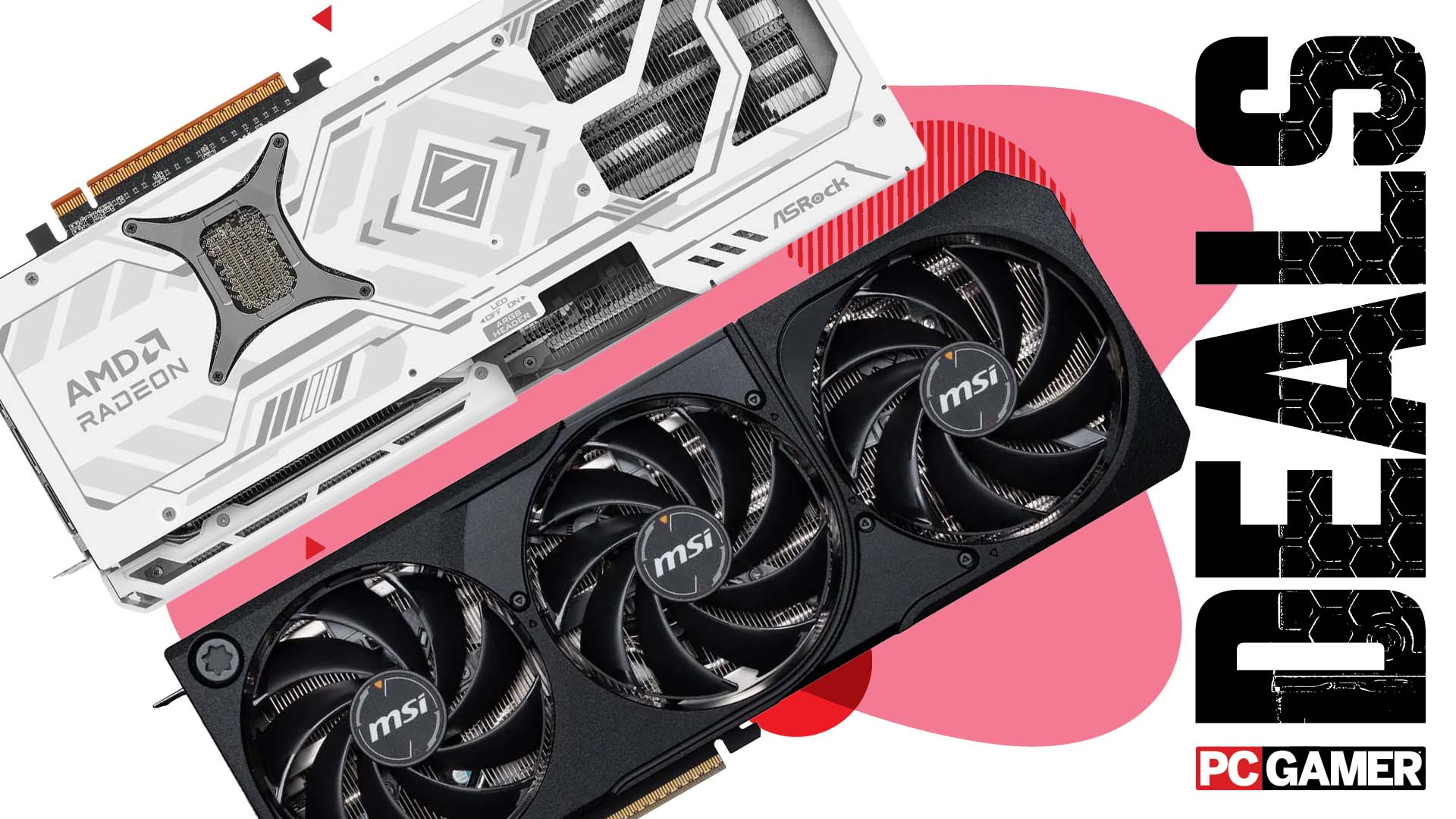
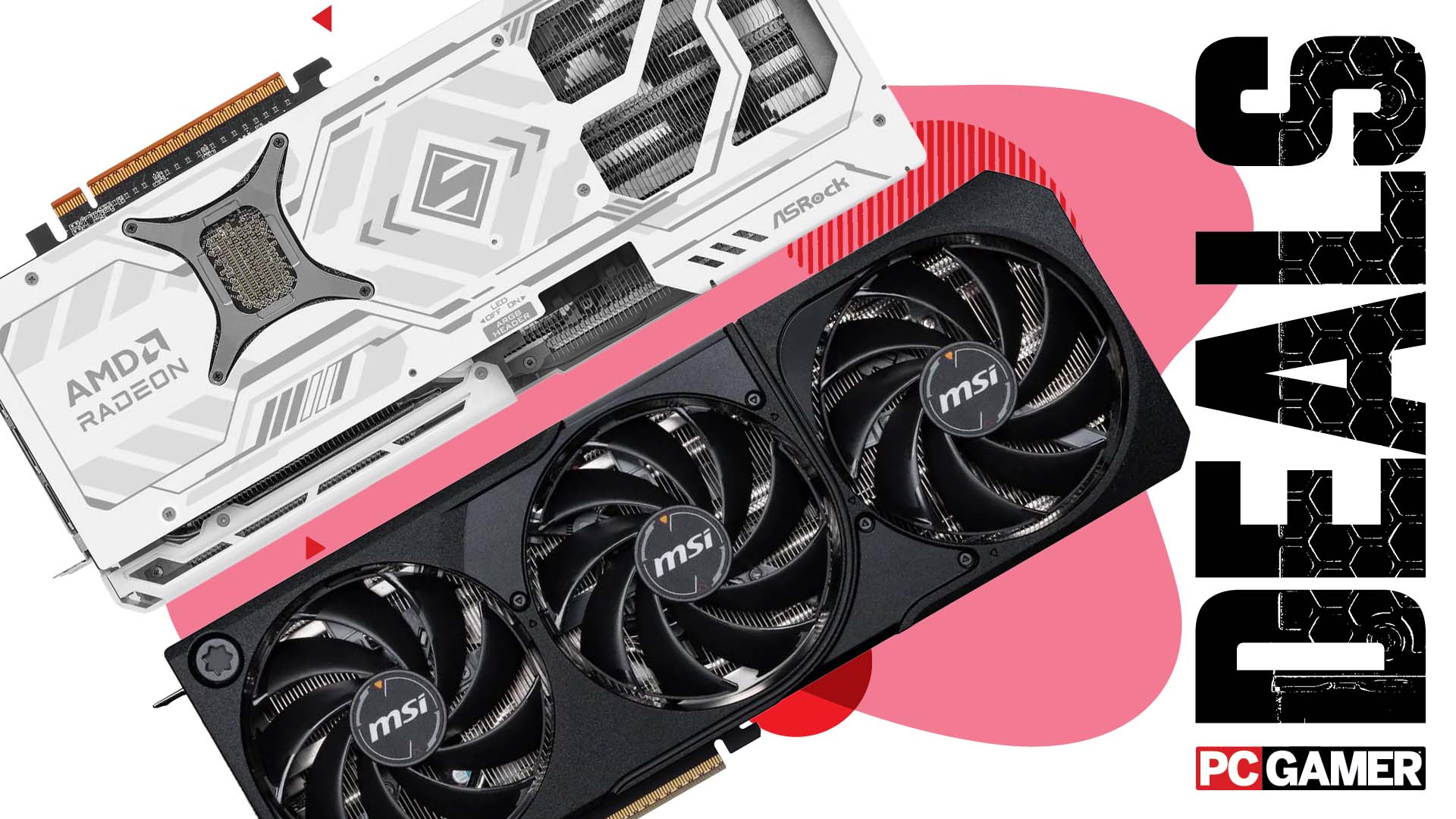
Consider the current price landscape from PC Gamer’s price tracking: the RTX 5070 launched at $549 MSRP but is currently street-priced around $789 at Walmart. The RTX 5080 commands $1,800 at Best Buy, nearly double its $999 MSRP. The RTX 5050, Nvidia’s budget card, goes for $400 vs. its $249 MSRP. These aren’t normal market dynamics, they’re scarcity premiums driven by the AI arms race diverting consumer GPU dies to data center use.
If the overcapacity thesis plays out, those premiums evaporate. The previous pattern from late 2025 already showed what happens when excess supply hits: card prices dropped, availability improved significantly, and for a brief period, you could actually buy a high-end GPU without selling a kidney. The drivers this time are stronger.
The broader implications are even more interesting. If GPU prices collapse, the rise of highly capable smaller AI models accelerates, and the line between local and cloud inference blurs. You won’t need to rent compute when you can afford to own it. The centralized AI infrastructure that the hyperscalers are racing to build becomes just one option among many, not the only game in town.
The Verdict: Hope With Hedges
The evidence for a coming GPU price crash is genuinely compelling, but it’s not inevitable. The market’s history of irrational behavior is well documented. As one investor notes, “a market will act irrationally a lot longer than before collapsing, because those who have a stake will pursue to keep it afloat by throwing money at it.”
The irony is that the same forces driving overcapacity also undermine the AI adoption narrative. If enterprises don’t deploy AI at the scale projected, the infrastructure bubble bursts, and the resulting crash is bigger than the dot-com bust. If they do deploy, the capacity gets used, and prices stay firm.
Either way, one thing is clear: the AI infrastructure buildout is the biggest capital expenditure cycle of our generation, and we’re approaching an inflection point. Whether that results in cheap GPUs or a financial crisis depends on whether actual AI demand catches up to the builders’ projections.
For the local AI community, the play is straightforward: build for efficiency, invest in capability, and wait. The patience might be rewarded with hardware prices we haven’t seen since before the AI boom. As one Reddit user put it, “I just want my cheap RAM back”, the GPUs might follow. Success will favor whoever’s ready when the market breaks.