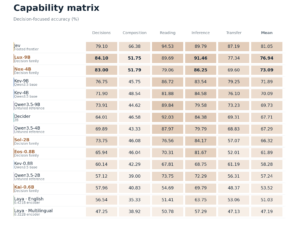
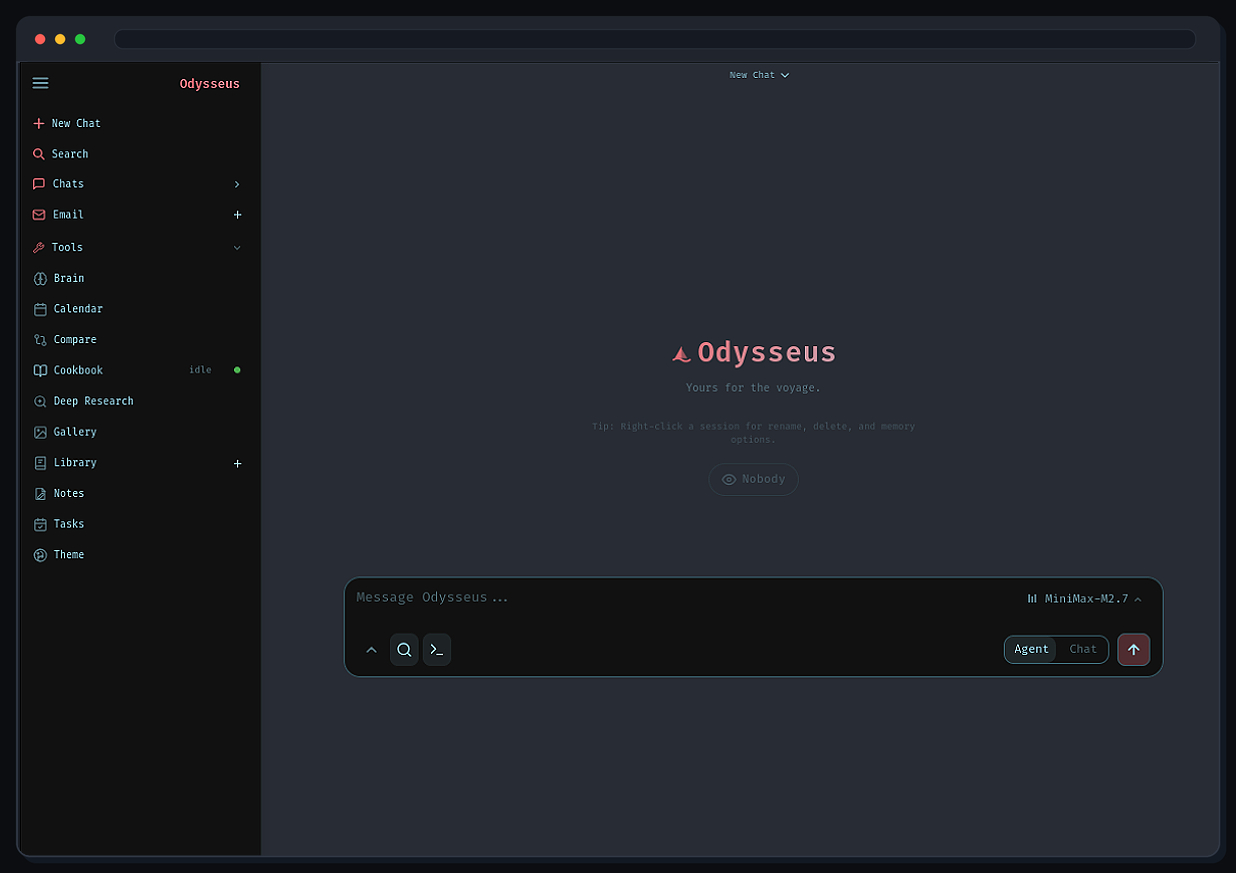
Felix Kjellberg, better known as PewDiePie to roughly 109 million subscribers, wanted to build a small AI model that runs entirely on his own hardware. Nothing flashy. A fine-tuned 9-billion-parameter model called Ajax, small enough to live on a decent GPU and smart enough to handle email, calendar, and web search through his self-hosted workspace, Odysseus.
For that, he needed training data. He turned to OpenAI’s API to generate it. The result? Two account bans, a reinstatement, another ban, and arguably the best free advertising the open-weight AI movement has ever received.
The story is equal parts comedy and legal minefield. It’s also a window into how the AI industry’s biggest players are drawing battle lines around what you’re allowed to do with their models’ outputs, and what happens when a high-profile hobbyist runs straight into those lines.
The Distillation Trap
Distillation is the practice of using one model’s outputs to train another. It’s not exotic. It’s not inherently malicious. It’s how many small models get their reasoning chops without needing billions of dollars in compute.
The problem? OpenAI’s terms of service explicitly prohibit using outputs to develop competing models. And Kjellberg’s goal, a locally-run, “uncensored” agent that handles daily tasks without phoning home, sits squarely in what OpenAI considers a threat.
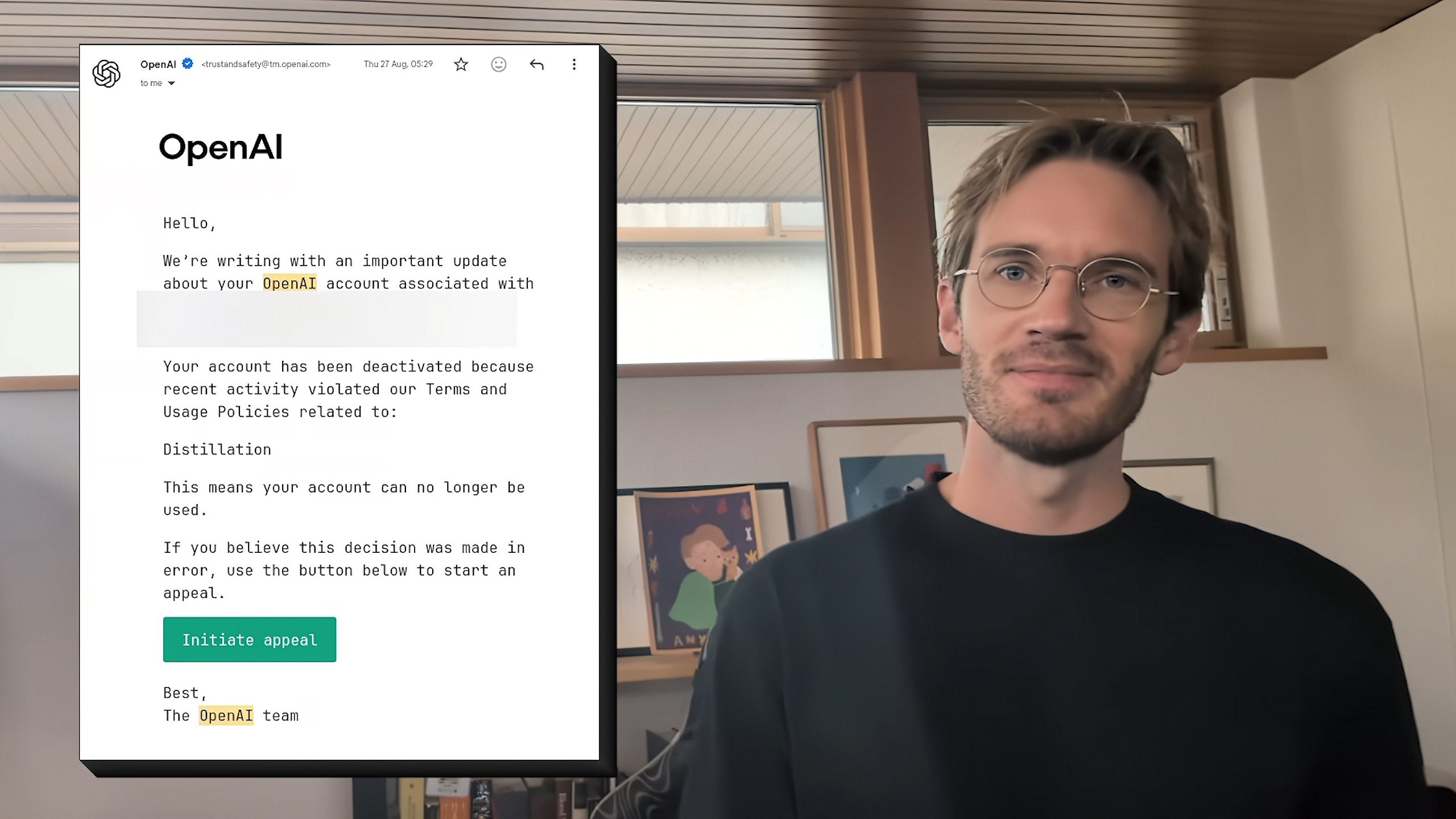
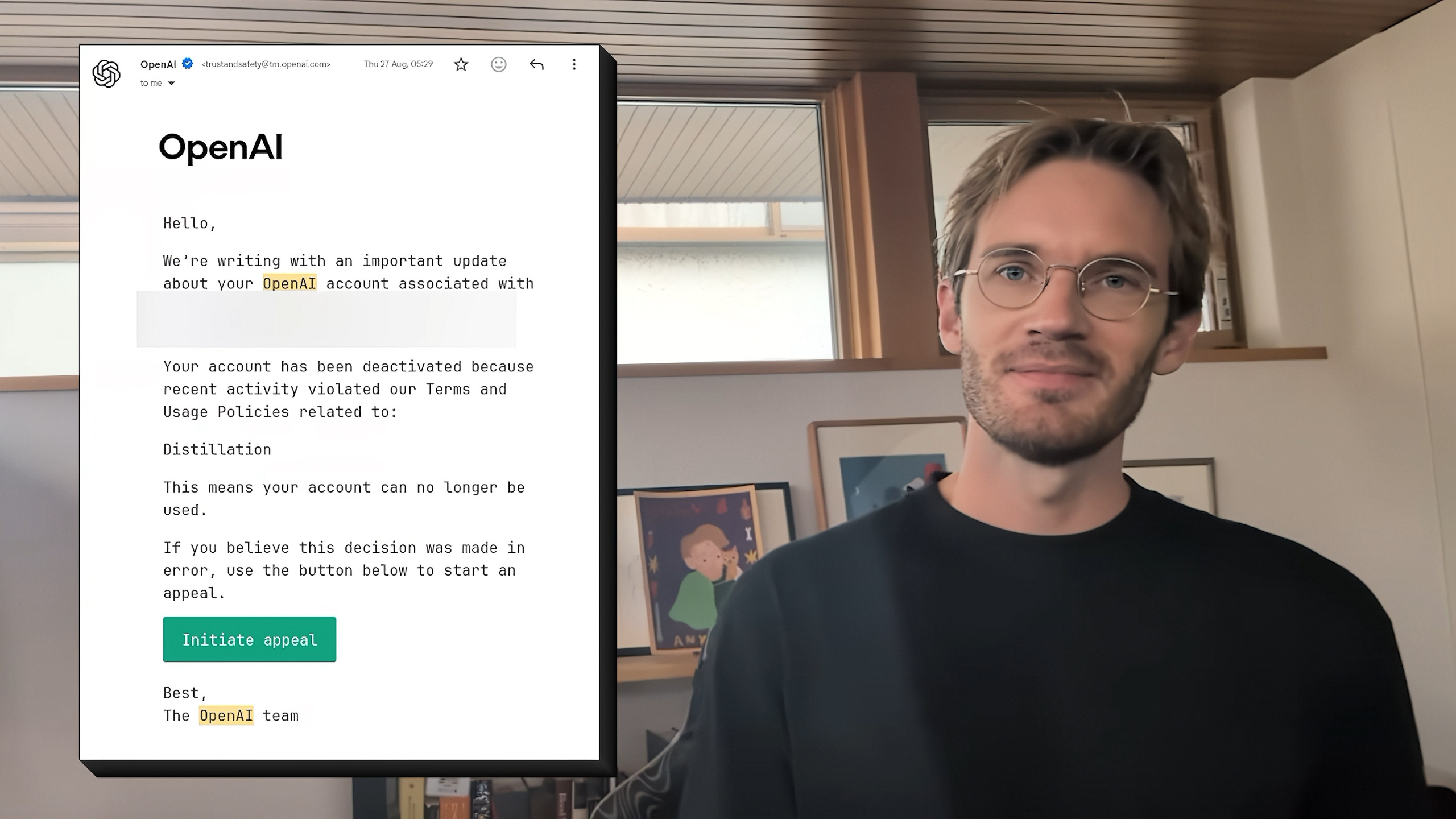
According to the OpenAI email he showed in his video, one ban was explicitly for “distillation.” The first ban came after he’d been pulling outputs to seed his training data. He appealed, got reinstated, and went right back to generating more data. The second ban followed immediately.
“How did they even know?” he asked in the video.
That’s the question that should worry every developer building on top of frontier APIs.
The Automated Enforcement Problem
The uncomfortable truth is that OpenAI’s enforcement systems don’t distinguish between a state-linked operation trying to steal proprietary reasoning and one creator feeding a 9B model for personal use. The signal is the same: unusual API activity that looks like training a model.
Researchers recently demonstrated that encrypted reasoning blocks from frontier models can be replayed across sessions and models, letting a weaker model effectively decode a stronger one’s hidden chain-of-thought. OpenAI has also been fighting an ongoing campaign it attributes to actors linked to Moonshot AI, where operators were copying encrypted reasoning from one conversation and asking the model in another to decode it. OpenAI says that campaign peaked at 16,000 requests over two days from more than 4,000 users.
Here’s the comparison that matters:
| Aspect | Moonshot-linked campaign | PewDiePie’s case |
|---|---|---|
| Actor | Operators tied to Moonshot AI | One creator building a personal local model |
| Scale | Thousands of users, 16K requests in 2 days | Unknown, likely small |
| Method | Replaying encrypted reasoning blocks | Not confirmed, likely standard API usage |
| Goal | Build a competing model | Seed training data for a 9B fine-tune |
When you’re sitting on the server side, those two scenarios can look identical. And automated enforcement doesn’t care about intent.
What OpenAI Is Actually Protecting
The knee-jerk reaction is to call this corporate greed. It’s more nuanced than that. Frontier labs treat chain-of-thought as their crown jewel for three concrete reasons:
- It’s what makes reasoning models better. The step-by-step reasoning a model produces is the most valuable training signal that exists. It shows a student model how to think, not just what to answer.
- It’s expensive to produce. Those reasoning traces require thousands of hours of RLHF, expensive inference runs, and massive compute budgets.
- It’s the cheapest possible training data for a competitor. Why spend $100 million on RL when you can spend $10,000 on API calls and distill the reasoning directly?
That’s why OpenAI and Anthropic encrypt reasoning tokens. That’s why they return summaries instead of raw chain-of-thought. And that’s why any traffic pattern resembling reasoning harvesting triggers automated defenses.
The practical enforcement line, per OpenAI’s terms:
You may not use output to develop models that compete with OpenAI, and may not circumvent rate limits, restrictions, or protective measures.
Three consequences for builders:
- “Competing” is vague. A hobbyist’s 9B fine-tune is not an obvious competitor to GPT-6-class models, but the clause doesn’t carve out hobbyists. Enforcement is OpenAI’s call.
- Circumvention is the sharper line. Attempting to recover hidden reasoning, like replaying encrypted blocks, is more clearly a violation than training on visible outputs.
- Accounts are the penalty. The practical risk is losing your account, API keys, or org access. Not a lawsuit. Not criminal charges. Just a door slamming shut.
Abliteration, GRPO, and the “Brain Damage” Problem
Kjellberg didn’t just stop at fine-tuning. To make Ajax actually useful for everyday agents, he needed it to stop refusing so many requests. That meant removing the model’s built-in conservative refusal behavior, a process he called “abliteration.”
He used Heretic, an open-source tool that applies directional ablation to locate the internal directions a model uses to refuse requests and dial them down. He’s described the process as “brain surgery” on the model’s weights, with the caveat that it causes some “brain damage.” You lose a bit of coherence and reliability when you yank out those refusal patterns.
But he wasn’t building a weapon. Per his lawyer’s advice, Ajax won’t provide “dangerous actionable instructions.” The line he drew: nothing that harms other people or oneself.
The project page for Ajax states the refusal behavior has been stripped down for a “freer, less restricted AI experience.” Where exactly that line sits in practice is something only outside testing of the released weights will settle, not his description of the process.
The Accidental Marketing Campaign
Here’s the part that has to sting at OpenAI’s headquarters. By trying to enforce its terms against one high-profile user, OpenAI gave the open-source AI movement one of the biggest mainstream moments it’s ever had.
The Reddit r/LocalLLaMA community captured the sentiment perfectly: “In trying to enforce their rules, all OpenAI really did was give open-source models a massive free advertisement to millions of people.”
The user rodrigodevbits framed it as top-tier comedy, noting the irony: OpenAI spent years scraping the entire public internet for free training data, but the moment someone uses their outputs to train a local model, it’s an emergency ban.
The community’s other takeaway? “His only mistake was not using a botnet like China”, a joke that cuts close to the bone about how enforcement actually gets applied in practice.
Kjellberg’s audience of 109 million subscribers means Ajax landed in front of more people than almost any open-weight release in history. Plenty of those people had never touched local inference before. They’ve now learned that a 9B model can run on a consumer GPU, that a self-hosted workspace can handle daily tasks with no cloud dependency, and that you can own your AI outright without being subject to someone else’s terms of service.
What This Means for Developers Building on Frontier APIs
Startup Fortune’s analysis of the incident cuts to the heart of the matter for anyone building products on top of closed APIs:
If your product’s core intelligence comes from someone else’s model, you inherit their terms of service as a business risk, not just a legal footnote. A sudden ban doesn’t just cost you access, it can take your product down with it if there’s no fallback.
This is the shadow AI problem in reverse: instead of employees using unauthorized AI tools inside an enterprise, it’s a developer building on an API without fully internalizing that the provider’s terms are a runtime dependency.
The deeper lesson? Distillation bans aren’t an edge case reserved for state-linked actors. They’re an enforcement lever OpenAI will pull against anyone, famous or not, who trains a model on its outputs. The account suspension is apparently instant and automated enough to catch a single power user twice.
What Open-Model Builders Should Do Instead
If you’re fine-tuning a small model and need reasoning data, here’s the practical order of operations you should try:
- Use open-weight teachers with permissive licenses. Generate your own traces. Check the license for output-use restrictions.
- Use public reasoning datasets whose licenses allow training.
- Generate synthetic data with your own pipeline, then filter by verifiable correctness for math and code.
- Use reinforcement learning with verifiable rewards rather than imitation.
- If you must use a closed API for data, read the terms carefully. Keep volumes small. Stick to visible answers only. Never attempt to recover hidden reasoning.
- Keep keys and orgs separate so a ban on an experiment doesn’t take down production.
The broader open-source shift is already well underway, models like DeepSeek V3.1 and Qwen are closing the gap with proprietary systems at a fraction of the cost. Kjellberg’s story just made that shift visible to millions of people who weren’t paying attention.
The Regulatory Question
This incident also lands in the middle of a much bigger policy fight. Y Combinator’s Garry Tan has argued for an “American distillation regime” that would let domestic open-weight labs train on frontier outputs. His argument: frontier labs didn’t ask permission to scrape the internet, so they shouldn’t get to dictate what customers do with model outputs.
The White House, meanwhile, has been treating foreign distillation as a security issue. The regulatory and geopolitical tensions around open-weight models are escalating, with proposals to ban Chinese open-weight models from US platforms entirely.
Here’s what makes this tricky: Chinese models are increasingly the default choice for local AI enthusiasts. Chinese-built models now handle between 30% and 46% of enterprise API token traffic on US platforms, up from 4.5% in early 2025. Kjellberg’s Ajax is literally a fine-tune of Alibaba’s Qwen3.5. The local AI movement is, in practice, deeply entangled with Chinese open-weight releases.
That’s a policy problem nobody has a clean answer for. Ban Chinese models, and you cripple the local AI ecosystem. Allow them, and you’re shipping sensitive technology that US regulators increasingly view as a national security threat.
The Takeaway
PewDiePie’s double ban isn’t really about one YouTuber getting caught violating a terms-of-service agreement. It’s a case study in how the AI industry’s power dynamics are playing out in real time:
- Frontier labs are locking down their reasoning traces because those traces are the cheapest possible training data for competitors.
- Open-weight models are improving fast enough that local AI is becoming genuinely useful on consumer hardware.
- Developers are realizing that building on a closed API means inheriting its terms of service as a business risk.
- Regulators are struggling to catch up with the geopolitical implications of open-weight AI.
Kjellberg’s account was reinstated after his first appeal, then banned again. He’s still shipping Ajax. He’s still building Odysseus. And he’s still asking the question that every developer building on frontier APIs should be asking: “How did they even know?”
The answer is that they know because they built the infrastructure. And that’s precisely why the open-weight movement, with all its warts and “brain damage”, keeps gaining ground. Ajax won’t out-reason a GPT-6-class model on hard problems. But it runs on your hardware, answers to you, and can’t be revoked by a corporate policy email.
For millions of people who just heard about local AI for the first time, that’s the pitch. And it just got the biggest mainstream moment it’s ever had.