Your AI Coding Assistant Is Architecturally Blind: The Context Crisis Nobody’s Talking About
Every developer using AI coding tools knows the ritual. You open a project, ask a reasonable question like “how does our auth flow connect to the user service?” and watch as your AI assistant either hallucinates a convincing but wrong answer, asks you to paste files manually, or shrugs its digital shoulders. So you paste the files. You explain the structure. You give it context. It helps, barely. You close your laptop. Next session? Groundhog Day.
This isn’t a minor UX annoyance. It’s a fundamental architectural failure that reveals something the marketing materials won’t say: your AI coding assistant has no persistent understanding of your system architecture. It’s not building a mental model. It’s not constructing a graph of relationships. It’s just a very sophisticated autocomplete that forgets everything the moment you close the tab.
The Root Problem: Code Is a Graph, Not a File List
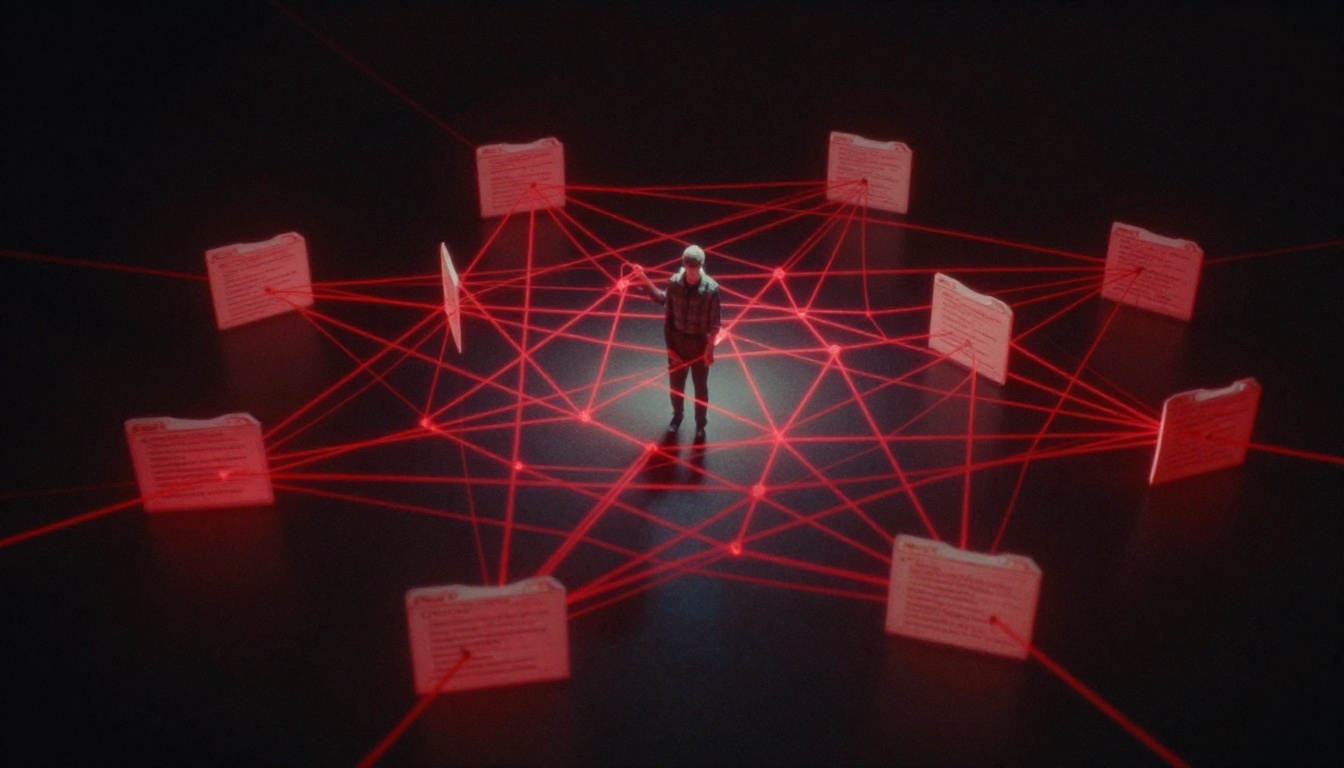
The core issue is cognitive, not technical. When a senior engineer who’s been on a project for a year answers a question, they’re not re-reading files. They’re querying a mental graph they’ve built up, functions call functions, API routes hit services, services write to databases, webhooks trigger workers, classes inherit from bases that three other classes also inherit from. This is architectural context.
But every tool that tries to “understand your codebase” by dumping raw files into context is solving the wrong problem. As one developer building Atlarix put it: “Your codebase isn’t a flat list of files. It’s a graph.” When AI tools scan everything and dump 100K tokens into context, they’re slow, expensive, and still confused. When they query a pre-built graph and inject only the relevant 5K tokens, they’re fast and accurate.
The difference is stark. Traditional RAG approaches treat your codebase like a haystack of text chunks. Knowledge graph approaches treat it like what it actually is: a web of relationships with semantic meaning.
The $20,000 Experiment That Proved the Point
Anthropic’s recent experiment building a C compiler with Claude Code is instructive. Two weeks, 2,000 sessions, $20,000 in API credits, and one 100,000-line Rust-based compiler later, the team had something impressive, but also revealing. The numbers were designed to grab attention, but they barely scratch the surface of what’s actually happening here.
The real story isn’t that AI can generate massive amounts of code. It’s that the AI needed 2,000 separate sessions because it couldn’t maintain a persistent architectural model. Each session was a fresh start, requiring re-explanation, re-contextualization, and re-building of understanding. That’s not sustainable architecture, that’s brute force.
This is where AI agent teams designing complex system architectures autonomously run into a wall. Without a shared, persistent architectural memory, each agent works in isolation, replicating the same context-building overhead. The result is a distributed monolith of cognitive overhead.
GitNexus: The Knowledge Graph Approach That Actually Works
Enter GitNexus, an open-source project that’s gained 1.5k stars by tackling this problem head-on. The creator, frustrated with AI tools that “don’t truly know your codebase structure”, built something radical: a client-side knowledge graph engine that indexes your entire repository into a queryable graph structure.
Here’s what makes it different:
# Index your repo (run from repo root)
npx gitnexus analyze

# That's it. This indexes the codebase, installs agent skills,
# registers Claude Code hooks, and creates AGENTS.md / CLAUDE.md
# context files, all in one command.
The magic isn’t in the CLI simplicity. It’s in what happens under the hood:
- Structure mapping – Walks the file tree and maps folder/file relationships
- AST parsing – Extracts functions, classes, methods using Tree-sitter
- Resolution – Resolves imports and function calls across files with language-aware logic
- Clustering – Groups related symbols into functional communities
- Process tracing – Traces execution flows from entry points through call chains
- Hybrid search – Builds BM25 + semantic + RRF indexes
The result? Your AI agent gets 7 specialized tools via MCP:
impact()– Blast radius analysis with confidence scoringquery()– Process-grouped hybrid searchcontext()– 360-degree symbol viewdetect_changes()– Git-diff impact mappingrename()– Multi-file coordinated refactoringcypher()– Raw graph queries
Traditional Graph RAG vs GitNexus:
Traditional approaches give the LLM raw graph edges and hope it explores enough. GitNexus precomputes structure at index time, clustering, tracing, scoring, so tools return complete context in one call. Instead of 10 queries to understand one function, you get one query with pre-structured intelligence.
The author found that Haiku 4.5 with GitNexus outperformed Opus 4.5 without it on deep architectural context tasks. That’s the power of giving the AI a graph instead of a haystack.
The Context Maintenance Crisis
But building the graph is only half the battle. The real challenge is keeping it accurate as your codebase evolves. This is where most solutions collapse.
Packmind’s research reveals the “bootstrapping illusion”: generating a CLAUDE.md file takes seconds, creating an illusion of completeness. But three months later, your team may have adopted a new testing framework, restructured packages, and deprecated libraries, while your context file still says “we use Jest” even though you switched to Vitest.
Common mistakes they found in real projects:
– Vague instructions: “Follow SOLID, KISS, YAGNI”, meaningless to an AI
– Missing feedback loops: No commands for tests, linting, builds
– Outdated documentation: Node version requirements, database migrations, folder structures
– Divergent files: AGENTS.md and CLAUDE.md with 178 different lines
The solution isn’t just detection, it’s continuous maintenance. Tools like Packmind’s context-evaluator audit your documentation against your actual codebase, but the real win is making maintenance a habit: review context files during architectural changes, not just onboarding.
Atlarix: The Blueprint Canvas Approach
While GitNexus focuses on indexing existing code, Atlarix takes a more visual, forward-looking approach. Its “Blueprint Canvas” lets you design systems visually, dragging containers, adding beacons (routes/functions), drawing edges, then generates implementation plans by comparing desired vs. actual state.
The workflow is architecture-first:
1. Design in Blueprint Canvas
2. Click “Generate Plan”, AI compares Blueprint to Live code
3. AI implements one task per message, waiting for review
4. Approve, iterate, ship
This is the “parse once, query forever” model. The initial parse takes under 30 seconds, building a graph of every meaningful node: API endpoints, functions, classes, database operations, webhooks. A file watcher updates affected nodes on save, so the graph stays current without manual intervention.
The token difference is dramatic: ~5K tokens instead of 100K. That’s not just cost savings, it’s the difference between coherent context and token soup.
GraphRAG: The Enterprise-Grade Evolution
The knowledge graph approach is scaling up. Graphwise’s GraphRAG solution demonstrates that augmenting RAG with ontology-based knowledge graphs reduces inaccurate answers by 2X on the MuSiQue benchmark (a challenging multi-hop reasoning dataset).
Unlike standard RAG that “flattens” data into chunks, losing relationships and causing hallucinations, GraphRAG treats the knowledge graph as a trusted semantic backbone. Features include:
– Low-code visual engine for subject matter experts
– Out-of-the-box templates for Policy Q&A and Technical Support agents
– Semantic metadata control reducing hallucinations from 60% to 90%+ accuracy
– Explainability panels for regulatory compliance
– SKOS-style concept enrichment for domain-specific intelligence
This is the difference between “vibe coding” and production-grade AI assistance. In regulated industries like pharma and finance, you can’t afford hallucinations. You need verifiable, traceable, grounded responses.
The MCP Protocol: Standardizing Context Transfer
The Model Context Protocol (MCP) is emerging as the standard for connecting AI agents to external data sources. OpenAI’s Codex App Server initially experimented with MCP but found it limiting for their rich session semantics (streaming diffs, approval flows, thread persistence). They built their own App Server protocol instead.
But for codebase context, MCP is gaining traction. GitNexus exposes its knowledge graph through MCP, allowing any MCP-compatible agent (Claude Code, Cursor, Windsurf) to query the graph. The CLI runs gitnexus mcp to start a server that serves all indexed repos.
The multi-repo architecture is elegant: each gitnexus analyze stores an index in .gitnexus/ inside the repo and registers it in ~/.gitnexus/registry.json. The MCP server reads this registry and can serve any indexed repo on demand.
The Controversy: Can AI Ever Truly Understand Architecture?
This is where opinions diverge sharply. Some argue that AI will never truly “understand” architecture, that it’s just pattern matching at scale. Others see knowledge graphs as the bridge between statistical AI and symbolic reasoning.
The brutal truth: current AI coding tools are making architectural decisions without architectural understanding. When an AI edits UserService.validate() without knowing that 47 functions depend on its return type, it’s not being helpful, it’s being dangerous. Breaking changes ship because the AI lacks upstream visibility.
This is why AI agents making architectural decisions without human oversight is so concerning. The pull request that lands at 3 AM, greenlit by CI, designed and deployed entirely by an AI, that’s not progress. That’s a maintenance nightmare waiting to happen.
The Senior Engineer Mindset vs. AI Context
Senior engineers don’t just know the code, they know the why. Why did you choose this database? Why is that service structured that way? What’s the rule about auth tokens? This is the “project memory” problem that Atlarix tries to solve with .atlarix/memory.md, automatically written during context compaction.
But there’s a deeper issue: the senior engineer’s mindset in managing system-level architectural trade-offs under pressure. When systems start to sweat, senior engineers don’t just query a graph, they interpret it, applying years of scar tissue and failure modes that no AI has experienced.
The question isn’t whether AI can generate code. It’s whether AI can develop the taste to know when a simple solution is correct versus when it’s a “big ball of mud” waiting to happen. People champion simplicity while delivering a big ball of mud. Simplicity isn’t the antithesis of being organized and considerate of your system requirements.
The Future: Living Context Engines and Agent Teams
The trajectory is clear: we’re moving from static context files to living context engines. The next generation of AI coding tools won’t just have access to your codebase, they’ll maintain a persistent, updating graph of your entire system architecture.
Claude’s research preview of agent teams signals the future: specialized agents for frontend, backend, infrastructure, testing, each with persistent context, collaborating on features. This reduces context pollution and improves specialization. Imagine separate agents that each maintain their own subgraph of the architecture, coordinating through a shared knowledge graph.
This is the opposite of today’s “one AI to rule them all” approach. It’s more like a senior engineering team, where each member has deep expertise in their domain but shares a common architectural understanding.
Practical Takeaways: What To Do Now
- Audit your current context setup: Run Packmind’s context-evaluator on your repos. You’ll likely find vague instructions, missing feedback loops, and outdated information.
- Start small with knowledge graphs: Try GitNexus on a single repo. Run
npx gitnexus analyzeand see what your AI agent can now understand. The difference in architectural questions is immediate. - Design before you code: Use tools like Atlarix’s Blueprint Canvas for new features. Architecture-first development prevents AI from guessing your intent.
- Maintain context as code: Treat your CLAUDE.md, AGENTS.md, and .cursorrules as living documents. Update them during architectural changes, not just onboarding.
- Separate generation from review: As Greptile’s research shows, the same tool shouldn’t generate and review code. Independent review agents with full codebase context catch cross-layer issues that linters miss.
- Measure what matters: Don’t just track lines of code generated. Track time to merge, defect rates in AI-generated code, and architectural drift. The cognitive architect approach only works if you measure architectural coherence, not just velocity.
The Bottom Line
We’re at an inflection point. The current generation of AI coding tools, Copilot, Cursor, even Claude Code without augmentation, are architecturally blind. They generate impressive code snippets but lack system-level understanding. This works for prototypes and isolated features but fails catastrophically for complex architectures.
The context crisis isn’t just a technical problem, it’s a cultural one. We’ve become addicted to the speed of “vibe coding” while ignoring the architectural debt piling up. The solution isn’t to abandon AI assistance but to ground it in persistent, queryable, maintainable architectural knowledge.
Knowledge graphs aren’t a nice-to-have. They’re the difference between AI as a typing assistant and AI as a true pair programmer that understands your system. The teams that figure this out first will have an insurmountable advantage: all the speed of AI generation with the coherence of thoughtful architecture.
The rest will be drowning in a sea of generated code that nobody, human or AI, truly understands.
The Debate Continues
We’re at an inflection point. The current generation of AI coding tools, Copilot, Cursor, even Claude Code without augmentation, are architecturally blind. They generate impressive code snippets but lack system-level understanding. This works for prototypes and isolated features but fails catastrophically for complex architectures.
The context crisis isn’t just a technical problem, it’s a cultural one. We’ve become addicted to the speed of “vibe coding” while ignoring the architectural debt piling up. The solution isn’t to abandon AI assistance but to ground it in persistent, queryable, maintainable architectural knowledge.
Knowledge graphs aren’t a nice-to-have. They’re the difference between AI as a typing assistant and AI as a true pair programmer that understands your system. The teams that figure this out first will have an insurmountable advantage: all the speed of AI generation with the coherence of thoughtful architecture.
The rest will be drowning in a sea of generated code that nobody, human or AI, truly understands.
The debate is just starting: Can AI ever develop true architectural intuition, or are we just building better pattern matchers? Drop your thoughts in the comments, especially if you’ve tackled the codebase-as-graph problem differently.