MOVA Breaks the Silent Era of Open-Source Video Generation, And It’s Not Asking Permission
OpenMOSS’s MOVA delivers synchronized video-audio generation with 18B active parameters, challenging closed models with fully open weights and day-0 SGLang support.
OpenMOSS dropped MOVA last week, and the timing isn’t subtle. While the AI world obsesses over which closed model demo looks slickest, MOVA quietly delivers something they’ve been treating as a premium feature: synchronized video-audio generation that actually works, with weights you can download, fine-tune, and deploy without writing a ten-figure check. The model clocks in at 32 billion parameters total, 18 billion active during inference, built on a Mixture-of-Experts architecture that doesn’t just generate video and audio, it fuses them from the ground up.
The “silent era” label isn’t marketing fluff. Open-source video generation has been stuck in a weird limbo where models could produce stunning visuals but either stayed mute or bolted on audio as an afterthought through clumsy cascaded pipelines. MOVA’s native bimodal approach changes the equation. It generates both modalities simultaneously through an asymmetric dual-tower architecture, using bidirectional cross-attention to keep lips, sound effects, and environmental audio locked in sync. No post-processing hacks. No error accumulation. One inference pass, one coherent output.
The Hardware Reality Check
Let’s cut through the hype and talk numbers, because the Reddit threads are already filling up with the only question that matters: can I run this on my hardware? The answer is complicated.
For the 720p version, you’re looking at 77.7GB of model weights. That’s not a typo. But here’s where MOVA’s MoE design becomes more than a bullet point, only 18B parameters are active during inference, which changes the VRAM calculus significantly. The official benchmarks tell a nuanced story:
| Offload Strategy | VRAM (GB) | Host RAM (GB) | Hardware | Step Time (s) |
|---|---|---|---|---|
| Component-wise offload | 48 | 66.7 | RTX 4090 | 37.5 |
| Component-wise offload | 48 | 66.7 | H100 | 9.0 |
| Layerwise (group offload) | 12 | 76.7 | RTX 4090 | 42.3 |
| Layerwise (group offload) | 12 | 76.7 | H100 | 22.8 |
Those layerwise numbers are the headline: 12GB VRAM opens the door to consumer GPU viability, albeit with a RAM tradeoff. The RTX 4090 manages 42.3 seconds per step, which for an 8-second video at 24fps means you’re waiting, but you’re not renting a data center. The H100 cuts that to 22.8 seconds, but the fact that both can run with 12GB VRAM is the real story.
The component-wise strategy is faster, 9 seconds per step on H100, but demands 48GB VRAM, putting it firmly in professional hardware territory. For context, generating an 8-second clip takes roughly 25 inference steps, so you’re looking at ~6 minutes on an H100 with aggressive offloading, or ~17 minutes on a 4090. Not real-time, but absolutely usable for production workflows.
Why “Fully Open” Actually Matters
MOVA’s release includes the full stack: model weights, inference scripts, training pipelines, and LoRA fine-tuning configs. Compare that to the closed ecosystem where even API access is tiered and fine-tuning requires enterprise contracts. The GitHub repo provides immediate access to:
# Environment setup
conda create -n mova python=3.13 -y
conda activate mova
pip install -e .

# Download weights
hf download OpenMOSS-Team/MOVA-720p --local-dir /path/to/MOVA-720p

# Single-person speech generation
torchrun \
    --nproc_per_node=1 \
    scripts/inference_single.py \
    --ckpt_path /path/to/MOVA-720p/ \
    --height 720 \
    --width 1280 \
    --prompt "A man in a blue blazer speaks in a formal setting..." \
    --ref_path "./assets/single_person.jpg" \
    --output_path "./data/samples/single_person.mp4" \
    --seed 42 \
    --offload cpu
The --offload parameter is your dial for balancing VRAM against speed. --offload cpu moves components to system RAM when idle, while --offload group does layer-wise offloading for finer control. The --remove_video_dit flag frees the stage-1 video transformer after switching to low-noise scheduling, dropping host RAM usage by ~28GB.
This isn’t a bait-and-switch "open core" release. The training configs for LoRA fine-tuning are included, with three modes targeting different resource levels:
# Low-resource LoRA (single GPU, ~18GB VRAM)
bash scripts/training_scripts/example/low_resource_train.sh

# Accelerate LoRA (1 GPU)
bash scripts/training_scripts/example/accelerate_train.sh

# FSDP LoRA (8 GPUs)
bash scripts/training_scripts/example/accelerate_train_8gpu.sh
The low-resource mode is particularly interesting, it gets you training on a single RTX 4090 with ~18GB VRAM, though step times crawl to 600 seconds. The FSDP version on 8 H100s cuts that to 22.2 seconds per step. The message is clear: scale your hardware, scale your speed, but the tools are the same.
The Fine-Tuning Story Nobody’s Telling
Here’s where MOVA gets dangerous for incumbents. The model ships with LoRA support that doesn’t feel tacked on. The enrichment data from Oxen.ai’s LTX-2 fine-tuning guide, while focused on a different model, maps almost perfectly onto MOVA’s pipeline. The process is identical: collect 20-30 short clips, caption them with vision-language models, and train.
The key insight from that LTX-2 LoRA training guide is that video-audio models learn modalities at different rates. Audio often "clicks" before video stabilizes, which means monitoring training requires listening to samples, not just watching them. MOVA’s architecture likely exhibits the same behavior, and the provided sampling every 200 steps during training gives you exactly that visibility.
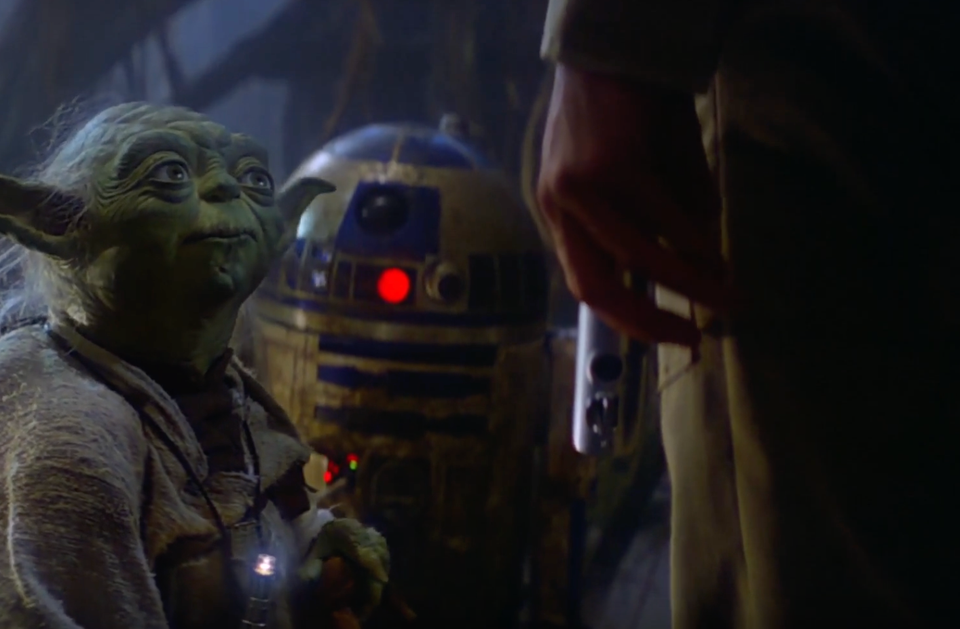
For a character like Yoda, the Oxen.ai team found that separating visual and speech prompts worked best:
[VISUAL]: Yoda stands in a swamp, tattered beige robes, holding wooden staff...
[YODA_SPEECH]: Do or do not, there is no try.
This approach, giving the model distinct tokens for each modality, translates directly to MOVA’s bimodal design. The dual-tower architecture means you can potentially control visual style and audio characteristics independently, something cascaded pipelines struggle with.
SGLang Integration and the Infrastructure Play
Day-0 support for SGLang-Diffusion isn’t a footnote, it’s a strategic move. SGLang’s distributed inference engine is built for exactly this kind of large model deployment. The integration example shows MOVA running across 8 GPUs with ring and Ulysses parallelism:
sglang generate \
  --model-path OpenMOSS-Team/MOVA-720p \
  --prompt "A man speaks..." \
  --image-path "https://github.com/OpenMOSS/MOVA/raw/main/assets/single_person.jpg" \
  --num-gpus 8 \
  --ring-degree 2 \
  --ulysses-degree 4 \
  --num-frames 193 \
  --fps 24 \
  --enable-torch-compile
This is infrastructure-grade tooling. The --enable-torch-compile flag leverages PyTorch 2.0’s compilation for further speedups, while the ring/ulysses configuration lets you tune parallelism for your hardware topology. For teams already running SGLang for language models, MOVA slots right into existing deployment patterns.
The broader implication? Video generation is becoming just another service in the AI infrastructure stack. The Mac Mini M4’s on-device AI performance shows where this is heading: local processing at cloud-competitive speeds. MOVA’s 12GB VRAM minimum with offloading means it’s not running on your M4 Mini today, but the trajectory is clear. The gap between local and cloud is closing fast.
Benchmarks That Actually Matter
MOVA’s Verse-Bench scores reveal where it shines. On lip-sync tasks, the Achilles’ heel of most video-AI models, MOVA-720p with Dual CFG achieves an LSE-D score of 7.094 and LSE-C of 7.452. The cpCER (character error rate for speaker switching) also leads the pack. These aren’t incremental improvements, they represent a qualitative jump in synchronization quality.
The human evaluation Elo scores show MOVA beating existing open-source models across both video and audio quality. But the real comparison everyone wants, against Sora, Veo, Kling, remains subjective because those models won’t publish comparable benchmarks. The closed ecosystem thrives on cherry-picked demos, MOVA gives you the weights to generate your own comparisons.
The Controversy Nobody Wants to Admit
Here’s the uncomfortable truth: synchronized video-audio generation has been held back not by technical impossibility, but by product strategy. Closed models treat audio as a premium feature because it’s hard to monetize a silent video. MOVA’s release forces a conversation about what should be baseline versus upsell.
The Reddit threads already highlight the tension. One commenter asks about VRAM requirements for 720p, then follows up with "Rip" when learning about the 77.7GB weight file. The community is simultaneously excited and daunted. Another points out that LTX-2 (another open video-audio model) produces better results in user-made videos than MOVA’s official demos, a direct challenge to the cherry-picking that plagues model releases.
This is the open-source dynamic at work. You can’t hide behind polished marketing. The weights speak for themselves, and the community will find the edge cases. MOVA’s team seems to understand this, releasing with full training support rather than just inference APIs.
Internal Links and the Bigger Picture
MOVA’s release doesn’t exist in a vacuum. It’s part of a broader shift in AI infrastructure toward openness and accessibility. The 15ms on-device speech synthesis revolution shows audio generation is already breaking free from the cloud. MOVA extends that to video.
The model’s MoE architecture, 32B total, 18B active, mirrors trends in efficient language models. It’s the same design philosophy that makes Alibaba’s Z-Image model run on modest hardware while delivering competitive performance. The pattern is clear: activation sparsity is the new frontier for accessible AI.
Meanwhile, the $10B Cerebras-OpenAI deal represents the opposite end of the spectrum, massive capital concentration in closed infrastructure. MOVA is a bet that the future belongs to models you can run, modify, and own. The Z.ai IPO raises the same question from a different angle: can open-source models survive commercial pressures? MOVA’s Apache 2.0 license is a direct answer.
The Bottom Line
MOVA isn’t perfect. The VRAM requirements will exclude many hobbyists, the 8-second generation length is limiting, and the community is already finding cases where other models outperform. But it’s fully open, technically sophisticated, and backed by infrastructure that scales from a single 4090 to multi-GPU clusters.
The synchronized video-audio problem isn’t solved, it’s just democratized. For researchers, indie filmmakers, and teams building the next generation of creative tools, that’s more valuable than any polished demo. The silent era is over. The question now is who adapts and who gets left behind.