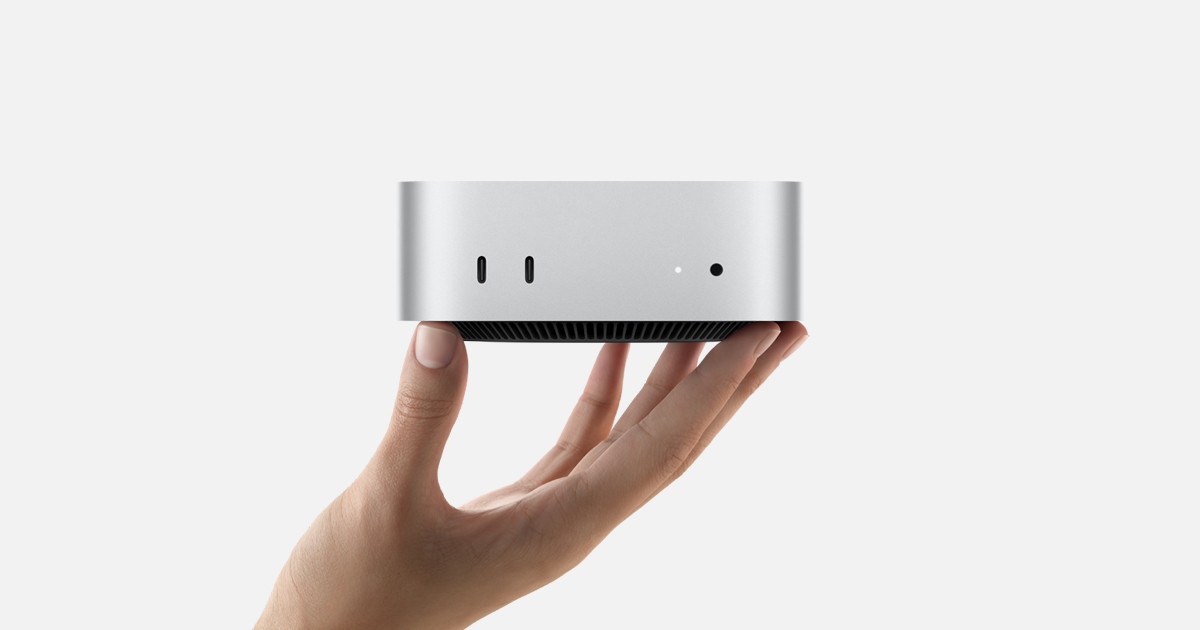
The $599 Mac Mini M4 Is Eating Cloud AI’s Lunch
A manufacturing company spent months stuck on a data migration project. Their IT department, bound by vendor evaluations and security protocols, couldn’t move the needle. Then a non-technical employee, someone whose job title had nothing to do with engineering, solved it in two days using ChatGPT and a consumer desktop. The Mac Mini M4 running whisper.cpp paid for itself in 20 days by replacing thousands in monthly Google Cloud transcription costs. This isn’t a tech demo. It’s a guerrilla insurgency against enterprise IT, and it’s happening in cubicles while vendors are still scheduling PowerPoint presentations.
The $799 Barrier to Enterprise Disruption
The economics are brutally simple. A Mac Mini M4 ($599) plus a Claude subscription ($200/month) creates a $799 total barrier to entry that undercuts cloud AI services by an order of magnitude. The Reddit thread that sparked this conversation tells the story directly: a guy running whisper.cpp on his desk eliminated a five-figure monthly cloud bill. He wasn’t a DevOps engineer. He asked Claude how to set it up, followed the instructions, and now runs production workloads from his desk.
This is the enterprise shift toward local, private AI for development that Anthropic just legitimized by letting Claude Code run completely offline. The same pattern repeats across industries: network engineers automating decades-old infrastructure, business analysts building custom web applications, operations staff transcribing months of meetings locally. The cloud AI industrial complex has a dirty little secret, they’re terrified of what happens when developers realize they can replicate services for the cost of a single month’s API bill.
Shadow IT’s AI-Powered Renaissance
We’ve seen this movie before. Shadow IT emerged in the 2010s when SaaS tools let marketing teams bypass CIO-approved software. Now it’s evolved into something far more potent: shadow AI infrastructure. Mid-size companies report employees casually automating processes that official tech stacks can’t handle while IT debates vendor contracts for six months.
The real disruption isn’t coming from lab announcements or frontier model releases. It’s happening in random cubicles where someone got curious and spent a weekend learning prompting. As one commenter noted, “The real moat isn’t technical skill, it’s just… willingness to try shit.”
This willingness creates what enterprise architects fear most: undocumented, unaudited automation running under someone’s desk. It works great until it breaks, leaks data, or becomes mission-critical without documentation. When that happens, IT inherits a system they didn’t know existed, with no documentation, and it’s suddenly their problem.
When “Vibe Coding” Meets Production
The term “vibe coding”, writing software by describing what you want to an AI without understanding how it works, terrifies senior engineers. One network engineer with 30 years of experience notes that AI turbocharges his efforts by an order of magnitude, letting him focus on actual network engineering rather than scripting. But he has the domain knowledge to validate the output.
The concern is what happens when that domain knowledge is missing. A non-developer can create a functional application, but when it silently fails, hits a scale issue, or encounters a dependency conflict, they’re stuck. As critics point out, 90% of software’s life is spent on these exact problems, which is precisely what vendor support contracts pay for.
Yet the counterargument stings: human-written enterprise codebases are often atrocious. AI-generated code might not be worse than what’s already in production. The difference is that traditional software development has processes, code reviews, staging environments, documentation requirements, that vibe-coded solutions bypass entirely.
The Hardware Underpinning the Revolution
The Mac Mini M4’s neural engine makes this practical. Running whisper.cpp locally delivers transcription quality that rivals cloud APIs at zero marginal cost. For batch processing of audio files, the economics are undeniable. But this extends beyond transcription.
Cost-effective local AI hardware disrupting cloud providers isn’t limited to Apple’s silicon. Eight “obsolete” AMD GPUs can deliver 26.8 tokens per second for $880 total investment. The performance-per-dollar calculus has shifted dramatically toward local execution, especially for workloads that don’t require real-time collaboration or massive scale.
This aligns with the smaller, efficient AI models challenging cloud dominance. When Ministral 3 and similar models can run on commodity hardware, the argument for cloud-based inference weakens for many use cases. The edge is becoming the center of gravity for AI workloads that involve sensitive data, batch processing, or predictable usage patterns.
Enterprise IT’s Security Nightmare
From an enterprise architecture perspective, this trend triggers every alarm. Data governance, access controls, compliance auditing, and disaster recovery all evaporate when an employee runs production workloads from their desk. The manufacturing employee who solved the data migration created a solution that works but exists outside the security perimeter.
One IT vendor veteran explains where most budget waste comes from: the employee who says “We don’t need a vendor contract! I can do it in-house and save a fortune!” Then his phone rings: “We can’t log onto our database servers and can’t figure out what went wrong!” The fix costs 40% more than the original solution would have, plus the damage remediation.
AI has weaponized this pattern by giving everyone “a little knowledge”, just enough to be dangerous. A senior software engineer laments that “willingness to try shit has been the bane of my existence for years”, but acknowledges it’s a rare skill. Most people give up at the first sign of resistance. Those who don’t are living in a different reality than those following the status quo.
The Competitive Pressure Accelerator
The AI arms race itself is driving this decentralization. As competitive pressure drives AI innovation and decentralization, the tools keep getting better and cheaper. OpenAI’s “code red” response to Gemini 3 shows how fear of losing market share accelerates capability deployment.
But this also means why massive cloud infrastructure doesn’t guarantee AI superiority. Despite Google’s data advantages, Gemini hasn’t dominated because local, specialized solutions can outperform generalized cloud APIs for specific tasks. The future isn’t one AI to rule them all, it’s a thousand AI models optimized for particular workloads, many running on local hardware.
This fragmentation challenges the enterprise architecture principle of standardization. When each department can spin up its own AI solution, you get interoperability nightmares. The web developer who can’t maintain the analyst’s Python script, which depends on libraries the security team hasn’t vetted, creates a tangled web of dependencies that no one understands end-to-end.
The Real Job Disruption Story
The original post’s title asks if a Mac Mini and Claude will replace more jobs than OpenAI. The answer is nuanced. OpenAI builds the engines, but the Mac Mini owner is the one driving the car. The threat isn’t the technology itself, it’s the asymmetry between those who deploy it and those who don’t.
Power developers are also threatened. Domain knowledge that provided job security for years is being absorbed by AI systems that can explain legacy codebases over a weekend. The network engineer who automated infrastructure since the 90s now works ten times faster with AI assistance, but his unique value proposition erodes as AI democratizes that expertise.
Yet new roles emerge. Companies are hiring “AI fixers” who clean up technical debt from vibe-coded solutions. The person who can debug an AI-generated system, understand its failure modes, and rebuild it properly becomes more valuable, not less. The market bifurcates into quick experimenters and deep maintainers.
Governance in the Age of Desktop AI
The public sector research on local LLMs for sensitive data analysis reveals another driver: privacy. When child welfare agencies analyze sensitive case notes, running Llama 3.1 locally ensures data never leaves their control. This same principle applies to healthcare, finance, and legal sectors where data residency is non-negotiable.
But overhyped AI hardware performance versus real-world efficiency reminds us that local deployment isn’t a panacea. NVIDIA’s DGX Spark promised 1 PFLOPS but delivers half that in practice. The gap between marketing and reality exists at every level, from cloud to edge.
The Path Forward: Controlled Chaos
Smart enterprises aren’t fighting this trend, they’re channeling it. They’re creating “AI sandboxes” where employees can experiment with local models on isolated hardware, with clear guardrails about when and how solutions graduate to production. They’re investing in local versus cloud AI in developer workflows that let developers choose the right tool for the job.
The most successful organizations recognize that the willingness to try shit is now the most valuable employee trait. They’re building structures that capture the innovation from these experiments while enforcing the governance that makes them sustainable. It’s not about stopping the Mac Mini revolution, it’s about making sure the revolution doesn’t burn down the building.
The Bottom Line
The $599 Mac Mini M4 isn’t just a computer. It’s a symbol of how AI democratization has broken the enterprise IT monopoly on automation. The economics are unassailable, the tools are improving daily, and the workforce is increasingly comfortable with AI-assisted creation.
Enterprise IT faces a choice: become the department that says “no” while work happens around them, or become the enablers who give employees safe paths to production. The former is career suicide. The latter requires rethinking decades of governance models.
The threat was never OpenAI taking your job. It’s the colleague who figures out how to run whisper.cpp locally while you’re still filling out vendor assessment forms. In the time it takes to schedule a meeting about cloud AI strategy, they’re already in production.
The revolution will not be provisioned. It will run on a Mac Mini under someone’s desk.