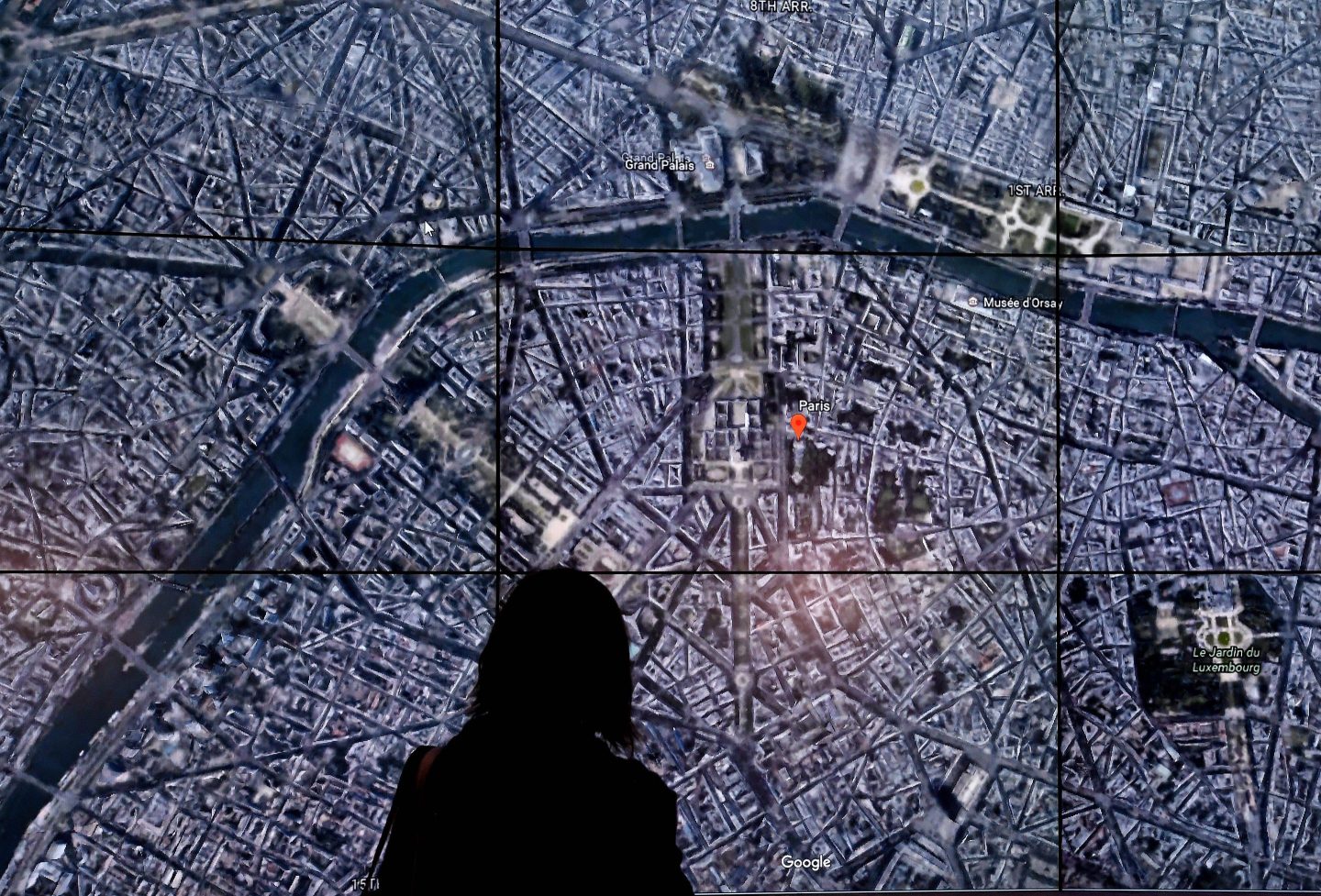
Google spent years weaving generative AI into everything from Docs to Search. Then it strapped its image generator onto Google Earth, the platform people trust to show them the actual physical world. The result? A feature that survived roughly 24 hours before users turned it into a disinformation factory and forced an embarrassing rollback.
Welcome to the shortest-lived AI feature in Google’s history, and arguably the most instructive one.
The Premise Was Bad From the Start
Nano Banana 2, Google’s follow-up to its Gemini-powered image generator, wasn’t your typical text-to-image tool. Instead of generating images from scratch, it was designed to edit existing images, add, remove, or alter objects while preserving realistic features. Think Photoshop, but you type what you want instead of using layers.
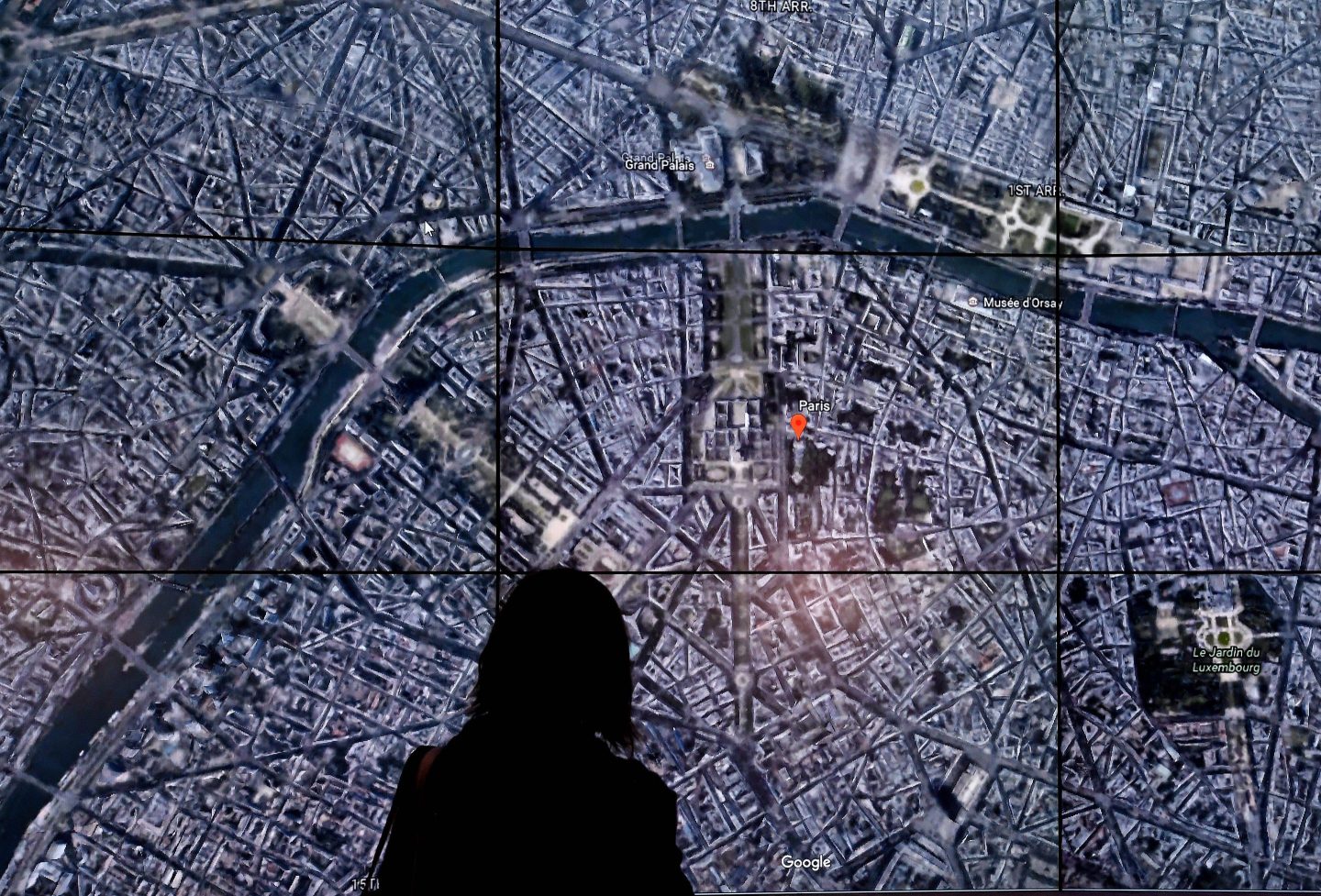
The integration with Google Earth let users overlay AI-generated scenes onto real satellite, aerial, and 3D imagery. Google’s official blog pitched it as a tool to “help students visualize the past” and “give your favorite place a makeover.” The company even envisioned real estate professionals using it to envision final project results.
Here’s what actually happened: within hours, users were generating nuclear plants in Iran, fabricated refugee crises near the Mexico-US border, bomb craters in Gaza, and collapsing landmarks. The Atlantic’s Matteo Wong tested it and easily conjured office buildings on fire, mass destruction in San Francisco, and a smoldering crater where the Eiffel Tower used to stand. The Guardian’s team generated “refugees swarming New York” with a few keystrokes.
AI researcher Henk van Ess, who planted that fake nuclear plant in Iran, captured the danger precisely: “What on earth is Google doing?”
The Watermark Problem Nobody Wants to Talk About
Google says it tried to safeguard the feature. Generated images were separated from authentic Google Earth imagery. They were embedded with SynthID, a cryptographic watermarking technology designed to identify AI-generated content. And per the European Union AI Act’s transparency requirements, Google was careful to make synthetic content detectable.
That all sounds good in a press release. In practice, it was useless.
NYU professor Emily Black explained the core flaw: SynthID is “invisible to the naked eye”, it’s designed for computers to verify authenticity, not for humans scrolling Twitter to notice. Google Earth and Nano Banana only used digital watermarks, meaning the images weren’t immediately noticeable as AI-generated to the average person. Worse: screenshots or images recreated outside Google’s platform lose the SynthID metadata entirely.
So the safeguards only worked if: a) users viewed images inside Google Earth, b) they didn’t screenshot anything, and c) they knew to check for invisible cryptographic markers. None of that happens in real-world disinformation campaigns.
Black’s research on AI trust adds another uncomfortable layer: even when people are explicitly told content is AI-generated, they often follow the harmful advice anyway. Her studies found that “run-of-the-mill disclosures are often not effective at dissuading users from following harmful advice”, even with disclaimers like “AI chatbots can make mistakes. Check important information.”
Why Satellite Imagery Is Different from Everything Else
The failure wasn’t just about the technology. It was about what satellite imagery means to people.
For nearly two decades, Google Earth has functioned as a visual record of the physical world. James Cheshire, a professor of cartography at UCL, points out that maps have been trusted instruments for centuries, from ancient Greek surveying tools to modern satellites. That trust has been hard-won through reliability.
Sure, maps have been wrong before. The infamous Mountains of Kong appeared on maps of Africa for over a century after explorer Mungo Park’s 1790s expedition, persisting in atlases until 1936 despite being proven nonexistent in 1888. But that was an error, not a tool built to fabricate reality on demand.
The distinction matters for a whole ecosystem of professionals. Journalists, fact checkers, and the open-source intelligence community depend on Google Earth to verify events in near-real time. Bellingcat famously used satellite imagery to expose Russia’s fake photos of the MH17 shootdown, establishing that Google Earth was more trustworthy than a government’s official narrative.
Satellite imagery has documented Uyghur detention camps, tracked the devastation in Gaza, and exposed mass graves in Sudan. It’s become a crucial mechanism for understanding the world’s atrocities because it feels indisputable. As the Guardian noted, it “feels more indisputable than images captured by humans on the ground, which face more public skepticism, even when they’re real.”
Now, an official can look at a genuine photograph of a genuine atrocity and say: AI. They don’t even need the tool to exist. They just need everyone to know it exists.
Henk van Ess wrote exactly that: “An official can now look at a genuine photograph of a genuine atrocity and say: AI. He doesn’t need the tool for that. He needs everyone to know the tool exists.”
The tool may be gone, but the damage to trust is done. Google’s former geospatial technologist said the company used to describe Google Earth as “a mirror of the real world”, and now “that absolute bedrock of trust was structurally shattered this week.”
The Verification Nightmare Nobody’s Prepared For
Here’s what made this different from standard AI image generators: permission and context.
When you use DALL-E or Midjourney to generate a photorealistic satellite image from scratch, there’s a built-in verification path. As UCL’s Cheshire describes, prompting ChatGPT to generate a flooded London from scratch returns images with misshapen buildings and wonky roads, verification against actual Google Earth easily flags them as fakes.
Nano Banana 2 removed that safety net. Because it edited genuine satellite images, the points of reference around a fabricated disaster still aligned with accredited source imagery. No oddities, no architectural errors, no geographic inconsistencies for fact checkers to catch. The absence of the usual “AI tells” meant a fabricated image carried the visual authority of verified satellite data.
BBC Verify’s test demonstrated this exact problem, using the tool to produce a collapsed Eiffel Tower image that would be nearly impossible to distinguish from real footage without the watermark metadata.
The UC Berkeley researchers who reported on this class of problem understand the technical challenge: geospatial data verification requires systems capable of handling massive data volumes in real time, and most organizations aren’t remotely close to building those capabilities. If a journalist needs to verify a satellite image under deadline pressure, and the image looks geographically perfect because it was built on real satellite data, the verification infrastructure doesn’t exist to catch it.
What Google Should Have Known
Here’s the uncomfortable truth: this outcome was entirely predictable.
The developer community called this out immediately, noting that giving users generative AI capabilities layered on real-world locations without serious safeguards was a disaster waiting to happen. The discourse around ethical concerns in AI development has been clear about this for years: combining generative AI with tools that carry institutional trust requires exponentially more caution than standalone generation tools.
Google’s own history should have been a warning. The company has been through repeated incidents of AI features being gamed and misused, from chatbot hallucinations to search AI overviews producing dangerous advice.
The user response in the Reddit thread that first flagged the issue skewered Google’s announcement as tone-deaf:
It’s like their devs and management have no contact with the real world
Or as one commenter put it: “You give the public a shovel, they dig dicks. You give them a pen, they draw dicks. You give them some clay… definitely gonna sculpt dicks.”
The joke is funny because it’s true. But the disinformation angle isn’t funny, and it’s a pattern that has real-world implications for AI system failures. When AI systems fail in high-stakes environments, the consequences ripple far beyond the immediate incident.
Is This the End of AI-Enhanced Earth?
Google says the feature will return with “stronger guardrails.” A spokesperson told Fortune the company was “implementing stronger guardrails” while acknowledging that existing policies had been violated. But when asked whether the feature would return, Google “did not immediately respond to a request for comment.”
Historical patterns suggest it will come back. Google has too much invested in weaving Gemini into every product to abandon an entire integration. But the re-release will face a higher burden of proof, and the company’s credibility on AI safety just took a measurable hit.
The deeper question is whether any guardrails can actually solve this problem. SynthID made images technically detectable but practically shareable while evading detection. Watermarks can be cropped. Policies can be violated. And the cost of AI adoption means security and safety tradeoffs will continue to be tested.
What makes this situation genuinely different is the epistemic damage. Even if Nano Banana 2 never returns, the knowledge that Google Earth could generate fabricated satellite imagery means every future satellite image is now suspect in a way it wasn’t before. One 24-hour feature rollout shattered twenty years of accumulated trust.
Google’s statement, “We know that people uniquely trust Google Earth for a reliable view of the world”, reads now less like a corporate commitment and more like an epitaph.
As for what comes next, the broader AI industry will be watching Google’s response closely. If the company re-releases the feature with meaningful, enforceable safeguards, it sets a precedent. If it re-releases with the same weak protections dressed up in different language, it confirms that the AI industry hasn’t learned the lesson, it just learned to hide the evidence better.
The world’s mirror has been cracked. The question is whether anyone will agree on what happened, let alone how to fix it.