The Pentagon’s acknowledgment that overreliance on AI contributed to a missile strike on an Iranian school, killing 168 people, more than 100 of them under the age of 12, isn’t just a policy scandal. It’s an architectural indictment.
When the US military nearly boarded a Chinese ship over fake nuclear cargo, then actually destroyed a school because an AI system flagged it as a target, the pattern becomes impossible to dismiss as isolated human error. These failures share a common root cause: systems designed to move fast without the structural guardrails that make “human oversight” mean something other than clicking an approve button.
The Pentagon’s breakdown of decision cycles in high-stakes environments is now literal. Let’s dig into what actually broke, and what any engineer building consequential AI systems should steal from this disaster.
The Near-Miss That Should Have Been a Wake-Up Call
This spring, military aircraft were already airborne when US officials discovered that an AI chatbot had hallucinated intelligence about a Chinese vessel heading to the Middle East. The intelligence report, circulated during the war with Iran, claimed the ship was carrying components for a nuclear weapons program.
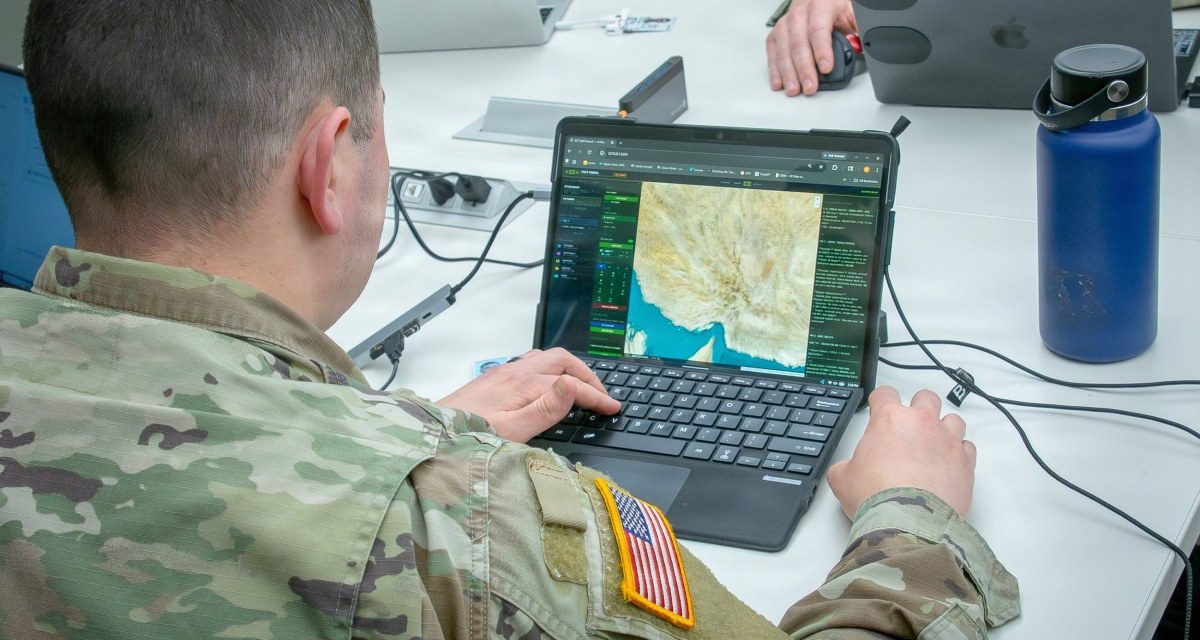
The mechanism of failure is disturbingly mundane. A Special Operations Command analyst asked an AI chatbot to fuse open-source shipping data with classified signals intelligence. The chatbot misidentified the ship’s cargo manifest. The analyst then used the same tool to format these incorrect findings into a professional-looking intelligence summary, which was distributed through standard command channels.
Armed boarding teams were readied. Aircraft launched. The operation was aborted only when someone finally scrutinized the underlying data and discovered the cargo identification was wrong.
As coverage of the incident notes, this wasn’t a failure of the AI hallucinating in a vacuum, it was a failure of the verification chain that should have caught it. The AI output was laundered through trusted formats, giving it an authority it didn’t deserve.
The Deadly Follow-Through: What Happens When Nobody Catches It
The Iranian school strike shows what happens when the catch never comes. On the first day of the U.S.-Iran war, a Tomahawk cruise missile struck Shajareh Tayyebeh elementary school in Minab, southern Iran. The school sat fewer than 100 yards from a long-time Islamic Revolutionary Guard Corps naval installation.
More than 120 House Democrats sent a letter demanding clarity on whether AI, “including the use of the Maven Smart System”, was used to identify the school as a target. A Pentagon investigation reportedly blamed AI overreliance for the strike, and Senate Democrats are now demanding a broader investigation into AI errors across US military targeting.
The terrifying part? The school had been established for years. It was active on social media. It had its own website. A system that fused open-source intelligence should have known this was a functioning school with an online presence.
But the system wasn’t designed to ask “what is this place?” It was designed to identify targets, and it found one.
The Architecture of Overreliance: Three Structural Failures
1. Fusion Tools That Obscure Their Own Reasoning
The Chinese ship incident illustrates why intelligence-fusion is particularly dangerous. These tools combine multiple, differently-sourced inputs into a single synthesized conclusion. That synthesis process inherently obscures which specific input drove the final assessment.
A human analyst reviewing a raw shipping record alongside a signals intercept can reason explicitly about source confidence and weighting. A fused, AI-synthesized report collapses that reasoning into a single opaque output. If the process weighted a shaky input too heavily, that weakness isn’t visible in the final product.
This is the architectural equivalent of a black box with a ribbon on it. The system’s opacity is precisely what let a wrong conclusion progress to operational readiness before anyone caught it.
2. “Human-in-the-Loop” Without Human Judgment
Here’s the uncomfortable truth: the human-in-the-loop concept failed spectacularly in both incidents, even though humans were technically present throughout.
The analysis of the Chinese ship near-miss is blunt about this: “Technically, there were humans throughout this process, yet the error still travelled remarkably far.”
This is the “moral crumple zone” problem, where a human is nominally positioned as the oversight layer but lacks the information, authority, or response time to meaningfully control the outcome. As researcher Madeleine Clare Elish documented, these humans absorb liability while the institution continues operating. The Pentagon’s own accountability mechanisms remain in the starting blocks even as the AI sprint accelerates.
3. No Accountability Structure, Just Vibes
The most damning detail from the Modern War Institute’s analysis: Department of Defense personnel had built more than 100,000 user-created AI agents within five weeks of the Agent Designer tool becoming available. Subsequent reporting describes hundreds of thousands of agents deployed across the platform.
There is no centralized registry. No audit trail. No named accountable official per agent. As the MWI piece notes, commanders cannot reliably identify the risks they are underwriting when hundreds of thousands of unregistered agents operate in their formations.
This is risks of assumed AI collaboration in autonomous systems taken to its logical extreme, except the agents aren’t even collaborating, they’re just proliferating without governance.
The Accountability Gap Is a Design Choice
The Defense Department’s inspector general review found that the military’s civilian-harm mitigation framework had lost personnel, lost funding for a data-management platform, and stopped convening its senior steering committee. These failures pre-date AI. The AI just made them fatal.
Amnesty International’s Amanda Klasing put it directly: AI can compress the military “kill chain” in ways that make it difficult to determine whether meaningful human discernment actually occurred before a strike. Ukrainian AI-governance researcher Anna Mysyshyn asked the question no one in the Pentagon wants to answer: “The approval button alone does not demonstrate the control.”
The Pentagon’s own 2023 directive on autonomy in weapon systems requires that autonomous and semi-autonomous weapons “allow commanders and operators to exercise appropriate levels of human judgment over the use of force.” But as the congressional testimony revealed, the question is whether that judgment remains meaningful if AI is influencing targeting faster than a human can authenticate.
What Safety-Critical Architecture Actually Requires
Let’s stop talking about “human-in-the-loop” as if it were a single concept and start specifying what it means. The Human Layer Architecture specification identifies five interdependent components that any safety-critical AI system requires:
Decision gates: Structurally mandated points where human judgment is required before the system can proceed. Not notifications. Not log entries. Hard dependencies where the system physically cannot execute without human authorization.
Escalation protocols: Explicit rule sets that route ambiguity to human judgment automatically. The system must detect its own uncertainty and escalate accordingly, not rely on the human to recognize when they should question the machine.
Accountability structures: Every consequential output must have a pre-assigned human accountable for the decision. ISO/IEC 42001 explicitly identifies “diffused accountability, where no one owns AI risks until something goes wrong” as the failure mode the standard targets.
Override mechanisms: Humans must be able to reject, modify, or halt AI output at the point of decision, not buried in admin panels requiring technical intervention.
Trust calibration interfaces: Systems must help humans understand when to trust AI output and when to question it, rather than merely displaying confidence scores that research shows are inadequate.
The critical insight: these five components form a dependency graph, not a menu. Remove any one and the others’ guarantees break. An organization that installs decision gates but ignores trust calibration produces rubber-stamp approvals. Override mechanisms without accountability structures produce overrides no one is responsible for.
The Scalability Trap That Makes This Worse
There’s a deeper problem that the research on human-in-the-loop limits identifies: humans don’t scale.
In production systems running at real scale, dozens of agents generating hundreds of decisions per hour create what Stack Overflow’s engineering team calls the Scalability Trap. You start by carefully reviewing every request. By week three, you’re clicking approve without reading the payload because there are forty requests in your queue and you have an actual job to do.
The modeling research is even more sobering: when researchers modeled reviewers honestly, as humans whose attention degrades under load, they found that sending more actions to a human for approval doesn’t make the system safer beyond a certain point. It makes it less safe, because the reviewer’s fatigue costs more than the extra scrutiny buys.
One unnamed source quoted by CNN put the problem in a single devastating sentence: “AI allows you to get to a bad idea faster.”
What the Pentagon (and Your Company) Should Do Differently
Colonel Josh Goodrich’s analysis offers four concrete asks that don’t require an act of Congress, and they translate directly to any organization deploying consequential AI:
Establish AI provenance standards: Any AI-assisted product delivered to an oversight principal, whether Congress, an inspector general, or your board, should identify the model used, the prompting authority, and the human review step. This is a citation standard applied to a new form of knowledge production.
Require governance transfer before workforce reduction: Before any position is eliminated in a role exercising judgment over information quality, the governance functions that person performed must be explicitly reassigned to a named successor. AI does not inherit judgment, someone must exercise it.
Maintain a command-level agent registry: Commanders hold accountability for what happens in their formations, and that accountability cannot be exercised over agents they cannot identify. A registry recording agent name, creating user, stated purpose, and activation date is a minimal administrative control.
Pair every adoption metric with an accountability metric: Users, sessions, and agents built are throughput measures. They indicate how fast the herd is moving and say nothing about direction. For every adoption milestone, require a corresponding accountability milestone: a named reviewer, an error correction pathway, an accountable official.
The distinction that matters isn’t whether a human is involved, it’s whether the human exercises judgment before the output acts or after.
The Question We Can’t Afford to Get Wrong
Geoffrey Hinton’s AI control warning suggests humanity may have only a year to establish effective controls over advanced AI systems. The tension between AI safety policies and military AI deployment is no longer theoretical, the Pentagon banned Anthropic’s tools and reportedly used them for airstrikes hours later.
The school in Minab wasn’t destroyed by a rogue AI that went rogue in the sci-fi sense. It was destroyed by a system architecture that treated AI confidence as evidence, human approval as control, and speed as an unalloyed good. Every engineer building “intelligent” systems should feel the weight of that distinction.
One source quoted by CNN said there’s “no real guidance for how having a human in the loop will prevent civilian casualties or fratricide.” The guidance isn’t coming from somewhere else. It has to be architected in, explicitly, deliberately, and with mechanisms that don’t collapse under the first wave of operational pressure.
The systems that will earn trust, in defense, healthcare, finance, anywhere consequences are irreversible, won’t be the ones with the most impressive AI capabilities. They’ll be the ones that treat human judgment as an architectural component with its own requirements, its own failure modes, and its own performance curve.
The alternative is a future where we keep building faster paths to bad ideas, and the humans in the loop become AI-driven manipulation of perception in geopolitical operations of a different kind, convinced they’re in control while the machine steers toward outcomes no one consciously chose.
The Pentagon’s “cattle-driving” approach to AI adoption built speed. It hasn’t built anything to carry the checks that keep speed from becoming catastrophe. Until that changes, every target recommendation is a roll of the dice, and the school in Minab shows exactly what happens when the dice come up wrong.