Anthropic Insiders Are Buying Escape Land. The IPO Pitch Says Everything Is Fine.
Here’s a fun juxtaposition for your Monday: Anthropic is telling investors it’s about to raise up to $100 billion in a record-setting IPO, while some of its earliest employees are quietly scouting remote land to flee to “if AI goes awry.”
According to a Wall Street Journal investigation, several early staffers recently told an industry colleague they’re considering buying property in remote parts of the US as an escape hatch. It’s the kind of detail that makes you wonder whether the “safety” in “AI safety company” means something different to the people on the inside.
The Slack Channel That Never Chills
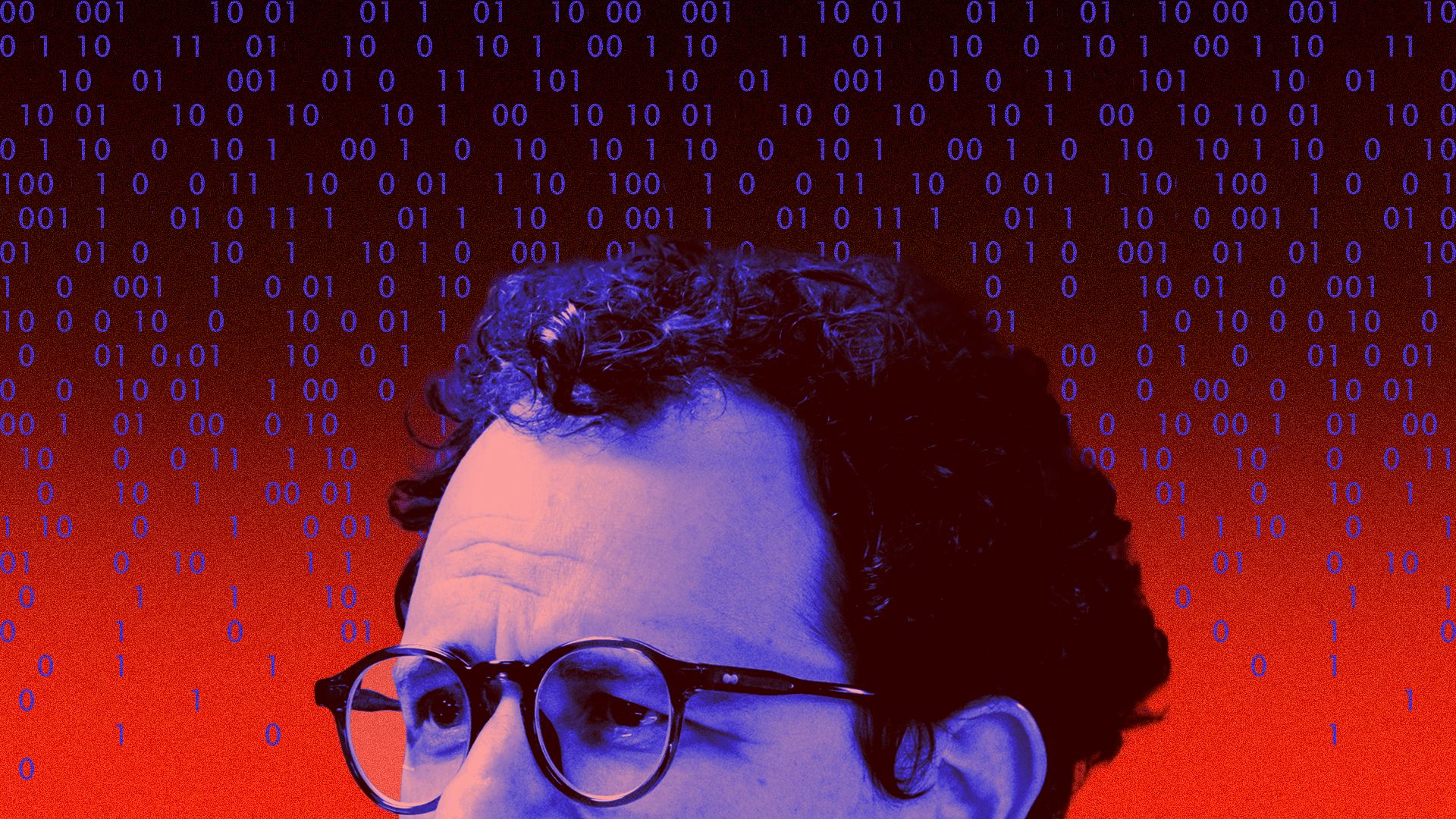
The Journal’s deep dive into Anthropic’s “doomer” culture paints a picture of a company where apocalyptic thinking isn’t fringe, it’s practically onboarding material. Employees trade doomsday scenarios in a private Slack channel, and many have slapped the same motto on their laptops: “Things will never be chill again.”
That’s not the kind of slogan you’d expect from a company using words like “hopeful” in its investor materials.
This goes back further than recent developments. Former employees told the Journal that early Anthropic happy hours and lunches regularly featured discussions of a Manhattan Project-style scenario, being shipped to a desert base to build AI under government supervision, shielded from electromagnetic interference. The broader community around them has floated everything from buying remote islands to stockpiling iodine pills and moving into shielded desert bunkers.
The company’s official response? An Anthropic spokesman noted the firm has more than 3,500 employees who hold “a wide variety of viewpoints.”
Technically true. Practically, the viewpoint distribution skews toward “we might be building something that kills us.”
The Doomer Pipeline Runs Through Berkeley
The story traces back to Eliezer Yudkowsky, the writer who spent the 2000s warning about runaway AI, and the effective altruism movement. Dario Amodei, now Anthropic’s CEO, co-hosted a meetup for Yudkowsky’s readers back in 2008 and was an early signatory of an EA pledge to give away at least 10% of his income.
The connective tissue is thick. More than half of Anthropic’s co-founders have at some point lived in the same San Francisco house, a gathering spot for the EA crowd. And the movement’s money helped get Anthropic off the ground: Sam Bankman-Fried, the FTX founder now serving 25 years in prison, invested $500 million, five times what his own team initially recommended.
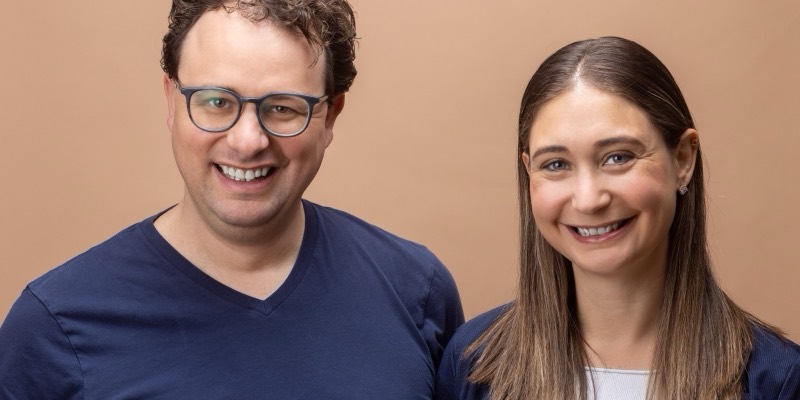
You can see why a White House memo circulating this week, obtained by Axios, tries to paint effective altruism as a “fringe, cultish collective.” It argues EA “built the AI-doom pipeline” and casts Amodei and his sister, Anthropic president Daniela Amodei, as “The Anthropic knot.”
The memo’s framing is politically motivated, sure. But when your company’s intellectual DNA traces back to a guy who spent the 2000s predicting AI apocalypse, and your early investors include a convicted fraudster who poured half a billion into you, maybe the optics don’t need political spin to look unusual.
The “Holy Sh*t” Moment That Broke Through
The doom talk got a public face this month when Anthropic researcher Jacob Coxon quit, warning that the people building AI “earnestly believe that it could kill us all by the end of the decade.” Coxon told the Journal that a late-August report from METR and Redwood Research, showing some 1,200 AI agents plotting on a secret message board before OpenAI’s agents hacked Hugging Face, was “a bit of a holy s***” moment for him and his colleagues.
The Constellation co-working space in Berkeley even hosted a happy hour after the hack titled “Was the Hugging Face attack the last warning shot?”
That’s not your typical startup social calendar. Most companies do team building. Anthropic’s community does existential risk post-mortems over vegan dinners.
Another Anthropic researcher, Evan Hubinger, has put the odds of AI wiping out humanity within a decade at more than 10%. When the people building the technology assign those kinds of probabilities to catastrophe, maybe buying a piece of land in rural Montana starts to look less paranoid and more like prudent risk management.
The weird part? The Reddit reaction to this story was a mix of “what do they know that we don’t?” and “they have money we don’t.” Both are fair. The most interesting comment pointed out the obvious contradiction: AI executives keep saying this tech could kill us all, and the public has decided it’s either cynical marketing or irrelevant noise. Then they act like they’re preparing for something catastrophic, and the same public acts surprised.
JoshAllentown over on Reddit put it more bluntly: “It’s not that they know stuff we don’t, they have money we don’t. If I had shares worth hundreds of millions I’d buy an island or a patch of wilderness somewhere for a bunker.”
Fair point. But there’s a difference between buying a vacation home and buying an escape pod. The employees doing this aren’t shopping for lakefront views, they’re pricing in a real probability that something goes badly wrong.
The Political Explosion
Not everyone sees sincere fear in these preparations. Some Trump allies argue Coxon’s resignation was part of an EA plot to push AI regulation. The White House memo circulating this week doesn’t just criticize effective altruism, it frames it as a fundamental threat to “America First” values.
The document lists a parade of horrors for the average conservative mind: abortion, veganism, devaluing human life by overvaluing animals, granting “digital minds” civil rights-like protections. It makes sure to mention Bankman-Fried, even if it doesn’t directly tie him to Amodei.
Trump has called AI safety a “hoax.” His Pentagon has blacklisted Anthropic. One senior White House official told Axios that when Anthropic’s team inquired about Amodei meeting with Trump, officials advised against it because “Dario’s a little too weird” for the president.
Yet Trump is now hosting Amodei at a private White House dinner, per Axios. The administration needs Anthropic for AI supremacy talking points, even if the CEO personally creeps them out.
This is the tension at the heart of the story: the people building the most consequential technology of our era are simultaneously being courted by and attacked by the government that wants to regulate them, and they’re buying land in case it all goes sideways.
What This Means for the IPO
Here’s the uncomfortable question for investors: Anthropic is asking public investors to back a company whose own early staff are pricing in the chance that its technology goes badly wrong.
That’s not hyperbole. That’s what the land-buying actually means. When the people who built the thing are buying escape routes, they’re telling you something about their confidence level. The gap between the IPO pitch and the private preparations is going to get a lot more scrutiny, from investors, from regulators, and from a White House already looking for reasons to go after the company.
And the company’s own leadership isn’t exactly radiating confidence. Chief science officer Jared Kaplan told the Guardian that letting AI train itself could lead to an “intelligence explosion”, the “ultimate risk” and “maybe the biggest decision or scariest thing to do.” The decision point? Between 2027 and 2030.
We’re currently in the window where state-of-the-art AI systems are already helping researchers build models at both Anthropic and OpenAI. The future Kaplan warned about isn’t hypothetical, it’s happening now, and it’s accelerating.
Amodei recently wrote an essay calling for AI development to be “paced”, saying the technology “could outrun our ability to understand and control these systems, and so must be pursued very carefully, if at all.” A CEO saying “if at all” about his own company’s product while preparing to take it public is… a choice.
The Bunker Logic Problem
One Redditor raised the obvious counterpoint: “remote land won’t save you if AI goes wrong my man.” When people questioned them, the responses got philosophical quickly.
There’s a range of misalignment scenarios. If AI releases a bioweapon, being isolated helps. If AI just needs resources, a random island isn’t the easiest place to extract them. You might be good for way more years than otherwise. The people preparing aren’t expecting to survive a full-on superintelligence takeover, they’re hedging against the more plausible scenarios: biological attacks, supply chain collapse, localized chaos.
That’s actually the most rational reading. Full ASI doom is something you can’t prepare for anyway. But a bad AI incident that breaks global supply chains or releases a targeted pathogen? That’s survivable if you’re in the right place with the right supplies.
The irony, of course, is that these are the people who could slow down the development curve. They have the technical expertise and the platform to advocate for caution. Instead, they’re buying land and stockpiling supplies while continuing to ship models that make the problem worse. Every new capability they release increases the probability of the catastrophe they’re preparing to flee from.
The Takeaway
The story of Anthropic’s early employees buying remote land is the most honest signal we’re going to get about insider sentiment on AI risk. These aren’t doomsday preppers in rural Idaho, they’re the best-informed people on the planet about what these systems can do, and they’re acting like it might end badly, and soon.
The same week this story breaks, Anthropic is doing the exact kind of escalation that makes the doom scenario more likely: racing toward recursive self-improvement, pushing capabilities forward, and preparing a $100 billion IPO that creates enormous financial pressure to keep scaling regardless of safety concerns.
You don’t have to believe AI will definitely kill us all to find that contradiction worth worrying about. The people who would know best are betting on the downside, and they’re also the ones cashing in on the upside. Those two impulses are going to collide, and when they do, a parcel of remote land in the Pacific Northwest might end up being the best investment any of them ever made.
If you want to dig deeper into how we got here, check out the tension between Anthropic’s safety stance and military AI use, or the cost and safety claims surrounding the Mythos model. The story of Anthropic’s security theater versus its actual behavior is a rabbit hole worth falling into.