For years, the data architecture playbook went something like this: land everything in a centralized warehouse, spin up expensive clusters, and pray the SQL your analysts write doesn’t melt the bill. Then DuckDB came along and asked a dangerous question, what if the database lived inside your application instead of the other way around?
The answer, apparently, is a 40× speedup on recursive queries and a growing army of developers who’d rather embed analytics than buy another warehouse credit. DuckDB v2.0, previewed on the official blog, isn’t just a feature release. It’s a declaration that the in-process analytical database has outgrown its “SQLite for analytics” label and become something far more interesting.
The Server That Isn’t a Server
Here’s the twist that breaks brains: DuckDB has been an in-process database since day one. No daemon. No port to open. Just a library that executes SQL next to your application code. That simplicity made it beloved by data scientists and Python developers who wanted to query Parquet files without begging the infrastructure team for a Snowflake account.
But v2.0 introduces a client/server mode via the Quack extension. Yes, they named it Quack. Any DuckDB process can now serve databases over the network, and other DuckDB instances can ATTACH to it using the new CONNECT statement:
ATTACH 'quack:server.example.com' AS qk (TOKEN 'my_token');
CONNECT qk;
SELECT count(*) FROM events;
-- executes on the server, results stream back
DISCONNECT;
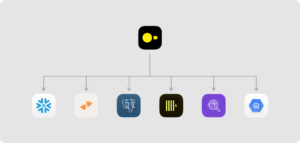
This isn’t just a party trick. The team built a full remote pushdown optimizer that ships SQL directly to PostgreSQL and MySQL instead of yanking entire tables over the wire:
CONNECT 'postgres://localhost/mydb';
SELECT count(*) FROM orders, -- runs on the PostgreSQL server
DISCONNECT;
Here’s the uncomfortable implication for traditional vendors: if an embedded database can serve queries over the network and push down to your existing systems, what exactly is the multi-thousand-dollar-per-credit warehouse doing for you that a library can’t?
A 40× Speedup That Should Make You Nervous
The performance numbers in the v2.0 preview are genuinely astonishing. Single-source reachability over a graph with one million edges, a recursive CTE benchmark you can run on a laptop, went from 4.90 seconds in v1.5.4 to 0.12 seconds in v2.0. That’s roughly 40× faster for the same query.
| Version | Run time |
|---|---|
| DuckDB v1.5.4 | 4.90 s |
| DuckDB v2.0 (preview) | 0.12 s |
What drives this? The rewritten recursive CTE engine. Aggregations that spill to disk when memory runs out. Partial aggregates pushed below joins. And massively expanded row-group pruning, min-max zone maps and Parquet Bloom filters now skip data for structs, lists, decimals, UUIDs, IN filters, and function predicates:
-- these now prune row groups instead of scanning them:
SELECT * FROM logs WHERE contains(message, 'ERROR');
SELECT * FROM t WHERE substr(code, 1, 3) = 'NL-';
SELECT * FROM 'data/*.parquet' WHERE id IN (1, 5, 9);
The DuckDB in production article scratched the surface on why teams are already running this in real workloads, cutting costs dramatically compared to Spark clusters. v2.0’s performance gains make that argument far harder to dismiss.
VARIANT: Your Semi-Structured Data, Shredded
The VARIANT type, first shipped in v1.5, gets first-class treatment in v2.0. Think of it as JSON on steroids, but the kind that hits the gym. A VARIANT column stores differently-shaped data in every row, similar to JSON. Unlike JSON, it’s not a text format. DuckDB detects the common structure hiding in your semi-structured data and “shreds” it, which means it compresses well and executes fast without you declaring a schema.
The pipeline works end-to-end in v2.0: shredded execution from storage, extraction pushdown into scans, shredded reads and writes for Parquet, and a family of variant_* functions:
CREATE TABLE events (payload VARIANT);
INSERT INTO events VALUES ('{"user": {"id": 42, "tags": ["a", "b"]}}'::JSON::VARIANT);

SELECT variant_type(payload), variant_keys(payload) FROM events;
SELECT * FROM events WHERE variant_contains(payload, {'user': {'id': 42}}::VARIANT);
For real-time log ingestion, where JSON-ish records share structure but evolve over time, this is a genuine breakthrough. You get schema flexibility without the query-time penalty that typically accompanies it.
Triggers, Because Long-Running DuckDB Is Now a Thing
Triggers were a long-standing feature request, and v2.0 delivers them in full: BEFORE and AFTER triggers, FOR EACH ROW and FOR EACH STATEMENT, transition tables, multiple triggers per event, RETURNING, and DROP TRIGGER.
The classic audit table use case works as expected:
CREATE TABLE target (id INTEGER, val INTEGER);
CREATE TABLE audit (id INTEGER, old_val INTEGER, new_val INTEGER);

CREATE TRIGGER trg_audit AFTER UPDATE ON target
REFERENCING OLD TABLE AS o NEW TABLE AS n
FOR EACH STATEMENT
    INSERT INTO audit
    SELECT n.id, o.val, n.val FROM o JOIN n ON o.id = n.id;

INSERT INTO target VALUES (1, 10), (2, 20);
UPDATE target SET val = val * 10 WHERE id <= 2;
SELECT * FROM audit;
| id | old_val | new_val |
|---|---|---|
| 1 | 10 | 100 |
| 2 | 20 | 200 |
The stated rationale is that triggers fit long-running DuckDB services. But the hidden implication is bigger: DuckDB wants a slice of the operational workload pie, not just ad-hoc analytics. That’s a direct challenge to the transactional databases that have dominated application backends for decades.
Async I/O: The Internet Is Your Disk Now
Interacting with data stored in S3 is central to the DuckDB experience. v2.0 introduces asynchronous I/O throughout the engine, which means the I/O layer scales independently from query processing. The result: dramatically faster queries on network storage, with Parquet support first, then CSV and DuckDB’s own file format.
The dedicated asynchronous I/O blog post goes deep on the design. The TL;DR is that synchronous access was the bottleneck preventing DuckDB from fully exploiting remote object stores. With async I/O, that bottleneck largely disappears.
This matters because it dissolves the last technical argument for “move your data into our warehouse first.” If DuckDB can query S3-resident data quickly and directly, the ETL tax starts to look like a historical artifact rather than a necessity.
A New Parser, a New Storage Format, and Extensions That Survive Upgrades
Two foundational changes in v2.0 are worth highlighting because they have long-tail implications.
First, DuckDB is dropping the PostgreSQL-derived parser for its own modern, extensible PEG-based parser. This ties into the extension ecosystem: extensions can now hook into the grammar itself and expose entirely new SQL syntax. There’s also a SET dialect_compatibility_mode = 'spark' option, which is a quiet admission that cross-engine migration matters.
Second, the storage format bumps to v2.0.0. The headline change is buffer-managed ART indexes, indexes are no longer pinned in memory. Large indexed tables open instantly, with indexes paged in on demand. Combined with lazy column metadata loading, wide tables also open faster. DICT_FSST string compression becomes the default.
For extension developers, the news is even better. The C API is now generated from a declarative, versioned YAML specification. Every function is described with its lifecycle on record, and CI verifies headers against the spec. You can write an extension once, compile it once, and have it keep working across versions “essentially until the end of time.” Custom extension repositories let organizations host and sign their own extensions:
SET allow_extension_repositories = 'allowed';
CREATE EXTENSION REPOSITORY my_repo FROM 'https://extensions.example.org';
INSTALL my_ext FROM my_repo;
LOAD my_repo/my_ext;
If you don’t trust the network, pass the public key directly. Repositories survive restarts, support key rotation, and can be audited via a table function.
The Architectural Reckoning
So what does DuckDB v2.0 actually signal? Look past the feature list and you’ll see an architectural shift with significant consequences.
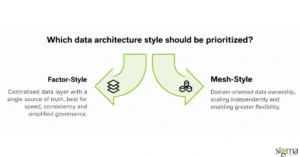
Centralized data warehouses were built on the assumption that analytics is expensive, compute is scarce, and data must be shipped to specialized infrastructure. DuckDB’s rise, 40,000+ GitHub stars and counting, suggests that assumption is breaking down. If a single machine can handle analytical workloads that would have required a cluster five years ago, the entire business case for monolithic warehouses starts to crack.
The data architecture evolution conversation increasingly centers on decentralization, and embedded analytics is the technical backbone enabling it. Rather than funneling everything through a central platform, teams can embed query engines directly into their applications, processing data where it lives.
This isn’t to say DuckDB replaces Snowflake or BigQuery. The comparison to centralized cloud warehouses still holds for massive enterprise BI workloads. But the boundary is moving. DuckDB’s foray into server mode, triggers, and multi-connection transactions means the “embedded database” label is becoming too limiting. It’s not just a library anymore, it’s a new architecture primitive.
The Reality Check
Being embedded has trade-offs. SQLite’s 16-year-old bug that broke Tailscale is a sobering reminder of what can go wrong when databases run inside application processes. DuckDB’s single-writer limitation disappears with Quack, but distributed operations remain out of scope for the core engine. If your analytical workload genuinely spans petabytes across hundreds of nodes, DuckDB is not your answer, yet.
There’s also the platform question. DuckDB uses a custom protocol and SQL dialect, which creates its own ecosystem gravity. The Spark dialect compatibility mode is a nod toward avoiding lock-in, not a guarantee.
What the Rise of DuckDB Means in Practice
The rise of DuckDB and Polars in modern data engineering pipelines is part of a broader movement: analytical workloads are moving off central platforms and into the tools engineers already use. The implications are:
- Cost structures change. Engineering teams can process substantial data workloads with zero cloud spend, because the database runs inside their application, not in a provisioned warehouse.
- Latency drops. No network round-trips between your app and your analytics engine. Queries run where the data lives.
- Architectures simplify. No need for a separate analytics service, a separate ETL pipeline, and a separate BI layer when one embedded library handles the query path.
- The “big data tax” shrinks. MotherDuck’s own analysis argues that over-provisioned cloud warehouses are the financial elephant in the room. Embedded analytics is the diet plan.
DuckDB v2.0 is coming this fall. If you’re building data-intensive applications, pay attention. The embedded analytics revolution isn’t coming, it’s already here, and it’s brought a server mode, triggers, and a 40× recursion speedup along for the ride.