Digital punch to the gut: “Most people celebrating AI layoffs haven’t stopped to ask the obvious: If humans lose jobs, how do AI-driven businesses survive without customers?” The thread exploded with 116 upvotes and 87 comments, most oscillating between dystopian dread and dark humor about doomsday bunkers in New Zealand. But beneath the cynicism lies a mathematical reality that should terrify every AI evangelist: you cannot automate your way to prosperity when your automation eliminates your market.
Welcome to the economic paradox that Silicon Valley’s finest are desperately ignoring. While they chase the $13 trillion growth story Morgan Stanley is peddling, they’re simultaneously engineering a consumer demand collapse that makes the 2008 financial crisis look like a minor market correction.
The Productivity Mirage and the Growth Stock Death Spiral
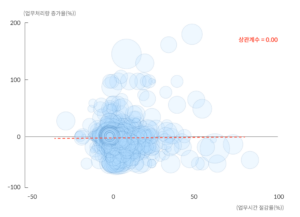
Here’s what the AI boosters won’t tell you: the technology isn’t even delivering on its core promise. JP Gownder, vice president at Forrester, has been tracking this closely. His analysis of US Bureau of Labor Statistics data reveals a damning trend: productivity growth was 2.7% annually from 1947-1973 (pre-PC era), but only 2.1% from 1990-2001 after PCs mainstreamed, and a paltry 1.5% from 2007-2019. The Solow Paradox is alive and well: we see AI everywhere except in the productivity statistics.
A recent MIT study found that 95% of companies integrating AI saw zero meaningful revenue growth. For coding, one of AI’s most hyped applications, programmers using AI tools actually became slower. When researchers at the Center for AI Safety tested AI agents on remote work tasks, not a single model completed more than 3% of assignments.
So why the hell are we doing this? The answer has nothing to do with productivity and everything to do with stock valuations.
Cory Doctorow’s analysis cuts through the bullshit: tech monopolists like Google, Meta, and Amazon control their entire sectors, but they’re trapped in a growth stock paradox. Once you hit 90% market share, you can’t grow anymore, at least not organically. When Facebook reported slightly slower US growth in Q1 2022, investors staged a $240 billion sell-off in 24 hours. The solution? Manufacture bubble after bubble: pivot to video, crypto, NFTs, metaverse, and now AI.
The primary goal isn’t to make AI work. It’s to keep the market convinced your company will continue growing until you can pivot to the next bubble. AI is just the latest growth narrative to keep monopolists’ stock prices inflated.
The Reverse Centaur Economy: Humans as Meat Peripherals
Doctorow introduces a crucial concept: the “reverse centaur.” A centaur is a human assisted by a machine (like driving a car). A reverse centaur is a human serving as a squishy meat appendage for an uncaring machine.
Take Amazon’s delivery drivers. They’re surrounded by AI cameras that monitor eye movements, penalize them for looking the wrong direction, and flag them for singing. The van can’t drive itself or carry packages to porches, so the driver becomes a peripheral for the vehicle. The machine drives the human at superhuman speed, demanding superhuman endurance.
This is the real AI business model. Not replacing humans, but turning them into accountability sinks. Consider radiology: an AI might help find tumors, but the pitch to hospital CEOs isn’t “make radiology more accurate.” It’s “fire nine out of ten radiologists, save $20 million annually, and make the remaining radiologist sign off on AI diagnoses at superhuman speed, and take the blame when the AI catastrophically misses a tumor.”
The radiologist’s job becomes not overseeing the AI, but serving as the legal liability sponge for its mistakes.
This model scales across every industry. Amazon’s automation endgame perfectly illustrates this trajectory, replacing 600,000 workers while pretending the robots are friendly assistants rather than tools to de-skill and surveil remaining humans.
The Consumer Demand Death Spiral
Now we arrive at the paradox. AI boosters promise a $13 trillion economic transformation built on firing workers and replacing them with machines that can’t actually do the jobs. But here’s what no one in the C-suite is modeling: what happens when you fire your customers?
The thread’s top comment crystallizes this: “If everyone loses their jobs the way I see it we either get UBI or heads start rolling. And one side far far far outnumbers the other.” Another user notes that the top 10-15% of consumers already account for 40% of economic activity, suggesting the elite believe they don’t need the “poors’ pittance consumerism.”
The Boston Consulting Group’s new Consumer AI Disruption Index validates this fear. 67% of marketing leaders expect major disruption to consumer behavior. Industries like news, travel, auto marketplaces, and retail are “breached”, facing high disruption risk as AI compresses discovery and comparison. The “secured” categories? Fintech, financial services, and media/streaming, industries with inherent trust and regulatory moats.
This bifurcation reveals the dark logic: AI automation is hollowing out the middle-class consumer base while fortifying services for the wealthy. When AI replaces entry-level white-collar workers, it doesn’t just eliminate jobs, it eliminates the people who buy phones, apps, SaaS subscriptions, media subscriptions, and games.
Ed Zitron’s analysis of AI economics shows the brutal math: ChatGPT has 800 million users, but the vast majority pay nothing. Each query costs compute, and power users cost more. There are no economies of scale, the more someone uses AI, the more they cost you. Unlike traditional software where marginal cost approaches zero, AI’s marginal cost increases with usage.
The result? A business model that literally loses more money the more successful it becomes.
The Bunker Mentality and the 40% Solution
The discussion reveals something chilling about elite thinking. Multiple users reference billionaires building doomsday bunkers in Hawaii and New Zealand. One commenter notes: “If the top 10-15% are already accounting for 40% of economic activity, they really don’t need the poors’ pittance consumerism to support them.”
This isn’t conspiracy theory. It’s economic calculus. When Nvidia’s Jensen Huang says AI productivity gains will make us work more, not less, and Palantir’s CEO says AI means you’ll have to work with your hands “like a peasant”, they’re previewing a world where automation doesn’t create leisure, it creates a servant class for the algorithm owners.
The hardware costs alone are staggering: $35 billion for 1GW of AI datacenter capacity. OpenAI has committed to spending $1.4 trillion over five years while projecting only $20 billion in 2025 revenue. This isn’t a business, it’s the largest wealth transfer in human history, from public markets and retirement funds into the pockets of chip manufacturers and energy companies.
Your next GPU upgrade has already become a luxury good, with AI-driven inflation pushing prices up 55-60% for DRAM and 33-38% for NAND Flash. The RTX 5090 could hit $5,000, a 150% premium, because the AI boom is consuming all available silicon.
The Aversion Feedback Loop
Consumers are already rebelling. Microsoft faces massive resistance to Windows 11 upgrades, with users explicitly citing its AI features as the reason. This isn’t technophobia, it’s rational economic self-preservation.
Consumer resistance to AI-driven products is accelerating because people intuitively understand: every AI feature is a potential job elimination tool. When your operating system comes with AI baked in, you’re not just getting convenience, you’re training your replacement.
The Washington Post’s decision to continue deploying error-riddled AI-generated podcasts “because this is how products get built” perfectly captures the insanity. We’re sacrificing quality, accuracy, and human judgment on the altar of automation that doesn’t even work properly yet.
The Technical Reality Check
Let’s be clear about what AI can actually do. AI is better than you at regex and other technical tasks, pattern matching, data cleansing, generating boilerplate code. These are real, valuable capabilities.
But the hidden cognitive costs are enormous. AI productivity is a high-interest loan against your expertise, financed at predatory rates against collateral no one has appraised: human cognitive resilience. Engineers shipping code 3x faster today are burning out 10x faster tomorrow, reviewing AI-generated “workslop” that someone else must debug.
The errors are subtle and dangerous. AI hallucinates code libraries with predictable names, names that malicious hackers then register to inject malware into supposedly “vetted” code. Senior developers could catch this, but tech bosses are specifically targeting senior developers for layoffs because they’re “mouthy, entitled, extremely highly paid workers” who might resist being turned into reverse centaurs.
The Inevitable Reckoning
The AI bubble will burst. Doctorow predicts most datacenters will be shuttered or sold for parts. Zitron jokes they’ll become “the largest laser-tag arena construction of all time.” But the economic damage won’t be contained to Silicon Valley.
When 10.4 million jobs vanish structurally by 2030, those workers don’t just disappear, they stop buying. They cancel subscriptions. They delay upgrades. They abandon brand loyalty. The BCG index shows that news, travel, and retail are already “breached”, their customer relationships too weak to survive AI-driven disintermediation.
The math is unforgiving: no income = no ecosystem. AI can generate infinite content, but it cannot generate a single paying customer. Every layoff announcement that sends a stock price soaring is simultaneously eroding the consumer base those companies need to survive long-term.
The elite’s bunker fantasy assumes the bottom 85% will quietly accept their obsolescence. History suggests otherwise. As one commenter bluntly put it: “People of the bottom % with nothing to lose tend to kill the top % off, historically speaking.”
The AI revolution isn’t just automating jobs. It’s automating away the entire economic foundation of consumer capitalism. And when the last human worker receives their pink slip, they’ll have one final message for the algorithm that replaced them: who’s going to buy what you’re selling?
The Inevitable Reckoning
The AI bubble will burst. Doctorow predicts most datacenters will be shuttered or sold for parts. Zitron jokes they’ll become “the largest laser-tag arena construction of all time.” But the economic damage won’t be contained to Silicon Valley.
When 10.4 million jobs vanish structurally by 2030, those workers don’t just disappear, they stop buying. They cancel subscriptions. They delay upgrades. They abandon brand loyalty. The BCG index shows that news, travel, and retail are already “breached”, their customer relationships too weak to survive AI-driven disintermediation.
The math is unforgiving: no income = no ecosystem. AI can generate infinite content, but it cannot generate a single paying customer. Every layoff announcement that sends a stock price soaring is simultaneously eroding the consumer base those companies need to survive long-term.
The elite’s bunker fantasy assumes the bottom 85% will quietly accept their obsolescence. History suggests otherwise. As one commenter bluntly put it: “People of the bottom % with nothing to lose tend to kill the top % off, historically speaking.”
The AI revolution isn’t just automating jobs. It’s automating away the entire economic foundation of consumer capitalism. And when the last human worker receives their pink slip, they’ll have one final message for the algorithm that replaced them: who’s going to buy what you’re selling?
The question isn’t whether AI can replace humans. It’s whether capitalism can survive AI replacing consumers. The data says no. The economics say no. The math says no.
But the stock tickers say yes, for now. And that’s all that matters in a bubble built on the promise of infinite growth in a finite world.
The only question left is: who gets left holding the bag when the music stops? Spoiler alert: it’s not the billionaires in their New Zealand bunkers. It’s every pension fund, retail investor, and tech worker who believed the fairy tale that you can automate your way to prosperity by eliminating your own customer base.