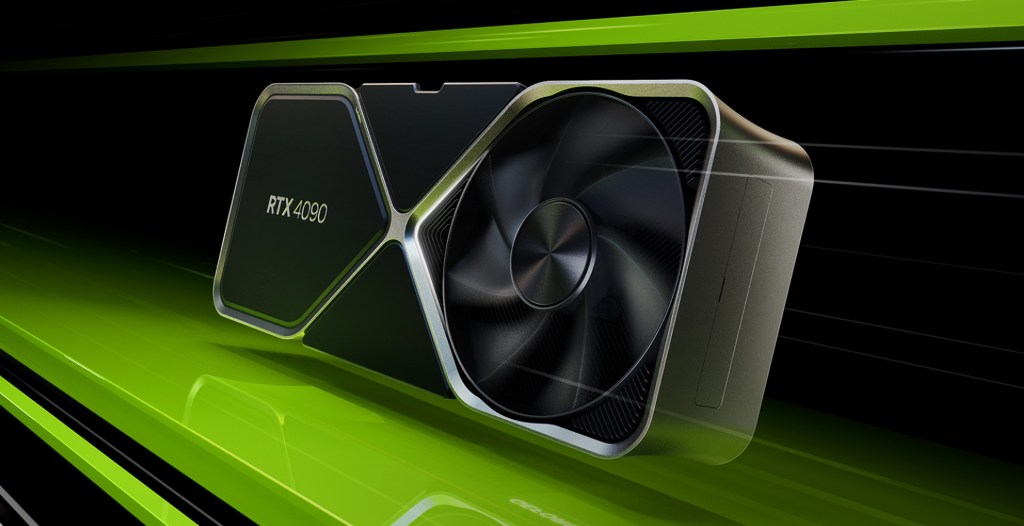
The math is brutal and unavoidable: by the end of Q1 2026, conventional DRAM contract prices will have jumped 55-60% quarter-over-quarter. NAND Flash will be up 33-38%. And if you’re eyeing an RTX 5090, prepare for a potential $5,000 price tag, up from its already steep $1,999 launch price. This isn’t speculation from forum rumors, it’s the aggregated forecast data from TrendForce’s semiconductor research team, and it’s forcing a fundamental recalculation of what personal computing hardware actually costs.
The AI Datacenter Vacuum Effect
The mechanism behind this price explosion is straightforward but rarely discussed in its full scope. AI training and inference workloads are voraciously consuming memory capacity, and the three major manufacturers, Samsung, SK Hynix, and Micron, are rationally reallocating their finite production capacity to where the margins are highest: High-Bandwidth Memory (HBM) for AI accelerators and server-grade DRAM for cloud providers.
TrendForce’s latest investigations confirm that DRAM suppliers in 1Q26 will continue shifting advanced process nodes and new capacity toward server and HBM products. This isn’t a minor pivot, it’s a wholesale reallocation that’s “significantly limited supply in other markets”, directly causing conventional DRAM contract prices to surge 55-60% QoQ. For context, that same memory now accounts for over 80% of the total bill of materials for consumer GPUs, according to industry sources cited by Kbench.
The cloud service provider (CSP) buying spree is compounding the crisis. U.S.-based hyperscalers have been pulling in orders since late 2025, with supply contracts for 2027 being finalized as early as Q1 2026. These companies aren’t just buying memory, they’re locking in capacity years ahead, effectively removing it from the spot market. When Dell warns its go-to-market team about price hikes of $55 to $765 for high-end memory configurations, they’re not guessing, they’re seeing the same contract pricing data that shows server DRAM prices projected to surge over 60% QoQ.
GPU Pricing Enters Uncharted Territory
The consumer GPU market is where this crisis becomes viscerally apparent. NVIDIA and AMD have both initiated phased price hike strategies starting in Q1 2026, with AMD reportedly beginning in January and NVIDIA following in February. The kicker? Both companies may continue raising prices every month going forward.
The numbers are stark. The RTX 5090, launched at $1,999, could climb to $5,000 later in 2026. Mid-range cards aren’t safe either, NVIDIA is reportedly weighing a 30-40% production cut for the RTX 5070 and RTX 5060 Ti, reallocating limited GDDR7 and GDDR6 supply to higher-margin AI products. This isn’t just about demand, it’s about manufacturers actively reducing consumer supply to serve the AI market.
ASUS has already confirmed price increases starting January 5, 2026, citing “rising component costs and supply chain pressure.” When add-in-board partners are pre-emptively hiking prices before the upstream memory increases fully hit retail, you know the supply chain is bracing for impact.
The SSD and RAM Reality Check
While GPUs grab headlines, the NAND Flash and DRAM markets tell a more systemic story. NAND Flash contract prices increased 19-20% in November 2025 alone, with further jumps in December. Client SSD prices are forecast to rise over 40% QoQ in Q1 2026, the largest increase among all NAND products.
The sentiment on enthusiast forums reflects this reality. Developers who bought 4TB NVMe drives for $250-330 in late 2025 are watching the same models approach $900. Another practitioner reported that DDR4 prices for their existing system had “gone through the roof”, while DDR5 modules they purchased in April 2025 for $199 were selling for over $600 before Christmas. The community’s assessment is blunt: storage already went up, the $60 2TB SSD is dead, and consumers are being forced back to spinning rust for bulk storage.
This isn’t limited to PC components. Canon Rumors reports that CFexpress cards have seen price explosions, Lexar GOLD 512GB 2-packs jumping from $344.99 in December to $1,199.99 in January. For photographers and videographers who rotate cards to manage wear leveling (a legitimate practice given the finite write cycles of NAND flash), this price increase directly impacts workflow reliability and data security.
The Developer and Researcher Dilemma
Here’s where this becomes more than a consumer inconvenience. The same hardware used for gaming and content creation is the foundation of local AI development, research, and edge deployment. When a 7900XTX is the pragmatic upgrade from a 2080 Ti because flagship cards are priced into irrelevance, the barrier to entry for machine learning experimentation rises dramatically.
The IDC projections quantify this impact: smartphone market contraction up to 5.2% and PC market contraction up to 8.9% in 2026 under pessimistic scenarios. “This signals the end of an era of cheap, abundant memory and storage”, their report states. For developers building local LLM applications or running inference at edge, the cost structure is fundamentally changing.
Framework’s price increase on DDR5 modules, citing “extreme memory shortages and price volatility”, exemplifies how this affects smaller manufacturers who can’t hedge with long-term supply agreements. Meanwhile, the major players, Lenovo, Dell, HP, have warned of 15-20% system price hikes starting H2 2026. The cost isn’t just in components, it’s in the entire system’s economics.
Strategic Response: The Case for Immediate Action
The controversial but data-supported recommendation is straightforward: if you need hardware within the next 6-24 months, buy it now. This isn’t FOMO-driven consumerism, it’s a rational response to a supply-constrained market with visible price acceleration.
The TrendForce data shows suppliers are “cherry-picking customers”, with large PC OEMs receiving only 30-50% of originally requested chip volumes. Module makers are facing component shortages and rising allocation pressure. When suppliers have depleted inventories and shipment growth depends solely on wafer output increases, buyers lose negotiating power entirely.
For AI practitioners specifically, this means:
GPU: If local LLM development is on your roadmap, secure compute capacity now. The monthly price hike cycle means each quarter of delay has measurable cost.
RAM: DDR5 for workstation builds should be prioritized. The 55-60% QoQ increase will cascade through channel inventory over the next 8-12 weeks.
Storage: Enterprise and high-capacity NVMe SSDs are seeing the steepest increases. The shift to QLC NAND for cost savings is accelerating, but even those products face 40%+ price hikes.
The counterargument, that waiting for the “AI bubble to burst” will normalize prices, ignores the structural capacity shifts. New fabrication plants won’t meaningfully contribute until late 2027 or 2028, and major DRAM manufacturers have publicly stated they have no plans to increase production. The China CXMT IPO, raising $4.2 billion for capacity expansion, might ease shortages in 2027, but that’s a 12-18 month horizon at best.
The Bigger Picture: A Market Transformation
What’s happening here is more than a temporary shortage. It’s a fundamental reordering of semiconductor priority. AI workloads have created a persistent, high-margin demand sink that’s reshaping how manufacturers allocate capacity. When memory represents 15-20% of a mid-range device’s BOM and that component jumps 50-60% in a single quarter, the entire product calculus changes.
This is why next-generation console releases may be delayed into 2027-2028, as Insider Gaming reported. It’s why smartphone manufacturers are considering spec downgrades, 4GB RAM and 128GB storage returning to flagship lines. It’s why PC gaming, local AI development, and content creation are simultaneously facing a cost crisis.
The datacenter isn’t just competing for the same silicon, it’s actively cannibalizing the consumer supply chain. And with CSPs signing multi-year supply agreements, that capacity is effectively removed from the market for the foreseeable future.
For the AI community, this creates a paradox: the very demand for AI compute is making it harder to democratize AI development at the edge. The hardware needed to run models locally is becoming a luxury good, potentially centralizing AI capabilities even further among well-funded organizations.
The data is unambiguous. The price increases are already in motion. The only question is how quickly you’ll adapt your purchasing strategy before the gap between need and affordability widens further.