Microsoft Wants Your Idle GPU to Train AI, And “Pay” You With Credits
Your gaming PC pretends to be a fortress of RGB-lit performance, but most of the time, it’s just sitting there, idle, bored, and burning electricity to display a wallpaper you haven’t changed since 2023. Microsoft has noticed this. More importantly, they’ve filed a patent to do something about it.
The patent, titled “Opportunistic Micro-training on Edge Devices Using Spare GPU Utilization”, describes a system that breaks down AI training workloads into micro-tasks and distributes them across consenting consumer devices. Your RTX 4090, sitting idle while you’re at work, could be crunching gradient updates for someone’s LLM. And Microsoft says you’ll get “credits” for the privilege.
This is either the future of distributed AI compute or the tech equivalent of being paid in exposure. Probably both.
The Mechanics: Turning Your GPU Into a Day Laborer
Here’s how the system works. Microsoft’s proposed technology analyzes a model’s dependency graph to identify computational split points, positions where the model can be cleanly partitioned into independently trainable chunks. The criteria for these split points aren’t arbitrary. The patent specifies three factors: communication cost, memory overhead, and data locality. These micro-tasks are then shipped to devices that have opted in, executed during spare capacity periods, and the results are sent back to a central orchestrator.
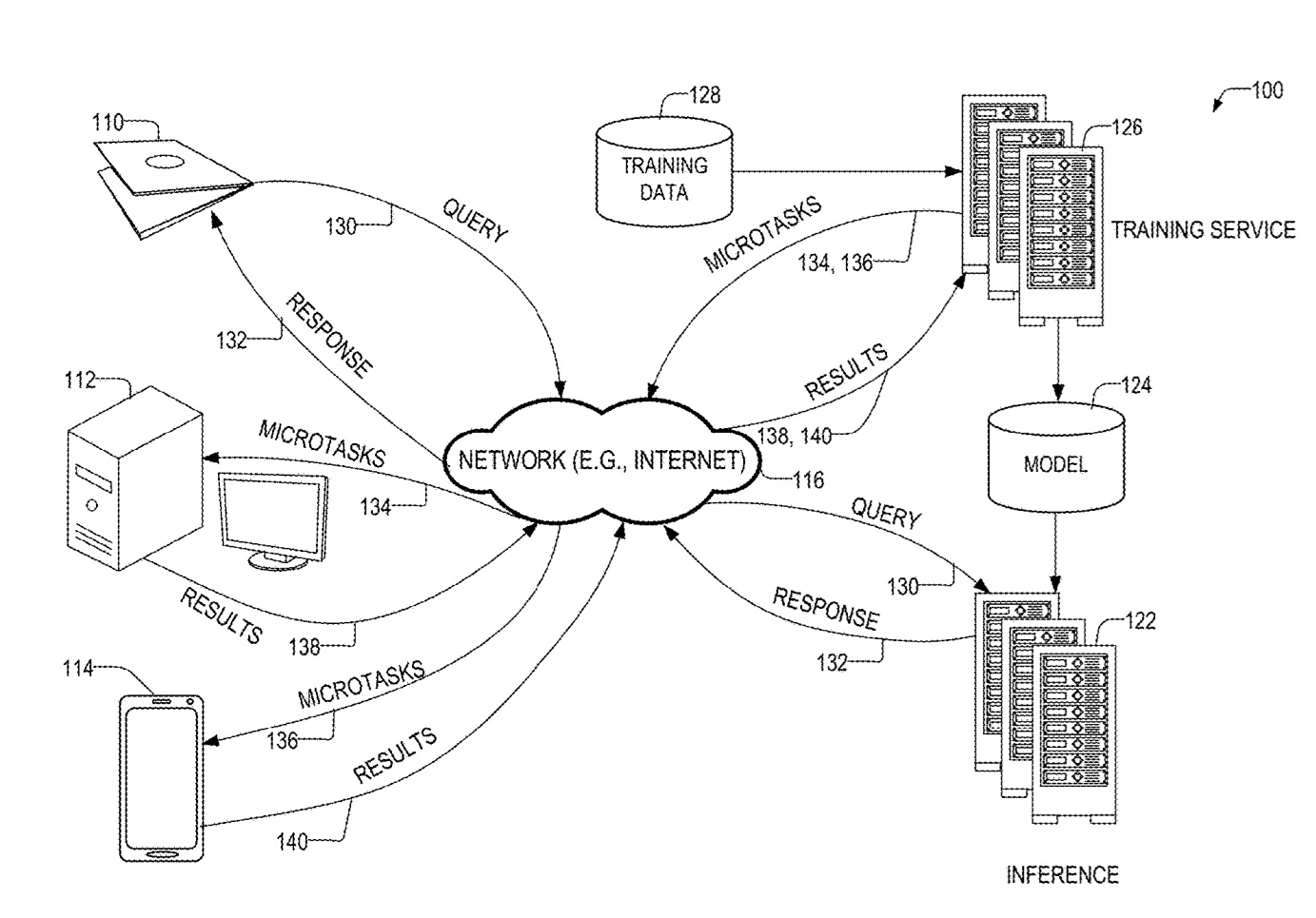
The scheduling is designed to be non-intrusive. The system monitors GPU utilization, memory usage, temperature, and power draw to determine when a device actually has spare capacity. If your GPU is running hot or you’re mid-game, the sample rate adjusts, checking less frequently when the GPU is busy, intervening only when there’s genuine headroom.
There’s also a trust layer. Results from participating devices get cross-validated, and each device accumulates a “reliability score” based on the accuracy of its contributions. The patent describes updating the central model based on validation scores, staleness factors, or device reliability metrics. This isn’t just an interesting technical detail, it’s a critical design decision that addresses one of the fundamental problems with distributed training: Byzantine failures, where malicious or faulty nodes corrupt the training process.
The compensation model is where things get interesting. Microsoft’s patent describes tracking the amount of computation each device completes, with each result triggering “a credit being applied” to the user’s account. These credits can be exchanged for free software, access to AI models, or potentially money. But here’s the kicker: compensation appears only in the descriptive text of the filing. None of the application’s 20 claims, the legally binding portions, explicitly specify paying participants.
That’s a red flag worth examining closely.
The Economics: Do the Credits Cover Your Power Bill?
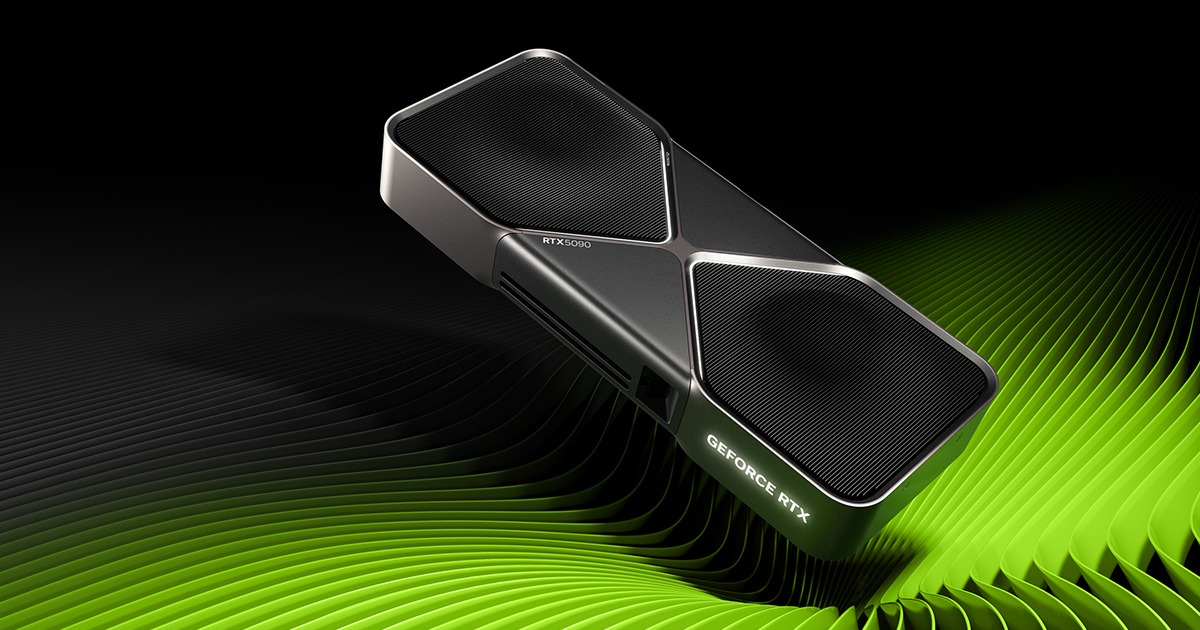
Let’s do some math. A modern high-end GPU like the RTX 5090 can draw nearly 600W under demanding workloads. An additional 250W sustained for four hours daily translates to roughly 30 kWh per month. At average US electricity rates of around 16-17 cents per kWh, that’s $5 to $6 in purely additional electricity costs. Add the wear-and-tear on the card, fans spinning longer, thermal cycling degrading solder joints, the increased likelihood of needing to upgrade your PSU, and the true cost rises further.
What would Microsoft pay for that compute? Azure’s spot pricing for a comparable GPU instance runs several dollars per hour. Even at heavily discounted rates, a user contributing 250W for four hours daily represents a meaningful chunk of compute that someone would normally pay a cloud provider for.
The response on developer forums has been predictably skeptical. The prevailing sentiment is that this arrangement resembles “crypto mining all over again”, except the compensation is speculative credits rather than tradeable tokens. Some users have pointed out existing business models like vast.ai, a marketplace where GPU owners already rent out their hardware at market rates. Compared to that, Microsoft’s credit system feels less like compensation and more like a loyalty program.
The electricity bill question is the crux. If Microsoft prices credits to undercut cloud providers, they’re effectively asking consumers to subsidize AI training infrastructure by accepting rates that don’t cover their own costs. The patent doesn’t specify payout rates, which is precisely the problem. Consumers would be signing up for an arrangement where the compensation structure is opaque.
The Trust Problem: “Opt-in” Has a History of Being Optional
The patent explicitly states that users must authorize the use of their hardware, and Microsoft’s proposal requires explicit opt-in. But the reaction from Windows users suggests that “voluntary” doesn’t mean what Microsoft thinks it means.
There’s a legitimate, history-based fear here. Microsoft has a well-established pattern of shipping features that are technically opt-out but practically mandatory. Windows Update re-enables settings after updates. Default configurations tend to favor Microsoft’s interests. Many users on forums have already raised concerns about Microsoft’s track record for making users “opt-out (if available at all) and re-tweak the settings after each update.” The patent specifies opt-in today, but there’s no guarantee that the opt-out version doesn’t get integrated into a future Windows 11 feature update with a popup designed to be clicked through.
The deeper issue is telemetry. The system needs to continuously monitor GPU utilization, memory consumption, temperature, power draw, and memory bandwidth to determine available capacity. That’s a significant expansion of what Microsoft already collects through standard Windows telemetry. Users who opt in would be giving Microsoft deeper access to system-level data, and the patent doesn’t clearly define what else might be captured alongside the compute metrics.
The Latency Elephant: Why Distributed Training Is Hard
Here’s the part that the patent glosses over: distributed training across consumer devices is a radically different problem from distributed training across data center GPUs. Data center interconnects operate at 100-400 Gbps with microseconds of latency. Consumer internet connections offer 10-100 Mbps upload speeds with latency measured in tens of milliseconds, if you’re lucky.
Training neural networks is a highly synchronized operation. Parameter updates need to be aggregated, averaged, and redistributed. When you train across thousands of heterogeneous devices with unpredictable availability, you end up with a staleness problem: the model updates that come back from slower devices are computed against an outdated version of the model weights. The patent describes a “staleness factor” to account for this, but it’s unclear how the system would handle the massive variance in update frequencies across consumer hardware.
The patent’s design works around these issues by sending micro-tasks that are relatively self-contained, and by emphasizing smaller models that can be partitioned into independently trainable components. This suggests Microsoft isn’t envisioning consumer GPUs training GPT-6. The realistic use case is fine-tuning or training smaller models where the communication overhead is manageable.
But there’s a more fundamental problem: if the workloads are so small that consumer hardware can handle them, why would Microsoft need consumer hardware at all? The economics of cloud GPUs are well-established, and the engineering complexity of consumer-driven distributed training is substantial. The only scenario where this makes sense is if Microsoft is facing a genuine GPU capacity shortage that makes distributed training the most economical, or only, option.
The Patent Is the Headline, But the Strategy Is the Story
Let’s zoom out. Microsoft filed this patent in April 2025, and it was published on November 5, 2026. That timing matters. We’re in the middle of an AI infrastructure crunch. GPU shortages have driven consumer card prices skyward, and the RAM market is experiencing what industry analysts describe as “a more extreme version of the problem.” OpenAI’s Sam Altman recently faced backlash for suggesting that RAM in consumer devices was “wasted” and should be redirected to AI infrastructure.
Microsoft’s patent drops into this environment as a solution to a specific problem. The company needs compute capacity for its own AI initiatives, we’ve seen the scale of their investment. Azure’s data center buildout is constrained by power availability, supply chains, and geopolitical uncertainty. Consumer GPUs represent an enormous, already-installed base of compute that’s sitting idle most of the time. The patent describes Microsoft acting as a middleman between GPU owners and third-party entities that want to train models but lack the computational resources. Microsoft is positioning itself to be the Uber of GPU compute, taking a cut of every ride.
There’s precedent for parts of this idea. Folding@home has relied on volunteer distributed computing for medical research for over two decades. BOINC projects like SETI@home built the infrastructure for exactly this kind of workload distribution. And earlier this year, NVIDIA introduced PAIR, a system for pooling idle compute across household devices, though focused on AI inference rather than training.
What’s novel in Microsoft’s patent isn’t distributed computing itself. It’s the combination of distributed training with commercial incentives, and the orchestration layer that handles the reliability, validation, and compensation. But the comparison to SETI@home is instructive. Those projects work because they’re TRULY voluntary, users contribute because they believe in the mission, not because they expect compensation. Adding a credit system commercializes the relationship, which creates expectations about value that Microsoft may not be willing to meet.
The Technical Architecture: A Closer Look
For those interested in the technical details, the patent describes a surprisingly sophisticated system. The dependency graph analysis is genuinely smart. Large models have sequential dependencies that make arbitrary partitioning inefficient. Microsoft’s approach analyzes the computation graph to identify split points that minimize communication overhead, essentially finding the “natural joints” in the model where partitioning is cheap.
The dynamic scheduling is also thoughtfully designed. Instead of statically assigning tasks, the system continuously monitors device capabilities and adjusts micro-task complexity based on available resources. The sample rate adjustment, checking less frequently when the GPU is busy or hot, more frequently when idle and cool, reduces the overhead of the monitoring system itself.
The validation layer addresses a problem that plagues distributed training in adversarial environments. Since the system can’t trust that every participant is honest, it cross-validates returned updates and maintains device reputation scores. This is the kind of Byzantine fault tolerance that distinguishes production systems from academic prototypes.
But the architecture has a fundamental constraint that’s hard to engineer around: throughput asymmetry. Consumer internet connections are inherently asymmetric, with dramatically lower upload speeds than download speeds. The micro-task data flows down quickly, but the model updates flow back slowly. For small models, this isn’t a problem. For the multi-billion parameter models that currently dominate AI research, the communication overhead would make distributed training across consumer hardware comically inefficient.
The Regulatory Landscape: What the Patent Actually Protects
The patent debate has focused on whether this should be patentable at all. Critics argue that distributed GPU computing is “completely obvious given that splitting GPU loads and outsourcing them has been going on for years”, pointing to SETI@home and BOINC as prior art. Others have noted that distributed computing platforms already exist as commercial services.
But the patent claims are more specific than the headline suggests. Claim 1 covers the complete process: breaking the model up with a dependency graph, identifying split points, calculating a split score based on data locality/communication/memory costs, selecting split points, generating micro-tasks, sending them to edge computers, and updating the model based on validation scores, staleness factors, or reliability metrics. Change any element, use different metrics, a different aggregation method, and you avoid infringement.
That’s a defensive patent more than an offensive one. It creates a moat around Microsoft’s specific implementation while allowing competitors to build alternative approaches. The patent doesn’t prevent decentralized AI training as a concept, it prevents someone from copying Microsoft’s exact orchestration method.
What This Actually Means for You
If you’re a GPU owner, here’s what matters. The patent describes an opt-in system with credits as compensation, and Microsoft has not announced a commercial service. But this patent signals the direction of travel. Compute capacity is the most constrained resource in the AI industry, and Microsoft is exploring every avenue to acquire it.
The economic question remains unresolved. Would credits meaningfully offset your electricity costs, hardware degradation, and the risk of a Windows Update “accidentally” enabling it? On the current information, the answer is a firm “maybe.”
For those skeptical about Microsoft’s position, the open-source ecosystem offers alternatives. The rise of local AI models for consumer hardware demonstrates that modern GPUs are already capable of running significant AI workloads, if you choose how to use that compute. Advances in open-weight multimodal models are reducing the need for massive centralized training infrastructure. The competition in open-source AI is pushing capabilities downward in cost and hardware requirements.
The Bottom Line
Microsoft’s toast-to-GPU-distributed training patent is a solution to a real problem, wrapped in a product that doesn’t exist, financed by a compensation model that’s undefined. The technical architecture is interesting. The economics are opaque. And the trust deficit between Microsoft and its users is the elephant in the data center.
The practical takeaway: your GPU is a resource. Whether Microsoft, NVIDIA, or an open-source project ultimately harnesses it depends on the terms. The patent doesn’t have to become a product to matter. It’s a signal about where the industry is heading, and a reminder that, in the AI economy, your hardware is never truly idle. It’s just not earning you anything yet.
Cross-posted to our framework and tools section. Have strong opinions about Microsoft’s GPU grab? Join the discussion.