The ‘AI Collaboration Partner’ Delusion: Why Your Job Title Isn’t the Problem
A data engineer rebranded himself as an ‘AI Collaboration Partner’ and sparked a civil war. Here’s why the title change misses the point entirely.
Data engineers must evolve their skills, not abandon their professional identity in the age of agentic AI.
An open letter appeared on r/dataengineering last week declaring the term “Data Engineer” officially deceased. The author, let’s call him enthusiastic, announced he had updated his LinkedIn title to “AI Collaboration Partner”, arguing that the old label reeks of manual labor and “legacy thinking.” The response was immediate and biblical. One commenter captured the collective mood with a simple, elegant declaration of hatred that garnered hundreds of upvotes.
This isn’t just about emojis and LinkedIn vanity. It’s about whether we’re witnessing the evolution of a discipline or the collapse of professional identity into performative AI hype. The data suggests something more complicated than either side wants to admit.
The Manifesto vs. The Market
The argument for rebranding goes like this: Data engineering used to mean wrestling with Airflow DAGs, hand-crafting SQL, and acting as “assembly-line workers” for the data warehouse. Now, with LLMs generating Python and agents handling ETL logic, the role shifts from implementation to direction. We become “directors” rather than coders, conversationalists rather than constructors.
It’s a seductive narrative, especially if you’ve spent three hours debugging a Spark job only to watch ChatGPT generate the fix in twelve seconds. The Lloyds Banking Group certainly buys into the transformation, they just launched a four-year research partnership with the University of Glasgow specifically to implement “agentic AI” approaches to software and data engineering, complete with PhD positions studying how large-scale transformation actually works in practice.
Career growth and salary data contradicts narratives of obsolescence in data engineering roles.But here’s where the manifesto crashes into reality. According to Interview Query’s job trend data, data engineering roles are growing at 15 to 20 percent annually. Entry-level engineers still command base salaries around $101,164, while senior roles average $129,198 and managers pull in $137,136.
What “AI Collaboration” Actually Means in Practice
Let’s dissect what “AI Collaboration Partner” actually entails before we print the business cards. The concept isn’t entirely without merit. Agentic AI, systems that can autonomously plan, execute, and refine data workflows, is moving from demo to production. The emerging model involves humans and AI collaborating on “paved paths”: pre-approved architectural patterns where agents handle the boilerplate while engineers govern the guardrails.
Think of it less as “directing” and more as curating. You still need to know why your Airflow DAG collapsed in production while working perfectly in staging, but now you’re also validating that the AI-generated dbt models didn’t hallucinate a relationship between tables that violates your actual schema constraints.
The shift isn’t eliminating engineering, it’s stratifying it. The bottom layer of script generation becomes commoditized, while the top layer of architectural validation becomes more critical. You still need to understand strategic choices between cloud-native and proprietary platforms shaping data architecture, but now you’re making those decisions with an AI pair programmer that occasionally suggests you migrate everything to a blockchain data lake because it read something on Twitter in 2021.
The Identity Crisis Is Real, The Solution Is Cringe
The backlash against the “AI Collaboration Partner” rebranding isn’t just about attachment to old titles, it’s about labor economics. When you define yourself as a “collaborator” rather than an “engineer”, you implicitly accept a devaluation of specialized technical knowledge. Collaboration is something anyone can do, engineering is something you get paid six figures to do.
The empirical data challenging the narrative that AI is rapidly replacing developer roles shows that despite the hype, we’re not seeing mass displacement. What we’re seeing is role evolution. The engineers who thrive aren’t the ones changing their titles to sound more AI-friendly, they’re the ones using AI to handle the tedious 40% of their job while doubling down on the architectural 60% that requires actual systems thinking.
Consider the skill requirements that haven’t changed: SQL optimization, data modeling, understanding of distributed systems, and the ability to translate business requirements into pipeline architecture. These aren’t “legacy” skills, they’re the foundation that makes AI assistance actually useful rather than dangerous.
An AI can generate a Python script to move data from S3 to Snowflake, but it can’t yet understand why moving that specific data at that specific time violates GDPR compliance or breaks your SLA with the finance team.
The Certification Trap and the Freelance Reality
For those navigating this transition, there’s a growing noise around validation of skills and expertise in the evolving freelance data market. The danger isn’t that AI will replace you, it’s that you’ll spend $2,000 on an “AI Collaboration Certificate” while your colleague spends that time learning actual vector database architecture and gets the job.
The engineers who will survive this transition aren’t the ones with the trendiest titles. They’re the ones who understand that AI is a tool that amplifies leverage, not a partner that shares equity. When you call yourself a “collaboration partner”, you’re linguistically putting yourself on equal footing with a tool that costs $20 a month and occasionally confuses Python syntax with Sanskrit.
The Verdict: Keep the Title, Upgrade the Workflow
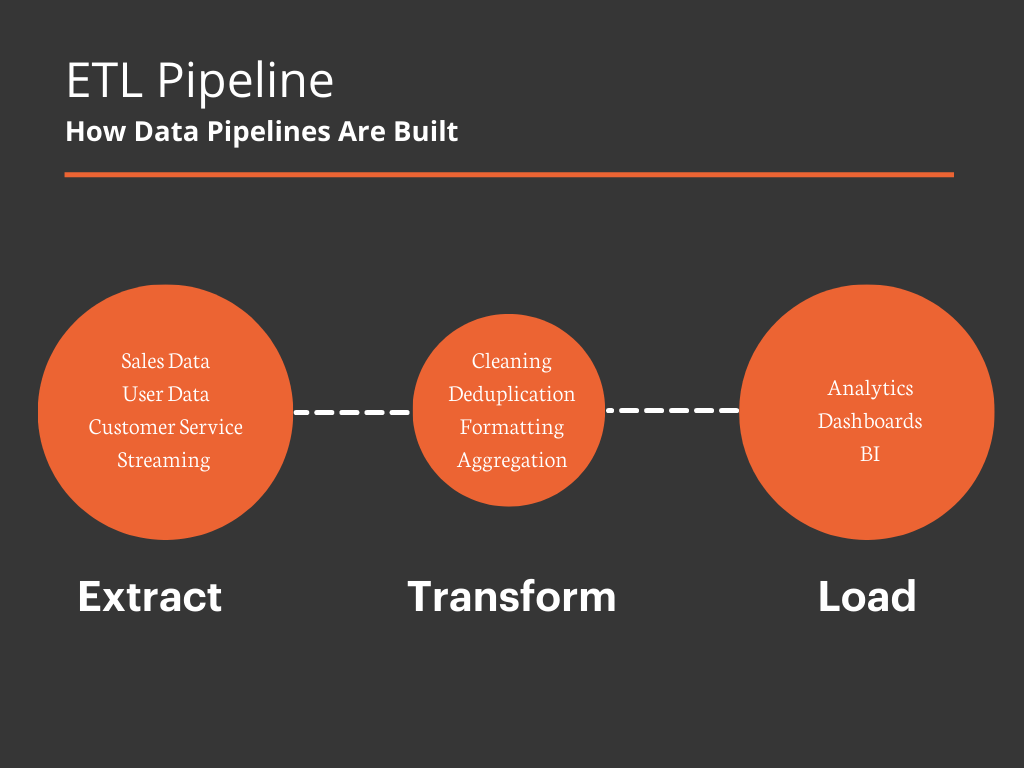
Data engineering isn’t dying, it’s just finally getting rid of the parts that made everyone miserable. The ETL pipeline isn’t vanishing, it’s getting augmented by agentic systems that handle the scaffolding while you handle the structure.
ETL pipelines continue to exist, now augmented by agentic systems handling infrastructure scaffolding.The pipeline still exists. The data still needs to flow. The difference is that instead of hand-crafting every transformation in Python, you’re orchestrating agents, validating outputs, and focusing on the “why” and “what could go wrong” rather than the “how do I parse this JSON.”
So keep the “Data Engineer” title. It still commands respect and salary. But update your workflow. Learn to prompt effectively, sure, but more importantly, learn to verify aggressively. The future belongs to engineers who can look at AI-generated code and immediately spot where it misunderstood the business logic, not to “collaboration partners” who think describing what you want constitutes technical expertise.
The assembly line isn’t disappearing. You’re just getting better tools. Don’t quit your job title until you’ve actually quit the job.