The 5.3GB Reality: Running Production AI on Apple Silicon Without Losing Your Mind
This post dissects the memory walls, quantization compromises, and split-inferencing architectures that determine whether your edge deployment actually works or just becomes an expensive space heater.
The Memory Wall is Real, and It’s Made of Unified RAM
For decades, AI inference meant NVIDIA GPUs with dedicated VRAM. Want to run a 7B parameter model at full precision? That’ll be 28GB of VRAM, please. Have fun with your $3,000 GPU.
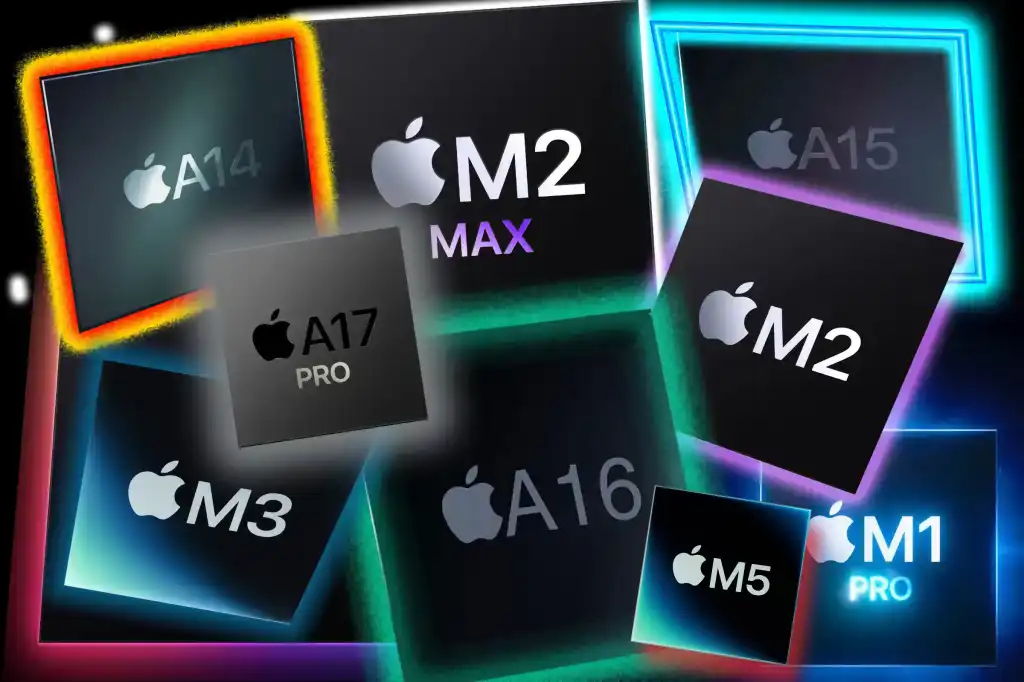
Then Apple Silicon changed the math. The Mac Mini M4 with 32GB of unified memory doesn’t distinguish between “system RAM” and “GPU memory”, it’s the same pool.
For LLM inference, this matters because model weights need to be accessible to the GPU, and on traditional hardware, that meant praying your VRAM was big enough. On Apple Silicon, your 32GB is your VRAM.

The practical result? A Mac Mini M4 with 32GB can easily handle models with up to 20B parameters, including Qwen3 Coder 30B, as long as you’re willing to quantize.
Even a modest setup can keep four models resident simultaneously, qwen2.5-coder:7b (4.7GB), mistral:latest (4.4GB), gemma3:latest (3.3GB), and qwen2.5-coder:1.5b (986MB), using under 14GB of memory with headroom to spare.
This is where showcasing MoE architecture capabilities on consumer hardware becomes relevant. Sparse architectures like Mixture-of-Experts activate only a fraction of parameters per token, making them ideal for this unified memory paradigm. When your memory bandwidth is shared between CPU and GPU, sparsity isn’t just an optimization, it’s a survival mechanism.
Quantization: The Necessary Evil You Can’t Ignore
You can’t talk about on-device AI without confronting quantization. That 5.3GB figure in the title? It comes from NVIDIA’s PersonaPlex 7B, which started life as a 16.7GB PyTorch checkpoint before being brutalized down to 4-bit precision.
The conversion process isn’t trivial. It requires classifying roughly 2,000 weight keys, quantizing both the 7B temporal transformer and the Depformer, and extracting voice presets.
But the result is a model that fits comfortably on a laptop with 8GB of unified memory, running natively in Swift via Apple’s MLX framework.
But here’s where most architects trip: not all quantization is created equal. That Q4_K_M file you downloaded? It might be a fidelity disaster waiting to happen.
Understanding quantization fidelity metrics for model selection isn’t academic navel-gazing, it’s the difference between coherent output and Markov-chain gibberish.
PersonaPlex on MLX: A Case Study in Brutal Optimization
The most impressive recent demonstration of edge inference comes from Ivan Sur’s port of NVIDIA’s PersonaPlex 7B to native Swift using MLX. This isn’t just “running a model locally”, it’s full-duplex speech-to-speech.
Traditional Pipeline
User speaks → [ASR] → text → [LLM] → text → [TTS] → Agent speaksPersonaPlex Approach
User speaks → [PersonaPlex 7B] → Agent speaksThe model processes audio tokens directly through a temporal transformer (32 layers, 4096 dimensions, 7B parameters) and a Depformer that generates audio codebooks sequentially.
public func callAsFunction(_ xs: MLXArray, step: Int) -> MLXArray {
    let start = step * outDim
    let end = start + outDim
    let w = weight[start..<end, 0...]  // slice weights for this step
    if let s = scales, let b = biases {
        return quantizedMM(xs, w, scales: s[start..<end, 0...],
                           biases: b[start..<end, 0...],
                           transpose: true, groupSize: groupSize, bits: bits)
    }
    return xs.matmul(w.T)
}With 4-bit quantization, the Depformer dropped from ~2.4 GB to ~650 MB, a 3.7x reduction with no measurable quality loss in ASR round-trip tests.
The optimizations don’t stop there: eval() consolidation reduced GPU sync barriers from 3 to 1 per generation step, bulk audio extraction replaced 384K individual calls with a single array operation.
The compiled temporal transformer fuses ~450 Metal kernel dispatches per step into optimized kernels.
RTF 0.87, Real-Time Factor below 1.0 means the model produces output faster than you can listen to it, clocking in at ~68ms per step.
RTF 0.87 and the Latency Lie
Real-Time Factor is the metric that separates toy demos from production systems. Above 1.0, you’re dropping frames, below 1.0, you’ve got headroom.
At 0.87, PersonaPlex has an 80ms frame budget at 12.5 Hz with room to spare.
But latency isn’t just about inference speed. It’s about the round-trip. A cloud API might process your request in 50ms, but add 150ms of network latency and you’re at 200ms total.
Edge inference at 68ms wins by a factor of three, provided you don’t need the raw power of a frontier model.
This is where explaining efficient inference architectures enabling local LLM deployment becomes critical. The Qwen team’s work on efficient architectures provides the blueprint for running serious models on consumer hardware.
When you combine efficient architectures with Apple’s unified memory, you get something that was impossible two years ago: sub-100ms inference on a laptop.
The Hybrid Imperative: Split-Inferencing and AI-RAN
The most sophisticated edge deployments don’t treat “on-device” as a binary. They use split-inferencing, distributing “thinking” across device, edge, and cloud based on latency requirements, privacy constraints, and computational complexity.
NVIDIA’s AI-RAN demonstrations show robots and autonomous vehicles making real-time decisions about where each AI task runs.
NVIDIA Achievement: 36 Gbps throughput with under 10 milliseconds latency
by keeping inference local when possible and spilling to edge servers when necessary. This isn’t just about bandwidth, it’s about meeting service-level agreements for physical AI and vision language models.
Simple tasks (email triage, file management, calendar scheduling) run locally at $0 API cost. Complex reasoning, long document analysis, and frontier-quality generation route to cloud APIs.
The result shows most teams can achieve 80-90% cost reduction while maintaining API quality for the 10% of tasks that actually need it.
The $0 API Cost Fallacy
ZeroClaw’s benchmarks on local inference reveal the uncomfortable trade-off: local is 3-4x slower per task than Claude or GPT-4, but eliminates monthly API bills that can run $150-300 for heavy usage.
Email Triage
Local: 8 seconds
API: 2 seconds
Complex Reasoning
Local: 15 seconds
API: 5 seconds
Trade-off
Data residency, predictable costs, sub-10ms network round-trips for local team members
http://localhost:11434/v1 and secured behind a Headscale mesh VPN.Minimum (8GB VRAM)
- Mistral 7B
- Llama 3.1 8B for simple tasks
Recommended (16-24GB)
- Qwen 2.5 32B
- Llama 3.1 70B (Q4) for most automation
Optimal (48GB+)
- Llama 3.1 70B full precision for complex reasoning
Tooling Wars: Ollama vs. LM Studio vs. Raw MLX
Ollama
Path of least resistance. One command (ollama pull qwen2.5:32b) and you’ve got a model running with an OpenAI-compatible API. It’s the choice for teams that want low friction over fine-grained control.
LM Studio
GUI-driven experience with specific constraints. Supports GGUF-formatted embedding models from Hugging Face and exposes a /v1/embeddings endpoint.
Raw MLX
For the masochists who need every millisecond. Uses explicit [MLXArray] inputs/outputs for KV cache arrays, avoiding Slice ops that crash compilation.
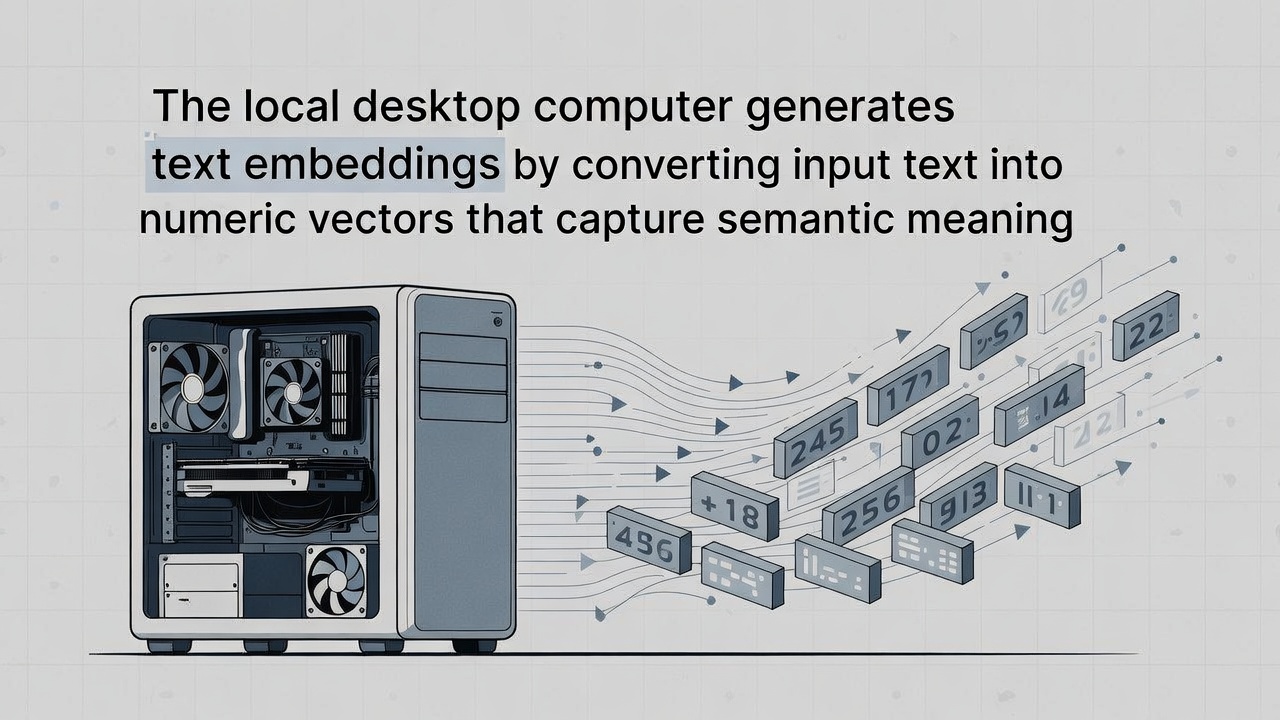
When selecting your stack, leveraging efficient small parameter models for better deployment is often smarter than brute-forcing a 70B model onto inadequate hardware.
The Qwen 3.5 series demonstrates that 9B parameters can punch at 30B weight classes with the right architecture.
The 25MB Canary in the Coal Mine
The trend toward efficiency isn’t limited to language models.
Demonstrating how smaller models prove more efficient for edge computing, Kitten TTS V0.8 packs high-quality text-to-speech into 25MB.
Proof that the industry’s parameter-count obsession is increasingly obsolete.
When your embedding model weighs 4GB and your TTS model weighs 25MB, suddenly running a complete AI pipeline on a device with 32GB unified memory isn’t just possible, it’s overkill.
You’ve got room for multiple model versions, KV cache, and the operating system.
The Architect’s Playbook
Keep it local when:
- Data residency is non-negotiable (healthcare, finance, legal)
- Latency must be sub-100ms and network connectivity is variable
- Token volume is high but complexity is low (classification, summarization, embedding)
- Assessing economic viability finds break-even favors CapEx over OpEx
Spill to cloud when:
- You need frontier-model reasoning (Claude Opus, GPT-4 class)
- Context windows exceed local memory (100K+ tokens)
- You need structured outputs or tool calling beyond local model capabilities
- The cost of a wrong answer exceeds the cost of an API call
The Mac Mini M4 running Ollama behind a VPN isn’t a toy, it’s a production-grade inference endpoint for teams under 20 people.
The PersonaPlex 7B implementation isn’t a demo, it’s a blueprint for real-time voice agents that don’t phone home to OpenAI.
The 5.3GB model running at RTF 0.87 on Apple Silicon isn’t just a technical achievement. It’s an economic weapon. Use it wisely.