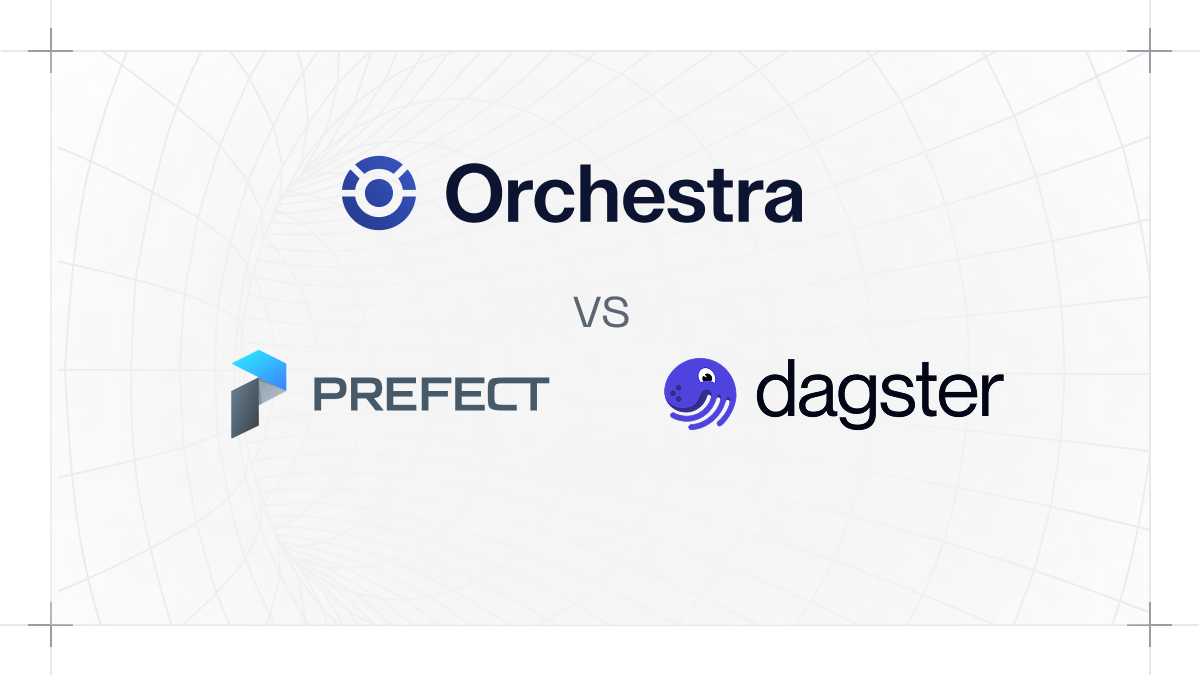
July 13, 2026, was a bad day for anyone who had just finalized their orchestration decision.
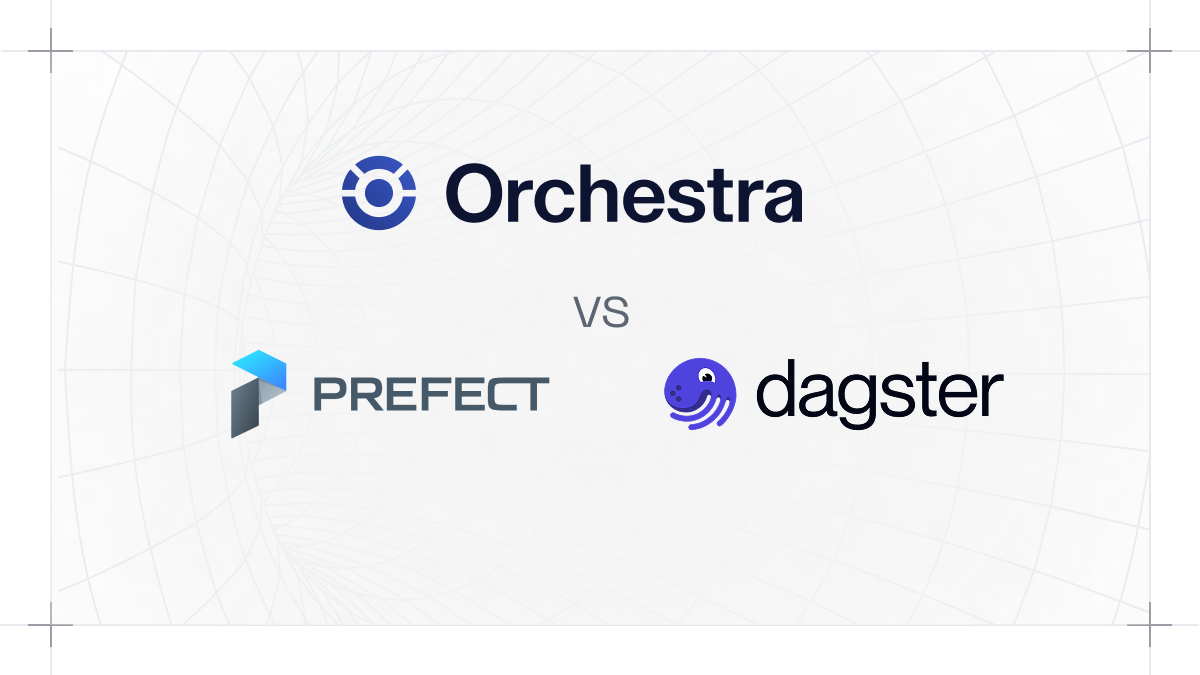
Prefect acquired Dagster Labs, uniting two of the most prominent open-source orchestrators under one roof. The official line? Both products continue as independently supported offerings, with “long-term support and continued investment.” The promises are specific: names stay, licenses stay, pricing stays, roadmaps stay.
The prevailing sentiment on developer forums is that this is standard M&A reassurance, and the skepticism is warranted. One seasoned observer called it “embrace, extend, and extinguish.” Another simply said it “sounds a lot like M&A bullshit.”
If you’re on a lean team, three engineers, maybe five, responsible for everything from pipeline development to incident response, this isn’t just interesting news. It’s a decision-point that could define your infrastructure for the next three years. You were likely evaluating Prefect or Dagster because they promised a modern experience without Airflow’s operational baggage. Now, you need a Plan B.
Let’s cut through the noise and figure out what actually makes sense.
Why This Acquisition Matters to You (and Why the “Nothing Changes” Line Falls Flat)
The public commitments from Jeremiah Lowin, Prefect’s founder and CEO, are worth taking seriously. He states that “current and new Dagster+ customers can continue using these products exactly as they have been, with no changes or action required.” The press release backs this up with specific guarantees about open-source maintenance, security patches, and pricing.
But here’s the thing about small teams: you can’t afford to operate on trust alone.
When you have two people managing pipelines, you don’t have the luxury of “let’s wait and see if the roadmap actually changes.” You need a tool that will exist in a stable, predictable form 18 months from now. The acquisition isn’t a death sentence for either product, but it introduces uncertainty that lean teams are structurally ill-equipped to absorb.
One data engineer on Reddit captured the frustration perfectly: “I had pretty good experience with Dagster, but their pricing models essentially pushed us out to Airflow as a small startup. Prefect isn’t cheap for smaller scale folks either, $100/month plus tax for 20 deployments.”
That’s the real calculus. The modern orchestrators were already pricing small teams out. The acquisition just adds strategic risk on top of the cost burden.
The Contenders: Where the Landscape Actually Stands
Let’s look at what’s available right now, stripped of marketing language, measured against the constraints that actually matter for lean teams: operational overhead, learning curve, pricing, and long-term stability.
Airflow: The Boring Choice That Keeps Winning
The conventional wisdom says Airflow is obsolete. The reality is that it powers an astonishing amount of production data infrastructure, and for good reason.
One team reported running “close to 200,000+ DAGs a month” on managed Airflow, costing roughly $3,000 monthly. For a lean team, that’s not cheap, but it’s predictable. More importantly, the same engineer noted that Airflow “worked great for my team of 2 and continues to work great with my team of 20 today.”
The ecosystem is unmatched. Managed services from Google Cloud Composer, Amazon MWAA, and Astronomer mean you can offload the infrastructure pain. The community is massive. The documentation, while sprawling, has been battle-tested by millions of developers.
The downside is real, though. Airflow 2 still requires “an incredible amount of boilerplate to do anything”, as one experienced user put it. For rapid development cycles and small teams, that friction adds up fast. The permissions model remains awkward. The delete button is still too close to the edit button in parameters.
For teams that can stomach the boilerplate, Airflow offers something no other tool in this space can match: certainty. It will be here in five years. The talent pool exists. The operational patterns are well-documented.
Mage: The Intuitive Upstart
Mage has quietly been building one of the most thoughtful developer experiences in the orchestration space. It’s designed from the ground up for what most lean teams actually need: a clean UI, native support for dbt and Python, and a block-based approach that reduces the scaffolding overhead.
The architecture is straightforward. You define pipelines using reusable blocks, data loaders, transformers, exporters, that can be composed visually or programmatically. The local development experience is strong, and the deployment model doesn’t require a PhD in Kubernetes.
Where Mage falls short is ecosystem maturity. The community is growing but not comparable to Airflow’s. Enterprise features around governance and role-based access control are still catching up. For a five-person team that just needs to get pipelines running, none of those gaps matter. For an organization that might need to scale to 50 engineers and regulatory compliance requirements, they might.
Kestra: The Declarative Challenger
Kestra takes a fundamentally different approach. Instead of defining workflows in Python code, you define them in YAML. This sounds limiting until you see how it handles event-driven triggers, scheduled workflows, and complex dependency graphs.
For lean teams, Kestra’s strongest card is operational simplicity. The server is a single Java binary. The UI is fast and responsive. The plugin ecosystem covers most of the common integrations, Snowflake, BigQuery, dbt, Slack, email.
The trade-off is significant, though: if you’re a team that lives in Python and wants to express workflow logic in Python, Kestra’s YAML-centric model will feel like a step backward. The configuration-over-code philosophy works well for standard patterns but becomes painful for complex, conditional logic.
Orchestrator Summary: Where They Actually Stand
| Platform | Best For | Core Strength | Operational Overhead | Pricing for Small Teams | Risk Profile |
|---|---|---|---|---|---|
| Airflow | Teams that value stability over developer experience | Ecosystem size, managed options, predictable future | Medium to high (managed) or very high (self-hosted) | $500-3,000/month managed | Lowest |
| Mage | Small teams wanting modern UX without complexity | Block-based development, clean UI, dbt support | Low | Free OSS, paid cloud coming | Medium |
| Kestra | Teams that want declarative, event-driven workflows | YAML-based, single binary, strong trigger system | Low | Free OSS | Medium |
| Prefect | Python-native teams needing dynamic execution | Execution durability, failure handling, Python decorators | Low to medium | $100+/month for managed features | Medium-high (post-acquisition uncertainty) |
| Dagster | Data-conscious teams needing asset lineage | Software-defined assets, lineage, testing framework | Medium to high | Pricing drove some teams away post-trial | Highest (acquisition integration uncertain) |
The Framework: How to Decide When You Can’t Afford to Get It Wrong
Here’s the decision tree that actually works for lean teams.
Step 1: Define Your Constraints
You cannot evaluate tools without clear constraints. For a team of 2-5 people, the binding constraints are almost always:
- Hours per week available for infrastructure maintenance. If that number is less than 10, eliminate anything that requires significant self-hosting.
- Python proficiency of the team. If everyone is a Python developer, Mage and Prefect will feel natural. If the team is SQL-heavy, Airflow or Kestra might be less jarring.
- Current AWS/GCP/Azure investment. Managed Airflow offerings from your cloud provider eliminate the biggest operational headache.
- Growth trajectory. If you expect to stay at 3-5 engineers, prioritize developer experience. If you expect to scale to 20+ within two years, prioritize ecosystem depth.
Step 2: Apply the Elimination Criteria
Eliminate tools that require specialized infrastructure knowledge. If the deployment guide mentions Kubernetes operators, custom Helm charts, or multi-node configurations without clear managed alternatives, it’s out. Your team doesn’t have the cycles to become infrastructure specialists.
Eliminate tools that lock you into a specific paradigm without escape hatches. Asset-centric modeling (Dagster) is powerful until you need to do something the paradigm doesn’t support. Make sure whatever you choose allows falling back to raw code.
Eliminate tools where the pricing model doesn’t match your scale. Prefect’s $100/month for 20 deployments might be fine until you need 50 deployments. Get the full pricing table before committing.
Step 3: Test Against Two Months of Production
Run a pilot that covers your most complex pipeline, not your simplest one. If your hardest workflow involves 15 table transformations, streaming data from Kafka, and a machine learning model inference, test that. The DAG that loads one CSV into PostgreSQL will work on any platform.
After two months, ask three questions:
- How often did the platform itself cause incidents (not your code, but the platform)?
- How much time did you spend on non-data work (infrastructure, deployments, debugging the scheduler)?
- Could you onboard a new team member in a week or less?
If the answers aren’t positive, the tool isn’t right for your constraints.
The Case for Staying Put (and the Case for Moving)
The current situation doesn’t demand immediate action. If your Prefect or Dagster deployment is working, the sensible move is to wait. The acquisition promises might hold, and even if they don’t, you’ll have at least 12-18 months before any significant changes materialize.
But there are scenarios where moving now is the right call:
You’re about to build a new system from scratch. If you haven’t committed yet, don’t commit to an orchestrator with an uncertain future. The cost of building on a platform that later changes direction is far higher than the cost of starting on a stable alternative.
Your team is growing and you need hiring velocity. Airflow is still the most common orchestration skill in job descriptions. If you’ll be hiring, Airflow experience is easier to find than Prefect or Dagster experience.
You’re price-sensitive at small scale. The managed service route for Airflow (MWAA, Cloud Composer) can be cheaper than Prefect Cloud or Dagster+ when you factor in the per-deployment pricing. One engineer reported being pushed out of Dagster entirely due to pricing, landing back on Airflow.
The Bottom Line
The Prefect-Dagster acquisition doesn’t fundamentally change the orchestration calculus for lean teams. It just removes two options from the “safe choice” category and forces a more deliberate evaluation.
Here’s what I’d actually do if I were rebuilding today with a lean team:
-
Start with managed Airflow unless you have a specific reason not to. The ecosystem is unmatched, the cloud providers offer managed versions, and the hiring pool is deep. The boilerplate pain is real, but the trade-offs between low-code alternatives and performance are worth understanding before you jump.
-
If Airflow feels wrong, look seriously at Mage or Kestra. Both offer better developer experiences than Airflow with lower operational overhead than Prefect or Dagster. Their ecosystems are smaller, but for a team of 3-5, that doesn’t matter.
-
Avoid making bets on unproven acquisition integrations. The “synergy” narrative is almost always oversold. If you need the features that made Prefect or Dagster attractive, consider whether those features are actually critical or just nice-to-have. Comparing temporal, hatchet, and prefect for task orchestration in microservices can clarify what you actually need.
-
Budget for migration from day one. Even if you pick the perfect tool, build the expectation that you’ll reassess in 12-18 months. Orchestration tools are infrastructure, not religion.
The worst thing you can do right now is panic and make a rushed decision. The second-worst thing is to ignore the uncertainty and hope it resolves itself. Neither Prefect nor Dagster is going to disappear tomorrow. But their futures are now tied to a business strategy that hasn’t been fully revealed, and lean teams need to protect themselves against that risk.
Pick the boring option. Focus on your pipelines, not your platform. Your future self, the one who’s not debugging a scheduler at 2 AM, will thank you.