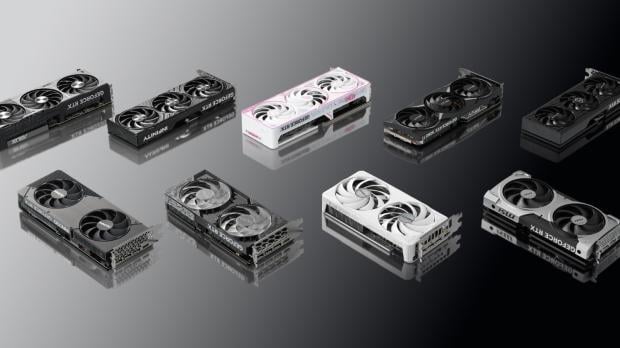
Remember when $700 got you a top-tier graphics card? That era is officially buried. According to a report from Taiwan’s Economic Daily News, Nvidia is implementing its third broad-based GPU price hike of 2026, raising the cost of GeForce RTX bundles, the GPU die plus its GDDR memory, by a staggering 20% to 30%. This follows a 10-15% increase in January and a targeted rise on the RTX 5090 in May. The result? Board partners are now paying nearly a third more for the core components than they did just months ago, and those costs are cascading directly to consumers.
An Asus TUF Gaming GeForce RTX 5080 that sold for $1,199 this past winter now carries an Amazon price tag of $1,595. That’s a 33% increase on a single component. The mid-range RTX 5070 Ti has seen an even more dramatic trajectory, jumping from 7,200 yuan ($1,064) in November 2025 to 10,700 yuan ($1,581) today. This isn’t a temporary spike, it’s a structural shift in the economics of high-performance computing.
The DRAM Crisis Has No Off Switch
The root cause isn’t Nvidia being greedy, though they’re certainly not passing up the opportunity. The villain of this story is the global DRAM market. Samsung, the dominant supplier of graphics memory, has increased its DRAM prices by around 20% for Q3 2026 alone. Independent research firm TrendForce confirmed on July 27 that graphics DRAM (both GDDR6 and GDDR7) pricing is climbing in lockstep with the broader memory market, as suppliers reallocate wafer capacity toward higher-margin products like HBM for AI accelerators.
The timeline is brutal. TrendForce projects conventional DRAM contract prices will rise another 13% to 18% quarter-over-quarter in Q3 2026, and the broader DRAM crisis is expected to persist until at least 2028. Nvidia, AMD, and Intel have all raised prices this year. Even console makers haven’t escaped: the PlayStation 5 now costs $649.99 (up 18%), the Steam Deck OLED 1TB jumped an eye-watering 46% to $949, and the Nintendo Switch 2 is getting an 11% hike in September.
The memory pricing structure has also produced absurd distortions. A standard 2GB GDDR7 module now costs around $20. A 3GB module? $60 to $70, roughly three times the price for just 50% more capacity. This pricing insanity puts enormous pressure on SUPER series cards that require 3GB modules. The RTX 5070 SUPER was expected to offer 18GB of VRAM, while the RTX 5070 Ti SUPER and RTX 5080 SUPER would each pack 24GB. Those upgrades are now on hold, with partners reportedly unable to commit to pricing.
Panic in the Retail Channel
The reaction from distributors has been telling. According to BenchLife, Nvidia’s price notices have triggered a full-blown panic among retail channel partners. One major Chinese e-commerce platform went so far as to de-list many mainstream Nvidia graphics cards last week entirely, unable to set prices in a market that’s changing on a weekly basis.
The situation is so volatile that even graphics card manufacturers themselves reportedly cannot forecast where pricing will head in the coming months. Inventory levels and GDDR memory costs are shifting month-to-month. The industry consensus points to continued upward pressure in the medium term, with any potential relief dependent on expanded production capacity, a timeline that stretches into 2028.
“The consumer GPU is dead.”
That sentiment, heavily echoed across forums and discussion boards, captures the mood. For many enthusiasts, the game has fundamentally changed. A mid-range card costing $1,000+ isn’t a “mid-range” card anymore, it’s a luxury item.
Why This Matters Beyond Gaming
If you’re reading this and thinking “I don’t game, so this doesn’t affect me”, think again. The same GPU that powers your gaming rig is also the workhorse for local AI inference, creative workloads, and even light machine learning development. The Blackwell architecture and its potential for on-device AI workloads (e.g., NVIDIA driver deprecation affecting older GPUs) become unreachable when the hardware itself becomes prohibitively expensive.
For developers and AI enthusiasts, this price climb pushes more workloads toward cloud solutions. But that’s not a free lunch either, cloud GPU costs are rising in parallel, driven by the exact same memory supply constraints. The supposed “democratization of AI” runs headlong into the reality of a semiconductor supply chain that can’t keep up with demand.
The Chain Reaction
Higher GPU prices trickle into every corner of tech, from game development to scientific research.
The Competition Isn’t Coming to the Rescue
One might hope AMD or Intel would step in and offer relief. But the data paints a grim picture. AMD has raised Radeon GPU kit prices by 10% in July alone, following earlier increases in 2026. The Radeon RX 9000 Series saw confirmed price increases. Even Intel’s fledgling Arc lineup hasn’t been immune to the pressures.
The reality is that the DRAM crisis is an industry-wide problem, not a Nvidia-specific one. No GPU maker can escape the cost of memory. And with Nvidia holding a dominant market share (estimated at 94% in discrete GPUs), they have the pricing power to pass along every cent of cost increase without fear of losing significant market share. The RTX 5090, which saw its own dedicated price hike in May, is still selling out at inflated prices.
Even if AMD or Intel gained ground, the DRAM cost structure would still pressure them. There’s no escape from the memory price spiral.
What Can You Actually Do?
If you’re in the market for a new GPU right now, the situation is genuinely bad. Here’s the cold calculus:
- Buy now, pay more. Inventory of “old” pricing is essentially gone. Waiting won’t make prices drop, it will likely make them worse.
- Consider the used market. Cards like the RTX 4090, which sell for inflated new prices, can be found used at meaningful discounts. But prices there are also climbing.
- Look at alternative architectures. The Intel Arc B580 and upcoming battlemage cards offer reasonable performance at lower absolute prices. They’re not competitive at the high end, but they exist.
- Accept the new normal. If TrendForce’s projections hold, we won’t see meaningful relief until 2028 at the earliest. Plan your upgrade cycles accordingly.
For those running LLMs or doing AI work on consumer hardware, the situation is especially painful. The DGX Spark’s underperformance vs. marketing claims shows that even Nvidia’s own “democratization” products struggle to deliver value when the underlying components cost this much.
Nvidia’s third price hike of 2026 isn’t a blip, it’s a signal. The convergence of AI-driven HBM demand, a structural DRAM shortage, and dominant market power has created a perfect storm for GPU pricing. The $1,500 mid-range GPU isn’t an anomaly, it’s the new baseline.
For enthusiasts, developers, and anyone who relies on high-performance graphics, the path forward involves either deeper pockets, longer upgrade cycles, or a willingness to explore alternatives. The days of predictable price-to-performance curves are over. Welcome to the era of the GPU as a luxury good.