Jev Isn’t a Chatbot, and That’s Why Everyone’s Confused
The AI community has a new punching bag, and its name is Jev.
Within days of TypeSafe’s launch, the r/LocalLLaMA thread “I really don’t understand Jev hype” racked up 417 upvotes, with the top comment dismissing it as “basically just a slightly newer classifier.” Another user compared it to rerankers. Someone else asked whether it’s just a small LLM forced to output a single token with grammar constraints.
Here’s the thing: they’re all partially right. And that’s exactly why this debate matters.
What the Hell Is Jev, Actually?
Jev doesn’t talk. That’s the entire point.
Built by TypeSafe, a startup founded by Diogo Almeida, one of the primary authors of the InstructGPT paper and a GPT-4 contributor, Jev is what the company calls a “System One” model. You feed it a state and typed questions. It returns choices, scores, and calibrated probability distributions. No prose. No “Great question!” No reasoning trace to parse before your application can act.
The API exposes three primitives:
- Choice: Pick from declared alternatives, returns probabilities plus confidence
- Score: Evaluate ordered descriptive levels, returns continuous score + distribution + confidence
- Noul: Binary proposition, returns probability it’s true
All three can be stacked in a single request against the same state, evaluated in parallel. TypeSafe reports that batching 13 questions into one call runs about 12x cheaper and 10x faster than individual calls.
Architecturally, this is a meaningful departure from autoregressive decoding. As one community member put it more eloquently than most vendor marketing:
Unlike Qwen, which relies on an autoregressive decoder loop to generate text tokens step-by-step while a grammar mask suppresses invalid vocabulary options, Jev drops open-ended text generation entirely and operates as a non-autoregressive decision model. It maps input contexts directly onto parallel, calibrated classification heads rather than generating JSON syntax character-by-character.
Translation: no KV cache overhead, no JSON parsing errors, no waiting for the model to finish typing before your code can branch.
The “It’s Just a Classifier” Argument, Scored Honestly
The skepticism isn’t unfounded. Classifiers have existed for decades. Forbes called Jev “a new neural network engineered for AI agents” without much fanfare. The Reddit thread’s top comment about it being “a slightly newer classifier” has real legs.
But here’s what the dismissive takes miss: traditional classifiers require task-specific training. Jev comes pretrained with broad world knowledge, zero-shot. That’s the difference between a tool you have to build and one you can deploy in ten minutes.
One commenter captured the nuance well: “It’s got similar accuracy to classifiers back in 2018-2019 with the benefit of not needing to be trained on the task specifically. For most use cases… that’s unfortunately not accurate enough.”
That’s the real story hiding in this debate. The innovation isn’t the architecture, it’s the packaging. Jev is a general-purpose, zero-shot classifier that you don’t have to pre-train, requires no complex configuration, and costs almost nothing to run.
The Economics That Break the Hype Cycle
Let’s talk numbers, because this is where Jev stops being a philosophical debate and becomes a deployment decision.
TypeSafe’s pricing: $0.042 per million input tokens, output unmetered. For comparison, typical LLM input pricing runs $0.20 to $10 per million tokens, with output around five times that. Jev’s responses land in the 70-500 millisecond range.
The headline claims: up to 193.6x faster and 444.6x cheaper than frontier LLMs on comparable decision tasks. TypeSafe itself acknowledges these figures sit at the upper end of realistic gains.
But the community-built examples are harder to dismiss:
- Browser Use found flights in ~7 seconds for $0.0039
- Hassan classified 1,018 AI research papers into 24 topics for $0.08 total, median 256ms per paper
- Riley Brown triaged 500 emails in seconds for 3.5 cents
The caveat on that last one? Summarizing the papers with an LLM first cost another $3.99. The judging was fifty times cheaper than the reading.
This is the Jevons paradox in action, the model’s namesake observed that cheaper coal drove demand up rather than down. TypeSafe is betting that cheap machine judgment gets used everywhere, not that companies save money.
What the Benchmarks Actually Say (And Don’t)
TypeSafe’s internal evaluation covers four workflows: security incident response, agent-trace observability, invoice processing, and customer service. Here’s where it gets uncomfortable:
| Model | Agreement | Cost per Case | Latency per Case |
|---|---|---|---|
| Jev | 67.8% | $0.0004 | 0.4s |
| GPT “Terra” | 67.9% | $0.0304 | 10.1s |
| Claude Sonnet 5 | 67.8% | Higher | Higher |
| GPT “Sol” | 74.1% | Variable | Variable |
| Claude Opus 5 | 73.1% | Variable | Variable |
Jev matches mid-tier models at a fraction of the cost. But on invoice processing specifically, the gap was brutal: Jev at 61.8% against GPT Sol’s 79.1%. If the mistake is expensive, that quality gap matters more than the inference bill.
The methodology has a catch TypeSafe openly discloses: reference labels came from averaging GPT-6 Astra and Claude Fable 5.1 at high reasoning settings, not from independent ground truth. The workflows were designed by TypeSafe’s own team. Its side-by-side demo against GPT-5.6 Terra uses a short input that flatters Jev, and TypeSafe admits it.
For a launch post, that’s an unusual amount of self-criticism. It makes the claims easier to judge, and harder to dismiss entirely.
The “Can’t Hallucinate” Claim Needs a Footnote
TypeSafe’s boldest line, that Jev can’t hallucinate, deserves scrutiny. What it can guarantee is narrow but real: Jev cannot return anything outside your defined schema. No invented categories. No malformed output. No type errors. That’s mathematically guaranteed by the architecture.
But a correctly typed wrong answer is still wrong. Jev constrains the shape of output, not the quality of judgment. When the right answer isn’t among your choices, probability still lands somewhere. Developers need escape hatches: “other”, “unclear”, “not enough information.”
Langfuse, which tested Jev as an eval judge, put it bluntly: it cannot abstain. Force a binary with no “unknown” and it will pick the least wrong answer rather than admit ignorance.
That’s a solvable design problem, but it’s not solved by the model itself.
Where This Actually Gets Interesting
The most compelling argument for Jev isn’t algorithmic, it’s architectural. Anthony Maio’s detailed analysis frames it perfectly: maybe generating language is the wrong interface between a model and the software that has to act on it.
Think about what an agent actually does. Which tool next? Is this request simple or complex? Retry or stop? Is this output good enough to show the user? Today we solve every one of those by asking a chatty model for JSON and hoping it behaves. Every tiny decision costs a full LLM call.
Jev’s strongest role is the control layer around agents: selecting tools, grading traces, detecting loops, checking completion, deciding when to escalate. A generative model drafts and plans. Jev supplies bounded semantic judgments. Code handles state, arithmetic, policy, and side effects. Humans take the ambiguous cases.
LangChain’s tutorial demonstrates two patterns worth stealing. Model routing: Jev reads the incoming request and picks the model based on criteria written in plain English. Auto Mode: Jev checks each tool call for risk before execution, the safety layer from Claude Code and Cursor, now available to any agent.
This is the “graph engineering” phase of agent design returning: explicit nodes, explicit branches, explicit thresholds. And TypeSafe’s own benchmark found something telling, every model, including frontier ones, got more accurate, faster, and cheaper when placed inside an explicit workflow instead of one giant prompt. The decomposition argument works regardless of whether Jev wins.
The Skeptic’s Scorecard
The LocalLLaMA thread’s skepticism isn’t wrong, but it’s incomplete. Let’s score it properly:
The case for “overhyped”:
- RLCD training method is undisclosed, no paper, no calibration curves, no independent reproduction
- Benchmarks come from TypeSafe itself with acknowledged design bias
- Accuracy trails frontier models on complex tasks
- “Can’t hallucinate” means “can’t produce malformed output”, not “always right”
- Closed and served via API, so no local experimentation
The case for “underappreciated”:
- Non-autoregressive architecture genuinely differs from LLM token generation
- Two orders of magnitude cheaper and faster than LLM alternatives
- Zero-shot classification with broad world knowledge, no fine-tuning needed
- Calibrated probabilities (per TypeSafe’s claims) enable threshold-based automation
- Already integrated with LangChain, Vercel, and OpenRouter
The most honest assessment comes from a community member: “I think it is pretty interesting if you don’t have labeled data yet to train your specialized classifier. An LLM is far more expensive and doesn’t answer in a structured way. Throw a few thousand examples in Jev, let a human decide the unclear ones, throw it as training data in your own classifier.”
That’s not a replacement for frontier models. It’s a bootstrap tool, a routing layer, a safety check. And that’s genuinely useful.
What This Debate Reveals About the AI Community
The Jev controversy exposes a deeper problem: the AI community has pigeonholed “intelligence” as text generation. If a model can’t write prose, it must be “just a classifier”, as if classification isn’t the foundation of most practical AI work.
One commenter captured the absurdity: “Wait until they discover rerankers.” Another noted, somewhat wearily, “If this is the thing that makes the tech industry rediscover classifiers, eh, I’m for it.”
That might be the most pragmatic take yet. Whether or not Jev’s calibration claims survive independent testing, it’s forcing a conversation about whether every intelligent component needs to talk. The debate over what constitutes true innovation in AI models is happening across the industry, and Jev is the latest flashpoint.
The history of hyped AI tools in developer communities suggests we should be cautious. The economic and practical trade-offs of overhyped AI automation rarely match the marketing. But the cost-efficient AI models disrupting pricing norms are real, and Jev belongs in that category.
The Verdict: Not Revolutionary, But Not Nothing
Jev is a general-purpose, zero-shot classifier with calibrated probabilities, packaged as a product with clean APIs and aggressive pricing. That’s not revolutionary. It’s not nothing either.
The training method is unproven. The benchmarks are vendor-generated. The “System One” framing is marketing, not science. But the architectural argument, that language generation shouldn’t be the default interface for every model-software interaction, is genuinely interesting.
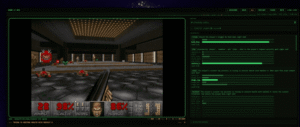
The community’s most useful contribution to this debate came from someone who actually tested it on Super Mario World and watched it fail. That’s the empirical spirit the hype cycle needs. Jev’s value will be proven by independent testing on real workflows, not by launch week enthusiasm.
Here’s the practical takeaway: don’t ask whether Jev is a revolution. Ask whether it’s cheaper and faster than what you’re doing today for your decision tasks. For routing, classification, scoring, safety checks, and eval judging, it probably is. For anything requiring open-ended reasoning or long chains of dependent logic, it isn’t.
The model that can’t speak might not be the future. But it’s a damn useful tool for the present.
And whether RLCD survives contact with independent evaluation is an open question worth watching. In the meantime, start by mapping your agent workflows to closed questions with escape hatches. That exercise is valuable regardless of which model eventually answers them.
The AI community spent years assuming one giant model should do everything. Jev is a reminder that architecture, not size, is what matters for most practical applications. It’s not the revolution TypeSafe’s marketing suggests, but the question it asks is the right one: how much more dependable could AI get if we stopped requiring every intelligent component to talk?
That’s a question worth arguing about.