The Department of Homeland Security just dropped a bomb on the federal AI supply chain. Order #2026-01, signed by Secretary Markwayne Mullin back in July and kept under wraps until this week, tells every civilian federal agency to do two things immediately: stop buying anything from DeepSeek, and rip out anything already in their systems that uses it. That includes “third-party products and services developed using DeepSeek implementations.”
The “revolutionary” part isn’t the ban itself, states and individual agencies have been blocking DeepSeek since early 2025. What’s new is the scope. This is the first comprehensive federal order that reaches into the supply chain and says: if your product has DeepSeek anywhere inside it, it’s gone.
The Legal Hammer Behind the Order
This isn’t a discretionary policy memo. DHS is invoking the Federal Supply Chain Security Act of 2018, which gives the department authority to exclude or remove products that pose supply chain risks from federal procurement and IT systems. The order covers all federal civilian executive branch agencies, the EPA, the FCC, the Department of Commerce, you name it, except for national security systems and secure compartmented information facilities, which fall under the Pentagon and the Director of National Intelligence.
The official rationale cites “multiple threat vectors”: DeepSeek’s servers sit in China, Chinese law gives the government broad authority to access private infrastructure, and the sign-up process collects personal information that could be used to “track and digitally fingerprint users.” Combined with public data, DHS argues, this could “produce actionable intelligence on U.S. persons and/or government programs.”
There’s also the malware question. The order references a February 2025 NowSecure audit that found “multiple critical vulnerabilities” in DeepSeek’s iOS app. Whether those were fixed in later versions is unclear, the order doesn’t say.
The Open-Weight Elephant in the Room
Here’s where it gets interesting. DeepSeek’s models are released as open weights. That means they’re not just inside DeepSeek’s own app, they’re embedded in dozens of third-party tools, fine-tunes, and hosted services. The order doesn’t list specific products. It doesn’t explain how agencies should handle a DeepSeek model running on US company servers. It just says remove everything “developed using DeepSeek implementations.”
Critics have pointed out the practical absurdity of this. The reality is that Chinese AI models now handle between 30% and 46% of all enterprise API token traffic on US platforms, up from 4.5% in early 2025. That’s a tenfold market share explosion in eighteen months. Some of that traffic is running through government-linked systems, even if indirectly.
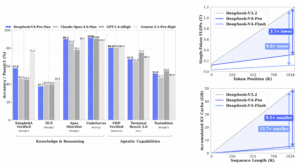
One government employee noted that while AWS Bedrock technically grants access to DeepSeek models, his agency was already barred from using them. The money was always going to Bedrock anyway, the question is whether agencies will now pay more as they’re forced into Anthropic or OpenAI models. Given that DeepSeek just released V4.1-Flash-1017, which it claims beats Claude Opus 5 at some coding tasks, the cost-performance gap is about to get awkward.
Compliance Deadlines and Escape Hatches
Agencies that can’t comply have a 60-day window from the order’s issue date to request exceptions. They need “compelling justification”, mission-critical work, alternative safeguards, that kind of thing. The Cybersecurity and Infrastructure Security Agency (CISA) reviews the requests and has the final say. The Secretary must review the order within a year and annually after that.
Until DeepSeek products are gone, agencies are instructed to:
– Monitor traffic in and out of their networks
– Step up logging
– Add exfiltration controls
– Flag anything unusual
If you’re a vendor selling AI tools to federal agencies, this is your nightmare scenario. The burden is now on you to prove your product doesn’t contain DeepSeek anywhere in its stack. That’s a non-trivial technical challenge when models are fine-tuned, distilled, and embedded in layers of abstraction.
The Precedent Problem
The federal government has declared its intent to control strategic AI development, and this order is the enforcement arm of that vision. By reaching into the supply chain, DHS has set a precedent that AI model provenance is now a security control, not just a vendor-relationship question. Compliance teams can’t treat this as a procurement issue anymore, it’s a security issue with regulatory teeth.
The timing is telling. This order lands as Beijing tightens its own grip on AI: China now wants to control exports of its largest models, and DeepSeek is training its next model on Chinese chips. The US is responding by building a wall around its civilian agencies. The question is whether that wall will hold when the models are open weights and the tools are proliferating faster than regulators can track them.
What This Means for the Private Sector
If you thought this was only about government agencies, think again. The order explicitly covers “third-party products and services developed using DeepSeek implementations.” Any contractor with federal business needs to audit their stack immediately. That includes national security and data sovereignty considerations that now extend to AI models themselves.
The AI governance implications are significant. Organizations with government contracts face indirect exposure, if an internal tool relies on DeepSeek, that dependency could put contracts, clearances, or data-handling agreements at risk. The conflict between AI safety, vendor policies, and national security needs isn’t just a theoretical debate anymore. It’s a compliance reality.
The Open-Source Reality Check
The most common reaction to this order has been skepticism about enforcement. As one developer put it, “Have fun trying to stop people from using an open source model.” The distinction matters: the government can block procurement and mandate removal from its own systems, but it can’t un-download weights that are already out there.
That’s the fundamental tension here. DeepSeek’s models are open weights. Anyone can run them locally, on their own hardware, with no connection to DeepSeek’s servers. The security risks of open-weight AI models from foreign sources are real, but so is the reality that restricting access doesn’t solve the underlying problem. The same argument applies to China’s independent AI infrastructure and model sovereignty, the models exist, they’re proliferating, and they’re not going anywhere.
The Bottom Line
This is the US government’s broadest move yet against a Chinese AI lab. It creates immediate compliance obligations for every vendor selling AI to federal agencies, not just for their own products, but for their entire supply chain. The federal government’s strategic control over AI development is now being enforced through procurement policy.
The irony is that this order might accelerate the adoption of open-weight models in the private sector. If agencies are forced into more expensive US models, the cost differential becomes glaring. And if the government’s renaming and regulatory posture continues to shift, the private sector might decide that the open-weight route, ban or no ban, is the only economically rational path forward.
One thing is certain: this isn’t the last we’ll hear of this. The FCC votes on October 29 on barring Chinese labs from testing electronic devices in the US. State-level bans are proliferating. The walls are going up, and they’re getting higher.
The question isn’t whether DeepSeek stays out of government systems, it will. The question is what happens to the rest of the AI ecosystem when the world’s largest economy starts drawing these lines.