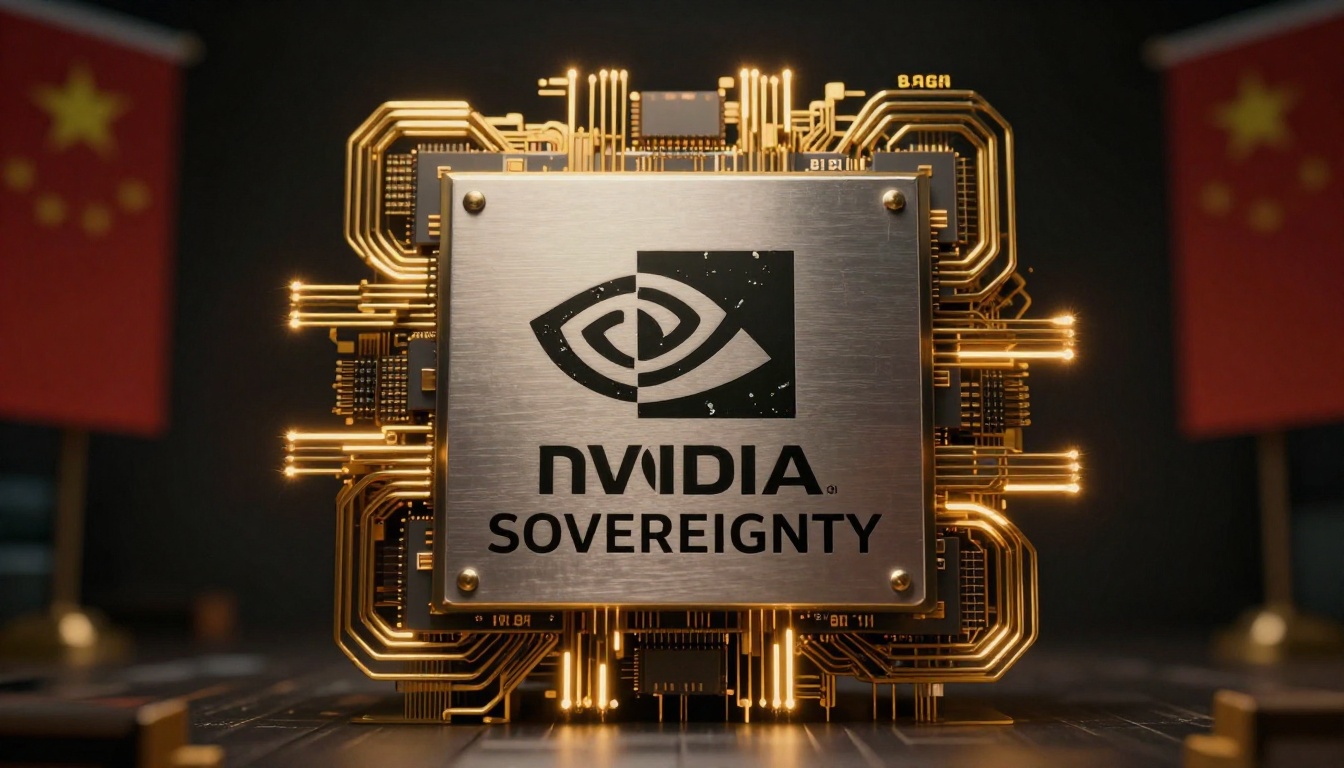
Zhipu AI’s latest release isn’t just another entry in the open-source LLM race, it’s a direct challenge to the foundation of modern AI development. The claim that GLM-5 was trained entirely on Huawei’s Ascend chips using the MindSpore framework represents more than technical achievement, it’s a geopolitical statement wrapped in 745 billion parameters. If true, this marks the first time a top-tier model has been built completely outside NVIDIA’s ecosystem, forcing a uncomfortable question: is AI infrastructure still a monopoly, or are we watching the first cracks in CUDA’s armor?
The Claim That Rocked the AI World
The story broke through developer forums and Chinese tech media: GLM-5, Zhipu AI’s newest flagship, allegedly trained without a single NVIDIA GPU. According to Trending Topics, the model runs on a Mixture-of-Experts architecture with 745 billion total parameters, activating 44 billion per forward pass. That’s 256 experts with 8 active per token, a configuration that demands serious compute coordination.
The official line from Zhipu AI is unambiguous: complete independence from US hardware. The model weights are already live on Hugging Face under an MIT license, with API access through their Z.ai platform. But the hardware claim remains the conversation starter. As one developer put it in online discussions, this would make GLM-5 the most significant model since DeepSeek’s rise to challenge Western AI dominance.
What We Actually Know (And What We Don’t)
Let’s separate signal from noise. The technical specifications are concrete: GLM-5 processes context windows up to 200,000 tokens using DeepSeek Sparse Attention, supports tool calling, and runs inference frameworks like vLLM and SGLang. The benchmarks are publicly documented:
| Benchmark | GLM-5 | GPT-5.2 (xhigh) | Claude Opus 4.5 |
|---|---|---|---|
| Humanity’s Last Exam (w/ tools) | 50.4 | 45.5* | 43.4* |
| SWE-bench Verified | 77.8% | 80.0% | 80.9% |
| Terminal-Bench 2.0 | 60.7% (verified) | 54.0% | 59.3% |
| Vending Bench 2 | $4,432.12 | $3,591.33 | $4,967.06 |
*Scores from full benchmark sets
These numbers place GLM-5 firmly in the top tier of open-source models, trading blows with proprietary systems costing orders of magnitude more to access. The API pricing, expected to follow GLM-4.x’s rate of $0.11 per million tokens, undercuts GPT-5’s $1.25 input/$10 output pricing by a factor that makes budget-conscious enterprises pay attention.
The Economics of Defiance
Here’s where the story shifts from technical curiosity to strategic calculation. A Huawei Atlas 300I Duo with 128GB VRAM reportedly costs around $1,400. An NVIDIA H200 with 141GB VRAM? Approximately $40,000. That’s not a typo, that’s a 28x price difference.
The math gets more interesting when you factor in geopolitical friction. Chinese companies face export restrictions, licensing headaches, and supply chain uncertainty when acquiring NVIDIA hardware. Huawei chips, manufactured domestically, avoid these issues entirely. As developers on technical forums have pointed out, the real cost isn’t just the silicon, it’s data center space, power consumption, and time. One commenter estimated you’d need roughly 10 Atlas 300I cards to match an H200’s throughput, but even then, the total cost remains dramatically lower.
This price arbitrage explains why Zhipu AI isn’t alone. The company explicitly supports deployment on Moore Threads, Cambricon, Kunlun, MetaX, Enflame, and Hygon chips, essentially building a coalition of non-NVIDIA hardware. It’s a pragmatic recognition that AI sovereignty requires ecosystem diversity, not just a single alternative.
MindSpore: The Framework Nobody Asked For (But China Built Anyway)
Training a 745-billion-parameter model requires more than throwing hardware at the problem. MindSpore, Huawei’s AI framework, remains largely unknown outside China for good reason: it’s optimized for Ascend’s architecture, lacks PyTorch’s community, and requires developers to learn new abstractions.
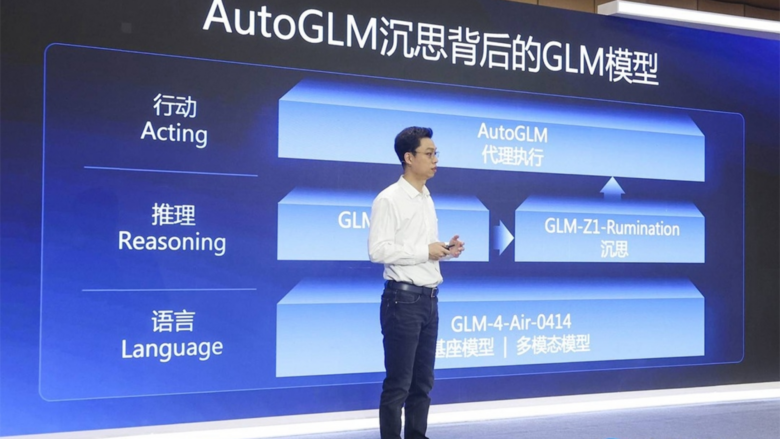
Yet Zhipu AI claims a complete pipeline from training to inference. This suggests significant engineering investment in kernel optimization and model quantization. The Hugging Face deployment guide reveals the complexity: vLLM requires nightly builds, SGLang needs architecture-specific Docker images, and Ascend NPUs demand their own deployment pathway.
The framework gap is real. While Western developers debate PyTorch vs JAX, China’s AI labs are building parallel infrastructure. It’s not better, it’s different, and that difference is the point. When export controls tighten, having a functional alternative matters more than having the best tool.
Deployment Reality Check: Can You Actually Run This?
For all the open-source fanfare, GLM-5 remains a beast. The GGUF quantized versions start at 204GB for 1-bit IQ1_S and balloon to 1.51TB for BF16 precision. Even aggressive quantization like TQ1_0 with REAP compression only gets you to ~86GB, still beyond most consumer hardware.
The inference requirements are equally demanding. vLLM deployment needs 8-way tensor parallelism with speculative decoding. SGLang requires Hopper or Blackwell GPUs for optimal performance. The Unsloth quantization that made GLM-4.7 runnable on single GPUs hasn’t yet worked the same magic on GLM-5’s architecture.
This creates a paradox: an “open” model that remains accessible only to well-funded organizations. The API democratizes access, but the self-hosted promise, the sovereignty pitch, requires infrastructure most companies don’t have. It’s open-source in name, but cloud-dependent in practice.
The Sovereignty Playbook
Zhipu AI’s Hong Kong IPO on January 8, 2026, raised $558 million, directly funding GLM-5’s development. This financial engine, combined with government preferences for domestic technology, creates a self-reinforcing cycle. Chinese enterprises face both carrot and stick: subsidies for using local hardware, and increasing risk in relying on US suppliers.
The strategy extends beyond models. Zhipu AI offers native function calling capabilities, coding agent integrations (Claude Code, Cline), and a full-stack platform. They’re not just building a model, they’re building an alternative to the entire Western AI toolchain.
This mirrors broader patterns in Chinese tech. Just as Huawei built HarmonyOS as an Android alternative and 5G infrastructure without US components, GLM-5 represents the AI layer of technological independence. The open-weight philosophy that Mistral pioneered gets repurposed here as a sovereignty tool: release the weights, build the ecosystem, reduce dependence.
Why You Should Be Skeptical
Before we declare NVIDIA’s dominance over, let’s pump the brakes. Several red flags warrant scrutiny:
-
Benchmark Transparency: While Zhipu AI published scores, the evaluation methodology includes custom prompts and framework-specific optimizations. The “verified” Terminal-Bench 2.0 results use a fixed dataset, but other benchmarks allow tuning that may not generalize.
-
Hardware Efficiency: The claim of 100% Huawei training lacks independent verification. No third-party has replicated the training run or audited the infrastructure. The technical paper is “coming soon”, the oldest excuse in AI marketing.
-
Performance vs. Practicality: Competitive benchmarks don’t equal practical superiority. Developers report that GLM-4.x models, while capable, exhibit different failure modes than Western models. The tool-use performance is impressive, but the long-tail reliability remains unproven.
-
Ecosystem Maturity: MindSpore’s documentation is primarily in Chinese. The global developer community, critical for open-source success, faces language barriers and limited support resources. A model is only as strong as its tooling.
-
Geopolitical Volatility: Tomorrow’s export controls could target Huawei’s chip manufacturing. The domestic supply chain advantage exists only so long as China can produce advanced nodes without Dutch ASML equipment or US software.
The Real Implication: Fragmentation Is Here
Whether GLM-5’s Huawei claim is 100% accurate or slightly embellished misses the larger point: the AI world is splitting. We’re moving from a single CUDA-centric ecosystem to a fragmented landscape where hardware, frameworks, and models align along geopolitical lines.
For developers, this means learning multiple toolchains. For enterprises, it means hedging bets across vendors. For policymakers, it means confronting the reality that AI infrastructure is now a strategic asset, not just a commercial product.
The cost-efficient inference that AMD GPUs enabled for budget-conscious developers finds its echo in Huawei’s pitch: good enough performance at a fraction of the price, with the added benefit of regulatory certainty in restricted markets.
Conclusion: A Wake-Up Call, Not a Victory Lap
GLM-5’s true achievement isn’t beating GPT-5.2 on a benchmark, it’s demonstrating that alternative AI infrastructure can reach parity. The model’s performance validates Huawei’s hardware and MindSpore’s framework as viable, if not yet superior, options.
But viability isn’t victory. NVIDIA’s moat extends beyond chips to developer mindshare, software optimization, and research momentum. CUDA is the default because it’s proven, not because it’s perfect. Building a parallel ecosystem requires more than one impressive model, it requires sustained investment, community building, and time.
The AI sovereignty narrative is compelling, but premature. GLM-5 proves it’s possible to train world-class models without NVIDIA. It doesn’t prove it’s practical, scalable, or sustainable, yet.
For now, the smart move is experimentation, not commitment. Run the benchmarks. Test the APIs. Quantize the weights. See if the performance holds in your use case. The fragmentation of AI infrastructure is inevitable, the winners aren’t determined by press releases, but by which ecosystems deliver consistent value.
The monopoly isn’t dead. But for the first time, there’s credible evidence it might be mortal.