Most AI companies talk about changing the world and then quietly optimize for quarterly revenue. DeepSeek’s founder Liang Wenfeng just told investors the exact opposite, and he did it over a four-hour meeting that has since become a leaked manifesto for a radically different approach to building AI.
The transcript, which circulated across Chinese social media before being taken down, reads less like an investor pitch and more like a philosophical treatise. Liang said “no” more times than most founders say “yes”: no to 3D generation, no to video, no to world models, no to becoming the next ByteDance or Tencent, and no to maximizing profit. His single, non-negotiable objective? Artificial General Intelligence.
The AGI Singularity, And Everything Else is a Distraction
Liang laid out a roadmap that is refreshingly direct. DeepSeek’s technical trajectory follows five clear steps: Chain-of-Thought reasoning, AI agents, continuous learning, a self-iterating singularity, and finally, embodied intelligence. Everything that doesn’t fit on this path gets dropped.
“We have been commercializing, but commercialization is not our objective”, Liang stated flatly. “The point at which DeepSeek fully pivots toward commercialization is probably still very far away.”
This isn’t just a nice sentiment, it’s operational strategy. Products, in Liang’s view, are “by-products” of the AGI journey. When you occupy a technological high ground and apply it to lower-level technology, you have an overwhelming advantage. The logic is brutally simple: solve the hardest problem first, and everything else becomes easy.
Why Open Source is the Ultimate Moat, Not a Charity
The conventional Silicon Valley wisdom says you lock down your best models behind API walls and subscription tiers. DeepSeek is doing the opposite, and Liang argues this is actually the smarter commercial play.
“Open source is beneficial if you want to make AI commercially successful”, he told investors. “That may sound counterintuitive.”
His reasoning is data-driven and historically grounded. Traditional software markets were small, a few billion dollars a year. Open-sourcing meant giving that market away. But AI is different. Liang estimates it could ultimately account for 10 percent of global GDP. At that scale, trying to monopolize the value is a losing bet.
“If we try to monopolize that value, history will inevitably leave us behind. That is an objective law.”
The open-source bet also serves a critical internal function: it gives employees a sense of accomplishment and strengthens organizational cohesion. When the team cheered after cutting API prices to one-quarter of the original level, that wasn’t altruism, it was proof that the culture works.
Crucially, Liang confirmed that the models DeepSeek releases as open source are identical to what they deploy internally. “We will not open-source an inferior model while privately deploying a better one.”
For context on how this open-source strategy fits into the broader Chinese AI landscape, our analysis of strategic open-sourcing by Chinese AI firms shows this is part of a coordinated shift that has reshaped global developer preferences.
The $10 Billion Bet That’s Actually About Restraint
DeepSeek is currently raising roughly $10 billion at a valuation around $45 billion, backed by China’s state AI fund and High-Flyer, the hedge fund where Liang built his fortune. But here’s where it gets interesting: Liang doesn’t want to maximize the return on that capital.
He described a pricing model based on recovering equipment costs in 10 months, not maximizing profit. “If we doubled the price, total revenue would nearly double”, he admitted. “But that’s not our starting point.”
This “restraint strategy” extends to how DeepSeek operates internally. The company runs on a flat, vision-driven structure with no formal hierarchy. Employees spend less than half their time on assigned tasks, the rest is free exploration. They generally don’t work overtime. “Research requires a relatively relaxed environment”, Liang explained.
The bet is that this culture of restraint actually increases the probability of achieving AGI. “AGI offers the greatest return. As for everything else, we will do it if we have the capacity, and we will not do it if we do not.”
The Resource Gap is Real, But Not Where You Think
One of the most candid moments in the meeting came when Liang addressed the gap between Chinese and American AI capabilities. His assessment is refreshingly direct: the gap is almost entirely about compute resources, not talent.
“We believe in scaling: larger scale undoubtedly produces better results. We do not train models of this size because we believe this size is sufficient. We train them at this size because these are all the resources we have.”
DeepSeek currently operates about 20,000 H-equivalent GPUs, which Liang described as an order of magnitude less than what’s needed to train the largest frontier models. To train an 800-billion-parameter model, he estimates needing 50,000 GB300 or 200,000 Huawei 950 cards, far beyond current capacity.
But he’s optimistic about narrowing the gap through efficiency rather than brute force. “We want to use a fraction of the compute to narrow the gap, first to six months and then to three months.” This focus on cost-efficiency breakthroughs in Chinese AI models has become a defining characteristic of the ecosystem.
Team Stability is the Only Thing That Can’t Be Compromised
For all the philosophical talk about AGI and restraint, Liang was also brutally pragmatic about risk. “There is only one thing on which we cannot compromise: we must maintain the stability of the team. This is also one of the greatest risks we face.”
He clarified that the funding round was primarily about mitigating this risk. “As long as I can keep the team stable, I will be able to achieve AGI. It is that simple.”
This explains why DeepSeek has been so careful not to become an adversary to any internet company, large or small. “We hope to empower and assist them. We do not want to make enemies. That also creates a better environment for us.”
The company’s culture is designed to retain talent through mission rather than money. “We do not want to build the next super-app. Become the next ByteDance? The next Tencent? We have absolutely no such ambition.” This clarity of purpose, Liang argues, is what allows DeepSeek to attract people who genuinely want to work on AGI rather than chase the next growth metric.
What This Means for the AI Competitive Landscape
Liang’s vision for the industry’s future is both humble and ambitious. He predicts that the final differentiation among large model competitors will come down to three factors: cost, time, and user experience, in that order.
Cost comes first because it’s the hardest to replicate as a competitive advantage. Time matters because being months early or late makes a significant difference. User experience creates some stickiness, but it’s not fundamental.
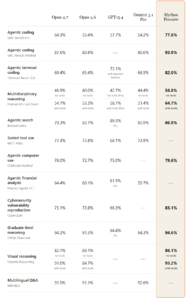
He also shared a bold prediction about the current market leaders. “Anthropic’s current lead over OpenAI is temporary, not permanent. OpenAI and Google will most likely take turns pulling ahead in the future.”
For investors and observers watching the Chinese AI ecosystem, a related development worth tracking is how Chinese AI dominance amid US sanctions has actually accelerated innovation rather than hindering it.
The “Ordinary People” Theory of Extraordinary Achievement
Perhaps the most striking aspect of the entire meeting was Liang’s insistence that DeepSeek’s success comes not from genius but from culture. “When we founded this company two years ago, we did not have much money, many GPUs, much recognition, or any particular ability to rally people around us. We were simply a group of very ordinary people.”
“The narrative I prefer is ‘a group of ordinary people accomplished something extraordinary,’ rather than ‘a group of geniuses accomplished something extraordinary.'”
This self-deprecating framing is disarming, but it’s backed by a coherent theory of competition. Liang argues that the real advantage isn’t raw intelligence or capital, it’s organizational design. By aligning everyone around a genuinely believed vision of AGI (not profit), DeepSeek achieves levels of focus and cohesion that money can’t buy.
“If your vision is to take as much as possible for yourself, you have already lost. You will probably face even greater difficulties. That is simply how the world works.”
The Verdict: A Dangerous Model or the Only Sane One?
DeepSeek’s approach is a bet that the traditional VC model of rapid monetization is incompatible with achieving true AGI. It’s a bet that restraint, open-source distribution, and mission-driven culture will outperform the profit-maximizing approaches of Silicon Valley’s biggest labs.
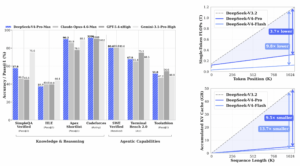
The early results are compelling. DeepSeek’s models have matched or exceeded frontier performance at a fraction of the cost. Their mixture-of-experts architecture scales to 1.6 trillion parameters. Developer adoption has been massive.
But the real test will come when the $10 billion funding round runs low, or when a competitor achieves a breakthrough that DeepSeek can’t match. At that point, the “restraint strategy” will face its ultimate stress test.
For now, Liang seems unconcerned. “We have always been commercializing, but commercialization is not our objective. The point at which DeepSeek fully pivots toward commercialization is probably still very far away.”
Whether this is visionary genius or naivety depends on your timeline. But in an industry where most companies are racing to cash out, DeepSeek is racing to build something that outlives them all. That alone makes this worth watching closely.
For those interested in how smaller, more efficient models are challenging the “bigger is better” orthodoxy, our coverage of open-source AI models challenging larger proprietary systems provides additional context on this paradigm shift.