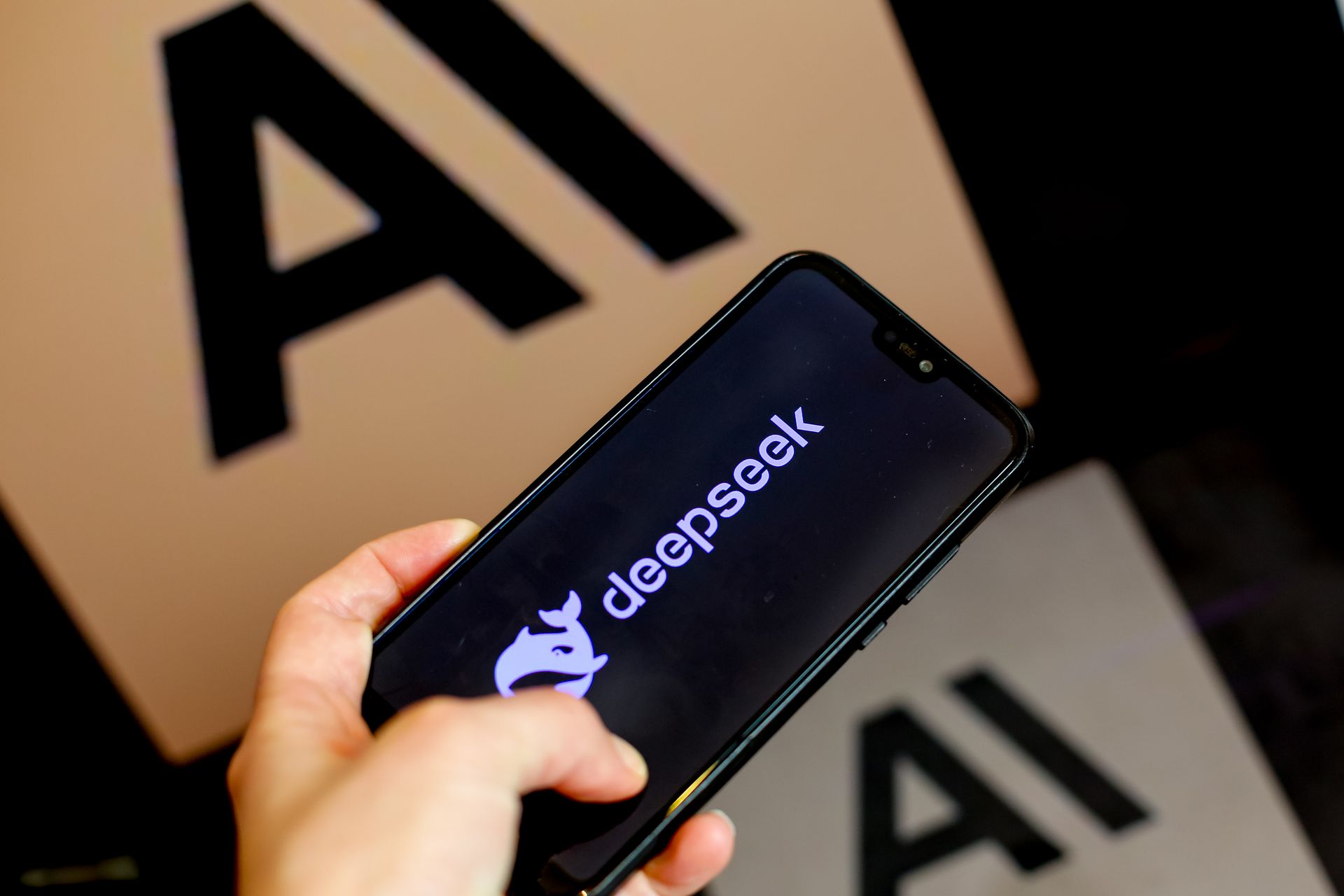
DeepSeek just pulled off something rare in the AI industry: a dual release that actually makes strategic sense. On August 13, the company officially launched DeepSeek-V4-Pro, ending a four-month preview period that felt like it would never conclude. Then, hours later, it dropped DeepSeek Harness (dsh), an open-source agent framework that might matter more than the model itself.
Let’s be clear about one thing first: the model release is genuinely significant. The 0813 build that went GA on DeepSeek’s API is a 1.6-trillion-parameter mixture-of-experts system with 49 billion active parameters per token. That’s a massive jump from the April preview, with DeepSWE scores leaping from 12.8 to 62.7, numbers that beat both GLM-5.2 and Opus-4.8. The community reaction was immediate, with one developer noting on Hugging Face that the benchmark gains were “absurd” for a model of this size.
But here’s what’s actually interesting: DeepSeek didn’t just ship a better model. It shipped the infrastructure to make that model useful in an agentic world.
The Model: Impressive Numbers, Complicated Economics
The V4-Pro-0813 benchmarks tell a compelling story. At maximum reasoning effort, the model hits:
| Benchmark | V4-Pro-Max Score | GPT-5.4 xHigh | Gemini-3.1-Pro |
|---|---|---|---|
| SWE-bench Verified | 80.6% | , | 80.6% |
| Terminal Bench 2.0 | 67.9% | 75.1% | , |
| GPQA Diamond | 90.1% | , | , |
| Humanity’s Last Exam | 37.7% | , | 44.4% |
| LiveCodeBench | 93.5% | , | , |
| Codeforces Rating | 3,206 | , | , |
These are vendor-reported figures, no independent evaluator has replicated them for the 0813 build yet. But even with that caveat, the trajectory is clear. The model’s architecture combines Compressed Sparse Attention and Heavily Compressed Attention, cutting single-token inference compute to 27% and KV cache to 10% of what V3.2 needed at the million-token setting.
The pricing picture is more complicated. The GA build launched at $0.435 per million input tokens and $0.87 per million output tokens, the same rates as preview. But DeepSeek has already announced a “significant increase” coming August 16, with peak/off-peak pricing that will push output tokens to $3.96 per million at peak hours.
That’s a 4.5x increase from current rates. The community reaction on forums was swift and skeptical. Developers who built DeepSeek into their workflows on the promise of cheap inference are now recalculating. One developer on Reddit summed up the sentiment: “The price increase really destroys deepseek’s appeal for me. It was always token hungry and a little slower, but it didn’t matter with how cheap it was.”
The counter-argument, also present in the discussions, is that the model is wildly token-hungry compared to alternatives. At 5.5x the token consumption of GPT-5.6 Luna for roughly equivalent capability, the cost advantage evaporates unless you’re getting exceptional cache hit rates, which dsh’s architecture is designed to maximize.
dsh: Where the Real Innovation Lives
Here’s where this release gets genuinely interesting. DeepSeek Harness isn’t another wrapper around an API. It’s an open-source agent framework built on Cordis, a plugin architecture whose design is described in A Programming Paradigm for Spatiotemporal Composability. The core philosophy is simple: everything is a plugin.
The architecture documentation makes this explicit. Models, tools, skills, sessions, sandboxes, storage, loops, scheduling, and even the UI are all plugins. There is no privileged core to patch. Extending dsh means mounting a plugin beside the others, and registrations are effects that unwind when their plugin unloads.
This is a fundamentally different approach from what OpenAI, Anthropic, and Google are doing with their agent frameworks. Those are vertical integrations designed to lock you into their ecosystem. dsh is horizontal, it’s designed to be replaceable at every layer.
The GitHub repository provides a concrete example:
npx @deepseek-ai/dsh web
That single command launches a full agent harness with a web UI at http://127.0.0.1:3080. But the real power is in the plugin tree. You can inspect exactly what your machine boots with:
dsh --profile web --dump-config
Every row that command prints can be replaced by your own patch file. The web and headless profiles ship as templates, but you can stack bundles in any order, override anything, and add your own plugins.
The Spatiotemporal Composability Angle
The Cordis design paper introduces something most agent frameworks haven’t grappled with: the temporal dimension of agent state. In traditional frameworks, you have spatial composition, how components fit together at a given moment. But agents are stateful systems that operate over time, and that temporal dimension is where the complexity lives.
Cordis addresses this with typed events and reversible effects. Every session is an append-only event log. Anything that reaches a model request must be reconstructable from that log, and a runtime invariant asserts this. This means session state can be traced, resumed, forked, searched, and replayed.
For developers who’ve dealt with the chaos of composable architectures, this design has real appeal. The session log isn’t just for debugging, it’s the source of truth for what the model sees. The documentation notes that “model-visible means logged”, which is a stricter guarantee than most frameworks provide.
The Open Source Posture
The community response to dsh’s release was notable. The repository hit 20,000 GitHub stars in hours, then 46,000 within a day. Sceptics immediately cried bots, and they might be partially right about some of that, given how AI agents have made GitHub stars near-meaningless. But the fork count (3.7k) and the quality of the architecture documentation suggest genuine developer interest.
What makes this different from other “open source” AI releases? The weights are actually open, under the MIT license. The code is open. The architecture is documented. And the philosophy, “Model + Harness = Agent”, positions DeepSeek as an infrastructure player rather than just a model vendor.
This is a stark contrast to the pattern of open-weight models that hide their capabilities behind APIs. DeepSeek released both the model and the harness to run it locally. Even if you can’t afford to run V4-Pro yourself, and at 1.6T parameters, most can’t, you can use dsh with any model provider.
What This Actually Means for Developers
The immediate practical takeaway is that dsh gives you a production-grade agent harness you can inspect, modify, and extend. The extension cookbook documents how to add tools, LLM adapters, and conversation nodes. The architecture documentation includes a roadmap for adding capabilities:
| Goal | Mechanism |
|---|---|
| Add a model provider | Register adapter on ctx.llm |
| Add a model-facing capability | Register on ctx.tools |
| Add shell execution | Register a ctx.shell backend |
| Add background work | Register on ctx.jobs |
| Add filesystem access or policy | Register a ctx.fs provider |
| Confine spawned processes | Use a ctx.sandbox backend |
The plugin system even supports AI-driven development, the README suggests using an agent to explore the codebase. There are already 316 community plugins indexed in the dsh-plugin directory, spanning categories from development to media.
One early user reported a 97% cache hit rate on their test workloads, which at DeepSeek’s current pricing makes the model remarkably cost-efficient. The harness’s session architecture, where the entire context is derived from an append-only event log, is explicitly designed to maximize cache hits by maintaining stable, resumable contexts.
The Strategic Calculation
This dual release tells us something about DeepSeek’s strategy. The company knows it can’t out-spend OpenAI or Google on compute. Its infrastructure footprint is just ~20,000 NVIDIA H100 GPUs, a fraction of what US hyperscalers deploy. So it’s competing on economics and openness instead.
The price increase coming August 16 is a demand-management play, not a profit grab. At the current rates, DeepSeek can’t handle the traffic. The off-peak discount, 50% below peak, suggests they want to shift workloads to times when their GPU cluster isn’t saturated.
But the long game is the harness. By open-sourcing dsh, DeepSeek is positioning itself as the neutral infrastructure layer for agentic AI. You can use dsh with any model, OpenAI, Anthropic, Google, or DeepSeek. The plugin architecture means there’s no lock-in. And if regulatory actions take out major US models, DeepSeek’s combination of open weights and open harness becomes very attractive.
The Verdict
Is V4-Pro the best model on the market? No, it trails GPT-5.4 on Terminal Bench and Gemini-3.1-Pro on Humanity’s Last Exam. But it’s competitive, dramatically cheaper than its Western equivalents even after the price increase, and fully open. For teams that care about sovereignty and inspectability, that’s a compelling package.
Is dsh the best agent framework? It’s too early to say, it’s still a developer preview with compatibility-breaking changes explicitly promised. But it’s the most architecturally thoughtful open-source harness to date. The event-sourced session model, the plugin-first design, and the emphasis on traceability address real pain points that rushed agent frameworks have been papering over.
The benchmark scepticism is warranted, these are vendor-reported numbers, and independent replication hasn’t happened yet. But the architectural bets DeepSeek is making deserve attention regardless. The company that popularized efficient MoE architectures is now trying to do the same for agent infrastructure.
Watch this space. The whale isn’t done.