Anthropic’s decision to hide Claude Code’s internal file operations behind a collapsed UI wasn’t just a minor product tweak, it was a tactical retreat from transparency that ignited a developer insurrection. Within hours of the v2.1.20 release, GitHub issue #21151 became a battleground where the future of AI agent observability would be contested. The message from developers was clear: if we can’t see what the AI is doing, we can’t trust it to do anything.
The Collapse That Broke Developer Trust
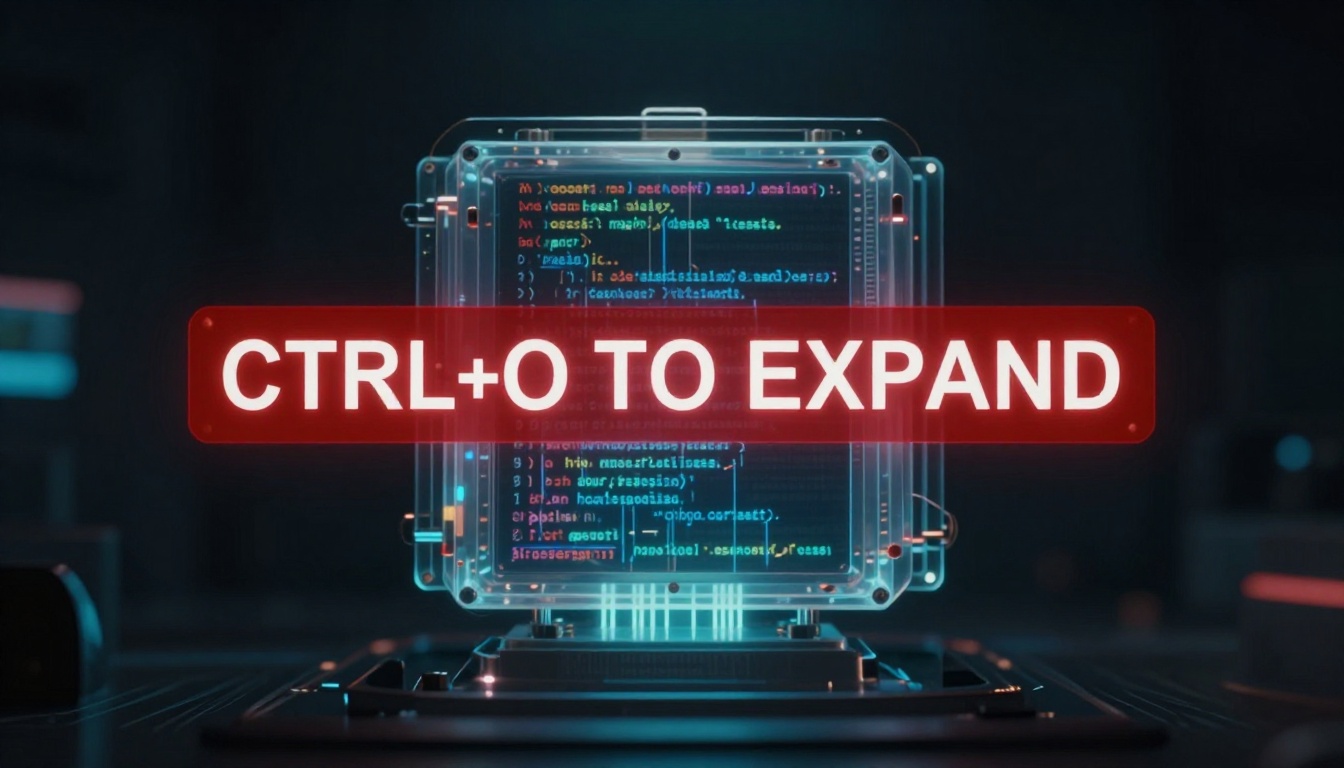
The change seemed innocuous at first. Instead of displaying “Read 3 files, 50 lines each”, Claude Code began showing “Read 3 files (ctrl+o to expand).” Boris Cherny, the tool’s creator, defended the move as UI simplification, “a way to simplify the UI so you can focus on what matters.” But developers immediately recognized a more sinister implication: Anthropic was asking them to trade transparency for convenience.
The backlash was swift and technical. One developer captured the sentiment perfectly: “It’s not a nice simplification, it’s an idiotic removal of valuable information.” Another pointed out the financial stakes: “If I cannot follow the reasoning, read the intent, or catch logic disconnects early, the session just burns through my token quota.” The ability to monitor file access in real-time isn’t a vanity feature, it’s a critical control mechanism for token-efficient AI agent architectures that prevents costly mistakes before they cascade.
Why File Visibility Matters at the Code Level
When an AI agent reads files, it’s not just accessing data, it’s building context that determines every subsequent decision. Developers need to see this process because:
- Security auditing: In regulated environments, every file touch must be logged and reviewable
- Context validation: Catching when Claude pulls from wrong files before it generates 500 lines of irrelevant code
- Cost control: Interrupting token-wasting tangents before they burn through API budgets
- Debugging: Understanding why an agent made a particular decision requires seeing what inputs it consumed
As one developer noted on Hacker News: “I can’t tell you how many times I benefited from seeing the files Claude was reading, to understand how I could interrupt and give it a little more context… saving thousands of tokens.” This isn’t about micromanaging the AI, it’s about maintaining visualizing internal model behavior to improve AI transparency in systems where opacity equals risk.
The Observability Crisis Beneath the Surface
Anthropic’s UI gambit reveals a deeper architectural crisis in AI agent design. As models become more autonomous, the gap between what they do and what we can observe grows exponentially. The company argued that verbose mode was the solution, but developers pushed back: “Verbose mode is not a viable alternative, there’s way too much noise.” This creates a false choice between seeing nothing and drowning in data, a hallmark of poorly designed observability.
The problem extends far beyond Claude Code. Modern AI agents operate as black boxes within black boxes. When an agent uses tools, chains prompts, and orchestrates sub-agents, traditional monitoring breaks down completely. You can’t slap a Datadog dashboard on a system where the “code” is a prompt and the “execution path” is a series of probabilistic LLM calls.
The Three Pillars of Agent Observability
LangChain’s evolution through three framework generations reveals what effective observability actually requires:
1. Instrumentation as First-Class Citizen
OpenTelemetry isn’t optional, it’s the only way to make agent behavior portable across tools. Without standardized traces, you’re locked into vendor-specific black boxes. As the LangChain team notes: “In software, the code documents the app. In AI, the traces do.” Every prompt, tool call, and intermediate result must be captured with semantic context.
2. Behavior Over Metrics
Traditional monitoring asks “Is the API up?” Agent observability asks “Did the agent hallucinate a function signature and try to call a non-existent tool?” This requires tracking:
– Decision paths and reasoning chains
– Tool invocation patterns and success rates
– Context accumulation and drift
– Token usage per decision step
3. Evaluation as Continuous Process
Agents are non-deterministic. You can’t unit test a probability distribution. Instead, you need continuous evaluation pipelines that compare actual behavior against expected patterns. This is why challenges in multi-step reasoning and error propagation in AI agents demand frameworks that treat testing and monitoring as converged disciplines.
The Governance Imperative
What makes Anthropic’s move particularly reckless is the regulatory landscape taking shape. The EU AI Act, ISO 42001, and NIST AI RMF all demand traceability for high-risk AI systems. When an AI agent can access files, execute code, and make autonomous decisions, “we simplified the UI” won’t satisfy auditors asking why a model accessed customer data it shouldn’t have.
Lumenova AI’s research frames this perfectly: “If an AI agent can act on behalf of your organization, can you see what it is doing, why it is doing it, and whether it is staying within approved boundaries?” Without file-level visibility, the answer is a resounding no. This transforms a UX debate into a governance failure.
The Shadow AI Multiplier Effect
The controversy also highlights the Shadow AI risk. When developers lose trust in official tools, they don’t stop using AI, they route around it. The same Hacker News threads discussing Claude’s opacity feature developers building custom wrappers and logging systems. This fragmentation creates:
- Security blind spots: Unsanctioned tools bypass DLP controls
- Compliance gaps: No unified audit trail across shadow systems
- Operational inefficiency: Teams reinventing observability wheels
Teramind’s research on detecting autonomous agents shows that behavioral velocity analysis, flagging “impossible speed” like hundreds of commands per second, is how security teams find these shadow systems. But prevention beats detection: if official tools were transparent enough, developers wouldn’t need to build alternatives.
The Token Efficiency Red Herring
Anthropic’s defense hinges on reducing “noise” as agents become more capable. Cherny argued: “Claude has gotten more intelligent, it runs for longer periods of time, and it is able to more agentically use more tools… The amount of output this generates can quickly become overwhelming.”
This conflates two separate problems: information density and information access. The solution isn’t hiding data, it’s better visualization, filtering, and alerting. The transparency and performance of open-source AI research agents proves that detailed logging and usability aren’t mutually exclusive. Open-source frameworks like LangGraph and PydanticAI manage to provide rich traces without overwhelming developers.
The real issue is architectural: Claude Code’s monolithic design doesn’t separate concerns between execution, logging, and presentation. A well-designed agent harness would allow developers to subscribe to different verbosity levels for different operations, set conditional breakpoints on file access patterns, and stream structured logs to external observability platforms.
Building the Observability Stack We Actually Need
The controversy has a clear lesson: bolt-on observability fails. You can’t retrofit transparency into a system designed for opacity. The future belongs to agent architectures that treat observability as a core primitive.
The OpenTelemetry Mandate
Every serious AI agent framework must emit OTel-compatible traces. This means:
– Semantic conventions for agent-specific spans (tool calls, prompt templates, context windows)
– Distributed tracing across multi-agent workflows
– Metrics correlation linking token usage to business outcomes
LangSmith’s cross-framework support shows the way: integrate with Claude Agent SDK, CrewAI, Mastra, and custom agents through a common telemetry layer. This creates a competitive moat for observability platforms while giving developers tool choice.
From Logs to Decision Graphs
Current logging is too linear. Agents don’t just execute steps, they explore, backtrack, and self-correct. We need visualizations that show:
– Decision trees with probability-weighted branches
– Context flow showing how retrieved information influences subsequent steps
– Cost accumulation per decision path to optimize token economics
Maxim AI’s approach of tracing the complete lifecycle, sessions, spans, LLM calls, tool invocations, points toward this future. But we also need runtime introspection: the ability to query an agent’s state mid-execution without breaking its flow.
The Evaluation-Monitoring Loop
Testing agents isn’t a pre-production activity, it’s continuous. The CI/CD pipeline must include:
– Synthetic task suites that probe agent capabilities
– Behavioral regression detection comparing traces across versions
– A/B testing frameworks for prompt and model comparisons
This is where the risks of overtrusting AI agents in decision-critical systems becomes operationalized. Accuracy metrics mean nothing without trace-level validation that agents are using the right data sources and following approved reasoning paths.
The Path Forward: Transparent by Default
Anthropic’s misstep offers a corrective roadmap for the industry:
- Make Verbose the Default, Not the Exception
The burden of proof should be on why something shouldn’t be visible, not why it should. Default transparency with opt-in simplification respects developer agency. - Structured Observability as a Feature
Don’t just dump text to terminals. Provide:
– Queryable trace APIs
– Configurable event streaming
– Integration hooks for external monitoring - Governance-First Design
Build agents assuming they’ll be audited. Every action should be attributable, every decision explainable, every tool use justified. This isn’t overhead, it’s table stakes for enterprise adoption. - Community-Driven Standards
The framework fragmentation problem (LangChain, CrewAI, OpenAI Agents SDK, etc.) requires industry consensus on observability standards. The OpenTelemetry project provides a template for how vendor-neutral standards can emerge.
Conclusion: Autonomy Without Observability is Liability
Anthropic’s attempt to “simplify” Claude Code backfired because it violated a core principle of the AI agent revolution: autonomy and observability are inseparable. As agents gain power to act on our behalf, the need to see into their decision-making grows proportionally, not inversely.
The developer backlash wasn’t about keyboard shortcuts or UI preferences. It was a referendum on whether AI tools should serve developers’ need for control or impose vendor-defined limitations. The answer, delivered through GitHub comments and Hacker News threads, was unequivocal: we cannot build trustworthy systems on opaque foundations.
For organizations deploying AI agents, the lesson is stark. Before you automate, ask: Can we trace every decision? Can we audit every action? Can we explain every outcome? If the answer is no, you’re not building AI agents, you’re creating the kind of liability that makes CISOs lose sleep.
The future belongs to frameworks that understand what LangChain learned through three generations of evolution: the agent is the system around the model, and that system’s most important feature is the light it shines on the model’s inner workings. Everything else is just vibes, and vibes don’t pass compliance audits.