Unsloth’s 2-Bit Miracle: How GLM-4.7 Lost 266GB Without Losing Its Mind

The math doesn’t add up. A 355-billion-parameter thinking model that scores 73.8% on SWE-bench, outperforming its predecessor by 5.8 points, shouldn’t fit on a single GPU with 24GB of VRAM and a side of RAM. Yet here we are, staring at a 134GB GGUF file that promises exactly that. Unsloth’s 2-bit quantization of GLM-4.7 isn’t just another incremental optimization, it’s a statement about the future of AI deployment that makes hardware vendors nervous and purists reach for their smelling salts.
The 75% Diet: When Aggressive Quantization Becomes a Feature
Let’s cut through the marketing fluff. The full GLM-4.7 model demands 400GB of disk space, an amount that puts it firmly in “data center or bust” territory. Unsloth’s Dynamic 2-bit GGUF variant compresses this to 134GB, a 75% reduction that crosses a critical threshold: it fits on a high-end consumer workstation.
The technical trick isn’t magic, it’s brutality. Standard 4-bit quantization already makes model weights leaner by storing each parameter in half a byte. Two-bit quantization quarters that again, cramming four values into a single byte. The tradeoff is precision, instead of fine-grained weight representations, you get a coarse approximation that can fundamentally alter model behavior.
But here’s where Unsloth’s “Dynamic 2.0” approach gets interesting. Rather than applying uniform quantization across all layers, the system preserves higher precision for critical components. Important layers sit at 6-8 bit precision while less crucial ones take the 2-bit hit. This selective lobotomy, sorry, optimization, means the model retains enough fidelity for serious coding tasks while shedding enough weight to run locally.
The benchmarks tell a provocative story: 73.8% on SWE-bench, 66.7% on SWE-bench Multilingual (+12.9), and 41.0% on Terminal Bench 2.0 (+16.5). These aren’t “good for a quantized model” numbers, they’re competitive with full-precision frontier models. The implication is uncomfortable: maybe we’ve been over-allocating precision in places where it doesn’t matter.
The Lobotomy Question: Does It Actually Think or Just Memorize?
The elephant in the room, one that developer forums have been shouting about, is whether extreme quantization destroys the very capabilities that make frontier models valuable. When you compress a model this aggressively, are you preserving intelligence or just creating a very sophisticated autocomplete?
The sentiment among early testers is split. Some report that GLM-4.6 at Q2 quantization remains their “favorite chat model by far”, suggesting the quality degradation isn’t catastrophic. Others ask the uncomfortable question: “Is it really worth running the model in 1 or 2-bit vs something that hasn’t been possibly lobotomized by quantization?”
The answer depends entirely on your definition of “worth it.” If you’re comparing against the full 400GB model running on enterprise hardware, sure, you’ll notice differences. But if you’re comparing against not running a frontier model at all, because your hardware can’t handle it, the calculation changes dramatically. One developer’s report cuts through the noise: running the KIMI K2 thinking model’s 1-bit version “does amazingly well considering its almost complete lobotomy on paper.”
Temperature settings become critical when working with heavily quantized models. For coding tasks, dropping to 0.4 keeps outputs focused and deterministic. For creative writing, 1.0 gives enough randomness to escape the quantization-induced rigidity. The model isn’t just “dumber”, it’s different, requiring different prompting strategies to extract value.
Hardware Reality Check: What “Consumer Hardware” Actually Means
Let’s be honest: “runs on consumer hardware” is doing a lot of heavy lifting. Unsloth’s documentation states the 2-bit quant “works well in a 1x24GB card and 128GB of RAM with MoE offloading.” That’s not your gaming rig, it’s a $1,500+ GPU paired with server-grade memory.
The 4-bit variant demands even more: 205GB unified memory for 5+ tokens/second. One developer with 3x RTX 3090 and 256GB RAM asks if Q4 is “good enough for serious coding.” The answer is yes, but the hardware bar remains stratospheric.
Performance metrics from the wild paint a sobering picture. A user running GLM-4.6’s IQ3_XSS quant on 48GB VRAM + 128GB RAM achieved only 4 tokens/second. Interactive use at that speed feels like dial-up internet, functional, but painful. For context, that’s roughly 0.1-0.5 t/s if you’re forced into swap/disk territory.
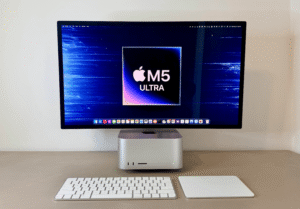
The economic calculation is brutal. A Mac Studio with 512GB unified memory can run the quantized version, but developers report prompt processing speeds make interactive use “impractical.” The hardware cost? Approximately $10,000. At that price point, API access starts looking very attractive.
The Democratization Mirage: Open Weights vs. Practical Access
Z.ai released GLM-4.7’s weights, earning praise for openness. But “open” doesn’t mean “accessible.” The model’s size creates a natural moat: hobbyists get the satisfaction of access and the frustration of hardware limits, while enterprises with real infrastructure can run it, exactly the customers who can afford API endpoints.
This dynamic transforms “open weights” from a democratizing force into a sophisticated marketing strategy. Inference providers get a new product to serve, while the community generates buzz and tests edge cases for free. The people most excited by open weights are often the least able to run them comfortably, and the people most able to run them are the least constrained by API pricing.
Unsloth’s quantization disrupts this equation slightly. By crossing the 134GB threshold, they’ve made local deployment technically feasible for a small slice of power users. But feasible isn’t the same as practical. Most developers will find the token throughput too slow for serious work, turning local deployment into a novelty rather than a workflow.
The Integration Play: Why Compatibility Matters More Than Raw Power
Here’s the strategic angle that makes GLM-4.7 interesting beyond its size reduction: it’s explicitly designed to slot into existing Western tooling. The release notes call out compatibility with Claude Code, Kilo Code, Cline, and Roo Code, not as an afterthought, but as a core feature.
This isn’t just about technical integration, it’s about distribution arbitrage. Western labs spent years polishing developer experience. Z.ai is offering a cheaper engine that snaps into the same chassis. At €30/year, a fraction of competitor pricing, the substitution doesn’t need to be perfect. It needs to be easy.
Features like “Preserved Thinking”, which maintains reasoning state across multi-turn conversations, aren’t just nice-to-haves. They’re compatibility layers that make the model feel coherent inside agentic workflows. The model thinks before acting, retains context across edits, and supports per-turn reasoning control. These aren’t research novelties, they’re product features designed for real tools.
Running the Beast: A Practical Guide
If you’re determined to run GLM-4.7 locally, here’s what you need to know. First, grab llama.cpp and build with CUDA support:
apt-get update
apt-get install pciutils build-essential cmake curl libcurl4-openssl-dev -y
git clone https://github.com/ggml-org/llama.cpp
 cmake llama.cpp -B llama.cpp/build \
    -DBUILD_SHARED_LIBS=OFF -DGGML_CUDA=ON -DLLAMA_CURL=ON
cmake --build llama.cpp/build --config Release -j --clean-first --target llama-cli llama-mtmd-cli llama-server llama-gguf-split
The critical flag is --jinja. Unsloth fixed chat template bugs, and without this flag, you’ll get garbage outputs. The command for the 2-bit variant looks like:
export LLAMA_CACHE="unsloth/GLM-4.7-GGUF"
./llama.cpp/llama-cli \
    --model GLM-4.7-GGUF/UD-Q2_K_XL/GLM-4.7-UD-Q2_K_XL-00001-of-00003.gguf \
    --n-gpu-layers 99 \
    --jinja \
    --ctx-size 16384 \
    --flash-attn on \
    --temp 0.4 \
    --top-p 0.95 \
    -ot "\.ffn_.*_exps.=CPU"
The -ot "\.ffn_.*_exps.=CPU" flag offloads MoE layers to CPU, a crucial optimization that fits non-MoE layers onto a single GPU. For coding tasks, keep temperature at 0.4. For general chat, bump it to 1.0.
For Ollama users, the 1-bit version runs natively, but you’ll need to merge split files for other quants:
./llama.cpp/llama-gguf-split --merge \
  GLM-4.7-GGUF/GLM-4.7-UD-Q2_K_XL/GLM-4.7-UD-Q2_K_XL-00001-of-00003.gguf \
    merged_file.gguf
The Bottom Line: A Fork in the Road
Unsloth’s 2-bit quantization of GLM-4.7 represents more than a technical achievement, it’s a philosophical statement. It argues that the future of AI isn’t just about bigger models, but about smarter compression and more efficient deployment. The 75% size reduction forces a question: were those extra 266GB doing meaningful work, or just carrying dead weight?
The answer depends on your use case. For research and maximum capability, the full model remains king. For practical coding assistance within existing toolchains, the quantized version might be “good enough”, and at €30/year versus $10,000+ in hardware, that might be all that matters.
The real controversy isn’t whether 2-bit quantization degrades performance. Of course it does. The question is whether the degradation crosses the threshold from “unacceptable” to “good enough for the price.” For a growing segment of developers, the answer is increasingly: yes.
And that should scare the hell out of companies betting their business models on hardware moats and API margins.