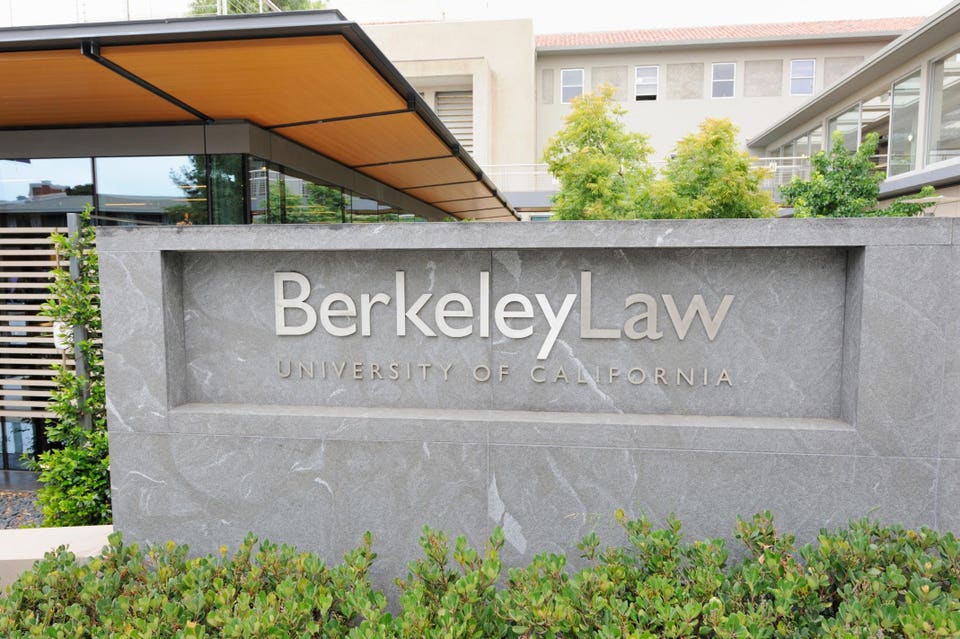
No brainstorming with Claude. No asking GPT to polish a sentence. No using an LLM to translate your research into English. Even using AI to proofread your final submission? Prohibited. The only major carve-out is for legal research, finding statutes or case law in databases, and even then, students are personally liable for every single citation. Hallucinate a fake case? That’s treated as prima facie evidence you violated the ban.
This isn’t a timid “we encourage responsible use” guideline. It’s a hard line in the sand, drawn by a school that has been a pioneer in AI legal research for years. And the reasoning, laid out in their official policy, is brutally simple: thinking is the sine qua non of good lawyering. If a student can’t think without an AI co-pilot, they have no business in a courtroom.
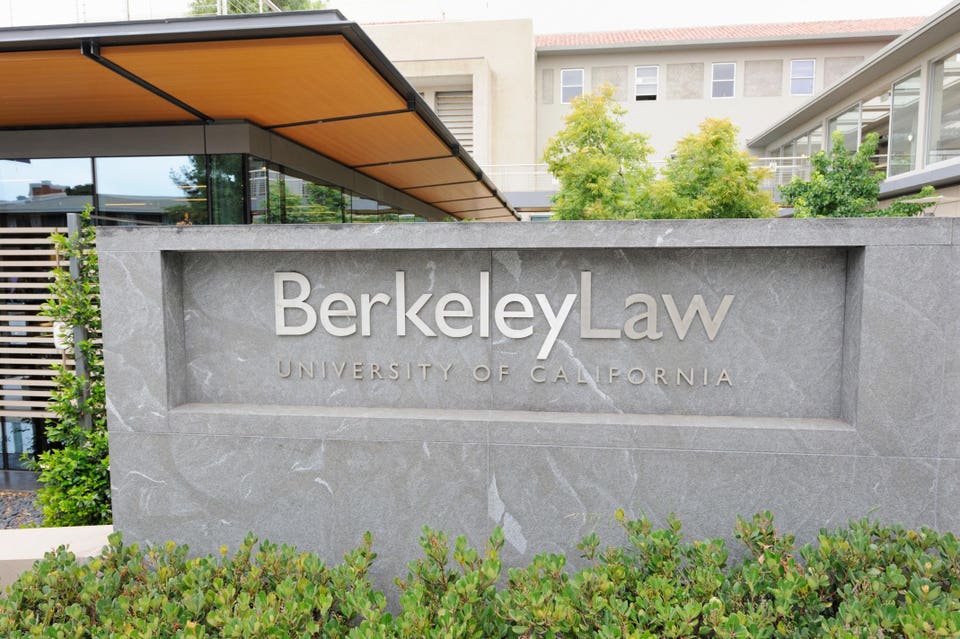
The Policy: What’s Actually Banned?
The old 2023 policy was built around plagiarism. The new one? It’s built around process. The school isn’t just worried about copy-paste cheating, it’s worried that AI is substituting for the cognitive struggle that builds a lawyer’s brain.
Here’s the exact list of prohibited uses, straight from the policy:
- Conceptualizing: Asking an AI to brainstorm a paper topic or thesis.
- Outlining: Asking an AI to propose an organizational structure.
- Drafting: Asking an AI to compose a paragraph summarizing a legal rule.
- Revising: Asking an AI to identify repetitive passages to cut.
- Editing: Asking an AI to correct grammatical mistakes.
- Translating: Asking an AI to translate a paper from another language into English.
- Exam Use: Using AI for any purpose during an exam.
Professor Chris Hoofnagle, who helped craft the policy, told Business Insider that the old policy was “too liberal.” The reason? “The increasing capability of LLMs required us to rethink students’ reliance on them. It can, in effect, write a research paper soup to nuts.”
Students can still use AI to tutor themselves or prepare for class. But the moment work is submitted for a grade, the AI is supposed to be off the table. Professors can carve out exceptions for specific courses that teach AI fluency, but the default is a hard no.
The Enforcement Nightmare That No One Wants to Talk About
Here’s where the policy gets spicy, and where the real debate lies.
The immediate reaction from the developer and tech community was a collective eye-roll. As one high-scoring comment on the discussion threads put it: “The problem with this is always, how will it be enforced? It’s already been proven that AI work can be made indistinguishable from human work.”
They’re not wrong. GPTZero and Turnitin’s AI detectors have been embarrassingly unreliable since the GPT-4 era. The detection arms race is a losing game for schools. Berkeley knows this. Hoofnagle admitted as much, noting that even standard search results on Lexis and Westlaw now include LLM-generated summaries. “There is no kind of clean answer for it”, he said.
The Hallucination Trap
The policy explicitly states that “citations to sources that do not exist will raise a presumption of prohibited AI use.” This is a clever, low-tech enforcement mechanism. AI models are notorious for fabricating legal citations. If a student submits a paper with a case that never existed, they’re busted. It’s not a perfect system, a smart student can manually check citations, but it catches the laziest cheaters.
The Blue Book Renaissance
The school is quietly shifting back toward in-person, proctored exams. This is the nuclear option. As one commenter noted, “Blue book exams are the honest answer.” Law schools spent two decades moving away from hand-graded exams because they’re brutal to scale. But AI is forcing a reversal. The Business Insider report confirms Berkeley has already converted more take-home exams to in-person, using software that blocks internet access and copy-paste.
The “Vibe Check” on Reasoning
This is the softest but most interesting enforcement mechanism. Hoofnagle told the San Francisco Chronicle that he proposed the new rules after seeing “questionable legal reasoning” in student assignments. When a paper is completely AI-generated, it often reads like a confident but shallow summary of the law. A trained professor can spot the difference between “a student who struggled to understand a doctrine” and “a student who had Claude write a perfectly plausible but ultimately hollow analysis.”
But let’s be real: this works for a top-tier law school with small class sizes. It’s not a scalable solution for a 300-person undergraduate lecture course.
The “Liability Shield” Hypothesis
A cynical but plausible read on this policy comes from the developer community: “Berkeley’s policy reads more like a liability shield than an actual plan.”
Here’s the logic. Law schools are being sued. Clients are suing lawyers who filed AI-hallucinated briefs. The legal profession is facing a crisis of confidence around AI-generated work. If Berkeley Law, one of the most AI-forward law schools in the world, is seen as allowing AI use without guardrails, they could be blamed for graduating lawyers who don’t know how to think critically.
By drawing an extremely hard line, Berkeley is making a public statement: We did not skimp on the fundamentals. Even if enforcement is imperfect, they can point to the policy and say, “We told them not to use AI to draft their papers.”
This is especially relevant given recent high-profile disasters in courtrooms. Australian judges have slammed lawyers for submitting AI-generated nonsense. A Stanford study found AI legal assistants make mistakes in one out of every six cases.
The Three Kinds of People (and the Real Skill Debate)
A fascinating comment on the discussion distilled the AI adoption spectrum into three archetypes:
- People who don’t use AI
- People who use AI as a substitute for thinking
- People who use AI as leverage for thinking
Berkeley’s policy is essentially saying: We cannot teach you to be Person #3 unless you first master being Person #1. You need to know how to write a legal argument from scratch before you can critically evaluate an AI’s proposed argument.
This is a fundamentally different philosophy from the “teach verification, not prohibition” crowd. One commenter argued that “teaching verification and responsible use seems more realistic than pretending the tools don’t exist.” They have a point. When these students graduate, they will walk into law firms that extensively use AI for everything from discovery to contract analysis.
Hoofnagle acknowledges this. He said demand from law firms is that “students graduate with proficiency in using AI. Students are asking for these courses, and they’re learning during their summers that law firms already extensively use AI.”
That’s why the policy carves out advanced AI-fluency courses. The first-year students are locked out. The third-year students in the AI clinic get to play with the tools. It’s a timed gate, not an eternal ban.
The Precedent for Everyone Else
This isn’t just a law school story. Every field that relies on analytical writing, journalism, consulting, academia, software engineering, is watching Berkeley’s experiment.
The parallel to software development is direct. When GitHub Copilot launched, the fear was that junior developers would become “Copilot-dependent”, unable to write a function from scratch. The same debate is happening in coding bootcamps and CS departments. Do you ban AI? Or do you teach “prompt engineering” as a core competency?
Berkeley’s answer is a bet on the long game: cognitive skills before tool use. The irony is that this policy exists at a school that is a leader in AI research. They aren’t Luddites. They are deliberately choosing to delay exposure.
This also connects to broader research on the productivity paradox. A UC Berkeley study on AI paradox and productivity trap found that AI tools don’t reduce work, they intensify it. The cognitive load of verifying AI output often negates the time savings. If true, then teaching students without AI first might actually be more efficient in the long run.
Another UC Berkeley study on AI intensifying work hours and burnout found that the AI economy is creating a split: a small group of hyper-productive AI “leveragers” and a large group of exhausted AI “substitutors.” Berkeley’s policy is an attempt to ensure their graduates land in the first group.
No One Has This Figured Out
Let’s not pretend Berkeley has a perfect solution. The policy is a blunt instrument. It will be circumvented by determined students. The detection problem remains unsolved. And the gap between the “no AI” law school and the “AI everywhere” law firm will create a jarring transition for graduates.
But the alternative, doing nothing, is worse. The old model of “don’t plagiarize” is meaningless when an AI can produce a plausible original essay in 10 seconds.
Hoofnagle summed up the philosophy perfectly: “In the classroom, we don’t want students to write the best possible paper, but rather the best possible paper that the student is capable of.”
That’s the core tension. AI doesn’t just help you polish your work. It replaces your cognitive effort in ways that are hard to detect and even harder to regulate.
Berkeley’s answer is to go nuclear. It’s a bet that the foundation matters more than the tool. It’s a bet that a lawyer who can write a brief from scratch will be a better lawyer when they finally get access to the AI.
Whether that bet pays off is one of the most important questions in education right now. Every university, every coding bootcamp, and every company training program should be taking notes.
The future of learning just got a lot more interesting, and a lot more restrictive.