
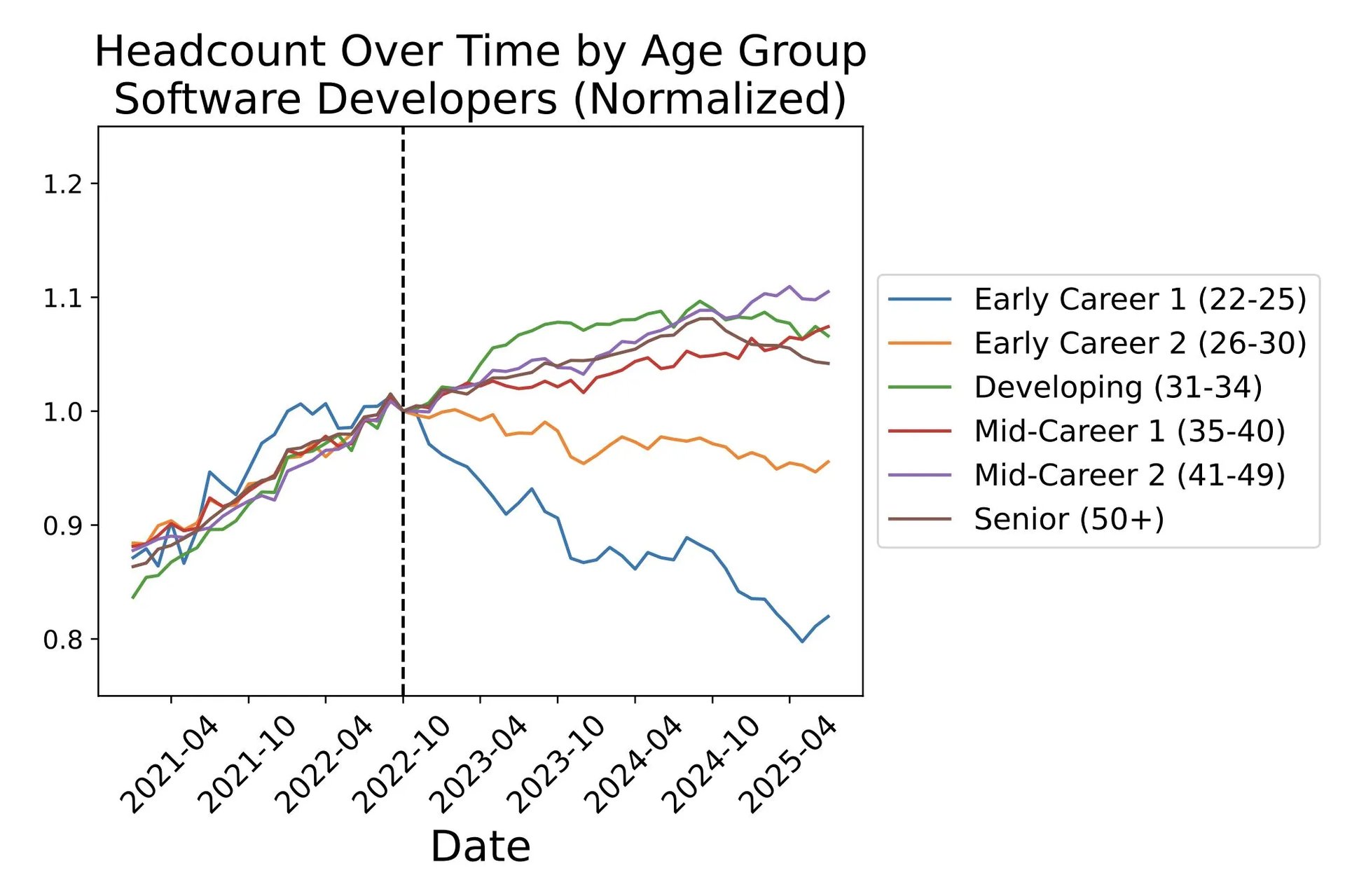
We’ve created a perfect storm where “modern” software architecture, microservices, Kubernetes, distributed tracing, has become a gatekeeping mechanism that systematically excludes junior talent. While AI automates away entry-level coding tasks, we’ve simultaneously erected technical barriers so complex that new developers can’t even get started.
The Architecture Barrier Complex
The problem isn’t that junior developers can’t code, it’s that they can’t navigate the architectural labyrinth we’ve built. When companies started giving engineers an alternative career path to management by letting them climb ranks as individual contributors, we unintentionally created a culture where senior engineers could opt out of developing the next generation. “I’m an IC, not a manager” became an acceptable argument to avoid mentorship responsibilities.
Now consider what juniors face when joining a typical “modern” team:
- Kubernetes orchestration requiring understanding of pods, services, ingress controllers
- Distributed tracing across microservices with OpenTelemetry
- Service mesh configurations for inter-service communication
- Multiple database technologies in polyglot persistence setups
- Message queues and event streaming with Kafka or similar
- Infrastructure as code with Terraform or CloudFormation
- Monitoring and observability stacks across distributed systems
The Docker article “You Want Microservices, But Do You Need Them?” captures the irony perfectly: “Each of these is necessary, but together they’re complex and expensive.” Companies are paying that complexity tax not just in cloud bills, but in their ability to develop junior talent.
The Mentorship Breakdown
When tech companies started giving engineers an alternative career path to management by letting them climb the ranks as individual contributors, we unintentionally normalized senior engineers opting out of developing the next generation. As one industry observer noted, this created a decade-long culture where “I’m an IC, not a manager” became an acceptable argument to avoid mentorship responsibilities.
This breakdown has devastating consequences:
When we neglect teaching hands-on work, we forfeit building expertise.
When we avoid pair-programming, we miss out on transmitting tacit knowledge.
When we don’t teach the art of code review, we miss the opportunity to teach software architectural design.
The Hacker News discussion around microservices reveals the disconnect perfectly. Developers admit “what we do (physics simulation software) doesn’t need all the complexity” yet feel powerless to stop the architectural over-engineering train. As one commenter noted, “Only have as much complexity as you absolutely need”, advice we’ve systematically ignored industry-wide.
AI’s Double-Edged Sword
The research reveals AI is automating junior work while only augmenting senior work. This removes the traditional apprenticeship ladder where new developers learned by doing simpler tasks under supervision. As companies replace junior positions with AI while excusing seniors from mentorship, we’re creating a missing generation of engineers.
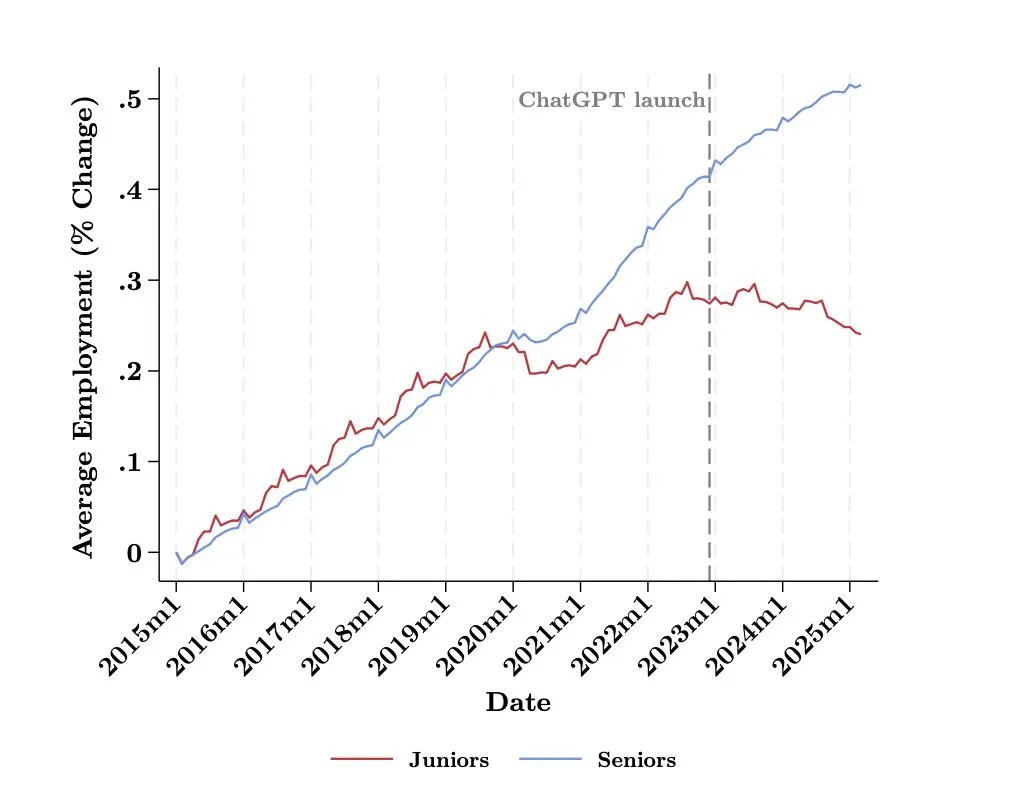
The timing mismatch becomes apparent when you ask: Where will senior engineers come from in 10-20 years when current seniors retire? The skills needed to architect complex systems and make good judgment calls under uncertainty are developed through years of mentored work that starts simple and grows in complexity.
The Domain Complexity Mismatch
The Hacker News discussion on microservices reveals a disturbing trend: developers acknowledge unnecessary complexity but feel powerless to stop it. One engineer working on “physics simulation software” admitted “what we do doesn’t need all the complexity” of microservices architectures, yet felt the “political path has been chosen” toward unnecessarily complex systems.
This isn’t just about technical overkill, it’s about creating environments where junior developers can’t meaningfully contribute. When a junior needs to understand Kubernetes networking, service mesh configuration, distributed tracing, and circuit breaker patterns just to fix a simple bug, we’ve moved beyond engineering excellence into gatekeeping territory.
The Economic Reality Check
The economic incentives are completely misaligned. US companies optimize for quarterly earnings, not long-term investment in employees. The average employee tenure hovers around two years, meaning there’s zero incentive to invest in junior development when you can just hire seniors.
Add it all together:
Companies replace junior positions with AI
+
Senior engineers excused from mentorship responsibilities
+
Companies optimize for immediate results
=
A systemic issue that nobody can fix individually
The Docker article notes that microservices “make sense in very specific scenarios where distinct business capabilities need independent scaling and deployment.” Yet we’ve applied them universally, creating architectural barriers that serve neither our systems nor our talent pipeline.
What Senior Engineers Are Missing
Here’s the uncomfortable truth senior engineers need to hear: Teaching forces clarity. When you have to explain complex systems in basic terms, you understand them more deeply. The mentorship gap isn’t just hurting juniors, it’s creating technical debt through opaque architectures that only their original architects understand.
Consider the Kubernetes example from the discussion: “Kubernetes is a good example of a microservice architecture” where “each microservice works with other microservices in a way where dependencies are not so coupled together.” But ironically, “Kubernetes is typically seen and understood by many to be a monolith.” This misunderstanding creates confusion for people working with it, exactly the kind of knowledge gap that prevents junior onboarding.
The Way Forward: Simplicity and Mentorship
We need to reclaim architectural sanity. As one Hacker News commenter noted: “Many developers started their career during the ZIRP era where none of the typical constraints of ‘engineering’ actually applied and complexity & high cloud bills were seen as a good thing.” Now that ZIRP is over, there’s finally pressure to improve software development efficiency and optimize infrastructure costs.
Here’s what we can do differently:
- For senior engineers: Rediscover the joy of teaching. Mentorship isn’t an optional “manager” activity, it’s how we ensure our architectural decisions outlive our tenure. Simplify your systems to the minimum complexity required. If your physics simulation software doesn’t need microservices, don’t build microservices.
- For companies: Recognize that sustainable engineering requires a talent pipeline. The 10-20 year outlook depends on developing junior talent today. Stop excusing seniors from mentorship responsibilities, make it part of the IC career ladder.
- For hiring managers: Demand simpler architectures. The Docker article notes that microservices require “duplicated data requires extra storage” and “constant service-to-service calls rack up network egress fees.” These costs extend beyond infrastructure to talent development.
Building Sustainable Systems
The conversation on Hacker News reveals a growing awareness: “If you have workloads with different shapes, microservices make sense. If not, do the monolith thing as long as you can.” This pragmatic approach creates systems where junior developers can actually contribute meaningfully.
We’re at a crossroads. We can continue down the path of over-engineering that excludes new talent, or we can build systems that balance technical sophistication with accessibility. The choice isn’t between modern architecture and mentorship, it’s about designing systems that serve both our technical and human needs.
The junior hiring crisis isn’t just about AI or economic conditions, it’s about the systems we’ve built and the culture we’ve created. Fixing it requires acknowledging that our architectural decisions have human consequences far beyond the codebase.