A developer going by the handle EvilEnginer recently dropped a trio of models onto Hugging Face that should make Anthropic’s legal team wake up in cold sweats. Dubbed OmniClaw, Omnicoder, and OmniRP, these aren’t just another set of fine-tuned weights, they’re distilled shadows of Claude Opus 4.6’s agentic reasoning, stripped of safety guardrails and packaged into a 9B parameter container small enough to run on a consumer RTX 3060. The kicker? They’re “fully uncensored with zero refusals”, trained on what the creator calls the DataClaw dataset: real Claude Code and Codex agentic sessions extracted through millions of API interactions.
This isn’t piracy in the traditional sense. No weights were stolen, no servers breached. Instead, we’re watching the AI equivalent of a student attending every lecture, taking meticulous notes, and building a condensed course based on what they learned, except the student is a neural network, the professor is a $20 billion frontier model, and the lecture hall is technically public API access. The result is a direct comparison of distilled models versus frontier LLM performance that raises uncomfortable questions about what “ownership” means when intelligence can be observed, compressed, and redeployed.
The Engineering: Frankenstein’s Monster in GGUF Format
Building OmniClaw wasn’t just about running transformers.Trainer(). The architecture reveals a sophisticated grafting process that merges multiple lineages into a single functional model. The base is Qwen 3.5 9B, but the DNA comes from four distinct sources:
- Jackrong’s reasoning distill, 14,000+ Claude 4.6 Opus-style reasoning samples focused on mathematical and logical deduction
- HauhauCS’s uncensored variant, aggressive safety tuning removal
- Tesslate’s OmniCoder, specialized coding capabilities
- Empero-ai’s Claude Code dataset, actual agentic session traces
The merge itself uses a custom “Add Difference” algorithm implemented in a Python script that operates directly on GGUF binaries. Rather than standard LoRA merging, this approach calculates tensor differentials between a “source” (standard Qwen) and “target” (uncensored variant), then applies those deltas to a third “apply_to” model (the Claude distill). It’s surgical weight manipulation at the binary level, preserving GGUF headers while rewriting the model’s behavioral DNA.
# The core delta calculation from the merge script
s = np.frombuffer(f_src.read(n), dtype=np.uint8).astype(np.int16)
t = np.frombuffer(f_tgt.read(n), dtype=np.uint8).astype(np.int16)
a = np.frombuffer(f_app.read(n), dtype=np.uint8).astype(np.int16)
r = np.clip(a + (t - s), 0, 255).astype(np.uint8)  # Apply difference
The developer only recommends Q8_0 quantization, 8-bit integer weights, claiming other formats produce “very bad quality.” This specificity matters because at 9B parameters with Q8_0 quantization, the model occupies roughly 9GB of VRAM, fitting comfortably within consumer hardware constraints while allegedly preserving the reasoning patterns of a model 15 times its size.
The Performance Reality Check
Before you delete your Claude subscription, the benchmarks tell a sobering story. Community testing on the Aider benchmark (225 hard coding problems) reveals the brutal efficiency cost of compression. While Qwen 3.5 35B-A3B achieves 26.7% pass@1 and 54.7% pass@2 at 95 seconds per problem, Omnicoder 9B manages only 5.3% pass@1 and 29.3% pass@2, taking 402 seconds per problem, four times slower for significantly worse results.
However, Jackrong’s underlying distill (which feeds into OmniClaw) shows more promising efficiency gains. Compared to base Qwen 3.5 4B, the distilled variant reduces average thinking length by 33.77% (from 2,829 to 1,874 characters) while improving passes per 10k thinking characters by over 41%. This demonstrates demonstrating how specialized small models can outperform larger counterparts in specific efficiency metrics, even if absolute capability remains behind frontier models.
The trade-off is clear: you’re sacrificing peak performance for local deployability and the removal of refusal patterns. For agentic workflows where latency and API costs matter more than solving the hardest LeetCode hards, this math starts to work.
The Legal Void: Why Copyright Can’t Save Claude
Here’s where it gets legally spicy. Anthropic has publicly alleged that Chinese firms extracted capabilities through “industrial-scale distillation”, but legal analysis from Monash University suggests they might have no recourse under current intellectual property frameworks.
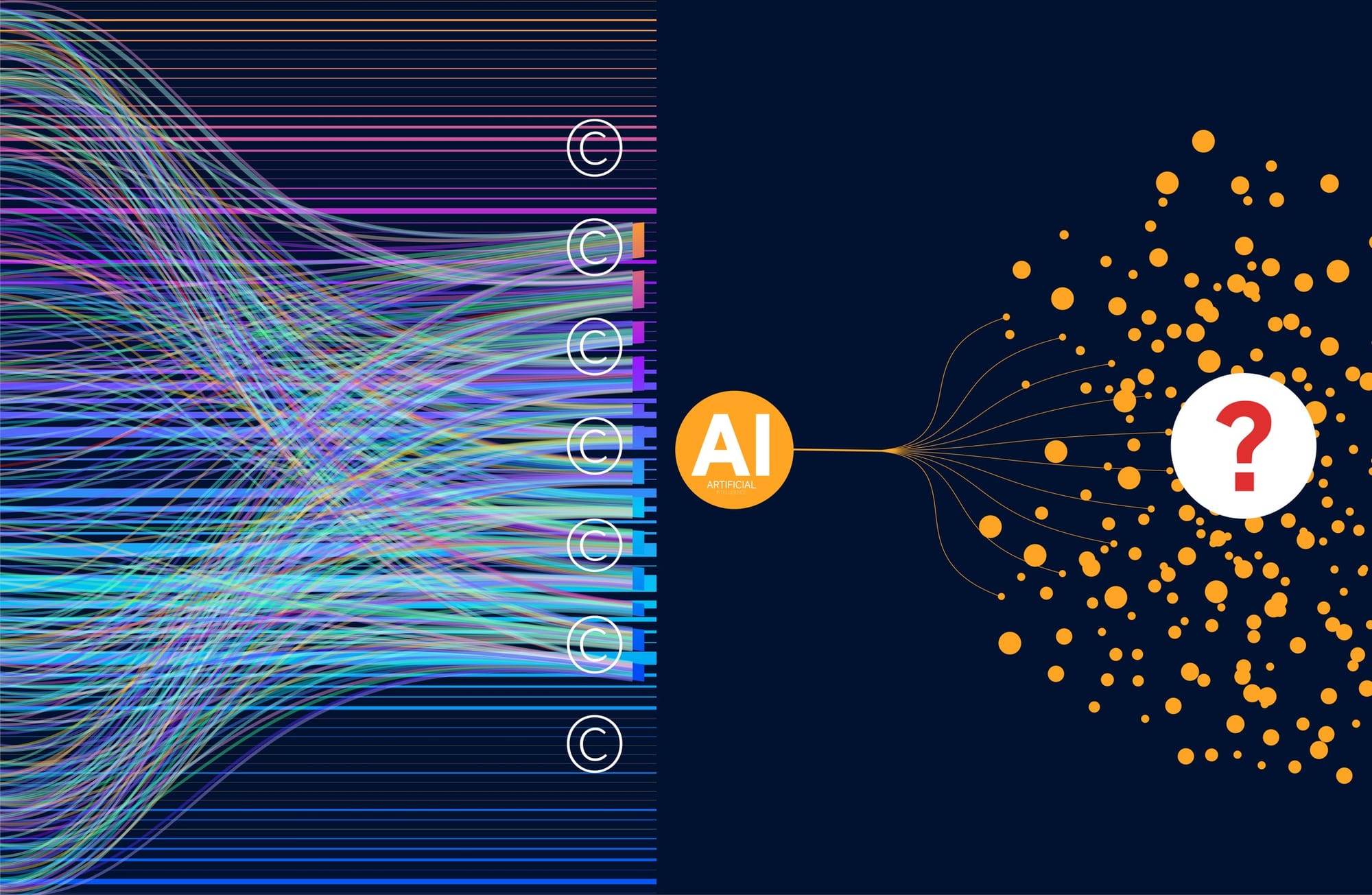
Copyright is dead in the water. Under Thaler v. Perlmutter and reinforced by Feist Publications, Inc. v. Rural Telephone Service Co., AI-generated outputs lack human authorship and therefore cannot be copyrighted. If the outputs aren’t protected works, using them to train another model doesn’t constitute infringement. As legal scholar Ridoan Karim notes, distillation copies behavior, not text, and copyright explicitly excludes protection for “ideas, systems, methods of operation, or functional processes.”
Reverse engineering precedent protects the practice. Cases like Sega Enterprises Ltd. v. Accolade, Inc. and Sony Computer Entertainment, Inc. v. Connectix Corp. established that analyzing a product’s behavior to uncover functional principles is legally permissible, provided you don’t copy protected expression. Model distillation fits this framework perfectly: it treats the teacher model as a black box, supplying inputs and statistically inferring patterns from outputs.
Contract law is porous. While Terms of Service prohibit automated extraction, enforcement requires proving privity, attribution, and measurable harm across potentially distributed, cross-border querying infrastructure. When access is mediated through layered accounts and proxy infrastructure, contractual prohibitions become “contingent shields rather than impermeable ones.”
Trade secrets evaporate on contact. Once outputs are exposed via API, the behavioral performance becomes observable. Trade secret law tolerates competitive learning from lawfully acquired, externally accessible information. The only protected elements remain the actual weights, training datasets, and architectural designs, none of which distillation exposes.
The Safety Implications: Zero Refusals, Maximum Capability
The “uncensored” label isn’t marketing fluff, it represents a deliberate surgical removal of alignment training. By merging with HauhauCS’s “Aggressive” uncensored variant and disabling thinking via modified chat templates baked into the GGUF headers, these models will reportedly “teach you how to make bombs” or assist with any request without the characteristic “I can’t help with that” reflex.
This creates a navigating safety frameworks and ethical boundaries in AI deployment dilemma that makes corporate AI safety teams nervous. When agentic reasoning capabilities, previously locked behind API rate limits and safety classifiers, can be compressed into a 9B parameter model running locally, export controls and usage policies become unenforceable suggestions.
The DataClaw dataset specifically targets “Claude Code / Codex agentic sessions”, meaning these models learned not just static knowledge but dynamic tool-use patterns: how to navigate codebases, execute terminal commands, and chain reasoning steps across multiple contexts. It’s the requirements for system architecture in an era of autonomous agents realized through unauthorized replication.
The Patent Paradox and the Future of Moats
If copyright and contracts fail, what about patents? Patent law protects functional inventions rather than expression, potentially covering specific model architectures or training pipelines. But here’s the strategic dilemma: patents require public disclosure. You can’t simultaneously maximize secrecy and patent protection.
Frontier AI firms now face an impossible choice:
– Patent their techniques and disclose the methods that make their models special, gaining 20 years of protection but losing trade secrecy
– Maintain secrecy and risk distillation attacks that legally replicate 80-90% of capabilities through behavioral observation
Most are choosing secrecy, but as OmniClaw demonstrates, secrecy is no match for systematic observation at scale. The “sweat of the brow” doctrine, the idea that hard work deserves protection, was explicitly rejected in Feist. The law doesn’t protect effort, it protects original expression and novel inventions. When intelligence is expressed as behavior rather than code, it enters a legal gray zone where the shifting role of human oversight and training in AI development becomes the only remaining control point, and even that is being automated away.
The Inevitable Conclusion
We’re witnessing the collapse of the API moat. When a single developer can merge four existing models, extract agentic reasoning from proprietary systems, and distribute an “uncensored” variant that fits on consumer hardware, the economics of frontier AI start looking shaky. Why pay $20/month for Claude when OmniClaw runs locally with zero refusals?
The uncomfortable truth is that current legal frameworks were designed for books, machines, and tangible inventions, not for machine reasoning that can be learned through observation. Until doctrine evolves (if it ever does), frontier labs must rely on technical countermeasures: rate-limiting, watermarking, usage anomaly detection, and architectural compartmentalization.
But as OmniClaw proves, those barriers are temporary. The question isn’t whether distillation is legal, it currently appears to be. The question is whether the AI industry can survive when its $20 billion research investments can be compressed into 9B parameter models by anonymous developers with a Colab notebook and a grudge against safety filters.
The genie isn’t just out of the bottle. It’s been distilled, quantized, and uploaded to Hugging Face with an Apache 2.0 license.