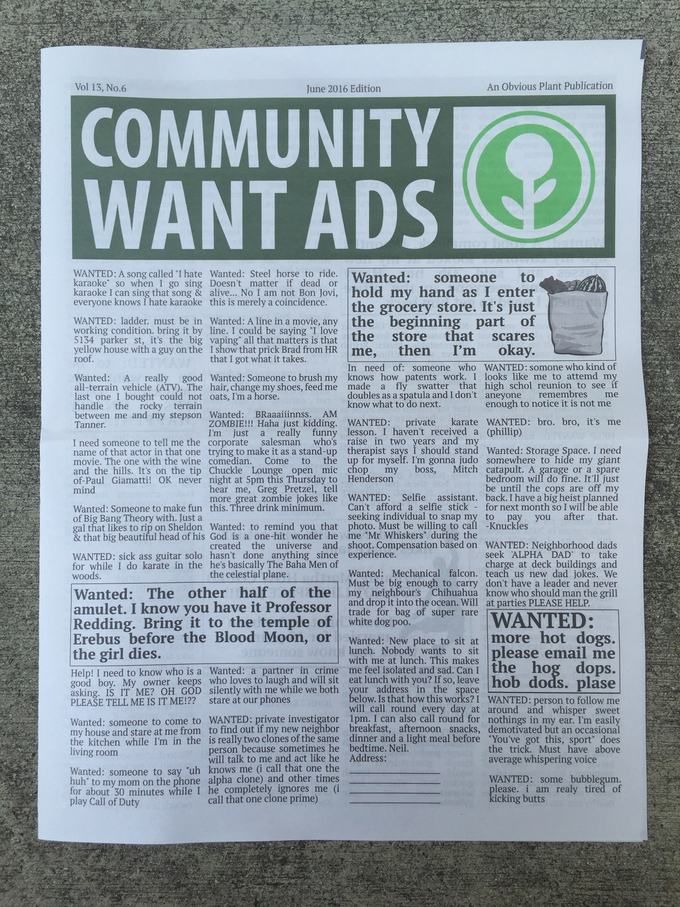
Try finding a genuine, unbiased opinion about a new data tool. Go ahead. Open your usual newsletter, scroll through Medium, or trawl LinkedIn. What you’ll find is an ocean of indistinguishable, functionally identical posts: “10 Reasons [Product X] Will Revolutionize Your Data Stack“, written in the same sterile, vaguely-enthusiastic tone. While platforms erode trust with opaque verification demands, the content ecosystem itself is suffering a more fundamental crisis of credibility. As one developer succinctly put it, the entire information space feels like it has “shifted into something where everything is either bought or written by AI.”
Welcome to the great technical journalism credibility crash. It’s not coming, it’s here. The fragmentation of independent media, the rise of “influencer-as-journalist” sponsored content, and the tidal wave of AI-generated slop have created an information environment where valuable signal is nearly impossible to find. Navigating this requires more than skepticism, it requires a new set of survival skills.
The Signal-to-Noise Ratio Has Flatlined
The core problem isn’t a lack of content, it’s a glut of worthless content pretending to be valuable. The Reddit user asking “Where do you find real opinions about data engineering these days?“ perfectly captures the practitioner’s frustration. Subscriptions turn into advertorials, LinkedIn is a performative wasteland, and “community” platforms become echo chambers of “amazing new SaaS” announcements disguised as insight.
This isn’t just annoying, it’s expensive. Poor information leads to bad technical decisions.
The same Reddit user highlighted a key example: ClickHouse. Many were sold on the hype and “paid articles, blog posts saying it’s amazing” only to later find themselves “stuck with shitty pipelines and trying to get out of it.” The problem is you often can’t tell if the hype represents genuine adoption or a well-funded marketing campaign masquerading as grassroots enthusiasm.
The Two-Headed Monster: Sponsored Hype and AI Slop
The degradation stems from two converging forces, each amplifying the other’s worst tendencies.
1. The Sponsored Content Grift
Independent technical blogging was once a labor of love. Now, for many, it’s a revenue stream. As one blog writer admitted, “Influencers get paid a lot of $$$ to pop up tools… for most people who do this full time this is their main source of income.” The incentives are perverse. An “independent” voice builds trust, then monetizes it by promoting tools. The recommendation is no longer driven by efficacy but by affiliate payments, free licenses, or speaking fees.
The line between genuine review and undisclosed ad is not just blurred, it’s deliberately erased. The result is a market where the loudest, best-funded tools appear the most popular, regardless of their actual utility or the quiet grumbling of the engineers forced to maintain them in production.
2. The AI Content Firehose
If sponsored content is the grift, AI-generated content is the pollution. Saint Mary’s University research outlines many of the core issues: inaccuracy, misleading information, and “hallucination.” An AI assistant might confidently tell you a man is dead based on its training data, a phenomenon detailed in their research guide. The deeper issue in tech journalism isn’t factual death reports, but confident, plausible-sounding nonsense about system architectures, performance characteristics, or best practices.
This leads to what is described as “creative homogenization”, as AI is used more, “creative writing, art, and ideas can start to look and sound alike, reducing variety and originality.” The web is being flooded with articles that have perfect grammar but zero insight, all repeating the same surface-level talking points.
It creates a feedback loop where AI trains on its own bland, recycled output, lowering the overall quality of the “training data” ecosystem. This not only degrades our collective developer mental models, but actively pollutes the well of knowledge we all drink from.
The Real-World Cost: Bad Decisions and Wasted Cycles
The consequence is more than just noise, it’s tangible business and technical risk.
- Tool Selection Blunders: Teams adopt tools based on marketing blogs, not production experience, leading to costly re-architectures months later.
- Architectural Blindness: Relying on AI-summarized or generated content means you miss crucial context and trade-offs, a problem similar to the architectural blindness of AI coding assistants. You get the “what” but never the critical “why.”
- Stagnant Skill Development: Reading shallow, AI-generated summaries of complex topics gives a false sense of competence without the underlying understanding.
The Cambridge study on AI-generated content copyright issues highlights a key economic shift: generative AI has “fundamentally reshaped content creation by lowering marginal costs.” It’s now essentially free to produce endless, mediocre technical content. This floods the market, drowning out the genuinely valuable, costly-to-produce human insights that require real-world battle scars.
The Practitioner’s Survival Guide: How to Find Signal in 2026
Finding truth now requires a paranoid, multi-pronged approach. The old methods of “read a blog” are gone.
1. Cultivate a Network of Trusted, Unmonetized Voices
Find practitioners who write because they have something to say, not sell. They exist, though they are harder to find. The Reddit community itself was cited as a current best source for “real opinions.” Look for individuals who post detailed post-mortems, nuanced critiques, or explorations of design patterns independent of any specific vendor.
2. Embrace the “Trust, but Verify” Mentality
The most common advice from those still creating quality content is brutal: never believe without trying it out and investigating it yourself. Treat every technical recommendation, especially glowing ones, as a hypothesis to be tested.
One experienced blogger outlined a pragmatic framework:
- Experiment: Spin up a real, if small-scale, test. Run your actual workload and evaluate cost and performance. Don’t trust benchmarks you didn’t run.
- Talk to Non-Core Contributors: Reach out to someone who has contributed an operator or a patch to an open-source project, not the marketing team. They’ll often give you the unvarnished pain points.
- Conduct a Pre-Mortem: Always ask “what happens when it fails?” and “how easy is recovery?” before commitment.
3. Develop an AI-Slop Detector
Learn the hallmarks of low-effort, AI-assisted content:
- The Generic Introduction: Long, fluff-filled openings that say nothing.
- The Recycled Listicle: “5 Things You Must Know About [Topic]” with no original examples.
- Perfect Grammar, Zero Edge: Writing devoid of any personality, frustration, or specific, gritty detail.
- Lack of Code or Specifics: Vague principles without concrete commands, configuration snippets, or error logs.
4. Seek Out Primary Sources and First-Person Accounts
The best signal comes from people who have actually done the thing, not written about doing the thing. Prioritize:
- Conference talks with Q&A (the Q&A is often where the real gold is).
- Detailed GitHub issue threads discussing actual problems.
- Personal blogs attached to real projects, even if poorly formatted.
- Deep-dive podcast interviews with engineers, not executives.
Is There a Way Out? Towards a New Information Ecosystem
This isn’t hopeless, but it requires a shift in where we place value. The market for trust is growing even as the market for attention is saturated with garbage.
- Support Independence: The few remaining independent voices need direct support, subscriptions, donations, buying their actual products (not just clicking affiliate links).
- Demand Transparency: Call out undisclosed sponsorships. Celebrate writers who clearly separate ads from editorial.
- Create, Don’t Just Consume: The best way to fight bad content is to contribute good content. Write a short post about a bug you fixed. Share a performance test you ran. You don’t need a SEO-optimized blog, a clear, honest Gist or LinkedIn post can be worth a thousand AI articles.
- Value Curation Over Creation: In an age of infinite generation, the act of curating, separating the gems from the sludge, is an immensely valuable service. Trusted curators will become the new gatekeepers.
The broader burnout crisis driven by AI tools is mirrored here: we’re spending more cognitive energy vetting information than using it. The path forward isn’t to abandon the internet, but to build a personal, resilient information diet built on verification, skepticism, and a network of real human practitioners, not content factories.
The next time you read a technical article, ask yourself: Who wrote this? Why? What are they not saying? The answer will tell you more about the future of our industry than the article itself.