A reported surge in opposition to AI and data centers is reshaping the industry’s expansion playbook. Gallup polling reveals 70% of Americans oppose new AI data center construction in their local areas, a level of hostility exceeding historic peak opposition to nuclear power plants. The backlash is already turning violent, with recent attacks on officials and tech executives, while governors in multiple states are mobilizing against utility rate hikes driven by hyperscale energy demand. Industry giants are discovering that abstract promises of innovation collapse when confronted with the concrete reality of 40,000-acre campuses, soaring electric bills, and a bipartisan political coalition that ranges from Bernie Sanders to Steve Bannon.
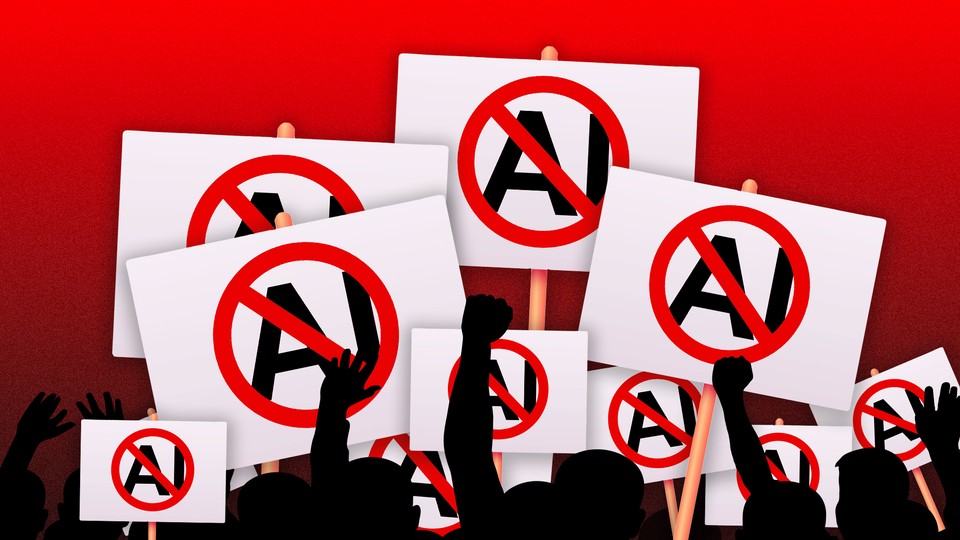
When “Not In My Backyard” Becomes “Not On My Watch”
The AI industry spent years warning that automation would reshape society. What it apparently did not anticipate was that society might fight back with firearms and firebombs.
In April, someone fired 13 rounds at an Indianapolis councilman’s house and left a note under his doormat that read simply: “NO DATA CENTERS.” Days later, a man threw a Molotov cocktail at Sam Altman’s home before allegedly heading to OpenAI’s headquarters and threatening to burn down the building and kill anyone inside. The accused has since pleaded not guilty to charges including attempted murder, but the incident landed with disturbing resonance. Social media posts applauding the attack racked up thousands of likes.
These are not isolated temper tantrums. The Soufan Center, a nonpartisan research group, reports a recent rise in direct threats against individuals, policymakers, and corporations involved with AI, with the most common online threats involving physical sabotage of proposed or operational data centers. Yannick Veilleux-Lepage, a researcher who studies technology and terrorism, wrote last month that “AI generates the structural conditions historically associated with the onset of political violence.” As many as a quarter of Americans already seem accepting of violence as a tool for political change. Local officials, unable to stop national tech billionaires, have become proxies for rage. After the Indianapolis shooting, the city council introduced a measure allowing officials to keep their home addresses private.
Silicon Valley likes to compare AI to the Industrial Revolution. They tend to skip the part where industrialists faced riots, smashed machinery, and occasional assassination attempts.
The Gallup Numbers Are Brutal
If the tech industry thinks this is a messaging problem, the numbers suggest it is far deeper.
According to a Gallup poll conducted March 2, 18, 2026, 71% of Americans oppose constructing AI data centers in their local area. Nearly half, 48%, are strongly opposed. Only 7% are strongly in favor.
To appreciate how toxic the data center brand has become, consider that Gallup asks a parallel question about nuclear power plants. Just 53% of Americans oppose building a nuclear plant in their neighborhood, and the historical high for nuclear opposition has only reached 63%. Americans would rather live next to a reactor than a server farm. Let that sink in.
The opposition defies easy demographic sorting. Majorities of Republicans, Democrats, and independents all say they would reject a local data center. Women (55%) are more likely than men (43%) to register strong opposition. The Midwest (76%) and South (75%) show slightly higher rejection rates than the coasts, but the sentiment is national. Among Americans who worry about environmental quality, opposition spikes to 78%.
The open-ended responses are telling. Half of opponents cite excessive resource use, 18% specifically mention water, 18% electricity, and 16% cite pollution including noise. Another fifth are concerned about quality-of-life impacts: traffic, population influx, and land use. The remaining opposition centers on general or specific anxieties about artificial intelligence itself.
The Power Sink: Where the Energy Goes
The public is not imagining the strain. Data centers are consuming 6% of electricity in both the UK and the US, according to research from the International Data Center Authority (IDCA). That is triple the global average of 2% and well past the IDCA’s warning threshold: “Significant community and political pushback starts to occur in nations once their datacentre footprints have reached the 5% consumption level of national grids.”
Annual global investment in data centers is now approaching $1 trillion, nearly 1% of the global economy. The IDCA found that global data center energy consumption rose 15% in just two years, driven by AI.
In the United States, data centers consumed about 176 TWh in 2023, equal to 4.4% of total US electricity use. Projections suggest that figure could reach 325, 580 TWh by 2028. Worldwide, data centers used roughly 415 TWh in 2024 and could reach 945 TWh by 2030. Meanwhile, 13% of US data center consumption comes from unused “zombie” services, running apps that were never switched off, totaling more than 3GW of wasted capacity.
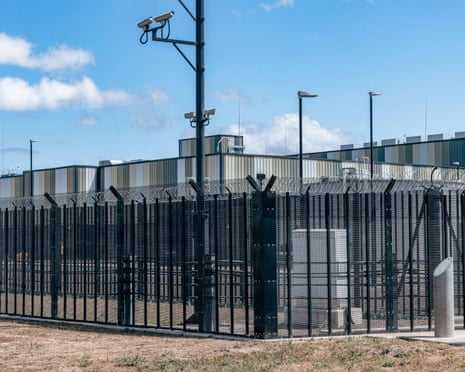
The environmental math is equally ugly. In The Dalles, Oregon, a city of roughly 16,000 people sought to claim 150 acres of Mount Hood National Forest watershed, with critics arguing the move was designed to secure more water for Google’s sprawling data center campus, which already consumes about one-third of the city’s water supply. Google developers have also been caught significantly misstating carbon emissions for proposed UK data centers. Greenpeace UK warns that an unchecked AI boom means higher energy bills, more water stress, and “a new lifeline for fossil fuels.”
Your Utility Bill Is Now a Campaign Weapon
The artificial intelligence boom is not theoretical for families staring down double-digit rate hikes. Governors, attorneys general, and regulators in at least six states, including Arizona, Indiana, Maryland, New Jersey, New York, and Pennsylvania, are actively fighting utility increases linked to data center expansion.
Pennsylvania Governor Josh Shapiro pressured PECO to withdraw a proposed 12.5% rate increase that would have cost the average residential customer an extra $20 per month. Shapiro then sent a letter to utility executives declaring that the “20th century utility model is broken” and that policymakers can no longer “simply prioritize corporate profitability to drive infrastructure development.” In Arizona, Attorney General Kris Mayes is challenging two proposed 14% rate hikes, arguing that utilities should be paid only the cost to maintain reliable service. In Indiana, Governor Mike Braun appointed utility commissioners with a mission to face down rate increases, including a 10.1% hike sought by AES Indiana alongside a 10.7% return on equity.
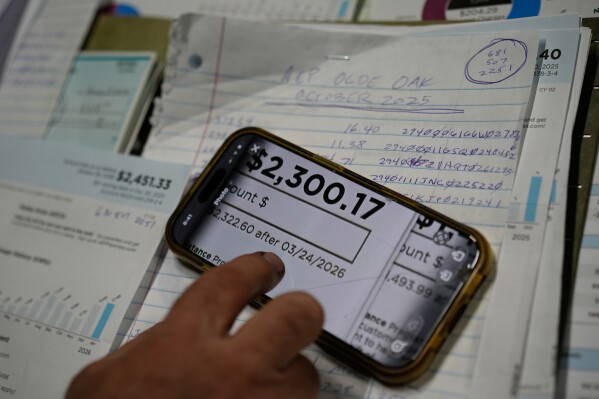
The profit margins tell part of the story. The Energy and Policy Institute reported that profits for 110 for-profit utilities rose from just under $39 billion in 2021 to over $52 billion in 2024. One former utility executive turned consumer advocate estimates that roughly 10% of a typical customer bill constitutes “excess profit” above what long-standing Supreme Court precedent might consider reasonable. As AP News reported, Morningstar analyst Travis Miller noted that “affordability is probably the number one issue that executives and investors are thinking about right now in the utility sector”, not out of charity, but because if rates become unaffordable, utilities cannot secure the future increases they need to satisfy shareholders.
The O’Leary Problem: What Happens When a Shark Bites Off More Than He Can Build
If there is a singular face to the data center backlash, it might be Kevin O’Leary. The Shark Tank investor is backing the Stratos Project in Utah, what would be the largest data center in the world. The proposed facility covers 40,000 acres, more than two and a half times the size of Manhattan, and would consume an estimated 9 gigawatts of power, more than double the 4 gigawatts the entire state of Utah currently uses.
Opposition has drawn national media coverage and a Tucker Carlson segment painting O’Leary as a real-life Mr. Monopoly out to exploit Utah taxpayers. O’Leary’s response has been to claim that over 90% of protesters are “being bussed in” and funded by shadowy groups, a talking point that organizer Astra Taylor dismisses as part of a concerted PR effort to smear a genuine grassroots movement.

Analyst Ben Thompson has proposed a more capitalistic solution: cut everyone in data center towns a direct check. If the facility on the road were sold to neighbors not on the basis of amorphous tax benefits but as a direct annual dividend, he suspects public opposition would soften. The sober counter, of course, is that data centers are already supposed to deliver local economic benefits. The problem is that the trade-off has deteriorated. As Business Insider noted, a traditional factory brought hundreds or thousands of jobs, a hyperscale data center might produce 30 to 100 positions, often low-wage security or sanitation roles, with some companies now proposing robot dogs for facility patrol.
The Bernie-to-Bannon Pipeline
The backlash has achieved something previously thought impossible: ideological alignment between Senator Bernie Sanders and Steve Bannon. Both have publicly declared AI a disaster for the working class. Sanders recently wrote that “AI oligarchs do not want to just replace specific jobs. They want to replace workers.” Bannon, on his podcast, warned that Silicon Valley “does not care about the little guy.”
This “Bernie-to-Bannon” coalition points to a widening bipartisan anxiety. Senator Josh Hawley of Missouri has questioned whether AI will be “good for the American worker”, while Senator Mark Warner of Virginia has expressed concern that “populism from both the left and the right” could curb innovation altogether.
At the local level, the resistance is organizing. More than 100 communities across 12 states have enacted local moratoriums on data centers. In Maine, state lawmakers approved the country’s first statewide moratorium, though Governor Janet Mills vetoed it. Sanders and Representative Alexandria Ocasio-Cortez have introduced federal legislation for a temporary national moratorium on new data center construction.
Writing in The Guardian and speaking to Democracy Now, organizer Astra Taylor argues that data centers represent an “industry chokepoint” where ordinary citizens can exercise leverage. She points out that only 10% of Americans are excited about where AI is heading, and that 80% of Republicans and independents want more regulations on AI even if it slows development. By her accounting, the AI sector has already poured roughly $400 million into 2026 elections. Tech boosters frame the technology as inevitable, but Taylor counters that democratic governance means asking whether we actually want AI to “take over every facet of our existence.”
The Supply Chain Mirage
Behind the political theater, there is a quieter technical frustration bubbling up in engineering and developer communities. The prevailing sentiment across forums is that the AI rollout has been profoundly undemocratic. Critics argue that tech oligarchs are structurally disconnected from the communities bearing the infrastructure burden, pitching automation as an inevitable good while local residents absorb the costs.
There is also widespread cynicism about the hardware ecosystem. Local AI models are increasingly viable for individuals and small teams, yet consumer RAM and GPU prices remain inflated by enterprise procurement strategies. Rather than an authentic physical shortage, there appears to be a virtual squeeze in which manufacturers shifted production to enterprise-grade memory earmarked for future data centers. Much of this hardware is reportedly sitting unused in warehouses on speculative “promise-to-buy” contracts that may never materialize, particularly as some data center projects get bogged down in local political fights. The practical result is a supply chain that locks consumers out of local alternatives while corporates hoard components for projects with uncertain futures.
The Industry’s Response: PR, Pledges, and Panic
Silicon Valley is not blind to the resentment, but its remedies so far have been cosmetic. In March, leaders from Google, Meta, Microsoft, Amazon, Oracle, OpenAI, and xAI met with President Trump to sign a “ratepayer protection pledge” committing to keep electricity costs from spiking around new facilities. Anthropic has promised to pay higher monthly charges to cover 100% of grid upgrade costs for its data centers, including portions that would otherwise fall to consumers.
These gestures have not stopped the political bleeding. The venture-capital firm Andreessen Horowitz recently published an essay declaring the “job apocalypse” to be a baseless fantasy. Sam Altman, who told The Atlantic in 2023 that “jobs are definitely going to go away, full stop”, has revised his position to claim that “jobs doomerism is likely long-term wrong.” The reversal reads less like earned optimism and more like crisis communications.
The market is already punishing AI slop in other domains. Microsoft’s stock plummeted 12% in a single day, erasing $440 billion in value, as Wall Street rejected low-quality AI outputs. On consumer platforms, Gen Z’s frustration with AI-generated content mirrors their parents’ frustration with AI-inflated utility bills. The same skepticism that exposed Moltbook’s “autonomous AI society” as a marketing mirage is now being applied to corporate promises that data centers will be quiet, green, and invisible neighbors.
For Practitioners: Architecture Is Now Local Politics
If you design, build, or fund AI infrastructure, the implications are direct and operational.
First, permitting risk is now existential. The days of quietly securing rural land and cutting side deals with county commissioners are ending. Projects in Utah, Maine, Georgia, and Texas have been paused, canceled, or moratorium’d after local organizing. Assume your data center will be a campaign issue.
Second, energy commitments are becoming public liabilities. The US Energy Information Administration is launching mandatory energy-use surveys for data centers after pilot programs in Texas, Washington, and Virginia. The EU AI Act already requires retention of energy consumption data. “Green by default” claims are facing stricter evidentiary standards.
Third, grid constraints are your constraints. Data centers can be approved faster than new transmission lines or generation capacity can be built. This gap forces public grids to absorb the cost of private speed. Practitioners should plan for 100% cost recovery of grid upgrades and consider demand-response capabilities as part of the permit process, not a voluntary greenwashing measure.
Fourth, the community of architects and engineers is itself fraying. Software architecture forums are already drowning in low-quality AI-generated content, and the physical manifestation of that same automation, the server farm, faces a parallel legitimacy crisis. If you are building the pipes, you are accountable for what flows through them and what it costs the neighborhood.
Conclusion: The Physical Internet Meets Physical Reality
The AI industry believed its infrastructure could remain invisible. It marketed intelligence as a cloud, weightless, borderless, inevitable. But intelligence runs on copper, silicon, water, and diesel. It requires acreage, substations, and zoning variances. And it makes noise.
Data centers have become the most concrete symbol of AI’s externalities: a technology that promises abundance for shareholders while delivering higher light bills, lower water pressure, and fewer jobs to the people living next door. The backlash is not a communication failure. It is a distribution failure of costs and benefits.
The industry is running out of backyards. Until tech leaders can answer why a given community should accept a power-hungry campus that generates 50 jobs and doubles local emissions, the opposition will only harden. The question is no longer whether AI is the future. It is whether AI can get past city council, and whether the public is willing to keep paying for a future that, so far, looks a lot like a very expensive utility bill.