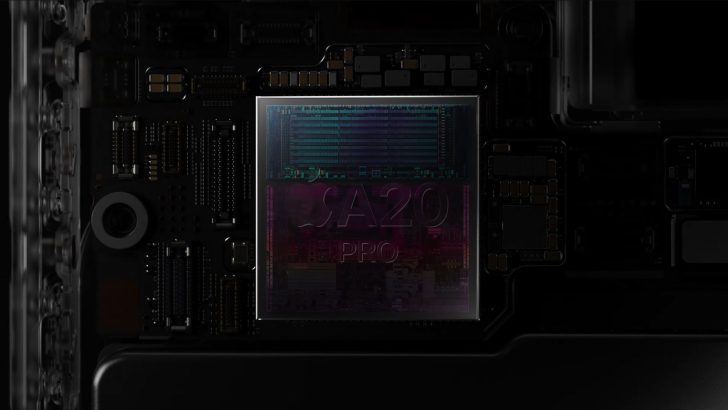
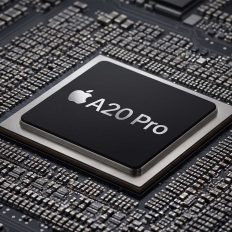
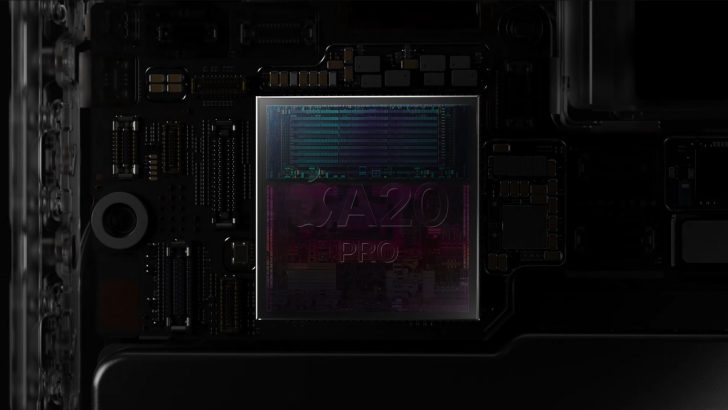
The rumor mill has been spinning for months, but the specs are now leaking faster than a sieve at a hydroelectric plant. Apple’s upcoming A20 Pro chip, set to power the iPhone 18 Pro series and the new foldable iPhone Duo, is packing a 32-core Neural Engine and a 50% boost in memory bandwidth. That’s a doubling of the dedicated AI cores that have been stuck at 16 across three generations and a massive jump to roughly 115 GB/s of memory throughput.
The “revolutionary” part isn’t just the core count. It’s the architectural philosophy. Apple is effectively spreading machine-learning compute across the entire SoC. The Neural Engine doubles, but the GPU also gets new Neural Accelerators, and the CPU now has them baked into every core. This is Apple betting the farm on a future where your phone isn’t just a slab of glass that runs apps, it’s a self-contained AI agent.
But before we start crowning this thing the second coming of desktop computing, let’s look at the caveat that has the entire tech forum ecosystem arguing: the RAM. It’s still allegedly just 12GB. So, what the hell is the point of all that bandwidth if the table is only big enough for a cup of coffee?
The 115 GB/s Reality Check: It’s Not Your GPU
Let’s get the numbers out of the way. The jump from a 64-bit to a 96-bit LPDDR5X memory bus is the headline act. A Reddit user on r/hardware initially highlighted that this 2nm silicon is expensive, but the payoff is real. At roughly 115 GB/s, the A20 Pro is outpacing the memory bandwidth of Apple’s own M2 and M3 chips (102.4 GB/s), landing dangerously close to the base M4 (120 GB/s).
For context, the inevitable comments will scream, “My RTX 3060 does 360 GB/s!” Yes, it does. But you’re holding a phone that sips power, not a 170W graphics card requiring its own PSU. As one user on the Tom’s Hardware forums pointed out, the bigger question isn’t whether it’s fast, it’s whether it’s custom packaging or a multi-chip configuration, since standard phone LPDDR5X packages cap out at 64-bit.
Apple has confirmed a packaging redesign, moving away from the stacked InFO_PoP memory design to a Wafer-Level Multi-Chip Module (WMCM). The DRAM now sits beside the SoC instead of on top of it. This is a massive win for thermals. The silicon can now attach directly to a vapor chamber that’s reportedly three times larger, allowing the chip to sustain its performance without the DRAM cooking the system. That’s why Apple can claim a 40% uplift in sustained performance over the A19 Pro, rather than the usual “peak performance that lasts 30 seconds.”
The 32-Core Neural Engine: A Different Kind of “Super” Core
While the six-core CPU (2 “Super” cores + 4 efficiency cores) and the 7-core GPU are getting the usual “up to 20% faster” and “40% faster graphics” treatment, the Neural Engine is where the story gets spicy. By doubling the cores, Apple is effectively doubling the dedicated AI throughput. This isn’t just about Siri understanding your mumbling better, it’s about the unified FP8 pathway shared between the GPU and Neural Engine.
As noted in a detailed analysis from Gadget Review, this shared FP8 format is the “plumbing” that makes running large language models (LLMs) locally a practical reality rather than a profit-draining cloud call. We’re not talking about hosting a 70B parameter monster here, we’re talking about the next generation of 7B-9B parameter models that are becoming increasingly competent at agentic tasks. When a 9B parameter model runs with the efficiency of a custom FP8 engine, with this much memory bandwidth to feed it, the phone stops being a touchscreen with a browser and starts becoming a hands-free workhorse.
This aligns perfectly with Apple’s long-term strategy. They are building the hardware now for an “AI agent” era, even if the current iOS interface feels bolted on. The infrastructure is there to run a 3B dense or 20B MoE model (per Apple’s recent blog posts) without destroying battery life, primarily because the hardware is doing the heavy lifting.
The Elephant in the Room: 12GB of RAM
This is where the spicy takes come in. All this bandwidth and compute is hitting a wall: memory capacity. The developer community is split. Some argue that 12GB is more than enough when you have clean data, the right harness, and efficient fine-tuning. They point out that you don’t need a frontier chatbot on your phone, you need a utility that can process specific workflows efficiently, transcription, summarization, and photo editing.
Others are less forgiving. The sentiment is that for the $1,199+ price point in 2026, 12GB is “the RAMpocalypse” hitting mobile. Realistically, if you want to run a decent 8B model at 4-bit precision, you’re already using half of your available RAM before you even load the context window or iOS background processes. It works, but it’s tight. It feels like buying a sports car engine and putting it in a compact sedan with a tiny gas tank, it will be fast, but you can’t go far without stopping to refuel (or, in this case, offload to the cloud).
Why This Matters for the AI Software Stack
For developers, the A20 Pro is a signal. It’s a statement that the hardware for edge AI isn’t a testbed anymore, it’s a mass-market product.
The shift to GAA (Gate-All-Around) transistors on TSMC’s 2nm N2 process isn’t just about shrinking. It provides roughly 10-15% performance uplift at equal power or 25-30% lower power draw at equal performance. This efficiency dividend is what allows the phone to claim up to 36 hours of video playback on the Pro and 45 on the Pro Max. But more importantly, it allows for sustained AI workloads without the thermal throttling that plagues current-gen phones.
The implications for product managers and software architects are clear: The constraints of mobile development have shifted. You no longer have to design for a dumb terminal that merely displays server results. You can now offload significant pre-processing, distillation, and even full inference tasks to the device.
The hardware is ready. The question, as always, is whether software developers will bother to optimize for the “Super” cores and the unified FP8 pathway, especially when the default fleet of older iPhones still relies on the cloud. If they don’t, the A20 Pro will just be another fast chip we use to check email.
But the direction is set. The M5 Ultra’s massive bandwidth proved Apple understands data movement, and the M6/M5 Ultra line proved they are building an AI fortress. The A20 Pro is bringing that fortress to the edge.
The Verdict: A Pro-Level Leap
The A20 Pro isn’t just a spec-sheet bump. It represents a fundamental shift in how Apple views the iPhone: not as a consumer electronics accessory, but as an untethered AI appliance.
For AI Engineers
The 32-core Neural Engine and FP8 support mean you can finally ship features that run locally, fast.
For Architects
The WMCM packaging and thermal redesign solves the “sustained performance” problem that has plagued mobile silicon for a decade.
For Consumers
It means your next phone or foldable device might actually get smarter over time as new models are shipped to match the hardware.
The only disappointment remains the stubborn 12GB RAM cap, but that’s a software limitation that can be engineered around. The hardware itself is a monster, and it makes the future of on-device AI feel a lot less like a marketing slogan and a lot more like an inevitability.